
The Lady Of Linden And The Vanishing Hitchhiker Legend
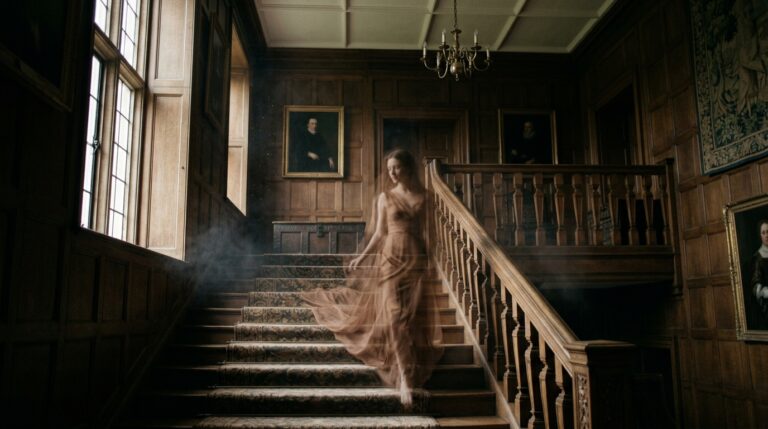
The scent of old roses and the faint sound of piano music often linger in the halls of historic estates, long after the original residents have passed. For decades, whispers of the lady of linden haunting have captivated those who walk the grounds of Linden Hall, where a young woman in Victorian lace is said to roam the corridors. Whether she is a memory etched into the stone or a spirit unable to leave her school days behind, her presence remains a chilling fixture of Pennsylvania folklore.
While many dismiss these stories as mere shadows and creaking floorboards, the historical records tell a more somber tale of love and loss. From the tragic end of a talented music student to the eerie echoes found in a memorial chapel, the evidence suggests that some bonds are too strong for death to break. Exploring these legends requires a balance of curiosity and respect for the real lives that inspired such enduring ghostly encounters.
Key Takeaways
- The legend of the Lady of Linden is rooted in the tragic history of Mary Dixon, a 19th-century music student whose memory is preserved through the Mary Dixon Memorial Chapel in Lititz, Pennsylvania.
- Witnesses consistently report sensory anomalies at Linden Hall, such as the scent of old roses, sudden temperature drops, and the sound of phantom piano music playing in empty rooms.
- The Lady of Linden manifests as a ‘vanishing hitchhiker’ on local roads, appearing as a silent passenger in Victorian dress who disappears from vehicles before reaching her destination.
- While psychological factors like highway hypnosis and pareidolia offer scientific explanations, the decades of consistent eyewitness accounts maintain the story’s status as a significant piece of American folklore.
The Midnight Passenger Of Linden Road
The stretch of road near Linden Hall becomes a stage for one of the most chilling variations of the vanishing hitchhiker legend. Drivers traveling late at night often report seeing a solitary woman dressed in white standing by the roadside, her figure illuminated only by their headlights. When a kindhearted traveler pulls over to offer a ride, she quietly climbs into the backseat and provides a local destination. The atmosphere inside the car often grows heavy and cold as the journey progresses, yet the passenger remains mostly silent. Just as the vehicle nears its destination, the driver turns around to find the backseat completely empty.
This phenomenon is not merely a local ghost story but a narrative that mirrors similar accounts found in cultures across the globe. Some researchers suggest these sightings are tied to the tragic history of Linden Hall, specifically the memory of Mary Dixon, a young music student who died in the late nineteenth century. While historical records confirm Mary passed away from tuberculosis in Bethlehem, the legend suggests her spirit returned to the school she loved. Sightings of a Victorian era girl in the Mary Dixon Memorial Chapel lend weight to the idea that a restless energy lingers in the area. These stories blend historical tragedy with modern encounters, making the Lady of Linden a permanent fixture in Pennsylvania folklore.
While skeptics argue that these encounters are the result of road fatigue or overactive imaginations, the consistency of the reports is difficult to ignore. Many witnesses describe the same specific details, from the texture of her vintage dress to the sudden drop in temperature before she vanishes. Whether this is a true haunting or a psychic imprint left on the landscape, the mystery continues to fascinate those who brave the dark roads at midnight. Have you ever experienced a moment on a lonely highway that you could not explain, or do you believe these stories are simply products of the night? Your perspective helps bridge the gap between the known and the unexplained.
Historical Roots And Local Sightings

The legend of the Lady of Linden finds its most poignant roots at Linden Hall in Lititz, Pennsylvania, where the memory of Mary Dixon continues to linger. Mary was a dedicated music student in the late nineteenth century whose life was tragically cut short by tuberculosis shortly after she left the school. Heartbroken by the loss, her father funded the construction of the Mary Dixon Memorial Chapel in 1885 to ensure her presence would never be forgotten on campus. Since then, generations of students and faculty have reported seeing a young woman dressed in Victorian era clothing moving gracefully through the chapel. These sightings often describe a peaceful but melancholic figure who seems forever tied to the halls where she once practiced her craft.
Witness accounts at Linden Hall frequently highlight a recurring pattern of activity that suggests a classic residual haunting. Observers often claim to hear the faint, ethereal sounds of piano music drifting from the chapel during the quiet hours of the evening, even when the building is empty. Some witnesses have described catching a glimpse of a girl with long hair standing near the altar, only for her to vanish the moment they attempt to approach her. These documented experiences align with the broader vanishing passenger phenomenon, where a spirit appears in a familiar location but disappears before any physical contact can be made. This specific local lore has transformed Mary Dixon from a historical figure into a protective, if restless, guardian of the school.
The persistence of these sightings raises fascinating questions about the emotional imprints left behind by sudden or tragic departures. While skeptics might attribute the footsteps and music to the natural settling of an old building, the consistency of the descriptions provided by different witnesses over the decades is difficult to ignore. Many believe that Mary’s deep love for her education and her father’s grand memorial act as an anchor, keeping her spirit tethered to the living world. Whether she is a literal ghost or a vivid piece of folklore, the Lady of Linden remains a staple of Pennsylvania’s paranormal landscape. Have you ever visited a historic site and felt an unexplainable presence watching you from the shadows?
Global Variations Of The Vanishing Traveler
The Lady of Linden fits into a fascinating global tapestry of vanishing travelers that transcends geographical borders. While the specific details of Mary Dixon at Linden Hall involve a grieving father and a memorial chapel, the core of the story mirrors the classic phantom hitchhiker trope found on nearly every continent. These tales often feature a quiet, well dressed passenger who hitches a ride or seeks a path home, only to disappear before reaching their destination. Folklorists suggest that these stories serve as a bridge between the living and the dead, reflecting a universal human desire to help a lost soul find peace. Across various cultures, this archetype manifests as a reminder that the past is never truly gone.
In South Africa, drivers often speak of Uniondale’s Maria Roux, a young woman who vanished from the backseat of cars after a tragic accident. Similarly, Mexico has its own legends of ethereal women who appear on lonely stretches of road, echoing the same sense of longing found in the halls of the Pennsylvania boarding school. These variations highlight a shared psychological pattern where communities process grief and sudden loss through the lens of the supernatural. By comparing the Lady of Linden to these international counterparts, it becomes clear that her story is not just a local haunting. Instead, it is part of a much larger human narrative about the enduring presence of those who left us too soon.
The persistence of these legends suggests that the vanishing traveler is one of the most resilient figures in modern mythology. Whether she is a Victorian student in a music room or a silent passenger on a dark highway, the Lady of Linden represents a collective curiosity about what happens after we die. These stories often gain strength during times of rapid social change, acting as a tether to historical roots and personal legacies. While skeptics may look for logical explanations, the consistency of these reports across different centuries and countries keeps the mystery alive. Does the Lady of Linden haunt her school out of a love for music, or is she part of a global phenomenon we are only beginning to understand?
Scientific Skepticism Versus The Unexplained

While the stories of Mary Dixon at Linden Hall or the vanishing figures on darkened roads pull at the heartstrings, scientists often point toward psychological phenomena to explain these encounters. One common theory involves highway hypnosis, a trance-like state where a driver functions normally but has no conscious recall of the time spent behind the wheel. In this state, the brain is highly susceptible to suggestion and may project familiar cultural tropes, like a hitchhiking girl in Victorian dress, into the driver’s field of vision. This does not mean the driver is lying, but rather that their mind is filling in the blanks of a monotonous journey with fragments of local folklore.
Grief and environmental factors also play a significant role in how these hauntings are perceived within the halls of historic institutions. At Linden Hall, the deep emotional weight of Mary Dixon’s early death and the subsequent memorial chapel create a setting where students are naturally primed to look for her presence. Psychologists suggest that grief induced hallucinations or even simple pareidolia, where the brain finds patterns like a face in the shadows, can turn a drafty corridor into a supernatural encounter. These logical explanations provide a framework for understanding the human experience without needing to rely on the paranormal to explain every cold spot or strange sound.
Despite these scientific perspectives, the sheer consistency of the Lady of Linden legends across different generations suggests a mystery that logic cannot entirely dismiss. Much like the terrifying legend of other famous American spirits, many witnesses are credible individuals who have no prior knowledge of the local ghost stories before their own strange experiences occur. Whether it is a shared cultural memory or a genuine ripple in the fabric of time, the legend persists because it speaks to a universal human fascination with what lies beyond. We invite you to share your thoughts on these sightings, as your own experiences might hold the key to understanding if these faint whispers are mere tricks of the light or something far more profound.
The Lasting Legacy of the Linden Ghost
The legend of the Lady of Linden remains one of the most poignant chapters in the history of American folklore. Whether she is seen as the spectral student Mary Dixon wandering the halls of her beloved school or as a silent passenger on a darkened road, her story taps into a universal fascination with the afterlife. These accounts do more than just provide a chill; they connect modern audiences to the Victorian era and the deep, personal tragedies of the past. By blending historical records with persistent eyewitness testimony, the mystery of the Lady continues to bridge the gap between documented fact and the unexplained.
The enduring popularity of this vanishing passenger archetype suggests that these stories serve a deeper purpose in our culture. They remind us that history is not just a collection of dates, but a series of lived experiences that might still linger in the places where they unfolded. Scientists and skeptics may point to environmental factors or the power of suggestion, yet the consistency of these sightings across generations is difficult to ignore. This delicate balance between the known and the unknown is what keeps the spirit of the Lady of Linden alive in the public imagination.
Now that the history and the haunts of this famous figure have been explored, it is time to look toward the readers for their own insights. Have you ever felt a sudden chill while walking through a historic chapel or noticed a mysterious figure in the rearview mirror on a lonely stretch of road? Perhaps you have a different theory about who the Lady might be or why she continues to appear after all these years. Sharing these personal encounters and theories helps to piece together the larger puzzle of this haunting legacy.
Frequently Asked Questions
1. Who is the spirit known as the Lady of Linden?
The Lady of Linden is believed to be the spirit of Mary Dixon, a talented music student who lived during the late nineteenth century. She is often seen wandering the halls of Linden Hall in Victorian lace or appearing as a silent passenger on nearby roads. Her presence is characterized by the scent of old roses and the faint, lingering sound of piano music.
2. Where do the most frequent sightings of the Lady of Linden occur?
Sightings primarily occur within the historic corridors of Linden Hall and along the stretch of Linden Road in Pennsylvania. Within the estate, she is often spotted near the memorial chapel or in areas associated with her time as a student. On the road, she appears as a vanishing hitchhiker who mysteriously disappears from the backseat of vehicles.
3. What are the common signs that the Lady of Linden is nearby?
Witnesses often report a sudden drop in temperature and a heavy, chilled atmosphere within their cars or rooms. The distinct aroma of fresh roses and the distant notes of a piano are also frequently cited as precursors to a sighting. These sensory experiences suggest a deep, lingering connection to her past life and musical passions.
4. Is there historical evidence to support the haunting?
Historical records confirm the tragic life of Mary Dixon, a student whose story aligns with the timeline of the sightings. Local archives and school history suggest that her untimely passing left a lasting mark on the community, bridging the gap between documented facts and local folklore. Researchers often point to these somber records of love and loss to explain the enduring nature of the legend.
5. How does the Lady of Linden interact with drivers on Linden Road?
She typically appears as a solitary woman in white standing by the roadside late at night. When offered a ride, she provides a local destination but remains mostly silent throughout the journey. Drivers report that she vanishes completely just as the vehicle reaches the location she requested.
6. Is the Lady of Linden considered a malevolent spirit?
There are no reports of the Lady of Linden causing harm or showing aggression toward those who encounter her. Instead, her presence is described as somber and melancholic, reflecting a soul that seems unable to leave her school days behind. Most encounters leave witnesses feeling a sense of mystery and curiosity rather than fear.