The Man Who Slept Into The Future: Paul Amadeus Dienach
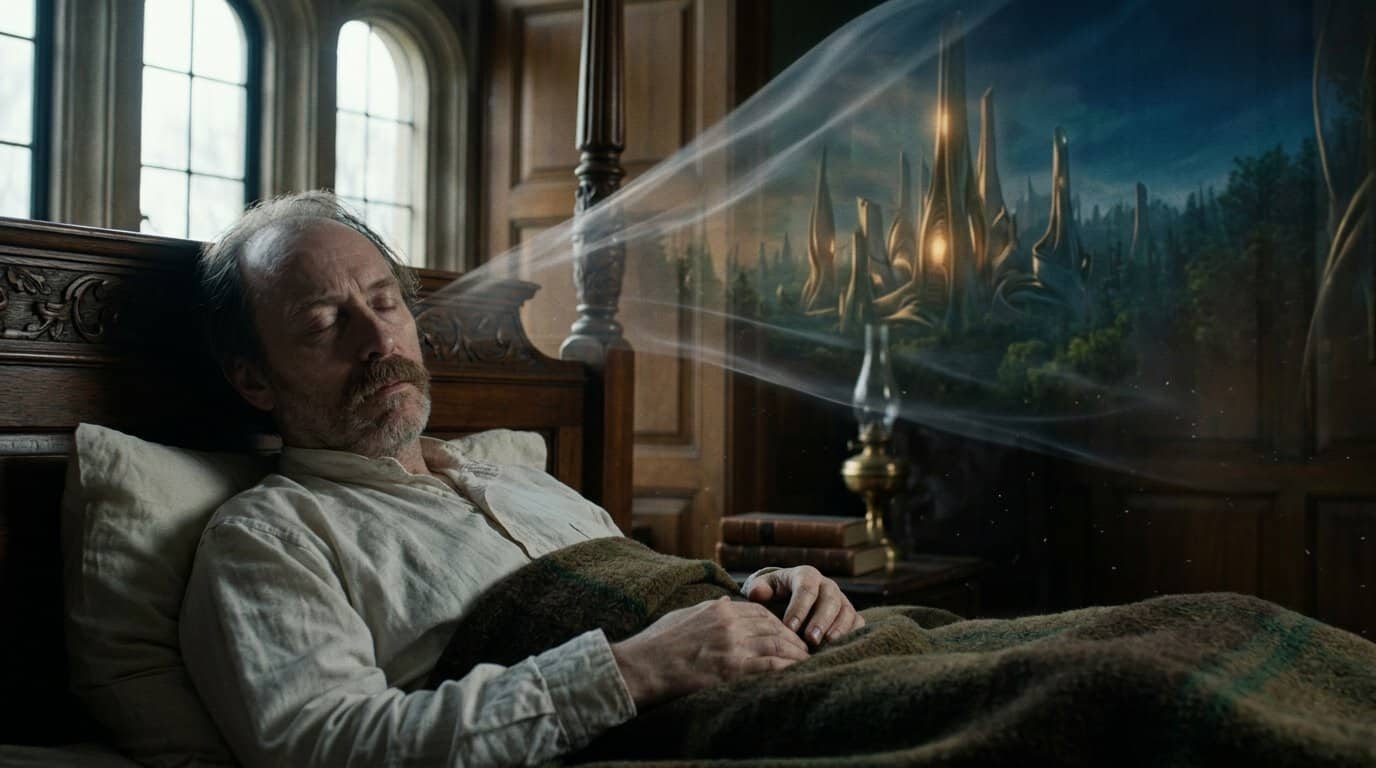
In 1921, a quiet Swiss teacher named Paul Amadeus Dienach fell into a deep, year-long coma that baffled his doctors. While his body lay motionless in a Geneva hospital bed, his mind was reportedly living a second life nearly two thousand years in the future. When he finally woke up, he carried with him a detailed memory of the year 3906 AD, claiming his consciousness had inhabited the body of a man named Andrew Northman.
These extraordinary experiences were captured in a private diary that would eventually become the legendary Chronicles from the Future. Dienach did not write his story for fame or profit; he simply wanted to document a world of advanced technology and shifting human spirituality that felt as real as his own. His journey offers a haunting glimpse into the possibility of time travel and the untapped potential of the human mind.
Key Takeaways
- Paul Amadeus Dienach’s year-long coma, triggered by encephalitis lethargica, serves as a profound case study for the potential of human consciousness to transcend physical time and space.
- The year 3906 AD is described as a global utopia where humanity has evolved past national borders and resource scarcity to prioritize spiritual growth and collective well- well-being.
- Humanity’s future involves a fundamental shift in consciousness, moving from ego-driven conflict toward a heightened state of empathy and intuitive communication.
- The preservation of the ‘Chronicles from the Future’ through student George Papachatzis highlights the transition of a private medical mystery into a significant piece of visionary literature.
The Enigma Of Encephalitis Lethargica And The 1921 Coma
The medical mystery began in 1917 when Paul Amadeus Dienach contracted a rare and terrifying neurological condition known as encephalitis lethargica. This sleeping sickness swept across the globe, leaving victims in states of profound lethargy or complete physical frozenness. For Dienach, the disease manifested as spontaneous, deep sleeps that pulled him away from his life as a teacher. These episodes were not merely naps but were heavy, dark descents that doctors of the era struggled to understand or treat. His fragile health eventually led him to a hospital in Geneva, where the most significant event of his life was about to unfold.
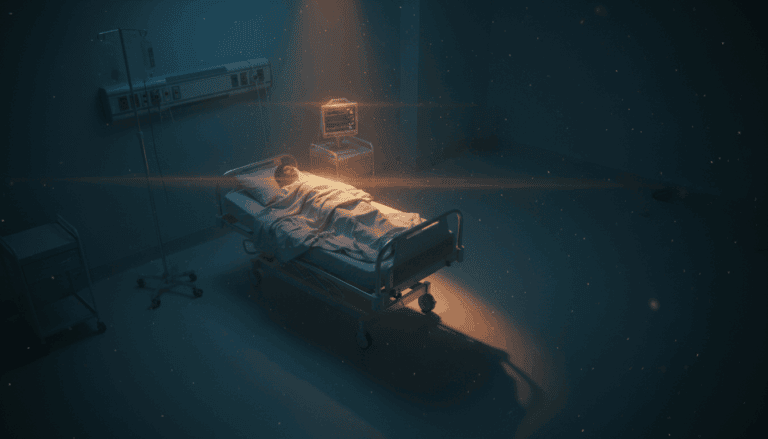
In 1921, Dienach slipped into a catatonic state that lasted for an entire year, leaving his body motionless in a hospital bed while his mind seemingly vanished. While the medical staff monitored his vitals and tended to his physical needs, Dienach claimed his consciousness had embarked on an impossible journey. He later described a sensation of his spirit leaving the Geneva ward and waking up in the year 3906 AD. In this future world, he allegedly inhabited the body of a man named Andrew Northman, who was recovering from a tragic accident. This transition marked the beginning of a detailed mental odyssey that would challenge the boundaries of science and time.
This extraordinary time slip raises fascinating questions about the nature of the human consciousness and the limits of our physical reality. While skeptics might dismiss the experience as a vivid hallucination caused by his brain inflammation, the sheer detail of the world Dienach described remains haunting. He returned to his own body in 1922 with a wealth of knowledge about a future civilization that he felt compelled to record in his personal diary. This narrative serves as a bridge between a tragic medical diagnosis and a profound paranormal mystery. Do you believe a coma could act as a gateway to another point in time, or was this simply a mind trying to escape its own suffering?
Life As Andrew Northman In The Year 3906 AD

When Paul Amadeus Dienach opened his eyes in 1921, he found himself in a world that defied everything he knew about physics and reality. His consciousness had allegedly traveled nearly two thousand years into the future, inhabiting the body of a man named Andrew Northman, who was recovering from a serious accident. According to his diary, Chronicles from the Future, the medical professionals of the year 3906 AD immediately recognized that a different soul occupied Northman’s body. Rather than treating him as a patient with a mental illness, these future humans greeted him with empathy and patience. They understood that a conscious slide had occurred, and they began to educate him on the incredible history of the intervening centuries.
The society Dienach described was a breathtaking utopia where the struggles of the modern era had long been resolved. He witnessed a world without overpopulation, poverty, or environmental decay, governed by a global administration that prioritized human well being over profit. Technology had advanced to a point where labor was largely automated, allowing citizens to focus on spiritual growth and creative pursuits. The people of this era possessed a heightened state of consciousness and communicated with a depth of understanding that felt almost telepathic to the humble teacher. This visionary journey offered a glimpse into a future where humanity had finally learned to live in harmony with itself and the planet.
Dienach spent his days in the future absorbing as much information as possible from his advanced hosts. He learned about the Great Change and the difficult eras humanity had to survive before reaching this golden age of enlightenment. The narrative he later recorded serves as a detailed roadmap of a civilization that had mastered both the physical and metaphysical realms. Even as he returned to his own time and his frail body, the memories of life as Andrew Northman remained vivid and transformative. His account stands as one of the most unique and detailed time slip stories ever documented, inviting us to wonder if such a future is truly waiting for us.
From George Papachatzis To The Chronicles From The Future
The journey of this remarkable diary began in the early 1920s when Paul Amadeus Dienach moved to Greece to seek relief for his failing health. During his time teaching German in Athens, he formed a deep bond with a student named George Papachatzis, who would eventually become a high ranking official in the Greek government. Aware that his life was coming to an end due to tuberculosis, Dienach handed over his personal papers to Papachatzis with a simple request to translate them for language practice. He never explicitly mentioned that the notes contained a detailed account of a year spent in the year 3906 AD. It was only after Dienach passed away in 1924 that his student realized the notebooks were not just linguistic exercises, but a chronological report of a consciousness slipping through time.
George Papachatzis spent years meticulously translating the dense German text, initially believing it might be a work of high concept fiction or a philosophical allegory. As he delved deeper into the descriptions of future social structures and technological shifts, he became convinced that his teacher had truly experienced something beyond human understanding. Despite the sensitive nature of the material, which challenged the religious and scientific norms of the time, Papachatzis eventually decided to share the work with a limited circle of thinkers. This small scale distribution eventually led to the publication of the Chronicles from the Future, though the book faced significant pushback and was even removed from some public spaces. Today, the diary stands as a legendary piece of fringe literature that bridges the gap between a dying man’s final days and a vision of humanity’s distant destiny.
Do you think a person in a coma could truly access a different point in the timeline, or is the brain simply capable of creating incredibly detailed dreams to cope with trauma?
Global Unification And The Evolution Of Human Consciousness
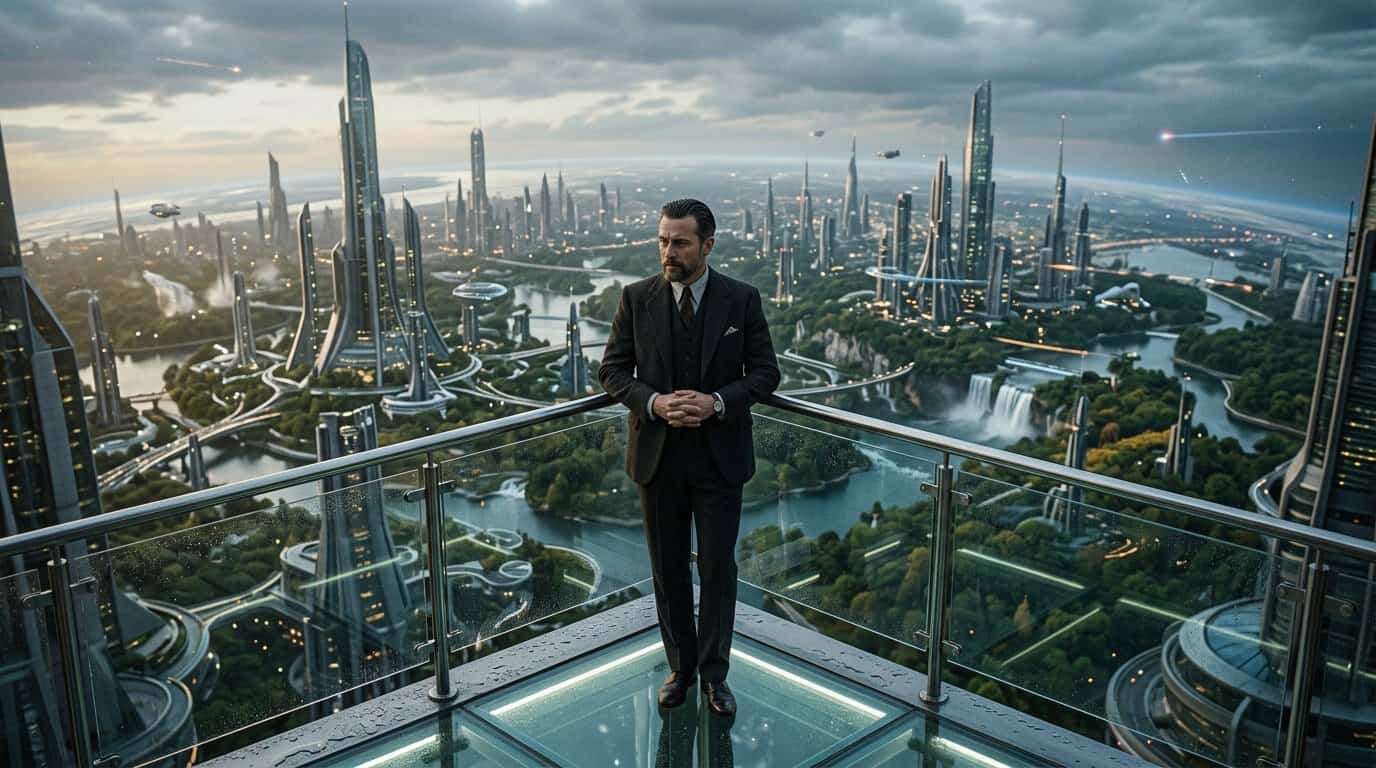
In the world of the year 3906, Paul Amadeus Dienach observed a humanity that had finally moved past the era of national borders and violent conflicts. His diary entries, later compiled in the book Chronicles from the Future, describe a long and difficult transition toward a unified world state. This global government was not born from a desire for power, but rather as a necessary response to a massive global crisis that nearly wiped out the population. According to his writings, the 21st and 22nd centuries were defined by overpopulation, ecological struggle, and localized wars that eventually forced survivors to rethink the concept of sovereignty. By the time his consciousness arrived in the distant future, he found a society governed by a benevolent administrative body that ensured resources were shared equally among all people.
The most fascinating aspect of this future was not just the political structure, but the fundamental evolution of human consciousness itself. Dienach wrote that a new type of human awareness began to emerge after the year 2300, leading to a period of spiritual enlightenment that balanced technological progress with inner peace. He noted that people in the 40th century possessed a heightened sense of empathy and intuition, allowing them to communicate and understand one another on a level that seems impossible today. This shift meant that the greed and ego which drive modern politics had become obsolete relics of a primitive past. The evolution he described suggests that global unification is not just a matter of changing laws, but a result of humanity reaching a higher stage of mental and emotional maturity.
As we look at these predictions today, they offer a curious road map for a species currently struggling with division and uncertainty. Unlike John Titor’s predictions which focused on immediate geopolitical collapse, Dienach emphasized that the road to this golden age would be filled with centuries of hardship, yet he remained hopeful about the ultimate destination of the human race. His accounts present the world state as an inevitable outcome of our survival instinct and our growing interconnectedness. While skeptics might view these visions as mere fantasy, the level of detail regarding the social and psychological changes of future generations continues to spark deep discussion. It leaves us wondering if our current struggles are simply the growing pains of a civilization destined for a much more harmonious future.
The Lasting Legacy of a Future Traveler
The legacy of Paul Amadeus Dienach remains a captivating puzzle that blurs the lines between medical mystery and prophetic vision. His diary, Chronicles from the Future, offers a rare, narrative driven look into a world thousands of years away, filled with detailed descriptions of social and technological shifts. Whether one views his year long coma as a window into the year 3906 or the result of a feverish imagination, the story continues to inspire those who seek answers beyond life’s edge. His transition from a humble teacher to a reluctant messenger of the future provides a hauntingly beautiful perspective on the persistence of human consciousness.
The debate surrounding Dienach often centers on whether his experience was a genuine time slip or a vivid subconscious dream triggered by his neurological condition. Skeptics might point to the creative power of the human mind during prolonged states of unconsciousness, while believers find the consistency and depth of his writings to be far too complex for simple hallucination. This tension between scientific explanation and paranormal possibility is what keeps the mystery alive for modern readers. It forces us to reconsider the nature of time itself and whether the mind can truly travel to places the body cannot reach. Some even question the accuracy of our historical records, much like the Phantom Time Hypothesis, which suggests that large portions of our timeline may have been fabricated.
What do you believe happened to Paul Amadeus Dienach during those silent months in a Geneva hospital bed? It is possible that his consciousness found a temporary home in the body of Andrew Northman, or perhaps his mind crafted an elaborate utopia to escape the tragedy of his own era. His story invites everyone to weigh the evidence and decide if the future is already written or if we are simply dreaming of what is to come. We encourage you to share your thoughts on this incredible journey and join the conversation about the unexplained wonders of our universe.
Frequently Asked Questions
1. Who was Paul Amadeus Dienach?
Paul Amadeus Dienach was a Swiss-Austrian teacher who lived in the early 20th century. He is best known for falling into a year-long coma in 1921, during which he claimed his consciousness traveled to the distant future. Upon waking, he recorded these experiences in a massive diary that was later published as Chronicles from the Future.
2. What medical condition caused his long sleep?
Dienach suffered from encephalitis lethargica, a mysterious neurological disease often called the sleeping sickness. This condition caused victims to fall into deep states of lethargy or complete physical frozenness. In 1921, this illness triggered a catatonic state that left him motionless in a hospital for an entire year.
3. What did Dienach claim to see in the year 3906 AD?
He described a world that had undergone massive transformations, including a shift in human consciousness and the development of advanced technology. According to his writings, his spirit inhabited the body of a man named Andrew Northman. He witnessed a future where humanity had moved past global conflicts and embraced a more spiritual, unified way of living.
4. Is there any scientific explanation for his experience?
While skeptics suggest his visions were vivid dreams or hallucinations caused by his brain inflammation, the sheer detail of his accounts remains a mystery. Some researchers look at the historical context of the encephalitis lethargica epidemic to understand how the brain might process reality during such a trauma. Others explore his story through the lens of quantum physics and the possibility of non-linear time.
5. How did his private diary become public?
Before his death in 1924, Dienach gave his personal notes to one of his students, George Papachatzis, to help him practice his German. Papachatzis was stunned to find the notes contained a detailed memoir of the future rather than simple language lessons. He eventually translated the text and shared it with the world, though it remained a hidden gem for decades.
6. Did Paul Amadeus Dienach try to profit from his story?
Dienach never intended for his writings to be published or for himself to become famous. He was a very private man who wrote the diary primarily to process his own confusion and document what he felt was a real, life-altering journey. His lack of desire for fame adds a layer of sincerity to his extraordinary claims.
7. What is the main message of the Chronicles from the Future?
The writings suggest that humanity will eventually overcome its current struggles to reach a state of deep peace and enlightenment. It paints a hopeful picture of the future where technology serves a higher purpose and people are more connected to their spiritual nature. The story serves as both a warning about our current path and a promise of what we might become.