The Mystery Of The Baalbek Trilithon Construction
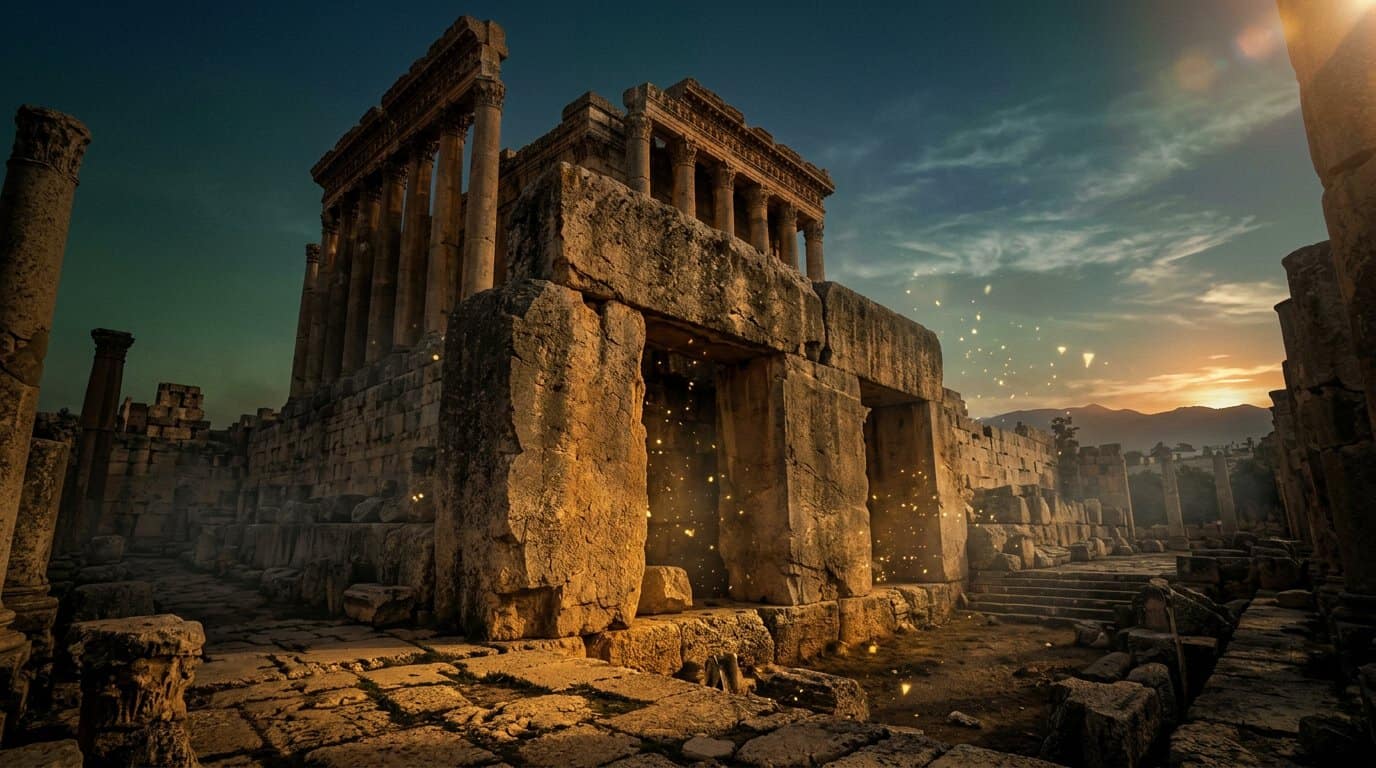
Deep in the mountains of Lebanon, three massive limestone blocks sit tucked into the foundation of an ancient Roman temple, defying modern logic. The baalbek trilithon construction represents one of the most incredible engineering puzzles ever found, with each stone weighing nearly 800 metric tons. These giants were not just carved; they were lifted over twenty feet into the air and placed with such precision that not even a blade of grass can fit between them.
While mainstream history credits the Romans with this feat, the sheer scale of the stones has sparked a centuries-old debate about who truly moved them. The weight of a single block is roughly equal to two Boeing 747s, making it difficult to imagine how ancient builders navigated the rugged terrain with such heavy cargo. This site invites us to look past the surface and wonder if a lost chapter of human history is hidden within these silent, towering walls.
Key Takeaways
- The Baalbek Trilithon consists of three 800-ton limestone blocks integrated into the Temple of Jupiter with such precision that the joints are too tight to fit a blade of grass.
- The scale of these megaliths pushes the limits of known Roman engineering, as lifting 800-ton stones twenty feet into the air exceeds the documented capacity of standard ancient cranes and pulley systems.
- The unusual structural arrangement—where the heaviest stones sit atop smaller blocks—suggests the Romans may have built their temple upon a much older, prehistoric megalithic platform.
- Transporting sixty-foot-long stones from a distant quarry across rugged terrain required a sophisticated understanding of physics and logistics that remains a significant mystery in human history.
Engineering Feats Of The Roman Trilithon
The scale of the three 800-ton limestone blocks at Baalbek presents a puzzle that continues to challenge modern architectural understanding. These massive stones, known as the Trilithon, are seamlessly integrated into the retaining wall of the Temple of Jupiter at a height of over twenty feet above the ground. While mainstream archaeology often credits Roman engineers with this feat, the physics of moving such weight remains a point of deep fascination. Each block is roughly sixty feet long, meaning they are larger than several fully loaded semi-trucks combined. The precision of their placement is so exact that even a thin blade cannot be inserted between the joints.
Moving these megaliths from a local quarry to their final resting place required overcoming immense friction and gravity. Some researchers, such as author Graham Hancock, have questioned whether traditional Roman cranes and pulleys were truly capable of lifting such concentrated mass. While the Romans were masters of stone, the Trilithon stands apart from their typical building styles seen elsewhere in the empire. This has led many to wonder if an earlier, forgotten culture possessed advanced techniques for stone cutting and transport that have since been lost to history. The site remains a primary example of an out of place artifact that defies easy explanation.
Exploring the base of the temple reveals a construction method that seems to blend different eras of human ingenuity. The massive stones sit atop smaller blocks, which feels counterintuitive to traditional structural arrangement where the heaviest pieces usually form the very bottom layer. This strange arrangement suggests that the Trilithon might have been part of an even older platform that the Romans later repurposed for their own grand temple. Whether achieved through clever wooden rollers or a technology we do not yet understand, the site serves as a silent witness to a level of skill that rivals our own. Do you believe the Romans moved these stones alone, or could they have built upon the foundations of a much older, mysterious civilization?
Moving Mountains From The Lebanese Quarries
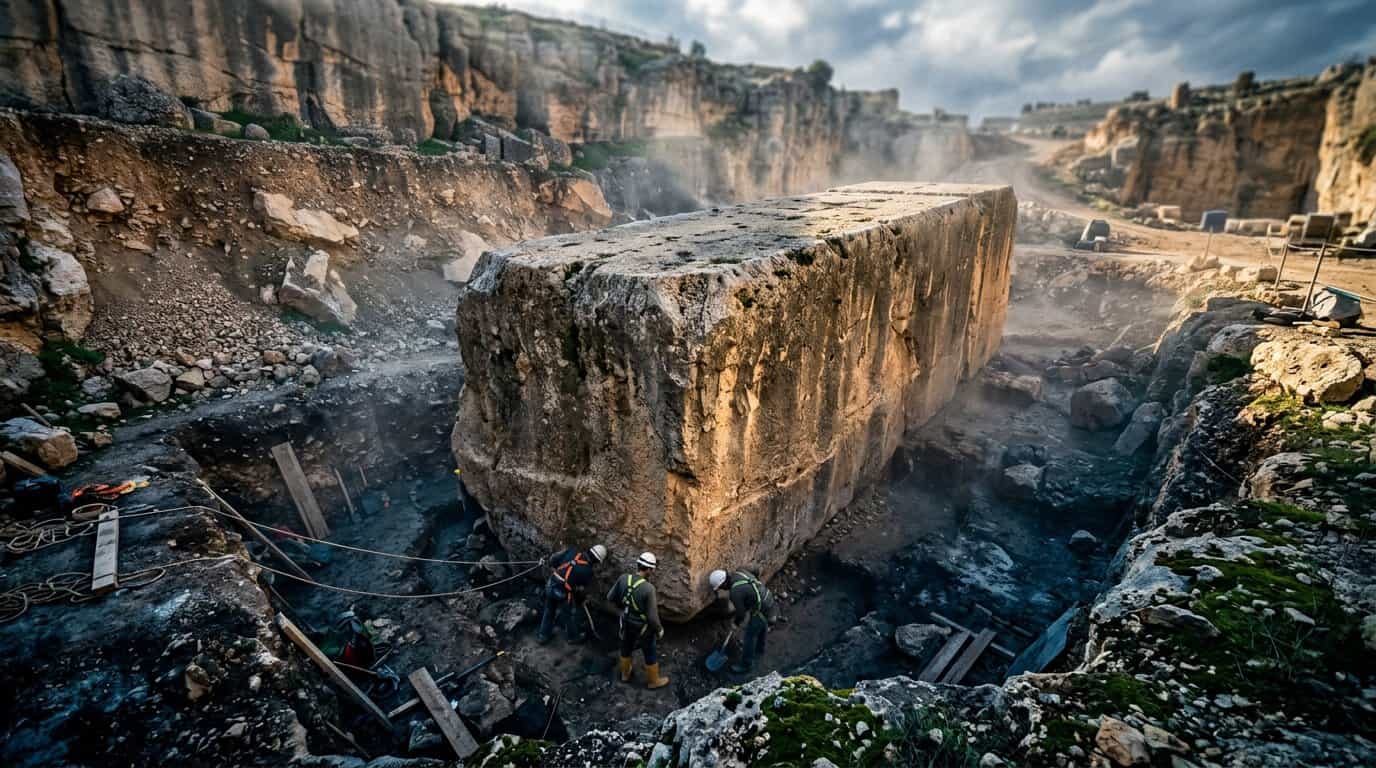
The journey of these massive limestone blocks began at a distant quarry located less than a mile from the temple site. Ancient workers meticulously carved these 800 ton giants from the bedrock using simple metal chisels and heavy wooden mallets. Once freed from the earth, the stones had to navigate a path that was not entirely level, requiring immense coordination and physical strength. This feat of logistics is so staggering that it pushes the boundaries of what we believe was possible for the era. Many researchers wonder if the Roman engineers used methods that have since been lost to history.
Moving mountains required more than just muscle, as it demanded a sophisticated understanding of physics and mechanical advantage. Historical accounts and archaeological studies suggest the use of massive wooden rollers, heavy duty capstans, and complex pulley systems to inch the blocks forward. Thousands of laborers likely worked in unison, pulling thick ropes made of hemp or leather to maintain steady momentum. Even with such a large workforce, the weight of the Trilithon stones would have crushed standard wooden equipment. This leads some experts to question whether the rollers were reinforced with metal or if a different, unknown technology was at play.
The final challenge involved lifting these megaliths nearly twenty feet into the air to rest on the temple podium. Placing stones of this magnitude with such precision that a knife blade cannot fit between them is a miracle of ancient masonry. Much like the engineering enigma of other ancient civilizations, modern cranes would struggle with such a task today, yet these blocks sit perfectly flush in their foundation. While mainstream history credits Roman ingenuity, the scale of the work leaves the door open for older, more mysterious origins. It makes one wonder if we are looking at the remnants of a construction technique that defied the standard limitations of the ancient world.
Ancient Megaliths Versus Modern Technical Limits
The scale of the Baalbek Trilithon presents a puzzle that pushes the boundaries of what we believe was possible for ancient builders. While mainstream historians often point to Roman ingenuity and complex pulley systems, the physics involved in lifting 800 ton blocks seven meters into the air remains difficult to replicate even with modern cranes. These massive limestone slabs are positioned with such precision that the joints between them are nearly invisible to the naked eye. This level of craftsmanship suggests a mastery over heavy materials that seems to bypass the standard tools of the first century. Many researchers find it hard to reconcile the primitive wooden cranes of the era with the monumental task of moving stones the size of modern houses.
Alternative theories often explore the idea that these megaliths might predate the Roman Empire, pointing to a lost era of high technology or forgotten engineering techniques. Some researchers suggest that the Romans merely built upon a much older foundation left behind by a civilization whose history has been lost to time. When we compare these ancient feats to our current technical limits, it becomes clear that the builders possessed a profound understanding of physics and leverage that we are still trying to fully grasp. The mystery lies not just in how they moved the stones, but in why they chose such an incredibly difficult path when smaller blocks would have been much easier to manage. This persistent gap in our knowledge invites us to wonder if the history of human achievement is far older and more complex than the textbooks currently suggest. Much like the lost giants of other regions, these structures challenge our understanding of prehistoric capabilities.
The Unsolved Mystery of the Three Giants
The Trilithon of Baalbek stands as a monumental puzzle that bridges the gap between known history and the unexplained. These three limestone giants, each weighing nearly 800 tons, are positioned with such precision that they challenge our modern understanding of ancient logistics. While the Roman Empire was famous for its architectural prowess, the scale of moving such massive blocks from a distant quarry remains a feat that few other civilizations have ever attempted. The way these stones sit elevated above the ground suggests a level of engineering that goes beyond simple rollers and pulleys. It is a site where every hair thin joint tells a story of incredible ambition and physical mastery. This level of ancient engineering continues to baffle experts who study how these cultures manipulated such immense weight.
Whether these walls were the result of ingenious Roman cranes or the remnants of a much older, lost technology continues to be a subject of centuries-old debate and intense study. Mainstream archaeologists point to the Temple of Jupiter as a Roman masterpiece, yet the size of the foundation stones dwarfs almost everything else in the Roman world. Some researchers suggest that the site may have been repurposed, with the Romans building atop a much older megalithic platform left behind by an unknown culture. This blend of documented history and lingering mystery makes Baalbek one of the most fascinating locations on the planet. The silent stones offer few clues, leaving us to wonder how such a massive task was truly accomplished. Much like the unsolved secrets of other megalithic sites, the methods used to manipulate such weight remain elusive.
What do you think about the origins of these incredible megaliths? Could the Roman engineers have possessed secret methods for lifting such weight, or is it possible that a forgotten civilization built the foundation long before the temple was ever planned? The scale of the Trilithon invites us to reconsider what was possible in the ancient world. We would love to hear your thoughts on this architectural wonder and whether you believe the answers lie in traditional history or something more mysterious. By exploring the colossal megaliths of other ancient sites, we can better understand the global scope of these engineering marvels. Please share your theories in the comments below and join the conversation about these ancient giants. Similar to the floating city of basalt stones in the Pacific, Baalbek forces us to rethink the technological limits of our ancestors.
Frequently Asked Questions
1. What exactly is the Baalbek Trilithon?
The Trilithon is a group of three massive limestone blocks built into the foundation of the Temple of Jupiter in Lebanon. Each of these giants weighs approximately 800 metric tons, which is roughly the same as two Boeing 747 airplanes.
2. How high were these heavy stones lifted during construction?
These enormous blocks were raised more than twenty feet into the air to be placed into the temple foundation. This height makes the feat even more impressive because modern cranes would struggle to lift such weight in the rugged mountain terrain.
3. How precise is the masonry work at the site?
The craftsmanship is so perfect that the stones fit together without any gaps at all. You cannot even slide a thin blade of grass between the joints, showing a level of precision that challenges our understanding of ancient tools.
4. Did the Romans definitely build the Trilithon?
While mainstream history credits the Romans, some researchers like Graham Hancock suggest the stones might belong to a much older, lost chapter of history. The Romans typically used smaller stones, and these megaliths sit beneath the Roman layers, hinting at an earlier origin. Similar questions arise when studying the giant walls of Siberia and their mysterious construction.
5. Where did the stones come from?
The limestone was carved from a nearby quarry and then transported to the temple site. Moving stones that are sixty feet long across uneven ground would have required overcoming immense friction and gravity using methods we still do not fully understand.
6. Could ancient cranes have moved these 800-ton blocks?
Traditional Roman cranes and pulleys were designed for much lighter loads and might not have been strong enough for this specific task. This gap in engineering logic is why many people wonder if the builders used a forgotten technology or a different method entirely.