The Mystery Of The Codex Gigas And The Devils Bible Origins
Deep within the walls of a 13th-century Bohemian monastery, a lone monk faced a terrifying sentence: to be walled up alive for his sins. Legend has it that he promised to write a book containing all human knowledge in a single night to save his life, a feat so impossible it led him to strike a deal with the Prince of Darkness. Exploring the devils bible origins reveals a story that blurs the line between historical fact and supernatural folklore, centered around a manuscript so massive it requires two people to lift it.
Known as the Codex Gigas, this “Giant Book” remains the largest surviving medieval manuscript in existence, filled with medical cures, ancient spells, and a haunting full-page illustration of Satan himself. While modern experts have spent years analyzing the ink and handwriting to find the truth behind its creation, the mystery of how one man could produce such a masterpiece alone persists. It stands as a silent witness to a time when faith and the occult lived side by side, inviting us to wonder if its pages were truly guided by a human hand or something much darker.
Key Takeaways
- The Codex Gigas is the world’s largest surviving medieval manuscript, standing nearly three feet tall and weighing 165 pounds, requiring at least two people to lift.
- Paleographic analysis confirms the entire volume was written by a single scribe, a feat of discipline estimated to have taken approximately 20 to 30 years of constant labor to achieve such perfect consistency.
- The manuscript serves as a comprehensive medieval encyclopedia, blending the complete Latin Bible and historical records with medical cures, magic spells, and exorcism instructions.
- The ‘Devil’s Bible’ nickname originates from a unique, full-page illustration of Satan, which folklore claims was a tribute to a dark entity that helped a condemned monk finish the book in a single night.
The Legend Of Herman The Recluse
The legend begins in the early thirteenth century within the walls of the Benedictine monastery of Podlazice. A monk known as Herman the Recluse reportedly committed a sin so grave that his brothers sentenced him to be walled up alive. In a desperate bid for mercy, Herman promised his superiors that he would write a book containing all human knowledge in just one night. As the hours ticked away and the impossibility of the task became clear, the monk turned to a dark power for assistance. Folklore suggests he made a midnight pact with a fallen angel to complete the massive manuscript before the sun rose.
This supernatural assistance is often used to explain how a single individual could produce such a massive work. The Codex Gigas is nearly three feet tall and requires two people to lift, yet the handwriting remains remarkably consistent from start to finish. Modern paleographic analysis confirms that the ink and calligraphy appear to be the work of one scribe, a feat that would normally take decades of constant labor. This eerie uniformity lends a shadow of credibility to the idea that the book was created under extraordinary circumstances. The sheer scale of the achievement continues to baffle historians who study the physical limits of medieval bookbinding.
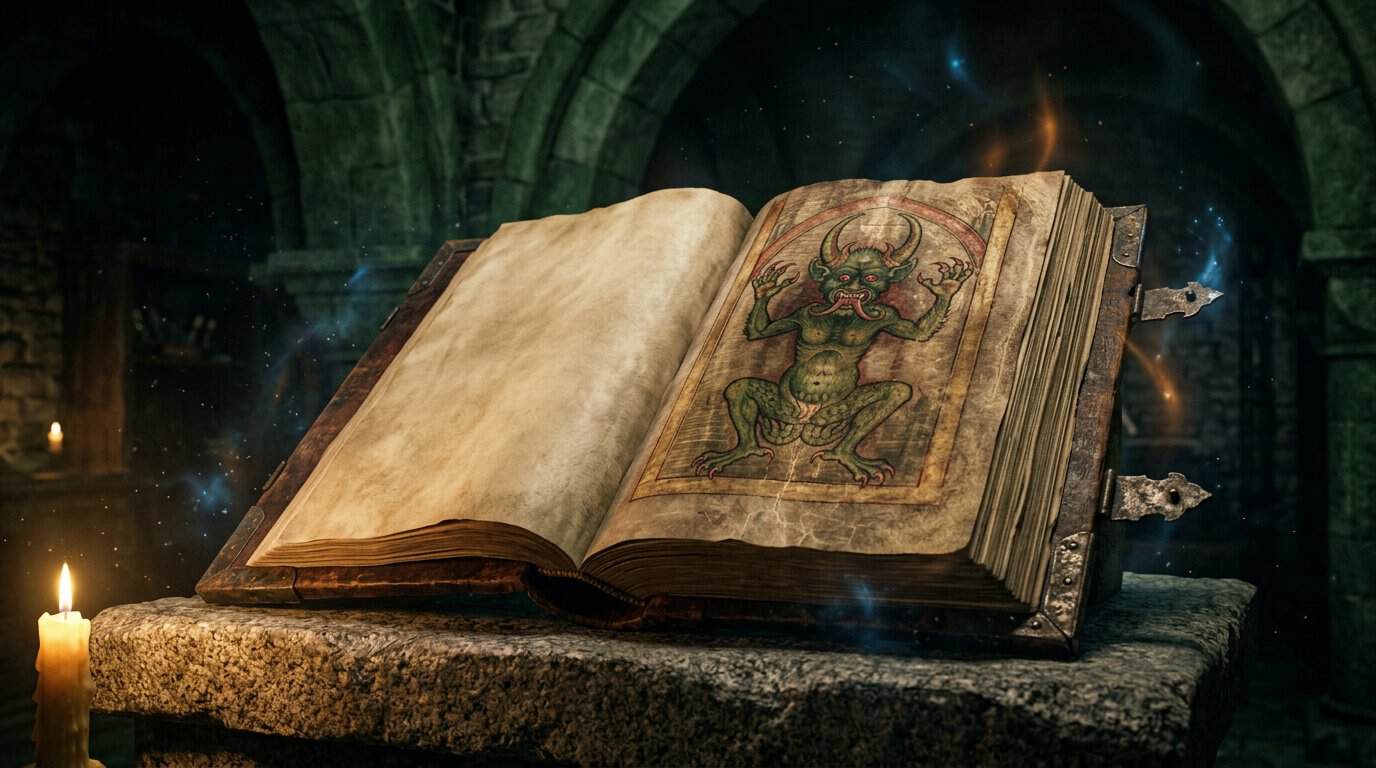
The most famous feature of the manuscript is the full page illustration of the Devil, which earned the book its chilling nickname. Unlike other medieval depictions that show the entity in a crowd, this portrait shows a solitary, green faced figure crouched between two towers. Scholars believe the monk included this image as a way to honor the entity that saved his life during that fateful night. While the rest of the book contains the Bible and historical records, this specific page remains the most studied and feared. It serves as a permanent reminder of the legend of Herman and the heavy price he may have paid for his survival.
Historical Reality Of The Podlažice Scribe
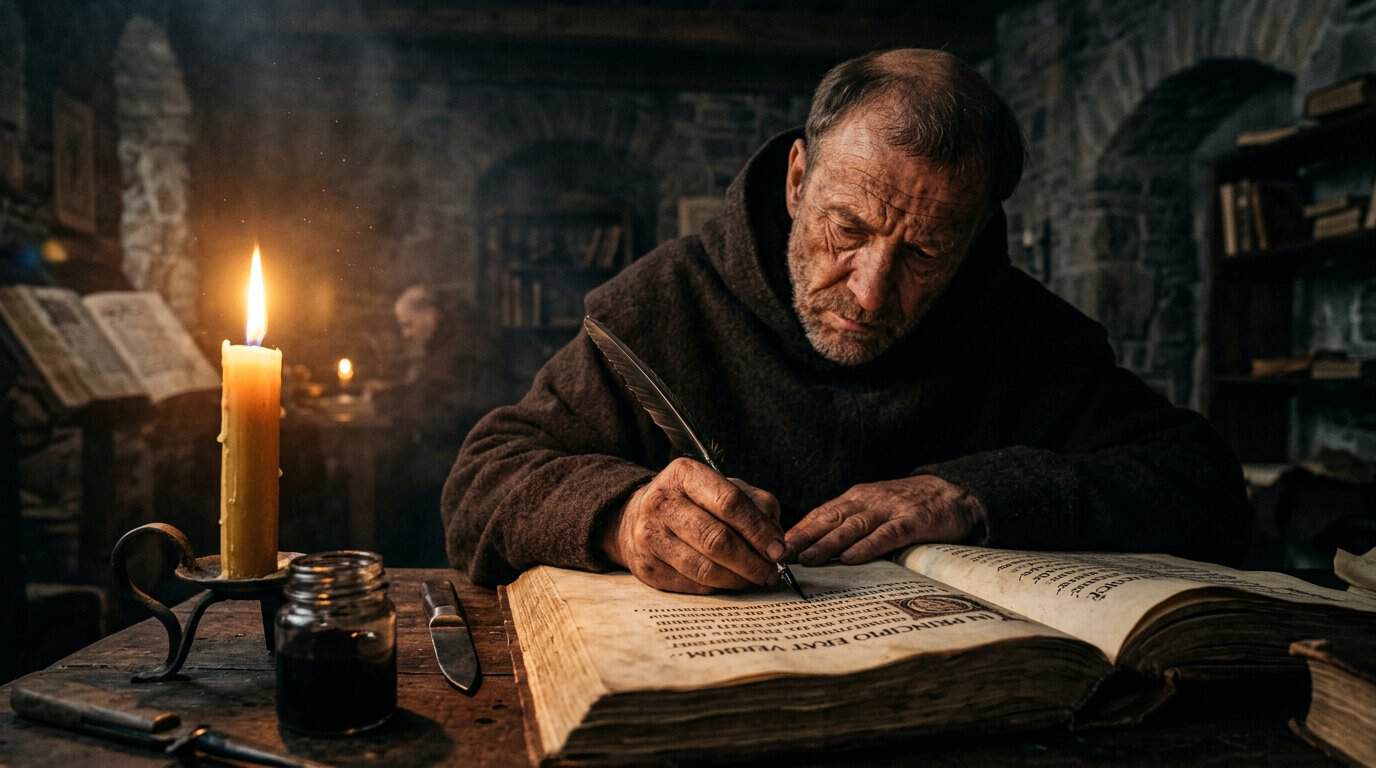
The legend of the Podlažice scribe often overshadows the remarkable physical reality of the monk who actually held the pen. While the story of a midnight pact with a dark entity captures the imagination, modern paleographic analysis suggests a story of human discipline that is nearly as unbelievable. Experts who have studied the handwriting throughout the Codex Gigas have noted a striking consistency in the ink and the style of the lettering. This uniformity indicates that the entire manuscript was likely the work of a single individual rather than a team of scribes. Such a discovery refutes the idea of a supernatural shortcut, pointing instead to a historical theory of solitary devotion.
This lone scribe, often identified as Herman the Recluse, would have faced a monumental task that most people today cannot fathom. Researchers and handwriting experts have estimated that it would take five years of nonstop writing just to complete the text itself. When you account for the intricate illustrations and the preparation of the vellum pages, the timeline stretches much further. Most historians believe the project likely occupied about thirty years of the scribe’s life. This means the monk spent his entire adulthood in a small cell, meticulously dip-penning every letter until the massive volume was finally complete.
Even though science points to a human creator, the sheer scale of the achievement keeps the mystery alive. To maintain such a steady hand without any visible signs of aging or illness over three decades is a feat that borders on the miraculous. The ink remains remarkably consistent, suggesting the scribe may have worked in a state of intense, meditative focus that modern science is still trying to understand. It is easy to see why medieval observers, seeing one man produce such a titan of literature, might have suspected he had help from a higher or lower power. Does the reality of a thirty year labor make the book more or less impressive than the legend of a one night miracle?
Physical Secrets Of The Giant Manuscript
The Codex Gigas is a masterpiece of medieval engineering that truly lives up to its name, which translates literally to Giant Book. This massive manuscript stands thirty-six inches tall and weighs a staggering 165 pounds, making it a feat of physical labor just to lift or move. Historians have documented that the book is housed in a wooden folder covered in leather and ornate metal guards. Its sheer size was intended to reflect the vastness of the knowledge held within its pages. The scale of the project suggests a level of devotion that borders on the supernatural, especially when considering the primitive tools available in the thirteenth century.
Creating a manuscript of this magnitude required an incredible amount of raw material gathered from the natural world. Experts estimate that the parchment pages were crafted from the skins of approximately 160 donkeys or calves. Each page is remarkably uniform, which adds a layer of mystery to its creation because the handwriting remains consistent from the first page to the last. According to paleographic analysis, this consistency suggests the entire work was completed by a single scribe. Such a task would normally take a person twenty to thirty years of constant labor to finish. This reality makes the legend of the monk completing it in a single night feel strangely more plausible to those who study its perfect symmetry.
Beyond its physical weight, the Codex Gigas serves as a massive encyclopedia intended to contain all human knowledge of its era. It includes the complete Latin Bible, medical cures, and historical records like the Chronicle of the Bohemians. Tucked away within these academic texts are also practical instructions for exorcisms and magic spells, showing how the medieval mind blended science with the occult. The most famous feature is the full-page illustration of the Devil, positioned directly across from a depiction of the Heavenly City. This intentional contrast invites readers to wonder if the dark entity truly had a hand in preserving this vast collection of wisdom. Given the immense effort required to build such a book, do you think it was the work of a lifetime of devotion or a single night of dark intervention?
Tracing the Legend and Legacy of the Codex Gigas
The true story of the Codex Gigas remains a captivating blend of historical dedication and haunting myth that continues to spark curiosity today. While the legend of Herman the Recluse and his midnight pact with a dark entity provides a spine-tingling explanation for the book’s creation, the physical reality of the manuscript is equally impressive. This massive volume traveled through centuries of war and fire, surviving against all odds to remain a centerpiece of medieval history. Its existence serves as a bridge between the documented world of 13th-century monastic life and the supernatural folklore that often fills the gaps in our understanding.
Scientific analysis confirms that the entire manuscript was written by a single scribe, a feat that would normally take decades of constant labor to complete. The remarkable consistency of the handwriting suggests a level of focus and devotion that seems almost superhuman to the modern mind. Whether this uniformity was the result of a lifelong penance or something more mysterious remains one of history’s greatest secrets. The sheer scale of the Devil’s Bible, combined with its famous and unsettling illustrations, ensures that its origins will always be shrouded in a sense of wonder.
The journey of this “Great Book” invites us to look past the ink and parchment to consider the spirit behind its creation. It stands as a testament to the human desire to capture all known knowledge within a single set of covers, regardless of the personal cost. Looking at the intricate details and the massive effort required to produce such a masterpiece, one cannot help but feel the weight of its history. Do you believe a single human could have possessed the endurance to finish this work alone, or does the legend of the shadow writer hold a grain of truth? Much like the stories of Saint Germain, these tales of impossible longevity and hidden knowledge continue to fascinate the world.
Frequently Asked Questions
1. What is the legend behind the creation of the Codex Gigas?
The story follows a 13th century monk named Herman the Recluse who was sentenced to be walled up alive for his transgressions. To save his life, he promised to write a book containing all human knowledge in a single night. Realizing the task was impossible, he allegedly made a deal with the Prince of Darkness to finish the work by dawn.
2. How large is the Devil’s Bible in reality?
The Codex Gigas is officially the largest surviving medieval manuscript in the world. It stands nearly three feet tall and is so heavy that it requires at least two people to lift it. The sheer scale of the book contributes to the mystery of how a single person could have completed it.
3. Why is it called the Devil’s Bible?
The name comes from a famous and haunting full-page illustration of Satan found within its pages. This portrait is unique for its time and sits directly across from a depiction of the Kingdom of Heaven. Folklore suggests the image was a tribute to the dark power that helped the monk finish the manuscript.
4. Is there any evidence that one person wrote the entire book?
Modern handwriting analysis conducted by experts suggests that the script is remarkably consistent throughout the entire volume. The uniform nature of the ink and the lettering indicates that a single scribe likely produced the work. This consistency fuels the debate over how one man could maintain such precision over several decades of labor.
5. What kind of information is contained inside the manuscript?
The book is a massive encyclopedia of medieval knowledge including the complete Vulgate Bible, medical cures, and historical records. It also contains more mysterious entries like ancient spells and formulas for exorcisms. This blend of holy scripture and the occult makes it a fascinating historical artifact.
6. Where can the Codex Gigas be found today?
The manuscript is currently housed and protected at the National Library of Sweden in Stockholm. It was taken from Prague as a spoil of war during the Thirty Years’ War in 1648. Visitors can still view this massive piece of history, which remains a silent witness to the intersection of faith and legend.