Unlocking The Secrets Of Madagascar Forest Of Knives
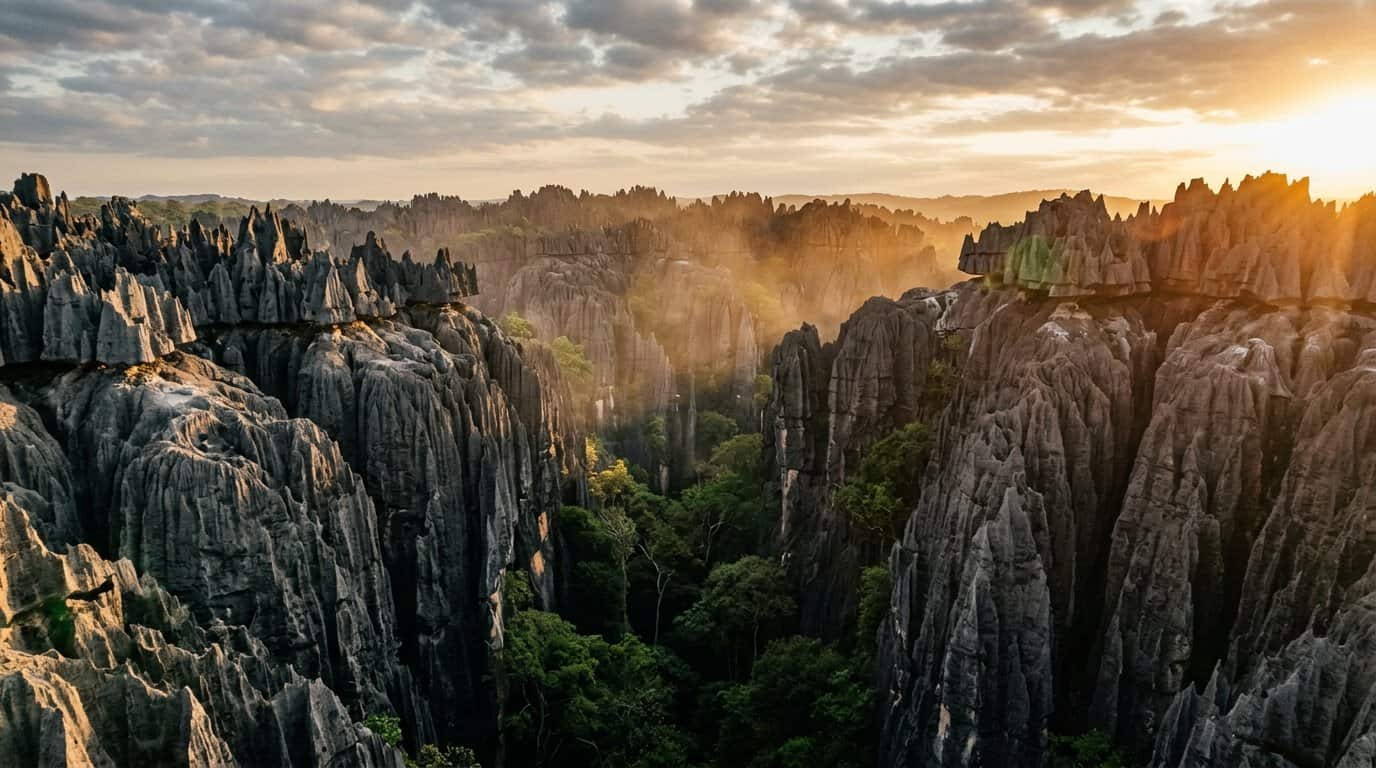
Deep in the western reaches of Madagascar, a jagged fortress of limestone needles rises like a stone dragon’s back against the horizon. This Forest of Knives holds the secrets of Tsingy de Bemaraha, a collection of mysteries etched into razor-sharp spires that reach nearly 100 meters into the sky. It is a place where the earth seems to have frozen into a labyrinth of blades, guarding hidden worlds that few humans have ever dared to explore.
Beneath the sun-scorched peaks, the environment transforms into a vertical puzzle of life and ancient history. Cool, humid canyons hide rare species found nowhere else on the planet, while deep cave systems whisper stories of the island’s first inhabitants. From the unique microclimates of its limestone towers to the legends of the ancestral Vazimba people, this UNESCO World Heritage site remains one of the most enigmatic wildernesses on Earth.
Key Takeaways
- Tsingy de Bemaraha functions as a vertical ecosystem where sun-scorched desert succulents thrive on razor-sharp peaks directly above lush, humid canyon floors.
- The limestone labyrinth serves as a sacred ancestral site for the Vazimba people, whose ancient pottery and spiritual legacy continue to protect the landscape through cultural taboos.
- A vast, unmapped network of subterranean rivers and flooded galleries supports unique, specialized species like blind cave fish that have evolved in total darkness.
- The ‘Forest of Knives’ remains a critical biodiversity stronghold where endemic species, such as the Decken’s sifaka lemur, have adapted to survive within a nearly impenetrable natural fortress.
Vertical Ecosystems Within The Stone Spires
The limestone needles of Tsingy de Bemaraha act as vertical islands where life has adapted to extreme contrasts in a very small space. At the very top of these razor-sharp peaks, the environment is a harsh and sun-scorched desert where only the hardiest succulents can survive the intense heat. These summits are constantly battered by wind and UV rays, creating a world that feels completely disconnected from the ground below. Scientists have noted that these exposed surfaces require plants to develop specialized water storage systems just to endure the daily temperatures. It is a place of survival where every inch of growth is a battle against the elements.
Descending just a few dozen meters into the deep fissures reveals a completely different world hidden from the sun. The canyon floors are perpetually shaded and hold onto moisture, creating a humid microclimate that supports lush ferns and tropical greenery. This dramatic shift allows species that thrive in damp darkness to live directly beneath sun-loving desert plants. Lemurs and rare birds often travel between these layers, navigating a labyrinth that changes its entire personality from top to bottom. This vertical stacking of life ensures that the stone forest remains one of the most biodiverse places on the planet.
Local legends suggest that these hidden depths have always been more than just a sanctuary for plants and animals. The deep canyons and caves are often linked to the Vazimba, the ancestral people who are said to have moved through these stone corridors with ease. While modern researchers focus on the botanical wonders of the humid floors, many locals believe the shadows of the Tsingy still hold the spirits of those first inhabitants. This blend of natural science and ancient folklore makes every spire feel like a guarded secret. What do you think is more impressive, the ability of plants to survive on the jagged peaks or the mysterious history hidden in the cool canyons below?
Sacred Shadows Of The Vazimba Ancestors
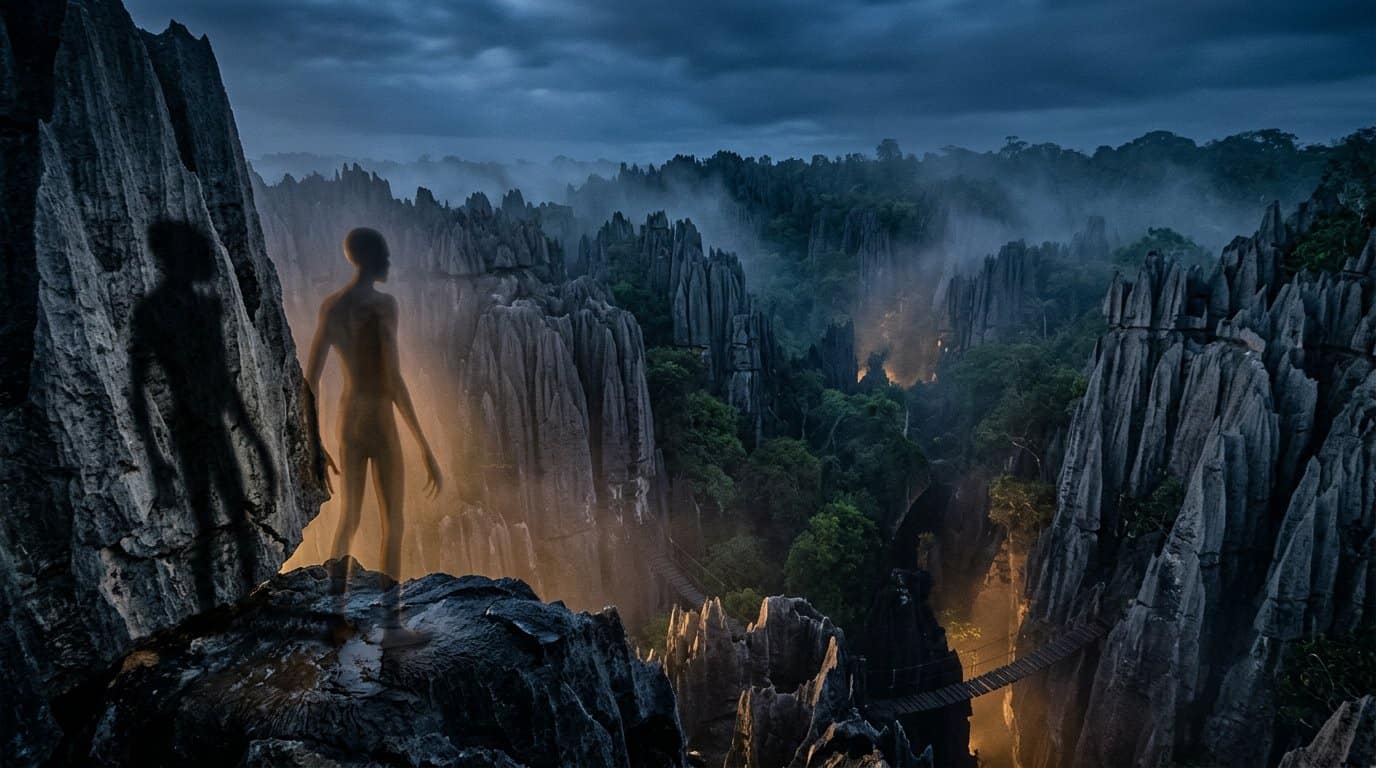
Deep within the labyrinthine limestone needles of the Tsingy de Bemaraha lie hidden caves that serve as a silent testament to Madagascar’s earliest inhabitants, the Vazimba people. These ancient people are often described in local folklore as small, mystical figures who possessed an intimate knowledge of the island’s most inaccessible terrains. Local historians and elders suggest that these limestone cathedrals were not just shelters, but sacred spaces where the veil between the physical and spiritual worlds remained thin. Visitors who navigate the narrow fissures can still feel a sense of reverence in these cool, quiet chambers. The presence of the ancestors is felt in every shadow, reminding outsiders that this stone forest was a home long before it was a destination for modern explorers.
Archaeological evidence found within these jagged formations suggests that the Vazimba lived in harmony with the unique vertical ecosystems of the region. Researchers have uncovered ancient pottery fragments and traces of early settlements that indicate a sophisticated adaptation to the harsh, razor-sharp environment. These discoveries support the idea that the Tsingy was a fortress of survival, offering protection from both predators and rival groups. While scientific documentation provides a glimpse into their daily lives, many aspects of their culture remain shrouded in mystery. The lack of extensive written records leaves much to the imagination, allowing the legends of the Vazimba to endure through oral traditions passed down across generations. Much like the quest for the hidden Agartha entrance to a world beneath our feet, the search for the truth behind these ancient dwellers continues to captivate the human spirit.
The spiritual legacy of the Vazimba continues to influence how the local Malagasy people interact with the park today. Many areas within the stone forest are considered fady, or taboo, out of respect for the spirits that are believed to still dwell in the deep canyons. These cultural boundaries serve as a natural conservation method, keeping certain sections of the park pristine and undisturbed by human activity. This blend of ancestral worship and environmental protection creates a unique atmosphere where history and nature are inseparable. As you look upon the towering grey spires, one cannot help but wonder what other secrets the Vazimba left behind in the unexplored corners of this vertical world. What do you think is the most intriguing aspect of a culture that thrives in such an extreme landscape?
Subterranean Rivers And Unmapped Gallery Networks
Beneath the razor-sharp peaks of the stone forest lies a sprawling, subterranean world that remains one of Madagascar’s greatest geographical enigmas. Massive underground rivers carve through the limestone base, creating a network of dark corridors and flooded galleries that have never been fully mapped by modern explorers. These hidden waterways act as the lifeblood of the region, sustaining the unique flora above while carving out vast cathedral-like chambers below. Local legends often whisper that these deep, watery shadows serve as the true home of the spirits, protected by the sheer difficulty of navigating the treacherous, submerged terrain.
Scientific expeditions have only recently begun to peel back the layers of this underground frontier. These explorers have discovered specialized species that have evolved in total darkness, such as blind cave fish and translucent insects that exist nowhere else on the planet. Each new trek into the unmapped gallery networks reveals how little we truly understand about the life thriving beneath the Tsingy. The silence of these caves is occasionally broken by the rush of hidden waterfalls, suggesting that an even larger system of interconnected tunnels may still be waiting to be found.
The mystery of these depths invites us to consider what other secrets might be tucked away in the parts of the earth that light never reaches. While geologists can explain the chemical erosion that formed these passages, the sheer scale of the labyrinth leaves plenty of room for wonder and desert enigmas about undiscovered chambers. These dark corridors bridge the gap between documented science and the ancient folklore of the Melaky region, reminding us that the world still holds places where maps end and mystery begins. What do you think remains hidden in the furthest, unexplored corners of the Tsingy’s underground veins?
Unlocking the Mysteries of the Stone Labyrinth
Tsingy de Bemaraha stands as a testament to the enduring power of the unknown, where razor-sharp limestone peaks guard secrets that have remained hidden for millennia. This stone labyrinth is more than just a geological wonder, as it serves as a living library of evolution and ancient human history. From the arid summits where unique reptiles bask in the sun to the humid canyons where the spirits of the Vazimba are said to linger, the park offers a vertical world of endless discovery. It is a place where science and folklore walk hand in hand, reminding us that some corners of our planet still refuse to be fully mapped or understood.
The true value of this Forest of Knives lies in its ability to challenge our understanding of what is possible in the natural world. As researchers continue to find new species within its jagged crevices, the site reinforces the idea that unexplored wilderness is essential for the health of our planet. Protecting these inaccessible reaches ensures that the mysteries of Madagascar’s first inhabitants and its unique biological treasures remain safe from the pressures of the modern world. Much like chasing the living dinosaur of the African interior, we are left to wonder how many more secrets are tucked away in the shadows of these limestone needles, waiting for the right moment to be revealed.
In an age where almost every inch of the globe can be seen from a satellite, places like the Tsingy remind us of the thrill of true mystery. Does the world become a less vibrant place when every stone is turned and every legend is explained by a map? There is a certain magic in knowing that some landscapes are simply too difficult for humans to conquer, leaving nature to thrive in its own chaotic perfection. Much like the bizarre legend of bottomless pits in other parts of the world, we invite you to consider whether the true value of a wilderness lies in its accessibility or in the nature’s ghostly choir of secrets it manages to keep from the rest of the world.
Frequently Asked Questions
1. What exactly does the word Tsingy mean?
The word comes from the local Malagasy language and describes a place where one cannot walk barefoot. It refers to the razor-sharp limestone needles that make the terrain nearly impossible to navigate without specialized gear. These jagged spires are so thin and sharp that they can easily cut through skin or clothing.
2. Who were the Vazimba people mentioned in local legends?
The Vazimba are believed to be the original inhabitants of Madagascar, often described as a mysterious group of small-statured people. Local folklore suggests they sought refuge within the deep caves and hidden canyons of the Tsingy to escape later settlers. Many Malagasy people still consider these limestone labyrinylths sacred ground where the spirits of these ancestors reside.
3. How can such different plants live in the same rock formation?
The Tsingy creates vertical islands of life with extreme microclimates that vary every few meters. The sun-scorched tops host desert succulents that store water, while the deep canyons below trap moisture to support lush tropical ferns. This dramatic temperature shift allows two completely different worlds to exist on top of each other.
4. Are there animals that live only within these stone needles?
Yes, the Tsingy is home to several endemic species like the Decken’s sifaka lemur which has adapted to leap between the sharp blades. Scientists have also discovered unique reptiles and birds that have evolved specifically to navigate this vertical puzzle. Many of these creatures are found nowhere else on Earth because they are trapped by the natural fortress of the stone forest.
5. What secrets are hidden inside the cave systems?
The caves beneath the limestone towers contain ancient geological formations and evidence of early human history. Explorers have found remains of extinct animals and artifacts that suggest these tunnels served as shelters for centuries. These dark passages remain one of the least explored frontiers in Madagascar, holding clues to the island’s prehistoric past.
6. Is it possible for travelers to explore these hidden areas?
Visitors can explore the site through a series of aerial suspension bridges and fixed cable routes known as via ferratas. These paths allow people to safely traverse the jagged peaks and peer into the deep canyons that were once inaccessible. However, much of the vast wilderness remains a guarded secret, reachable only by professional researchers and experienced climbers.