The Secret Echoes Of Monkton Farleigh Quarry
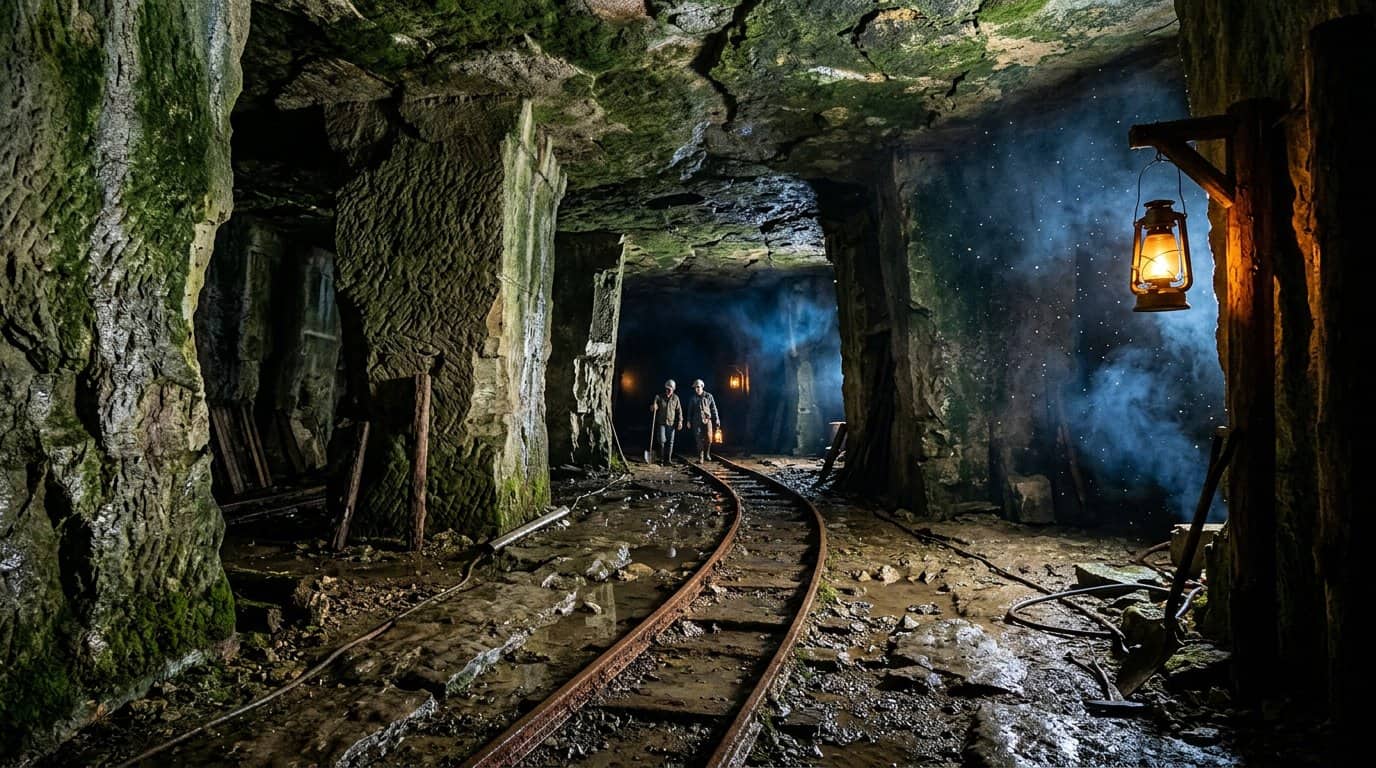
Deep beneath the rolling hills of Wiltshire lies a hidden world carved into the earth, where silence now reigns over miles of stone-walled tunnels. Known as Monkton Farleigh Quarry, this former Bath stone mine underwent a staggering transformation to become one of the largest underground ammunition depots on the planet. During the height of World War II, a sprawling 80-acre network hummed with activity as thousands of tons of explosives were moved through the darkness. It served as a secret, subterranean fortress, shielded from the chaos of the surface by layers of solid rock.
Today, the site is a place of stark contrasts where history meets modern-day mystery. While high-security vaults now protect sensitive commercial documents in climate-controlled zones, other corners of the quarry remain frozen in time, untouched for decades. Adventurers and historians alike are drawn to the echoes of the past that still linger in the abandoned galleries and the long-forgotten conveyor tunnels. There is a strange, magnetic pull to these depths, where the line between a well-documented military past and the whispers of underground legends begins to blur.
Key Takeaways
- Monkton Farleigh Quarry transformed from an ancient stone mine into an 80-acre subterranean fortress capable of housing 120,000 tons of high explosives during World War II.
- The site features the Farleigh Down Tunnel, a mile-long secret artery that used a heavy-duty conveyor system to move 1,000 tons of ammunition daily directly from the main railway line.
- Unique acoustic anomalies and rhythmic vibrations within the tunnels fuel persistent legends of phantom footsteps and secret government experiments, bridging the gap between military history and urban mystery.
- The complex has transitioned into a high-security commercial facility where reinforced, climate-controlled vaults now protect sensitive corporate and government documents behind restricted zones.
The Hidden Depths Of Central Ammunition Depot
The transformation of the Monkton Farleigh Quarry stone mines into a massive bomb-proof vault is a feat of engineering that defies easy explanation. During the height of World War II, the Royal Engineers took ownership of these ancient caverns, working tirelessly to convert eighty acres of subterranean space into a secure fortress. By the time they finished, the complex was capable of housing 120,000 tons of high explosives safely beneath the Wiltshire countryside. This massive undertaking involved clearing thousands of tons of debris and reinforcing the limestone ceilings to withstand direct hits from heavy aerial bombardment. Today, the sheer scale of these hollowed-out depths serves as a silent reminder of the desperate measures taken during the war.
One of the most impressive features of this underground labyrinth is the Farleigh Down Tunnel, a mile-long passageway that connected the depot directly to the main railway line. This secret artery utilized a heavy-duty conveyor belt system to move up to 1,000 tons of ammunition every single day without ever being spotted from the surface. While historical records from the Ministry of Defence detail the site’s logistical success, modern visitors and explorers often report a strange atmosphere within these deep tunnels. The way sound travels through the stone corridors creates unusual acoustic anomalies, leading some to wonder if the site holds secrets beyond its official military history.
Even though much of the complex is now used for high-security commercial facility storage, the mystery surrounding its hidden corners continues to grow. Rumors of classified sectors and unexplained vibrations have turned Monkton Farleigh into a focal point for those interested in underground conspiracy theories. The transition from a military stronghold to a private, restricted facility has only added fuel to the fire for local researchers and urban explorers. It is hard not to feel a sense of unease when considering what might still be tucked away in the darkness of these eighty-acre workings. Do you believe these tunnels are strictly for storage, or could there be more to the stories of strange sounds echoing from the depths?
Acoustic Anomalies And Subterranean Echoes
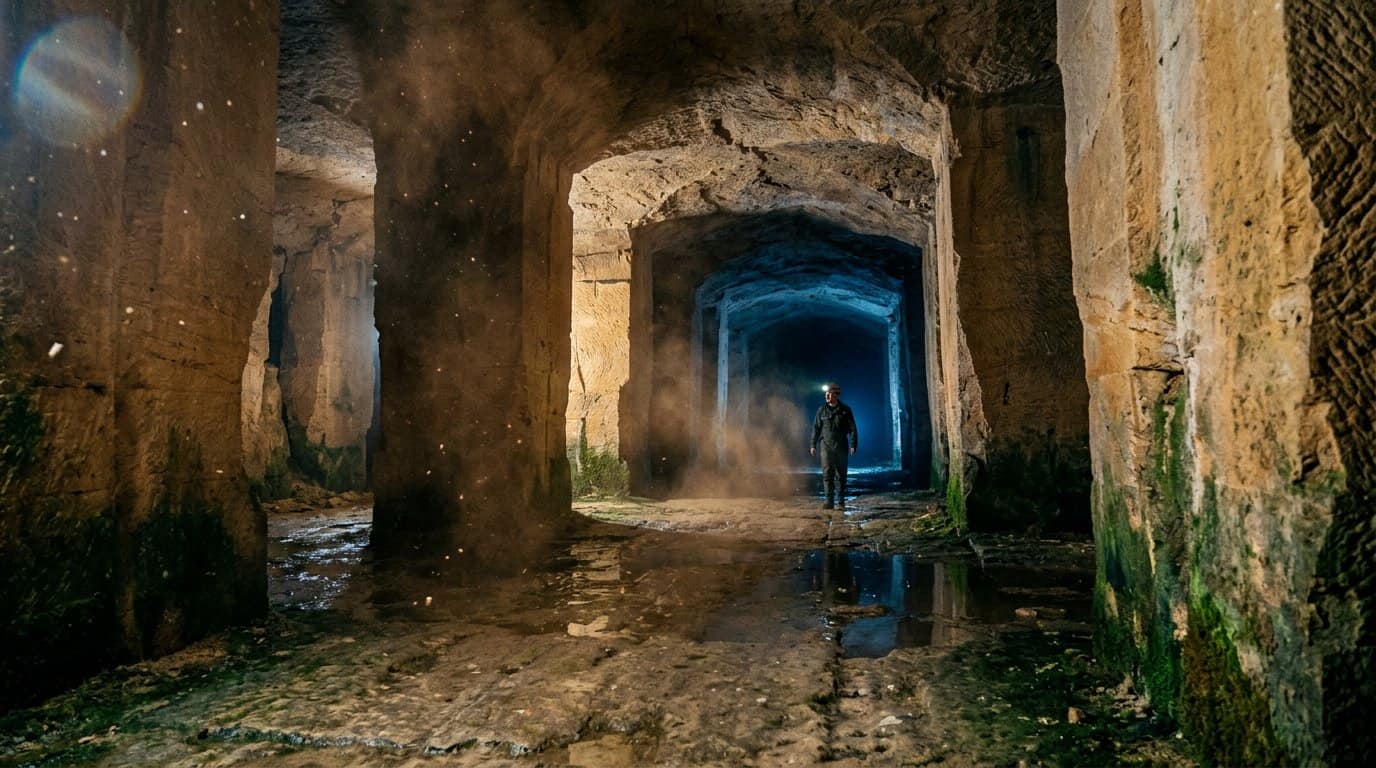
Explorers who venture into the silent depths of Monkton Farleigh Quarry often describe a sensory experience that defies logic. The vast, damp corridors of this former ammunition depot possess a unique ability to warp sound, creating echoes that seem to follow visitors like invisible companions. In the absolute stillness of the eighty acre complex, a simple footfall can transform into a rhythmic thud that sounds remarkably like a distant, heavy door closing or a muffled conversation. These acoustic quirks are so convincing that many modern urban explorers have reported hearing phantom footsteps pacing behind them in the dark. While skeptics point to the natural resonance of the Bath stone walls, these persistent auditory phenomena have become a cornerstone of local legend.
The strange way sound travels through the subterranean tunnels has sparked intense speculation about what might be happening behind the site’s high security barriers. Since parts of the facility are currently used for high security commercial storage, rumors of secret government experiments and hidden bunkers have naturally flourished. Some theorists suggest that the specific frequency of the echoes could be linked to experimental acoustic technology or surveillance testing conducted deep underground. Historical accounts from the wartime era mention the immense scale of the conveyor systems, and some believe the earth itself has “remembered” the mechanical vibrations of the past. These stories bridge the gap between historical fact and modern mystery, keeping the intrigue of the quarry alive for a new generation.
Whether these sounds are merely the result of wind whistling through ventilation shafts or something more mysterious, they continue to fuel the site’s reputation as a hotspot for the unexplained. The combination of its massive size and the heavy duty infrastructure creates a perfect environment for sound to behave in unpredictable ways. When a noise carries for over a mile through the Farleigh Down Tunnel, it can arrive at the other end sounding distorted and otherworldly. This creates an atmosphere where it feels as though the walls are whispering secrets from the Cold War or even earlier. Does the quarry simply play tricks on the human ear, or is there a deeper reason for the strange vibrations felt by those who explore its depths?
Modern Secrets And High Security Document Storage
Following its service as a massive wartime ammunition depot, Monkton Farleigh underwent a transformation into a fortress of corporate and government secrecy. The sprawling eighty acre complex was eventually repurposed into a high security storage facility designed to protect sensitive documents from prying eyes. Behind reinforced doors and heavy security patrols, the deep stone tunnels now house millions of records that are deemed too critical or dangerous for standard office buildings. This transition from military storage to commercial silence has kept the site shrouded in mystery, as the public is strictly forbidden from entering the active zones. The sheer scale of the underground network means that while some areas are documented, vast sections remain hidden away under the guise of private enterprise.
The silence of these deep chambers has given rise to modern legends, particularly regarding the strange acoustic anomalies reported by those who have ventured near the perimeter. Visitors and local explorers have long whispered about rhythmic humming and metallic echoes that seem to defy the natural physics of the stone mine. Some theorists suggest these sounds are evidence of secret machinery or deeper levels that were never officially recorded on the wartime blueprints. Because the site is used for high level document storage, the intense security measures only serve to fuel the fire of these underground conspiracies. Many believe that the archives hold more than just paper, suggesting that the quarry remains a nerve center for operations that the public was never meant to understand.
What do you think is truly hidden behind the reinforced steel doors of the Monkton Farleigh complex? While the official records point to paper archives and historical documents, the persistent rumors of strange sounds and unexplained activity keep the mystery alive for many. The history of the site shows that it was built for maximum protection, making it the perfect place for secrets to stay buried forever. Whether it is simply a filing cabinet or something far more unusual, the quarry remains a focal point for those fascinated by the hidden world beneath our feet. Share your thoughts on whether these underground tunnels are hiding more than just the past.
The Lingering Secrets of Wiltshire’s Underground Fortress
Monkton Farleigh Quarry stands as a silent witness to the intersection of military history and modern mystery. While its corridors once buzzed with the frantic energy of the war effort, the silence that fills the tunnels today feels heavy with secrets. The transition from a massive ammunition depot to a high security storage facility has only deepened the public fascination with what lies beneath the Wiltshire soil. It is a place where the physical reality of eighty acres of stone meets the shadowy world of underground conspiracies. The site serves as a grounding point for those who believe that not every government secret has been declassified or brought to light.
The strange acoustic anomalies and tales of hidden bunkers continue to fuel the imaginations of explorers and theorists alike. Some visitors claim the air feels different within the depths, as if the tunnels themselves are holding onto the echoes of the past. Whether these experiences are the result of unique geological architecture or something more profound remains a subject of great debate. The sheer scale of the complex makes it easy to wonder if certain sections remain untouched by modern hands. It is this blend of documented industrial achievement and whispered urban legend that keeps the legacy of the quarry alive in the digital age.
As the heavy doors of the modern storage districts remain closed to the public, the mystery of the site only continues to grow. Many people find themselves drawn to the idea that there is more to the story than just boxes of old documents and empty stone chambers. Much like the secrets of Derinkuyu, do you believe the strange reports from the quarry are simply tricks of the mind in the dark, or is there a grain of truth to the rumors of secret activities? The tunnels of Monkton Farleigh invite us to consider what might still be hidden just a few feet below our boots. We would love to hear your thoughts on whether these underground mysteries are purely physical or if something truly unexplained remains in the shadows.
Frequently Asked Questions
1. What was the original purpose of Monkton Farleigh Quarry?
The site began its life as a traditional Bath stone mine where workers carved out limestone for local buildings. In the late 1930s, the Royal Engineers transformed the vast caverns into a massive underground fortress to protect ammunition from air raids. It eventually became one of the largest subterranean bomb stores in the world.
2. How much ammunition was stored inside the quarry during World War II?
At its peak, the complex held a staggering 120,000 tons of high explosives and ordnance. The 80 acre network was designed to be completely bomb proof, ensuring the safety of the British military supply chain. Thousands of tons of debris were cleared to make room for this massive underground arsenal.
3. Can the public visit Monkton Farleigh Quarry today?
Most of the quarry is currently closed to the general public because it serves as a high security commercial storage facility. These modern zones are climate controlled to protect sensitive documents and legal records. While some areas are strictly off limits, historians and explorers still study the abandoned sections to document their wartime history.
4. Is the underground complex still used for military purposes?
The Ministry of Defence officially decommissioned the site in the 1960s after the threat of conventional large scale bombardment changed. Today, the space has transitioned into the private sector. It now functions as a secure vault for businesses that need a protected, stable environment for their assets.
5. Are there any legends or mysteries associated with the tunnels?
Many people believe that secret tunnels still connect the quarry to other nearby military installations like the Box Tunnel or Burlington Bunker. While some of these links are documented, others remain part of local folklore. Much like the efforts involved in unlocking the vault of ancient history, the silence of the deep galleries often fuels stories of hidden rooms and forgotten equipment left behind after the war.
6. How did the military move supplies through such a deep underground space?
The Royal Engineers installed an elaborate system of conveyor belts and narrow gauge railways to transport heavy shells. These tunnels stretched for miles, connecting the deep storage bays to the surface loading areas. Much of this infrastructure remains visible today as a testament to the incredible engineering required for the project.