
The Dancing Plague of 1518: When a City Danced Itself to Death
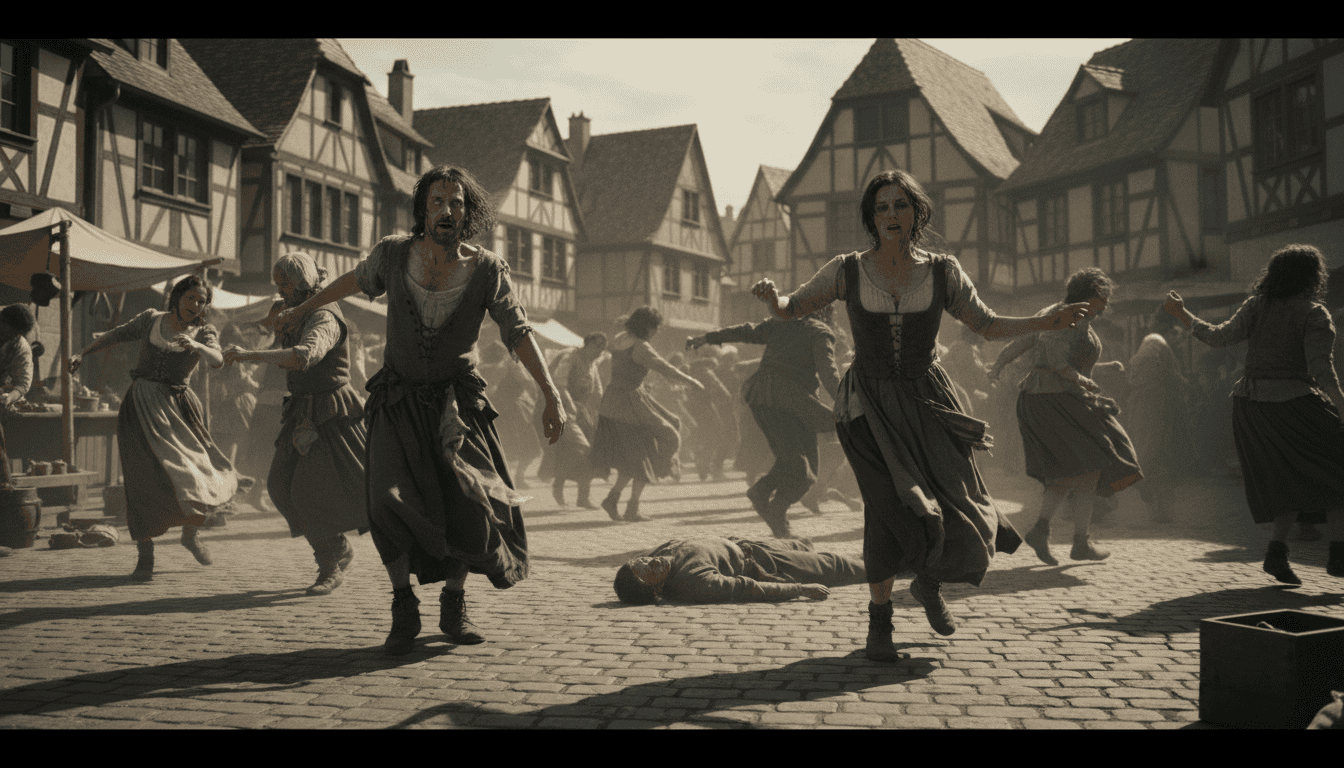
In the summer of 1518, a bizarre and terrifying spectacle unfolded on the streets of Strasbourg, Alsace. It began in mid-July when a woman, known as Frau Troffea, stepped outside her home and began to dance with a fervent, unstoppable energy. She danced alone for days, unable to rest, her movements growing more frantic. Within a week, dozens of others joined her, their bodies seemingly possessed by the same compulsive rhythm as the city watched in bewildered horror. This was not a rhythmic display of joy but a grim, silent struggle against one’s own limbs, as the individuals appeared unable to stop despite their visible agony and exhaustion.
Over the following weeks, the number of dancers swelled into the hundreds; some historical accounts estimate as many as 400 people were affected. Initially, civic leaders and physicians believed the cause was “hot blood” and prescribed a peculiar remedy: more dancing. They cleared a guild hall, erected a wooden stage, and hired musicians to keep the afflicted moving. This misguided solution only worsened the problem, turning a strange outbreak into a deadly public performance that caused exhaustion, injury, and even death for many victims. The atmosphere in the city shifted from curiosity to a palpable sense of dread as the sounds of pipes and drums echoed through the streets, accompanying the shuffling feet of the doomed.
Key Takeaways
- In the summer of 1518, a “dancing plague” occurred in Strasbourg where hundreds of people danced uncontrollably for weeks, leading to exhaustion, injury, and death.
- The phenomenon began with one woman, Frau Troffea, but quickly spread to as many as 400 people through a process of social contagion.
- City authorities and physicians mistakenly believed the cause was “hot blood” and prescribed more dancing as a cure, even building a stage and hiring musicians to encourage the dancers.
- This official response was a disastrous failure that worsened the crisis, fueling the frenzy and leading to more fatalities from exhaustion and heart attacks.
- The most widely accepted modern explanation is mass psychogenic illness, where extreme societal stress from famine and disease manifested as a contagious physical compulsion.
- Another theory suggests poisoning from a fungus on rye bread (ergotism), but it is considered less likely as the reported symptoms do not fully align with this condition.
Frau Troffea and the Spreading Fever
The strange affliction began in mid-July 1518 with a Strasbourg resident named Frau Troffea. Without music or apparent reason, she stepped into a narrow street and began to dance with a fervent, unstoppable energy. Her performance was not a celebration but a compulsion that continued for nearly a week. Concerned family and neighbors watched in bewilderment as she danced until collapsing from exhaustion, only to resume after a brief rest. This disturbing spectacle was the origin of a phenomenon that would soon engulf the city. Day after day, she remained in the public eye, her shoes wearing thin and her feet becoming bloodied against the cobblestones.
Frau Troffea’s solitary dance soon attracted more than just onlookers. Within a week, over thirty other individuals had inexplicably joined her, compelled by the same uncontrollable urge to move. The phenomenon grew rapidly, and by August, historical records suggest as many as 400 people were afflicted by the dancing fever. The crowded streets of Strasbourg transformed into a chaotic, non-stop dance hall where men, women, and children jerked and twirled for days, some until they collapsed from injury or died from exhaustion. The sheer scale of the event meant that no corner of the city was untouched by the sight of twitching bodies and the sound of heavy breathing from those caught in the grip of the mania.
Strasbourg’s Baffling Medical Prescription
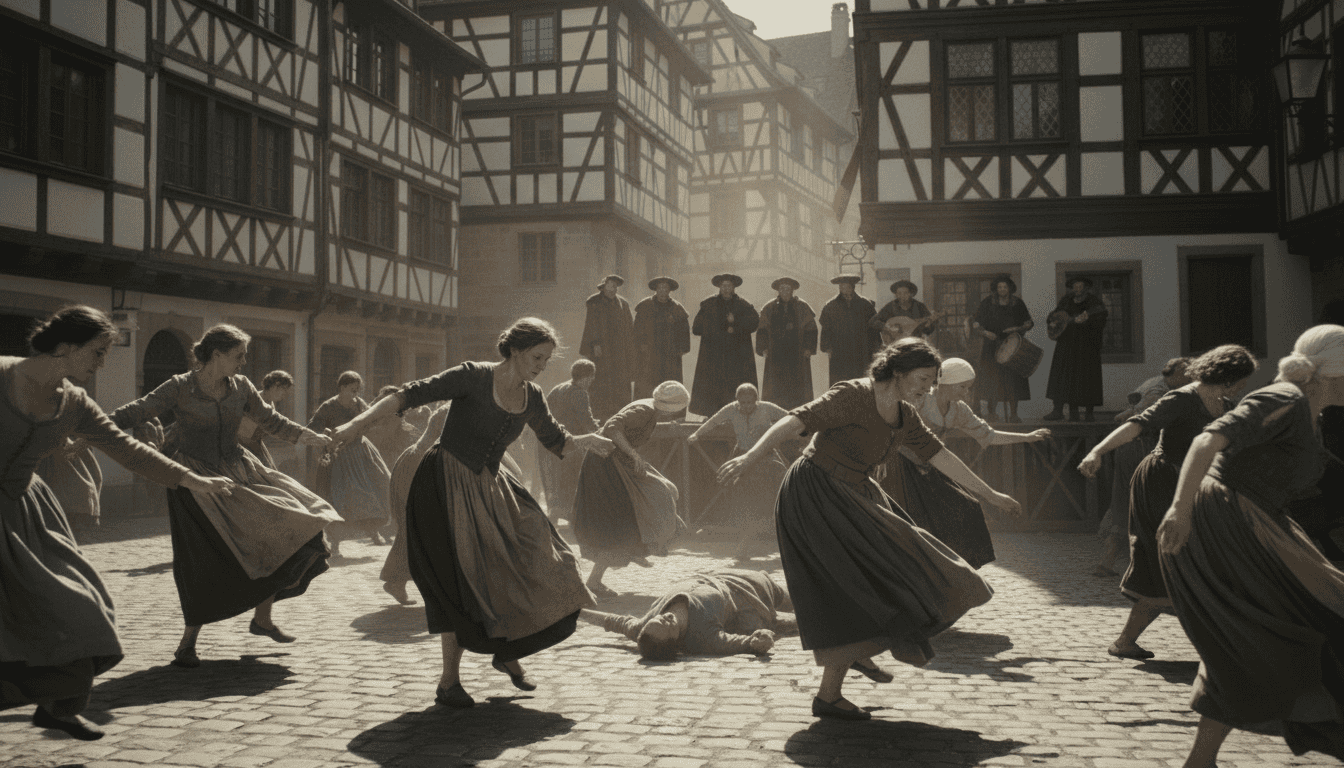
As the phenomenon spread rapidly, Strasbourg’s bewildered authorities consulted local physicians. Their diagnosis, based on the prevailing humoral theory, concluded the dancers suffered from “hot blood,” a natural disease that needed to be expelled. They prescribed a cure that seems baffling today: more dancing. Civic leaders believed continuous dancing would allow the afflicted to sweat the fever out of their systems. This fateful decision to treat the hysteria by encouraging it only escalated the crisis. The logic was that if the body was overheating from within, the only way to cool it was to let the internal fire burn itself out through movement.
To implement this unusual medical advice, the city council took extraordinary measures. They cleared open spaces, designated guildhalls for the dancers, and constructed a large wooden stage in the grain market. To keep the afflicted moving, authorities hired professional musicians to provide a constant soundtrack of pipes and drums. Healthy dancers were also paid to join the throng, supposedly to guide the exhausted and maintain the rhythm. This organized effort transformed a spontaneous outbreak into a bizarre, state-sponsored dance marathon. The sight of paid “strong men” holding up the sagging bodies of the afflicted so they could continue to move was a haunting testament to the desperation of the city leadership.
The authorities’ prescription, though well-intentioned, had catastrophic consequences. Instead of healing the afflicted, the public spectacle and incessant music seemed to draw more people into the hypnotic frenzy, swelling the number of dancers into the hundreds. The relentless physical exertion in the summer heat led to exhaustion, dehydration, heart attacks, and strokes. The “cure” proved more fatal than the affliction, as the city’s intervention only fueled the deadly plague. By providing a stage and music, the city essentially created a feedback loop that reinforced the psychological compulsion of the participants.
Mass Hysteria or Poisoned Rye Bread
The most widely accepted explanation for the Dancing Plague is mass psychogenic illness, a condition where shared stress manifests as dramatic physical symptoms. In 1518, Strasbourg was a city under immense pressure, suffering from severe famine, disease, and deep-seated poverty. These conditions created widespread anxiety, which historians believe was ignited by superstitious beliefs, including the fear of saints like St. Vitus who were thought to inflict a “dancing curse.” Frau Troffea’s frantic dance may have acted as a trigger, offering an outlet for the population’s unbearable psychological distress. The city officials’ misguided response of encouraging more dancing legitimized the behavior and likely fueled the psychological contagion. This form of mania is often seen in high stress environments where individuals feel they have lost control over their survival.
Another prominent theory suggests a physical cause: ergotism, a poisoning from consuming rye bread contaminated with the Claviceps purpurea fungus. This fungus produces psychoactive alkaloids that can induce muscle spasms, convulsions, and vivid hallucinations, symptoms that could be mistaken for frenzied dancing. This explanation, however, is challenged by historians and medical experts. Ergotism typically causes gangrenous symptoms and restricts blood flow, which would make sustained, coordinated dancing for days physically improbable. Additionally, historical accounts of the plague do not mention other classic signs of ergot poisoning, so most scholars find the social and psychological explanation more convincing. The psychology of the era, deeply rooted in the supernatural, meant that any physical twitching would be interpreted through the lens of divine punishment or demonic possession.
The Role of Superstition and Saint Vitus
To understand the mindset of the people in 1518, one must look at the religious psychology of the 16th century. Many citizens believed that the dancing was a curse sent by Saint Vitus, a Christian martyr who was said to possess the power to cast down a dancing plague upon those who angered him. This cultural belief created a powerful “nocebo” effect. When people saw Frau Troffea dancing, they did not see a sick woman; they saw a divine judgment in action. This fear likely triggered a dissociative state in others who felt they were also being judged, causing the mania to spread like wildfire through the pious and terrified population.
The city eventually realized that their musical cure was failing and pivoted to a religious solution. The dancers were taken to a shrine dedicated to Saint Vitus in the hills outside the city. There, their bloodied feet were placed into red shoes and they were led around an altar. Surprisingly, this change in approach seemed to work for many. By addressing the psychological and spiritual roots of the fear, rather than just the physical symptoms, the authorities finally managed to break the spell of the dancing plague. This shift in treatment highlights how the collective belief system of a society can dictate both the spread and the cure of a psychogenic outbreak.
Fueling the Frenzy: Strasbourg’s Fatal Cure
The 1518 episode began with Frau Troffea and quickly became a city-wide phenomenon, with up to 400 people dancing uncontrollably through the streets of Strasbourg. Local authorities, mistakenly believing the cure was more dancing, worsened the situation by building stages and hiring musicians to encourage the afflicted. This bizarre official response only fueled the frenzy, causing many to dance for days without rest. The plague eventually subsided as mysteriously as it began, but not before some participants reportedly died from exhaustion, heart attacks, or strokes. The peak of the crisis saw dozens of deaths per day, making it one of the most lethal instances of mass hysteria recorded in Western history.
Centuries later, the Dancing Plague of Strasbourg remains one of history’s most compelling examples of mass psychogenic illness. While supernatural causes were blamed at the time, modern historians suggest a combination of famine, disease, and extreme psychological stress was the likely trigger. The collective anxiety of the populace probably manifested physically, creating a contagious psychosomatic condition on an incredible scale. This baffling chapter in history highlights the profound connection between the mind and body, and how social pressures can manifest in extreme and unpredictable ways. It serves as a reminder that the human brain, when pushed to the brink by environmental and social trauma, can produce behaviors that defy logic and survival instincts alike.
Frequently Asked Questions
1. What was the dancing plague of 1518?
The dancing plague of 1518 was a historical event where hundreds of people in Strasbourg, Alsace, began dancing uncontrollably for weeks. This was not a celebration but a compulsive affliction that led to exhaustion, injury, and in some cases, death.
2. Who was the first person to start dancing?
The phenomenon began in mid-July 1518 with a Strasbourg resident known as Frau Troffea. She stepped outside her home and began to dance with an unstoppable energy, continuing for nearly a week before others joined her.
3. How many people were affected by the dancing plague?
While it began with one woman, the affliction spread rapidly. Within a week, over thirty people were dancing, and some historical accounts estimate that as many as 400 people were eventually affected.
4. How did the city’s leaders respond to the outbreak?
Believing the cause was “hot blood,” civic leaders and physicians prescribed a peculiar remedy: more dancing. They cleared a guild hall, erected a wooden stage, and hired musicians to keep the afflicted moving, thinking this would cure them.
5. Was the official remedy for the dancing plague effective?
No, the remedy of encouraging more dancing was a disastrous failure. The approach worsened the problem, turning the outbreak into a public spectacle that led to more exhaustion and fatalities.
6. What were the consequences for the dancers?
The constant, frantic dancing had severe physical consequences. Dancers suffered from extreme exhaustion and injuries from the nonstop movement. For some, the relentless compulsion ended in death.
7. Are there other examples of the government studying unusual human behavior?
Yes, throughout history, various agencies have investigated unexplained phenomena, such as France’s deadliest historical mystery involving a predatory beast, or when the government began uncovering Project Stargate results to determine if human consciousness could be harnessed for intelligence gathering. In other regions, dark events like Germany’s unsolved massacre at Hinterkaifeck continue to haunt the public imagination.