
The Silent Secret Of Kenya Lost Gedi Ruins
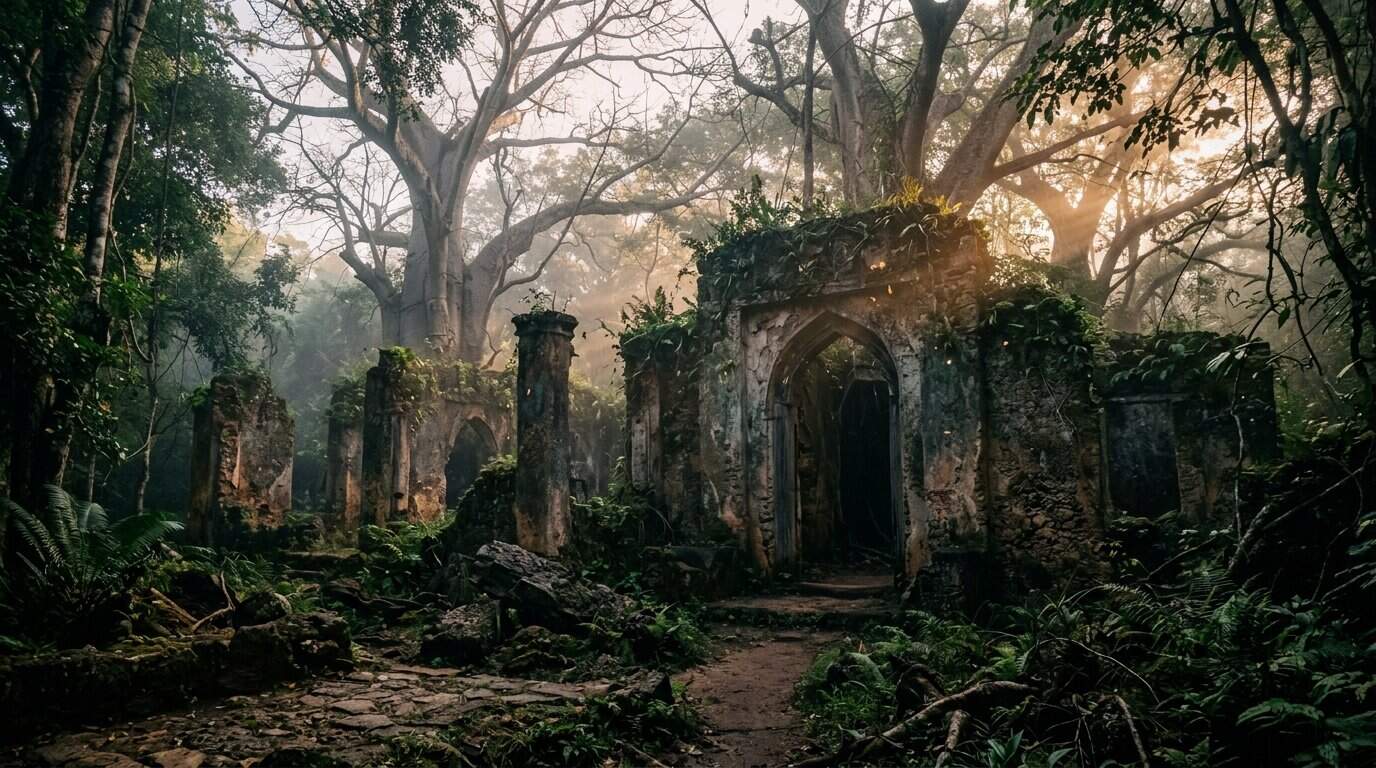
Deep within the lush tropical forests of Kenya’s coast lies a silent city of stone that defies easy explanation. For centuries, the gedi ruins mystery has captivated travelers and historians alike, as they wander through the remains of a sophisticated Swahili metropolis that once boasted flushing toilets and grand coral palaces. Despite its advanced infrastructure and thriving trade, the entire population vanished without a trace in the 17th century, leaving behind a “Ghost City” reclaimed by ancient baobab trees.
Local legends whisper of spectral guardians and unseen spirits that protect the site, but the physical evidence is even more haunting. Archaeologists have found no signs of war, plague, or natural disaster that would explain why thousands of people suddenly walked away from their comfortable homes. This abandoned marvel sits as a silent puzzle in Kilifi County, waiting for someone to finally piece together the clues of its abrupt and silent end.
Key Takeaways
- The Gedi Ruins reveal a highly advanced medieval Swahili civilization that featured sophisticated urban planning, coral-brick architecture, and indoor plumbing systems including flushing toilets.
- Archaeological evidence of Ming Dynasty porcelain, Venetian glass, and Indian beads proves Gedi was a major global trade hub connecting East Africa to Asia and Europe.
- The city’s sudden abandonment in the 17th century remains an unsolved mystery, as there are no physical signs of war, plague, or natural disaster to explain the population’s departure.
- Potential causes for the exodus include environmental shifts like a falling water table or the threat of outside raids, yet the city remains strangely absent from the written historical records of the era.
Sophisticated Engineering Deep Within The Jungle
Deep within the lush coastal forests of Kenya, the ruins of Gedi reveal a level of engineering that challenges our understanding of medieval African societies. Unlike many neighboring settlements of the time, Gedi was constructed using durable coral-brick architecture and lime mortar, allowing its grand palaces and mosques to survive the test of time. Archaeologists have uncovered a city that was far ahead of its era, featuring a complex layout that suggests sophisticated urban planning. The Great Mosque and the Sultan’s Palace stand as silent witnesses to a culture that valued both architectural beauty and structural integrity. These ruins prove that a highly organized and wealthy community thrived here long before the arrival of European explorers.
Perhaps the most startling discovery within the city is the presence of an advanced indoor plumbing system. Residents of Gedi enjoyed the luxury of sunken stone bathtubs and sophisticated drainage systems that channeled waste away from living quarters. Deep, hand-carved wells provided a steady supply of fresh water, which was then distributed through a network of pipes and basins. This level of hygiene and convenience was rare in many parts of the world during the 15th century. Such intricate infrastructure implies that the people of Gedi possessed specialized knowledge in hydraulics and civil engineering.
The sheer scale of these amenities suggests that Gedi was not just a small trading post, but a bustling metropolis designed for comfort and efficiency. Every stone street and coral wall points to a society that had mastered its environment and established a high standard of living. Much like the discovery of the zero point of history, these ruins challenge our assumptions about the technological capabilities of ancient civilizations. Despite this clear evidence of success, no written records from the city have ever been found to explain how they developed such technology. This leaves us to wonder why did ancient people hide their history or build such modern cities in the heart of the forest?
Global Treasures Found In A Silent City
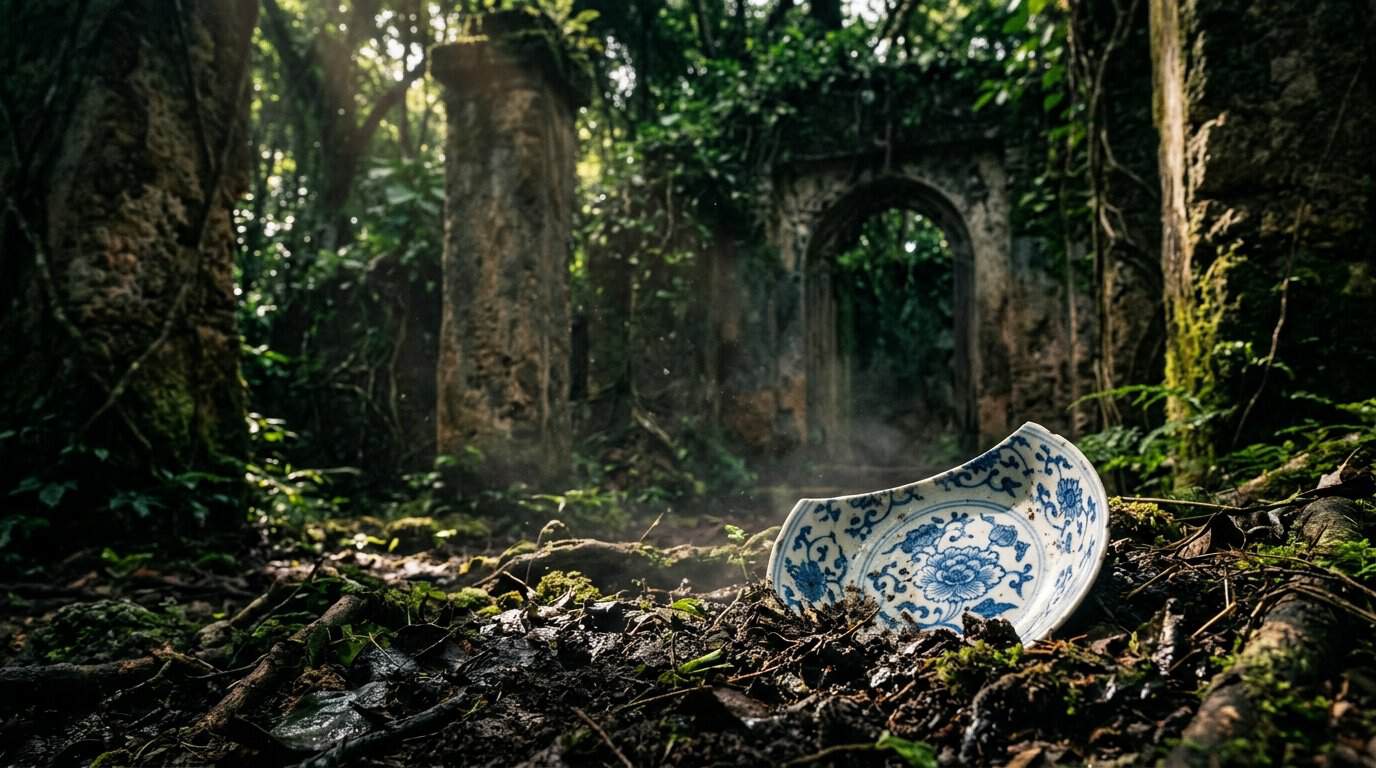
Deep within the lush Arabuko Sokoke Forest, the coral-brick walls of Gedi stand as a silent testament to a civilization that once enjoyed immense global prestige. While the city remains strangely absent from historical Portuguese maps and local written records, the artifacts unearthed by archaeologists tell a story of incredible wealth and far-reaching connections. Excavations have revealed delicate Ming Dynasty porcelain from China and colorful beads from India, proving that this ghost city was a vital player in the global trade hub connecting East Africa to the Indian Ocean trade network. These treasures suggest that the residents of Gedi lived a life of luxury, surrounded by beautiful items brought from thousands of miles away.
The presence of sophisticated Venetian glass and Spanish scissors further highlights the cosmopolitan nature of this mysterious African metropolis. According to researchers at the National Museums of Kenya, the city featured advanced indoor plumbing and grand mosques that rivaled the great trading hubs of the era. It is fascinating to consider how such a prosperous community, capable of importing fine goods from across the globe, could vanish so completely without leaving a written trace of its downfall. This contrast between the physical evidence of their success and the total silence of the historical record creates one of the most compelling puzzles in African archaeology.
Walking through the ruins of the Great Palace, one can almost feel the echoes of a bustling marketplace where gold and ivory were likely traded for these international luxuries. The variety of foreign goods suggests that Gedi was not just a small outpost, but a significant hub of cultural exchange during the 15th and 16th centuries. Even though the people left no diaries or ledgers to explain their sudden departure, the broken pottery and glass they left behind serve as a glittering map of their world. How do you think such a powerful and well-connected city could be completely forgotten by the rest of the world for hundreds of years?
The Sudden Departure From The Coral Walls
The sudden disappearance of Gedi’s residents remains one of the most puzzling chapters in African archaeology. By the mid-17th century, this once bustling city of coral-brick palaces and advanced mosques was completely silent, left to be reclaimed by the surrounding jungle. Historians have long searched for a singular event that could explain why an entire population would walk away from such sophisticated infrastructure. Some researchers suggest that a falling water table may have dried up the city’s deep wells, making life in the coastal heat impossible to sustain. Without a reliable source of fresh water, even the most prosperous trade hub would crumble in a matter of weeks.
Beyond environmental factors, the threat of outside conflict looms large in the theories surrounding Gedi’s downfall. The Wazimba, a group known for their fierce raids along the East African coast, are often cited as a possible reason for the city’s hasty evacuation. Curiously, while the Portuguese were active in nearby Malindi during this period, their extensive records contain no mention of Gedi at all. This silence in the historical record suggests the city might have been a well-guarded secret or had already begun its decline before the Europeans arrived. The lack of traditional battle scars at the site adds to the mystery, implying the residents may have fled in anticipation of a threat rather than during a siege.
While scientific analysis points toward drought or shifting trade routes, the local oral traditions offer a more supernatural perspective. Many people in the region believe the ruins are protected by the Old Ones, spirits who ensure the city remains undisturbed by the living. This blend of environmental data and local lore creates a fascinating narrative of a civilization that simply vanished into the shadows of history. The mystery of Gedi invites us to wonder what could truly frighten a wealthy, walled community into abandoning their homes forever. Do you think a natural disaster forced their hand, or is there a deeper reason for their silence that history has yet to uncover?
Final section: Conclusion
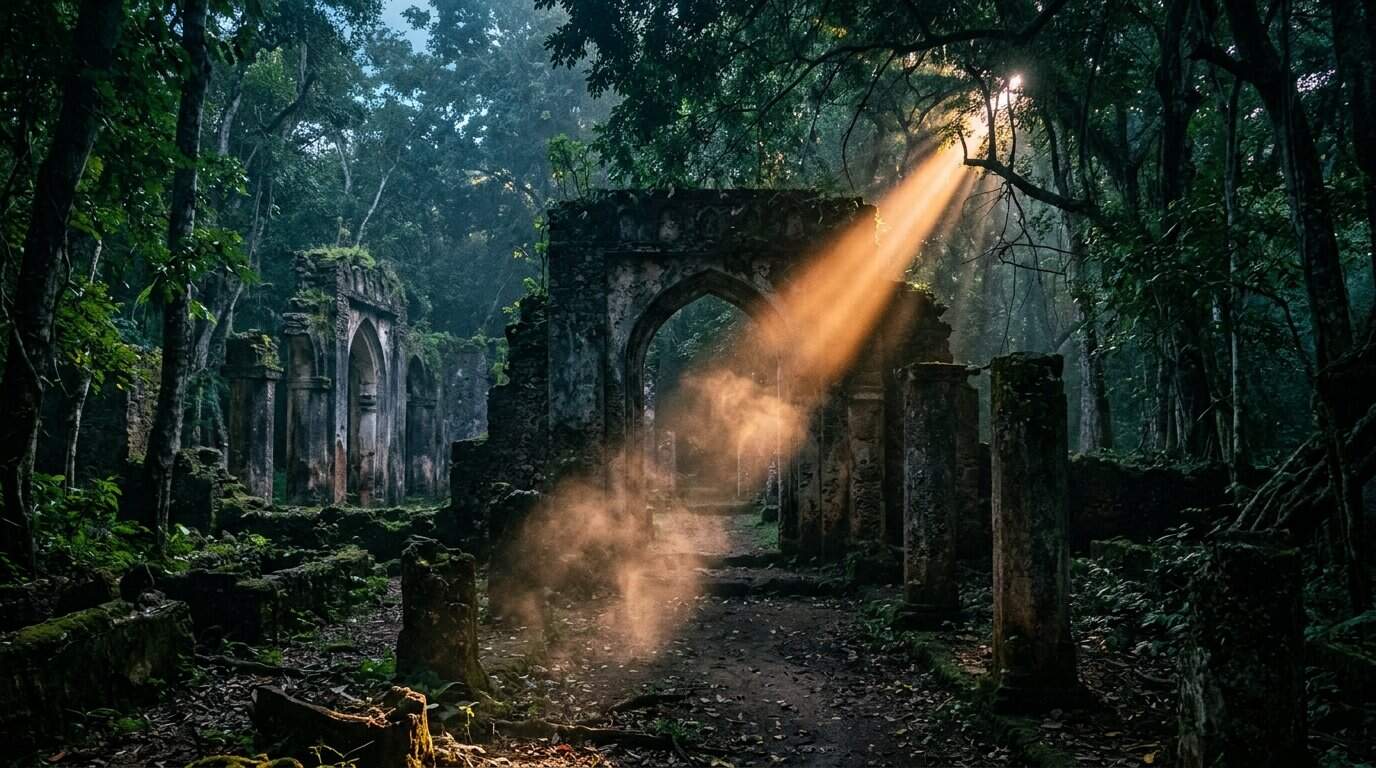
The Gedi Ruins stand as a silent testament to a sophisticated Swahili civilization that once thrived along the Kenyan coast. Despite the advanced infrastructure and the coral-brick palaces that remain, the absence of written records detailing the city’s collapse leaves a haunting void in African archaeology. The forest has reclaimed much of the site, wrapping ancient walls in vines and shadows, yet the sense of a bustling community still lingers in the air. Visitors often feel the weight of this ghost city as they walk through sun-drenched courtyards that were once filled with life. This enduring mystery ensures that Gedi remains one of the most intriguing historical puzzles in the world.
Scholars and historians continue to debate whether a sudden plague, an invading force, or a dwindling water supply forced the inhabitants to flee their homes. The lack of traditional battle scars or signs of a slow decline makes the abrupt departure in the 17th century even more difficult to explain. It is rare to find a city of 2,500 people that simply vanishes from the historical narrative without leaving a single trail of evidence behind. This gap between scientific discovery and the unexplained is where the legend of Gedi truly lives. The site invites everyone to look beyond the stones and imagine the final days of a kingdom that refused to tell its secrets.
Why do you believe such a prosperous and modern city was left to be swallowed by the jungle? Much like the Nan Madol mystery, some people suggest that spiritual omens or local legends played a role in the exodus, while others look for more practical environmental shifts. The beauty of Gedi lies in the fact that every visitor can develop their own theory based on the silent clues left in the coral masonry. We would love to hear your thoughts on what could cause an entire population to walk away from their paradise forever. Please share your perspective in the comments and join the conversation about this remarkable lost civilization.
The Unsolved Exodus of a Ghost City
The Gedi Ruins stand as a silent testament to a sophisticated African civilization that vanished without leaving a single written record of its departure. This once-thriving Swahili city featured advanced coral-brick architecture, indoor plumbing, and a complex layout that housed thousands of people. Despite its clear prosperity and global trade connections, the entire population walked away from their stone houses and mosques by the mid-17th century. The lack of historical documentation regarding this exodus transforms the site into one of the most compelling archaeological puzzles in East Africa.
Researchers have spent decades examining the remains to understand why such a successful community would suddenly disappear. While some experts suggest that a lack of water or the threat of invading groups played a role, the physical evidence at the site remains delightfully ambiguous. The forest has reclaimed much of the stone city, adding an air of intelligent intrigue to the moss-covered walls and empty tombs. This blending of scientific inquiry and historical silence invites everyone to wonder what life was truly like before the city fell quiet.
Exploring the ruins allows for a rare glimpse into a lost world where the past feels remarkably present. The gedi ruins mystery serves as a reminder that even the most advanced societies can leave behind more questions than answers. Whether the abandonment was a slow decline or a sudden flight, the site continues to challenge our understanding of African archaeology. Much like the secrets of the coral reefs found in other parts of the world, what do you think finally drove the people of Gedi to leave their beautiful coral city behind for the shadows of history?
Frequently Asked Questions
1. What exactly makes the Gedi Ruins so mysterious?
The mystery lies in the fact that a highly advanced city with coral palaces and indoor plumbing was suddenly abandoned in the 17th century. There are no signs of war, disease, or natural disasters, leaving experts to wonder why thousands of people simply walked away. It remains a silent ghost city hidden deep within the Kenyan forest.
2. How advanced was the technology in this ancient city?
Residents enjoyed a level of comfort that was rare for the medieval period, including sunken stone bathtubs and sophisticated flushing toilets. The city featured complex urban planning with coral brick architecture and a functional drainage system. These engineering marvels suggest a wealthy and organized society that was far ahead of its time.
3. Where are the Gedi Ruins located?
This archaeological site is tucked away in the lush tropical forests of Kilifi County along the coast of Kenya. It sits as a hidden gem near the town of Malindi, where ancient baobab trees have grown over the stone structures. The remote jungle location adds to the haunting and peaceful atmosphere of the ruins.
4. Are there any local legends about the site?
Local traditions whisper about the Old Ones, which are spectral guardians said to protect the city from intruders. Many people believe the ruins are haunted by spirits that have kept the site preserved for centuries. These stories add a layer of spiritual intrigue to the physical remains of the mosques and palaces.
5. What have archaeologists found at the site?
Excavations led by professional archaeological teams uncovered artifacts from all over the world, including Ming Dynasty china and Venetian glass. These items prove that Gedi was a major hub in a global trade network that connected Africa to Asia and Europe. Despite these riches, no evidence has been found to explain the community’s sudden disappearance.
6. Can visitors explore the ruins today?
The site is open to the public and offers a chance to walk through the remains of the Great Mosque and the Sultan’s Palace. Visitors can see the incredible plumbing systems and grand doorways that still stand today. It is a unique place where history and nature blend together as the forest slowly reclaims the stone walls.