Unlocking the Kryptos Sculpture Code: The CIA’s Unsolved Mystery
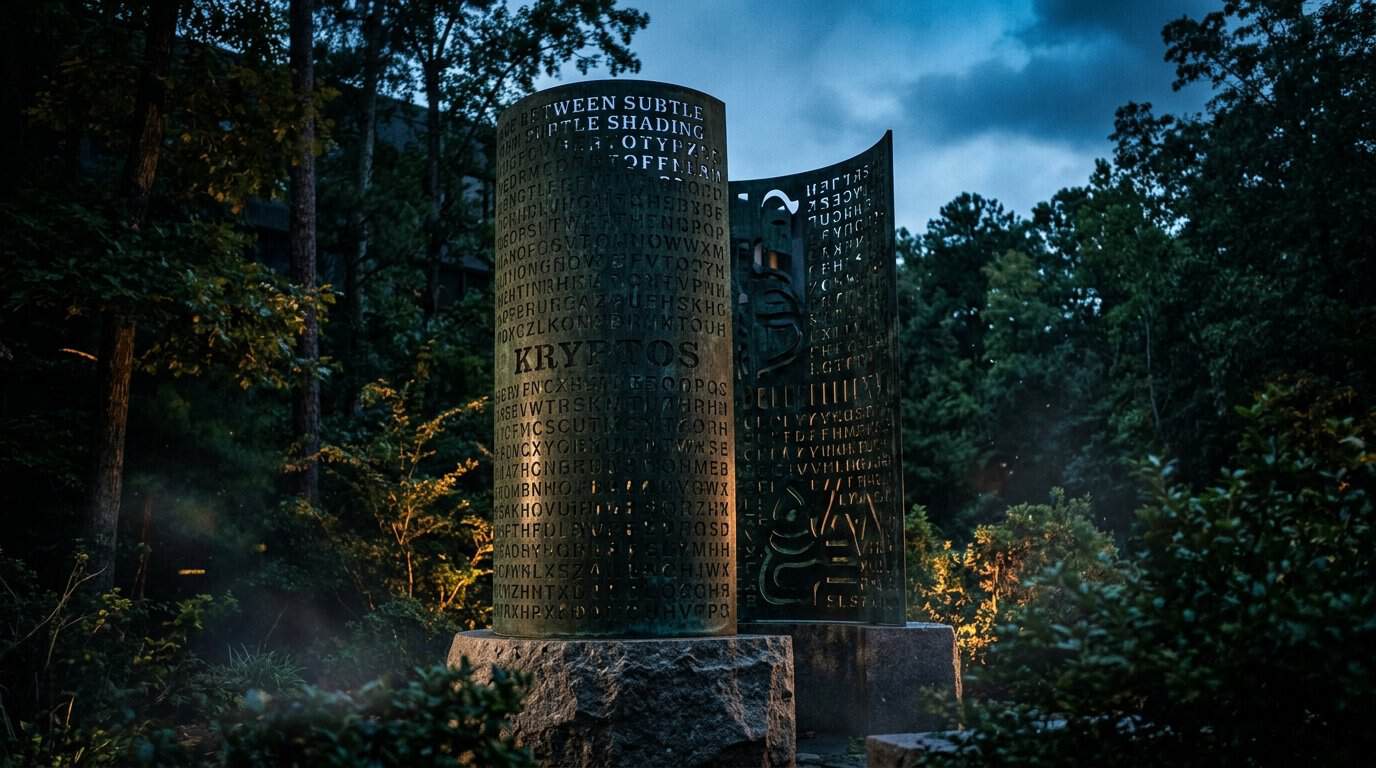
Hidden in plain sight inside the courtyard of the CIA headquarters in Langley, Virginia, stands a mysterious twelve-foot copper scroll holding some of the world’s most guarded secrets. Dedicated in 1990 by artist Jim Sanborn and a master codebreaker, this famous installation features the perplexing Kryptos code carved directly into its metallic surface. Nearly two thousand letters spell out a complex sequence divided into four distinct encrypted passages. While brilliant minds managed to crack the first three sections within a decade, the final section triggered a decades-long chase that stumped top intelligence agencies.
The persistent mystery behind this final message has fueled endless fascination, giving rise to intriguing theories about secret agency operations and hidden history. Amateur sleuths and professional cryptanalysts alike continue to analyze every detail, searching for subtle clues hidden in the surrounding granite and petrified wood. There is an undeniable thrill in knowing that an unsolved truth is standing right out in the open, waiting for someone to finally see the pattern.
Key Takeaways
- Created in 1990 by artist Jim Sanborn and CIA cryptographer Edward Scheidt, the Kryptos sculpture at CIA headquarters features a 12-foot copper scroll containing nearly 2,000 hand-carved letters across four distinct encrypted passages.
- Cryptanalysts successfully solved the first three passages (K1–K3) within a decade, unmasking poetic descriptions, geographic coordinates near the CIA, and excerpts from the opening of King Tut’s tomb.
- The final 97-character section, K4, has stumped professional intelligence agencies and modern supercomputers for over 35 years due to complex shifts in encryption techniques and distorted letter frequencies.
- Despite official clues confirming words like ‘BERLIN,’ ‘CLOCK,’ and ‘NORTHEAST,’ K4 remains one of the world’s most famous unsolved ciphers, driving an ongoing global hunt involving both human intuition and artificial intelligence.
The Birth of Kryptos at CIA Headquarters
In 1990, the Central Intelligence Agency dedicated a striking sculpture in the courtyard of its headquarters in Langley, Virginia. Artist Jim Sanborn wanted to build a piece that reflected the hidden world of secret intelligence and codebreaking. To turn his vision into a true puzzle, Sanborn partnered with Edward Scheidt, a retired cryptographic officer from the CIA. Scheidt taught the artist various classical cipher techniques, helping him mask secret messages directly within the artwork. Together, they forged a massive S-shaped copper scroll that stands twelve feet high, forever blending fine art with high-stakes espionage.
- A massive S-shaped copper screen containing nearly two thousand hand-carved letters.
- A surrounding backdrop of petrified wood, red and green granite, and quartz.
- Four distinct encrypted passages, designated K1 through K4, waiting to be deciphered.
The sculpture, officially named Kryptos, contains nearly two thousand encrypted characters cut directly into the metal plate. Sanborn and Scheidt intentionally structured the puzzle into four separate passages, known to enthusiasts as K1, K2, K3, and K4. Codebreakers quickly scrambled to crack the secret messages using modern computers and relentless dedication. While expert cryptanalysts eventually solved the first three sections within a decade, the final passage remained completely elusive. This mysterious fourth section transformed a government art installation into one of the world’s most captivating modern ciphers.
For over thirty-five years, Kryptos has captivated both professional intelligence officers and amateur sleuths around the globe. Scheidt ensured that the encryption methods involved layers of matrix grids and intentional typos to throw off even the smartest analysts. Sanborn has teased tiny clues over the years, yet the ultimate mystery continues to resist every attempt at a full solution. The sculpture stands as a living bridge between real-world intelligence work and the human obsession with solving mysterious puzzles. Its enduring silence invites every curious mind to look closer and wonder what secret still waits hidden in plain sight.
Deciphering the First Three Passages of Kryptos
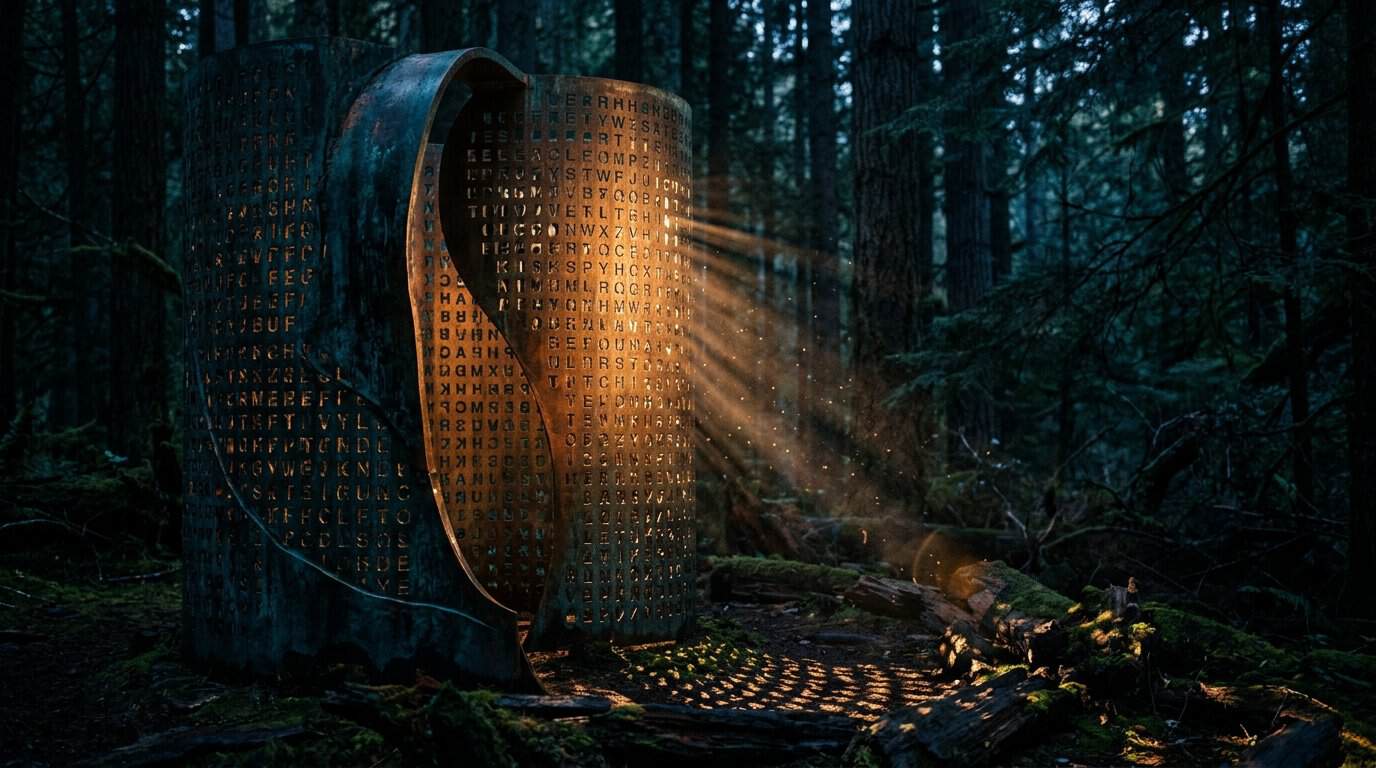
For nearly a decade after the sculpture was unveiled in 1990, the hidden messages embedded in the copper scroll remained completely silent. The silence was finally broken in 1998 when CIA analyst David Stein spent nearly four hundred hours during his lunch breaks meticulously cracking the code using only pencil and paper. Shortly after Stein shared his discoveries internally, California computer scientist James Gillogly announced that he had also solved the first three passages using an advanced computer algorithm. Both men independently proved that artist Jim Sanborn and retired CIA cryptographic expert Edward Scheidt had crafted an intricate, multi-layered puzzle. Their success ignited a global obsession among amateur sleuths and professional cryptanalysts alike.
When the codebreakers translated the intricate matrix of letters, they uncovered a fascinating tapestry of poetic descriptions, covert intelligence, and historical wonder. The decoded texts did not contain standard military directives, but rather a carefully chosen blend of mystery and art. Each passage unveiled a unique narrative thread that left researchers marveling at the creator’s vision. To crack these sections, the analysts had to decipher altered Vigenère ciphers and complex transposition grids. These groundbreaking solutions revealed three distinct messages that transformed the copper sculpture into an active mystery:
- K1: A deeply poetic line penned by Sanborn about subtle shading and the absence of light.
- K2: Covert clues mentioning invisible subterranean details and exact coordinates near the CIA building.
- K3: A paraphrased excerpt from archaeologist Howard Carter’s diary describing the opening of King Tut’s tomb.
While unmasking K1 through K3 brought immense satisfaction to the intelligence community, it ultimately raised far more questions than it answered. The subtle misspellings and deliberate clues scattered throughout the first three texts suggested that Sanborn was laying down a trail for an even grander reveal. Researchers quickly realized that the solutions to these initial sections were likely prerequisite keys needed to solve the final mystery. Even today, the legendary fourth passage remains stubbornly unsolved, inviting a vibrant community of codebreakers to continuously debate its hidden meaning.
The Elusive Mystery of the K4 Cipher
For thirty-five years, the final ninety-seven characters etched into the copper scroll at CIA headquarters have defied the brightest minds in cryptography. Sculptor Jim Sanborn, working alongside former CIA cryptographer Edward Scheidt, designed the four-part puzzle to test both human ingenuity and advanced computing. While amateur analysts and agency professionals solved the first three sections by 1999, the passage known as K4 refuses to yield its secret message. The complexity stems from a clever shift in encryption techniques, as Sanborn altered his mathematical masking methods specifically for this final segment. Today, this short string of letters stands as one of the most famous unsolved ciphers in modern history, drawing thousands of puzzle enthusiasts into a global digital hunt.
Over the years, Sanborn has periodically released official clues to rekindle interest and steer researchers in the right direction, including:
- Characters 64 through 74 translate directly to the word NORTHEAST.
- Characters 70 through 74 spell out BERLIN, hinting at Cold War intrigue.
- Characters 22 through 33 reveal the word CLOCK, opening new avenues for time-based theories.
- The word EAST appears immediately following NORTHEAST in the decoded sequence.
Despite these tantalizing crumbs of information, cryptanalysts quickly realized that knowing a few scattered words does not automatically unravel the underlying system. Traditional codebreaking methods rely heavily on letter frequencies, yet Sanborn intentionally distorted standard linguistic patterns to thwart modern computer algorithms. Prominent codebreakers, including former NSA analysts who tackled the initial sections, believe that K4 utilizes a complex matrix or an additional layer of transposition that hides the remaining text. Every solved word seems to raise more questions about the context of the message, teasing a narrative connected to secret intelligence operations and global historical events. The sheer mathematical resilience of ninety-seven simple letters highlights just how clever human craftsmanship can be when pitted against modern technology.
The enduring intrigue of the sculpture lies in its blend of fine art, high-level espionage, and accessibility to everyday problem solvers. With Sanborn now in his late seventies, time is short for the global community to decipher K4 while its creator is still here to confirm the solution. Some theorists suspect the final message contains a physical directive or a secondary riddle hidden elsewhere on the CIA grounds, waiting to be uncovered. The search continues to bridge the gap between real-world intelligence agencies and internet sleuths united by a shared passion for deep mysteries. Do you believe K4 will finally be cracked using advanced artificial intelligence, or is human intuition the only key that can untangle Sanborn’s final code?
Unraveling the CIA’s Most Enduring Cryptic Masterpiece
Standing silently in the heart of the Central Intelligence Agency, the Kryptos sculpture remains one of the most intriguing bridges between real-world espionage and puzzle solving. American artist Jim Sanborn and retired CIA cryptographer Edward Scheidt crafted a masterpiece that continues to challenge the brightest minds across the globe. By embedding four distinct ciphers into a massive copper scroll, they created a unique intersection where high-level intelligence tradecraft meets public curiosity. Even after more than three decades, the artwork proves that some of the greatest secrets do not stay hidden in classified files, but sit out in the open waiting for the right mind to discover them. The lingering mystery of this famous installation reminds everyone that human ingenuity can still outsmart even the most advanced systems.
Cracking the final ninety-seven characters known as K4 will likely require a blend of modern artificial intelligence and old-fashioned lateral thinking. While supercomputers can process millions of character combinations in seconds, the ultimate key might rest in subtle artistic details, physical clues on the agency grounds, or clever wordplay. Many dedicated researchers believe that K4 relies on a complex layering of transposition and substitution techniques that deliberately trick automated algorithms. Others suspect that the remaining ciphertext connects directly to the revealed messages of the first three sections in ways cryptanalysts have yet to fully realize. As machine learning algorithms improve alongside human intuition, the final breakthrough could happen at any moment.
The enduring legacy of Kryptos lies in its ability to bring together a global community of amateur sleuths, seasoned mathematicians, and curious dreamers. Each official clue released over the years has reignited excitement, proving that the drive to solve the unsolvable is a fundamental human trait. Whether the final code falls to an advanced computer program or an observant individual noticing a hidden pattern, the journey toward the solution remains just as fascinating as the destination itself. The puzzle continues to spark endless debate about what secrets are waiting beneath the surface of those remaining letters. What is your personal theory on how K4 will finally be solved, and do you think artificial intelligence or human intuition will cross the finish line first?
Frequently Asked Questions
1. What is the Kryptos sculpture code?
Kryptos is a famous twelve-foot copper sculpture created by artist Jim Sanborn and codebreaker Edward Scheidt in 1990. Located at the CIA headquarters in Langley, Virginia, its surface features nearly two thousand hand-carved letters hiding four distinct encrypted messages. Three of these messages have been solved, but the final section continues to mystify cryptanalysts around the world.
2. Who created the Kryptos sculpture and its hidden ciphers?
American artist Jim Sanborn designed the physical artwork, bringing a vision of secret intelligence to life. To craft the actual ciphers, Sanborn collaborated with Edward Scheidt, a retired cryptographic officer from the CIA. Scheidt taught Sanborn classical encryption techniques, which allowed them to carve deeply hidden messages into the massive copper screen.
3. Where is the Kryptos sculpture located?
The Kryptos sculpture stands in the central courtyard of the CIA headquarters in Langley, Virginia. It is set against a backdrop of natural elements like petrified wood and red granite. Because it rests on secure government grounds, public access is restricted, making the sculpture an even more elusive puzzle.
4. How many sections of the Kryptos code have been solved?
Codebreakers successfully cracked the first three sections of the sculpture within a decade of its dedication. These solved passages revealed poetic text, historical references, and even geographic coordinates. However, the fourth and final section remains completely unsolved despite decades of effort by brilliant minds.
5. Why is the fourth section of Kryptos so difficult to crack?
The final section uses advanced, complex cipher techniques taught to the artist by a master CIA cryptographer. At under one hundred characters, the brevity of the remaining text provides fewer mathematical patterns for analysts to study. Clues may also be hidden in the physical landscape surrounding the sculpture, adding layers of artistic mystery to the mathematical puzzle.
6. What techniques were used to encrypt the Kryptos messages?
The sculpture relies on classical cipher methods that mask text through intricate substitution and transposition patterns. Edward Scheidt trained artist Jim Sanborn on these traditional cryptographic systems to ensure the messages remained secure. The result is a layered puzzle carved directly into a massive metallic scroll.
7. Can amateur sleuths try to solve the remaining Kryptos puzzle?
Yes, amateur codebreakers and professional analysts from all over the globe actively study the remaining passage. Anyone with an interest in cryptography can analyze the published letters and test new theories. The secret remains standing out in the open, waiting for a clever mind to spot the final hidden pattern.