Paranormal Investigation Course Reviews: What Learners Should Compare
Paranormal investigation course reviews are most useful when they compare what each course teaches and how it is delivered. UniversalClass lists a self-paced program with an average completion time of 12 hours, while the Rhine Education Center schedules instructor-led classes. Courses also differ in cost, scope, and credentials, so a high rating alone cannot show whether a course suits a learner’s goals.
Some offerings focus on equipment and field investigation; others cover research methods, ethics, and parapsychology. The Rhine Research Center defines parapsychology as the scientific study of interactions between living organisms and their external environment that seem to transcend known physical laws. UniversalClass lists its course at $175, while Paralearning says its qualifications are not academically recognized. Ratings and learner totals are figures displayed by providers or sales platforms, not independent evaluations. A useful comparison starts with the syllabus, schedule, feedback, and what a certificate represents.
Key Takeaways
- Paranormal investigation courses differ in focus and format, so learners should match the syllabus to their goal, such as field methods, parapsychology, or research ethics, and check whether classes are self-paced or scheduled.
- Course prices and feedback figures need context: UniversalClass lists a $175 self-paced course with an average 12-hour completion time, Rick Warner lists a $39.99 course, and Paralearning offers courses from $36, but provider-reported ratings and learner totals are not independent evaluations.
- Credential claims vary by provider: Paralearning says its paranormal qualifications are not academically recognized, and Rhine Education Center says its courses are not accredited or university-associated.
- Learners seeking scheduled study can compare Rhine Education Center’s Fall 2026 courses, including an eight-week Introduction to Parapsychology course from October 7 to December 2 for $220, and should check local rules before offering paid investigative services.
Which Paranormal Investigation Course Fits?
The right paranormal investigation course depends on whether a learner wants a self-paced introduction, practical field-investigation content, or structured study of parapsychology and research ethics. Parapsychology is the scientific study of interactions between living organisms and their external environment that seem to transcend known physical laws.
Options range from self-paced video courses to scheduled, instructor-led classes. Paralearning, for example, offers self-paced courses with lifetime access, while the Rhine Education Center’s listed Fall 2026 classes include an eight-week Introduction to Parapsychology course and a six-week Ethics in Research & Investigations course. A fixed schedule may suit learners who want regular sessions, while a self-paced format gives them more control over when they study.
Course focus matters as much as format. Some listings emphasize equipment and field investigation, while others cover research methods, ethics, and discussion with instructors. Learners interested in investigating locations can check whether lessons address field practice. Those curious about how unusual experiences can be studied may prefer a syllabus that includes research ethics and Institutional Review Boards.
Ratings and learner counts on course-provider pages or sales platforms are listed figures, not independent evaluations. They offer context, but do not show whether the lessons match a learner’s goals. Comparing the syllabus, schedule, and teaching format gives a clearer picture. Learners should also consider what they expect a certificate to represent before enrolling, since course credentials can carry different weight in different settings.
What Do The Course Reviews Show?
The displayed prices, ratings, and learner counts place UniversalClass, Rick Warner’s course, and Paralearning in different comparison brackets. These are provider- or platform-reported details, not independent evaluations.
| Offering | Displayed price and feedback | Format and listed details |
|---|---|---|
| UniversalClass, Paranormal Investigations: Complete Edition | $175; 4.7 stars; 533 students reported as having taken the course | Self-paced; average completion time of 12 hours; 19 lessons; 9 exams and assignments; 1.2 CEUs |
| Rick Warner, Paranormal Investigator Certification Course | $39.99; 4.6 stars from more than 35 reviews; 93 students | Course format and workload are not included in the figures shown here |
| Paralearning | $36 for one course; $48 for two; $62 for four; $74 for all seven. Displays 4.6/5 for overall course satisfaction and reports more than 3,500 learners | Self-paced courses with lifetime access |
Price differences may help learners narrow their choices, while ratings and participation figures offer a snapshot of how each listing presents audience response. The figures do not measure the same thing: UniversalClass reports students who took one named course, Rick Warner’s sales page pairs a student count with a review rating, and Paralearning reports learners across its courses alongside overall satisfaction. A larger learner total does not, by itself, show that a course is a better fit. UniversalClass provides the clearest workload outline in this comparison. Its lesson, exam, and assignment counts help learners picture the course structure, while the stated completion time offers a planning reference. Paralearning’s bundle prices let learners compare buying one course with choosing a wider set, and its lifetime-access policy means learners can study at their own pace rather than follow a stated schedule. Rick Warner’s listing has the lowest displayed price among the three offerings, but price alone does not reveal the depth or format of instruction. The certification wording is part of the course title, not a measure of academic recognition. A useful comparison considers the details each listing provides: workload and course structure for UniversalClass, review and student figures for Rick Warner, and course bundles, access terms, and overall satisfaction for Paralearning.
What Will Students Actually Learn?
A paranormal investigation course can teach different skills despite having a similar title. Some listings emphasize equipment and field investigation, while others include research methods, ethics, and discussion with instructors. A syllabus can show whether practical lessons explain how to plan an investigation, use equipment, and record observations, or focus more on evaluating evidence. Learners who want a balance of field skills and research training can look for both. A research-focused course might also address how to design a study and apply ethics guidelines. For example, a listed Ethics in Research & Investigations course covers Institutional Review Boards and research ethics guidelines. The syllabus should also explain how learners interact with instructors. Scheduled discussion, opportunities to ask questions, and feedback on assignments can offer a different experience from watching lessons alone. A course title or certificate label does not show how much instruction, feedback, or research training is included. Assignments matter, too. Learners can check whether exams or written tasks ask them to explain methods, assess observations, or apply ethical principles, rather than simply recall terms. The format can show how a course checks understanding, though the number of assignments alone cannot reveal how detailed the feedback will be. A careful approach encourages investigators to document what happened, when it happened, and how observations were gathered. It also considers ordinary explanations, such as environmental conditions or equipment problems, alongside possibilities that remain unexplained. That balance keeps curiosity alive without treating an unusual impression as proof.
Are Paranormal Course Certificates Recognized?
Paranormal course certificates can represent different things, so learners should check their scope. Paralearning states that paranormal qualifications are not academically recognized. Its certificate of achievement is issued after a learner passes the final assessment with a score of at least 80%. The certificate records achievement within the course. The Rhine Education Center states that its courses are not accredited or associated with a university. It also says they cannot be transferred to other universities without special arrangements. For learners hoping to apply coursework toward a degree, that distinction matters: a certificate alone does not mean a college will accept the course. A certificate may still be useful for personal study, marking progress, or documenting completion. Those goals differ from seeking a qualification recognized by an employer, university, or licensing body. A course title that includes “certification” does not establish professional status or permission to investigate for clients. Before enrolling, learners should check what the certificate confirms, who issues it, whether an assessment is required, and whether a school or employer they have in mind accepts it. They should not assume a paranormal course provides academic credit or professional licensing. Anyone seeking formal recognition should confirm the relevant institution’s requirements before paying for a course.
Does Paranormal Investigation Require A License?
Taking a paranormal investigation course does not, by itself, require a private-investigator license. Rules for offering investigative services depend on where the work takes place.
California offers one jurisdiction-specific example. The California Bureau of Security and Investigative Services says private-investigator license applicants generally must be at least 18, have 6,000 hours of compensated investigative experience or qualifying substitutions, pass a written exam, and undergo a criminal-history review. Those requirements apply to California’s licensing system; they do not establish that paranormal investigators generally need a license.
A course certificate and a state license serve different purposes. A certificate records learning or achievement within a course. California’s private-investigator license is a legal credential governed by state requirements. The word “certification” in a course title is not the same as a state private-investigator license, and a license does not show that someone has completed paranormal training.
The type of work matters. Someone studying paranormal topics for personal interest may face different rules from someone offering investigative services to clients. Before advertising or accepting paid work, learners should check the requirements where they intend to operate, including whether local law treats their planned services as private investigation.
When Does Instructor-Led Study Make Sense?
Scheduled study through the Rhine Education Center may suit learners who want fixed course dates, instructor discussion, or a focused subject rather than an open-ended, self-paced format. A timetable can help build a steady study routine, while discussion gives learners a chance to raise questions as they work through the material. For Fall 2026, the Rhine Education Center listed Introduction to Parapsychology as an eight-week scheduled course running October 7 through December 2, 2026. The price is $220, or $200 for members. Learners interested in research conduct can compare it with the scheduled six-week Ethics in Research & Investigations course, running October 12 through November 16, 2026, for $160, or $140 for members. Its topics include Institutional Review Boards and research ethics guidelines. The choice is not simply between self-paced and scheduled learning. A self-paced option gives learners more control over study time, while scheduled classes set a shared pace and may suit those who value instructor contact and discussion. The subject matters, too: parapsychology and research ethics offer a different focus from courses centered on equipment and field investigation. Learners comparing reviews can check whether the course dates fit their calendar, whether instructor interaction is part of the format, and whether the syllabus matches their interests. Before enrolling, learners can compare four points: Schedule: Do the Fall 2026 dates fit, or is self-paced study a better match? Subject: Is the priority parapsychology, research ethics, or field investigation? Cost: Does the listed price fit the budget, including the member rate where applicable? Credential: Is course completion enough, given that Rhine Education Center courses are not accredited or university-associated?
Choose A Course That Matches Your Goal
A learner drawn to field investigation can make a shortlist by checking whether each syllabus names equipment, preparation, and a method for recording observations. A course title alone does not show whether learners practice those steps or only watch demonstrations. Before paying, learners can ask the provider what assignments involve and whether an instructor comments on submitted work.
Learners more interested in research can compare lesson descriptions for research methods, ethics, and instructor discussion. The Rhine Education Center’s Ethics in Research & Investigations course may suit that interest, while a self-paced course may work better for someone who needs to choose study times freely. Learners should check a fixed schedule against work, family, and other commitments before enrolling.
Learners considering Rick Warner’s Paranormal Investigator Certification Course can ask about its format and workload, since the displayed sales-page details do not describe them. Those considering Paralearning can decide whether one subject is enough or whether a bundle better matches their study plan, then confirm which courses are included.
Before choosing, learners can write down their main goal in one sentence: learning field methods, exploring parapsychology, or studying ethical research. Which goal would shape the next course review they read?
Frequently Asked Questions
1. What equipment should a beginner bring to a paranormal investigation?
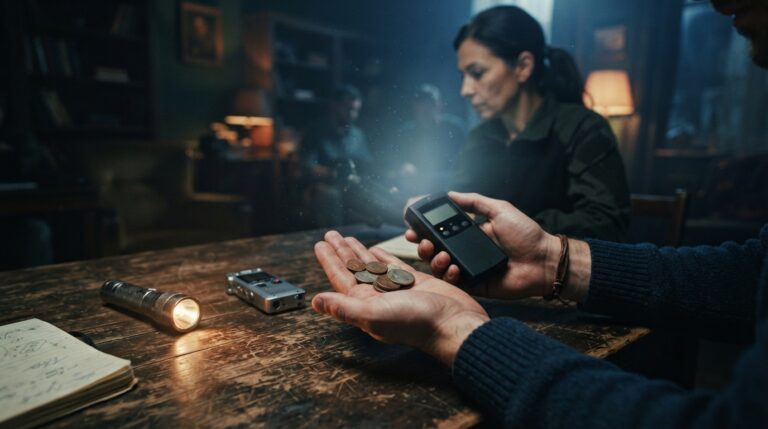
A beginner can start with a notebook and pen, a flashlight, and a phone or camera for recording observations. Before buying specialized equipment, learners can check whether the course syllabus recommends particular tools and learn to note ordinary factors, such as environmental conditions or equipment problems.
2. Can someone learn paranormal investigation without joining a team?
Yes. Someone can study paranormal investigation independently through self-paced courses and careful practice documenting observations. Any field investigation should respect property access, privacy, and personal safety, whether or not the learner belongs to a team.
3. What should a course syllabus say about student privacy during investigations?
A course syllabus should explain how students are expected to protect the privacy of people they encounter and anyone whose home or personal information is recorded. It should clarify consent, what may be photographed or shared, and how notes, recordings, and identifying details are handled.