Ball Lightning Eyewitness Accounts And The Search For Evidence
A glowing sphere slips across a storm-darkened room, drifts through a window, or vanishes without a sound. Ball lightning eyewitness accounts describe scenes like these across centuries, often with strikingly similar details: a bright, floating orb linked to thunderstorms and charged air. Some witnesses report objects that last only seconds, while others describe lights moving slowly through homes, fields, or aircraft cabins.
The stories are compelling, but they are not easy to explain. Scientists have recorded very few convincing events, leaving open the possibility that some reports describe a real atmospheric phenomenon, while others reflect misidentifications or unusual electrical effects. Between careful evidence and unforgettable testimony, ball lightning remains one of nature’s most intriguing mysteries.
Key Takeaways
- Ball lightning is typically described as a glowing, roughly spherical object associated with thunderstorms, often moving slowly, lasting seconds, and disappearing suddenly. Similar descriptions have appeared across centuries, although shapes, colors, sounds, and behavior vary widely.
- Eyewitness testimony suggests that some encounters may involve a real atmospheric or electrical phenomenon, but many reports could reflect misidentified lights, reflections, electrical discharges, burning debris, or sensor artifacts.
- Scientific evidence remains extremely limited. Rare cases with video, spectral data, weather records, or multiple independent observers are the most valuable, yet no accepted theory explains all reported features.
- Proposed explanations include unusual electrical discharges, vaporized soil and particles, plasma, trapped microwave energy, and post-lightning combustion. Careful documentation of timing, weather, movement, duration, and physical traces is essential for testing these possibilities.
Introduction To Ball Lightning Accounts
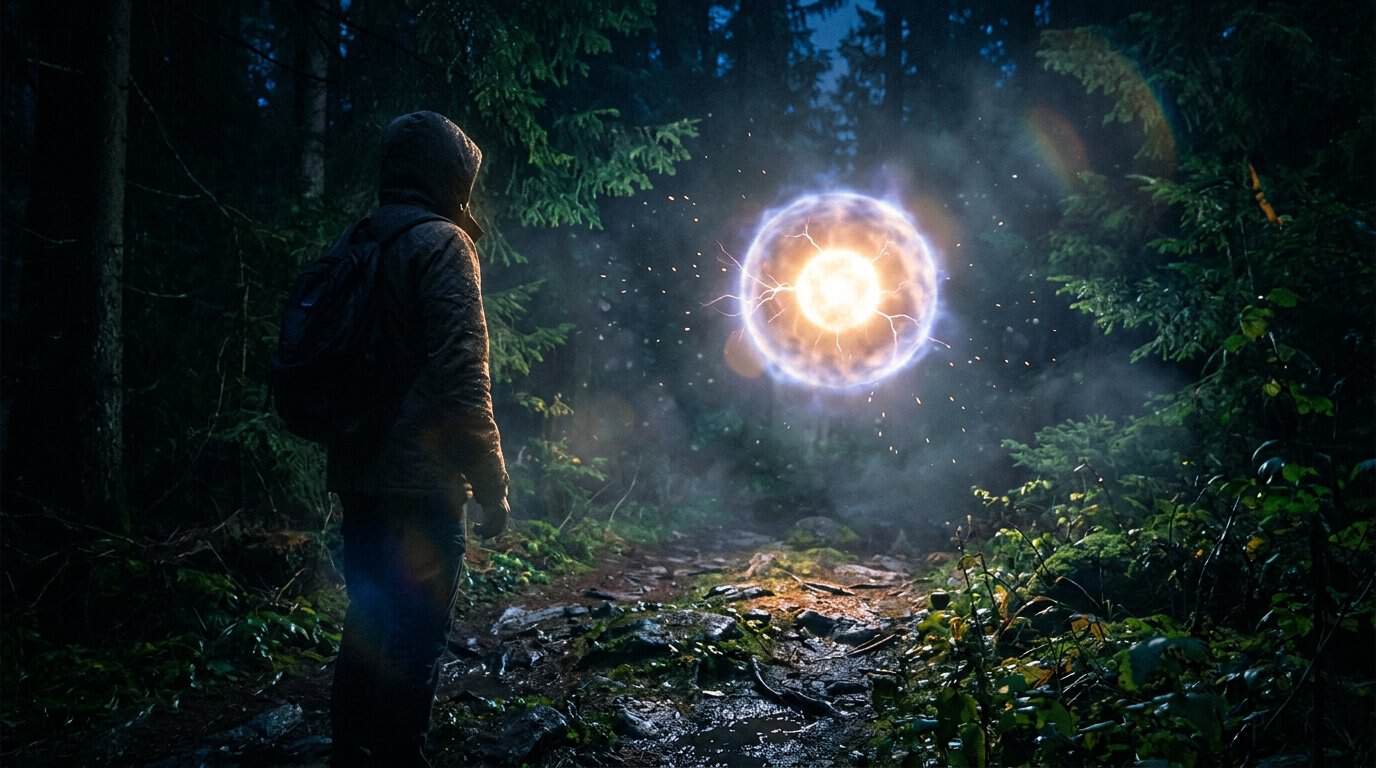
A storm rolls across the countryside as lightning flashes beyond the window. Suddenly, a glowing sphere drifts through the room, hovers near a doorway, and fades without a sound. Similar scenes appear in ball lightning eyewitness accounts, from historical reports of luminous objects moving near homes and fields to modern stories recorded by pilots, soldiers, and storm observers. Ball lightning is generally described as a glowing, roughly spherical object linked to thunderstorms, although witnesses have also reported oval, disk-like, or irregular shapes. Its strange behavior places it at the crossroads of natural science, folklore, and experiences that can sound almost supernatural.
The accounts share enough details to invite serious study, yet they do not point neatly to one explanation. Witnesses often describe slow movement, bright colors, unusual silence, and objects that last for several seconds before vanishing. Poor visibility and electrical conditions, however, can also produce mistaken identifications or misleading instrument readings. Researchers therefore face a central question: do these repeated eyewitness accounts describe one real phenomenon, several different events, or a mixture of both? A small number of carefully investigated reports suggest that at least some encounters may involve a genuine atmospheric or electrical event. The lack of reliable recordings and an accepted theory, however, keeps the mystery open.
Historical Ball Lightning Witnesses
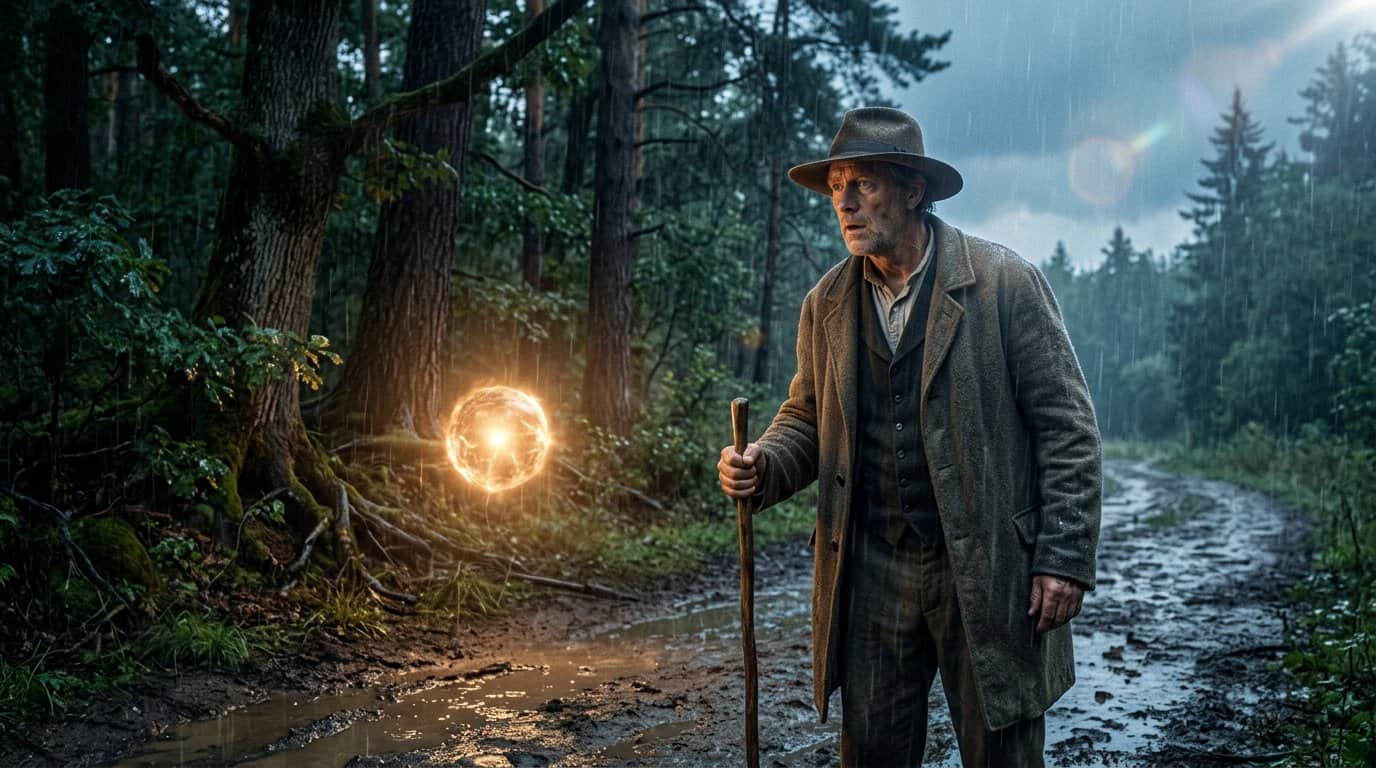
In 1566, witnesses in Basel, Switzerland, described a glowing ball moving above a church during a thunderstorm. The account is often cited as one of Europe’s earliest possible records of ball lightning. Another famous report came from Widecombe-in-the-Moor, England, in 1638, when a violent storm struck a church and witnesses described a bright object entering the building. The event reportedly killed several people and injured many others, although modern readers cannot know whether the object was ball lightning, a conventional lightning discharge, or a mixture of storm damage and interpretation. These stories helped establish a pattern that still appears in modern accounts: a luminous shape, sudden movement, and an unsettling sense that ordinary lightning had taken on a physical form.
The mystery became especially personal in St. Petersburg in 1753, when scientist Georg Richmann was studying electricity during a thunderstorm. Historical accounts say that a bright, bluish-orange globe emerged near his experimental apparatus, struck Richmann in the forehead, and killed him, while his assistant was knocked down. The incident may have involved an electrical discharge connected to the experiment rather than free-floating atmospheric ball lightning, but it showed how dangerous and poorly understood electricity remained. Because the account came from observers close to a scientific investigation, it became an important part of the phenomenon’s history. It also reminds readers that eyewitness descriptions do not automatically reveal the cause.
During the nineteenth century, reports continued to appear in newspapers, scientific correspondence, ships’ logs, and weather observations. Witnesses commonly described glowing spheres drifting through rooms, following walls, hovering near trees, or vanishing quietly, sometimes leaving burns or damage behind. Yet these records rarely included precise timing, photographs, electrical measurements, or independent observers. Dramatic retellings could also change as stories spread. Historical testimony therefore does not prove that every account describes the same event, but its recurring details suggest that at least some witnesses may have encountered a real atmospheric or electrical phenomenon that modern instruments have only rarely captured.
Patterns In Eyewitness Descriptions
A storm witness may describe a glowing sphere appearing near a field, a home, or a line of electrical equipment before fading beyond reach. Across historical accounts, the object is often reported as orange, red, yellow, or white, with a size ranging from a marble to a large beach ball. Its light can appear soft and steady, intensely bright, or strong enough to illuminate nearby walls. Some witnesses recall a faint hiss, crackle, or silence, while others mention an ozone-like or burning smell. These repeated details make ball lightning eyewitness accounts intriguing, although color and brightness can change with distance, weather, and human memory.
Movement is another recurring feature, but it rarely follows one clear pattern. Reports describe spheres drifting slowly, hovering, bouncing, moving sideways against the wind, or vanishing within seconds. A smaller number of witnesses claim that the objects lasted for half a minute or longer. Stories of glowing objects passing through windows, traveling along walls, or appearing near wires and appliances have given ball lightning an almost supernatural reputation. Yet those scenes may also involve reflections, electrical discharges, or other storm effects, especially when no independent observer or instrument recorded the event. Historical collections and modern reviews therefore show both striking similarities and wide differences in behavior.
A review published in History of Geo- and Space Sciences notes that reports are numerous, but only a small number of events have been captured with useful scientific instruments. That evidence supports a cautious possibility: some witnesses may have seen a real atmospheric or electrical phenomenon, while other accounts may describe misidentified lights or sensor artifacts. A simple comparison table could show commonly reported traits, such as a spherical shape, warm colors, quiet movement, short duration, and proximity to storms, while also showing how often each detail is disputed. The unresolved question is whether these shared patterns point to one phenomenon or several different events grouped under the same name. Which detail in these accounts seems most convincing, and which seems easiest to explain another way?
Modern Ball Lightning Investigations
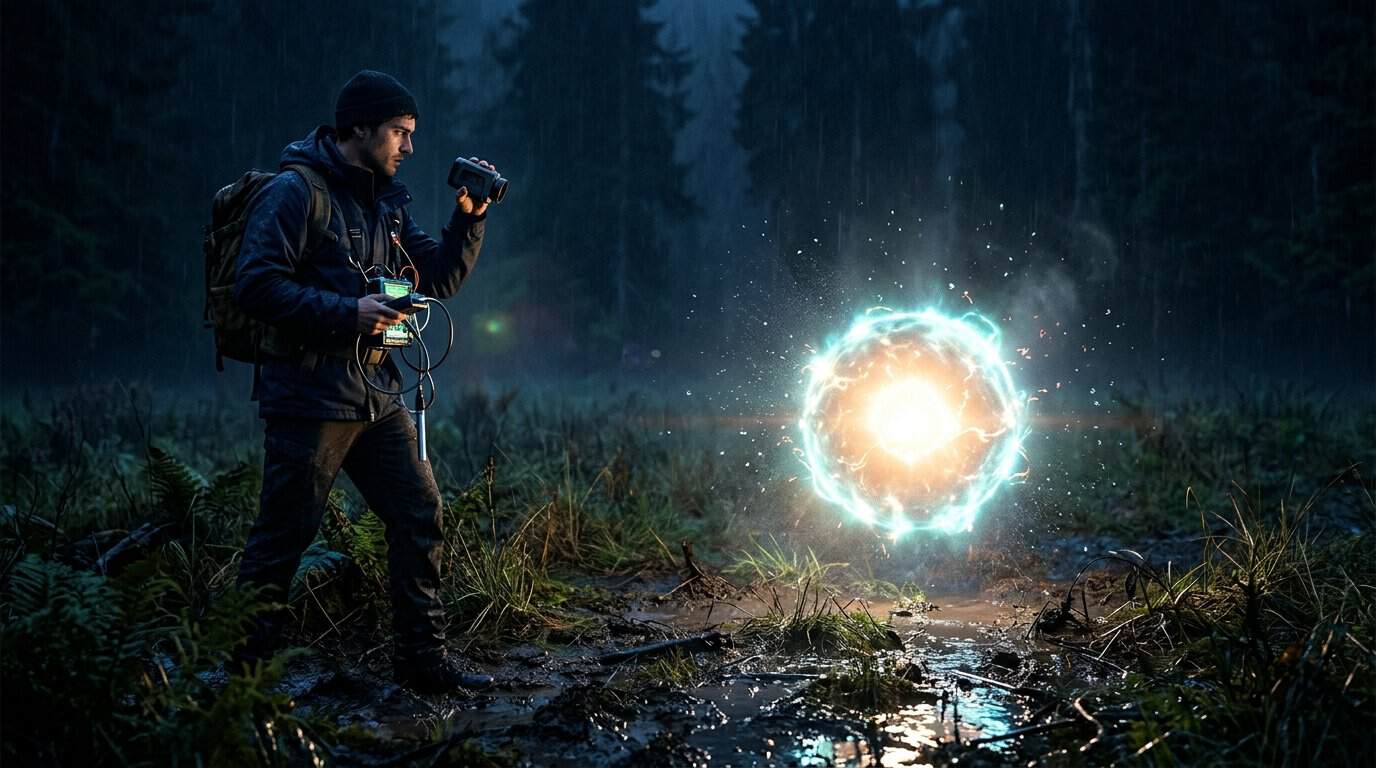
Modern investigations have moved ball lightning eyewitness accounts beyond folklore and into the reach of weather science. During storms, trained observers, photographers, and researchers have reported glowing spheres appearing briefly near the ground, buildings, or damaged electrical equipment. A widely discussed case in China was recorded during a 2012 thunderstorm in Qinghai and published by researchers in 2014. The event included video footage and spectral measurements, giving scientists more than a memory to examine. It was important because multiple instruments captured details about the light, including features that may point to vaporized soil or other electrical effects.
Professional records do not make every sighting conclusive, but they can strengthen a case when witnesses, cameras, and measurements agree. Photographs and videos may reveal movement, color, duration, and size, while weather records can show whether lightning, hail, strong winds, or unusual electrical conditions were present. Researchers still have to consider camera reflections, lens flares, exposure errors, power-line discharges, burning debris, and objects carried by the wind. Even a sincere witness can mistake a distant light or a brief electrical flash for a glowing sphere, especially when a storm changes the scene from one second to the next.
The evidence therefore points to a mixed picture rather than a single easy answer. Some reports may describe a genuine atmospheric or electrical phenomenon, while others likely come from misidentified objects or recording artifacts. Scientists continue comparing eyewitness accounts with storm data, laboratory experiments, photographs, and rare instrumentally documented events to find patterns that can be tested. Until more cases are captured from several angles with reliable measurements, ball lightning remains a real possibility surrounded by scientific uncertainty.
Science Behind Unresolved Accounts
Eyewitness accounts often begin with the same startling scene: a storm has passed, a flash lights the sky, and a glowing sphere appears near the ground. Historical reports describe objects drifting through rooms, hovering near windows, or vanishing after a few seconds, while modern witnesses sometimes capture only a blurred light on video. A 2021 review in History of Geo- and Space Sciences noted that these stories share recurring details, including a round shape, bright colors, slow movement, and links to thunderstorms. Yet the small number of instrumentally recorded events makes it difficult to separate a genuine phenomenon from reflections, electrical equipment, or misreadings of ordinary lightning.
Several scientific ideas could explain at least some of the observations, but none has been proven. One possibility is an unusual electrical discharge. Another suggests that a lightning strike vaporizes soil and creates a glowing mixture of hot gases and fine particles. Plasma, the charged state of matter found in lightning, may also help explain the light and movement, although a stable, free-floating ball remains difficult to reproduce. Other proposals involve microwave energy trapped in a bubble of ionized air or burning particles carried by hot air after a strike. Each theory fits certain eyewitness details, but each also leaves important questions unanswered as research into plasma continues.
The most careful scientific view leaves room for both nature and human perception. Some accounts may describe a rare atmospheric or electrical event, while others could involve burning debris, reflections, camera artifacts, or the brain interpreting a brief flash as a solid object. That uncertainty does not make every report meaningless, especially when independent witnesses describe similar behavior in different places and periods. Instead, it shows why ball lightning remains connected to the wider study of unexplained natural phenomena, where careful records matter as much as dramatic stories. As better sensors and faster cameras become common, future observations may reveal whether these glowing spheres share one cause or several.
What Ball Lightning Accounts Reveal
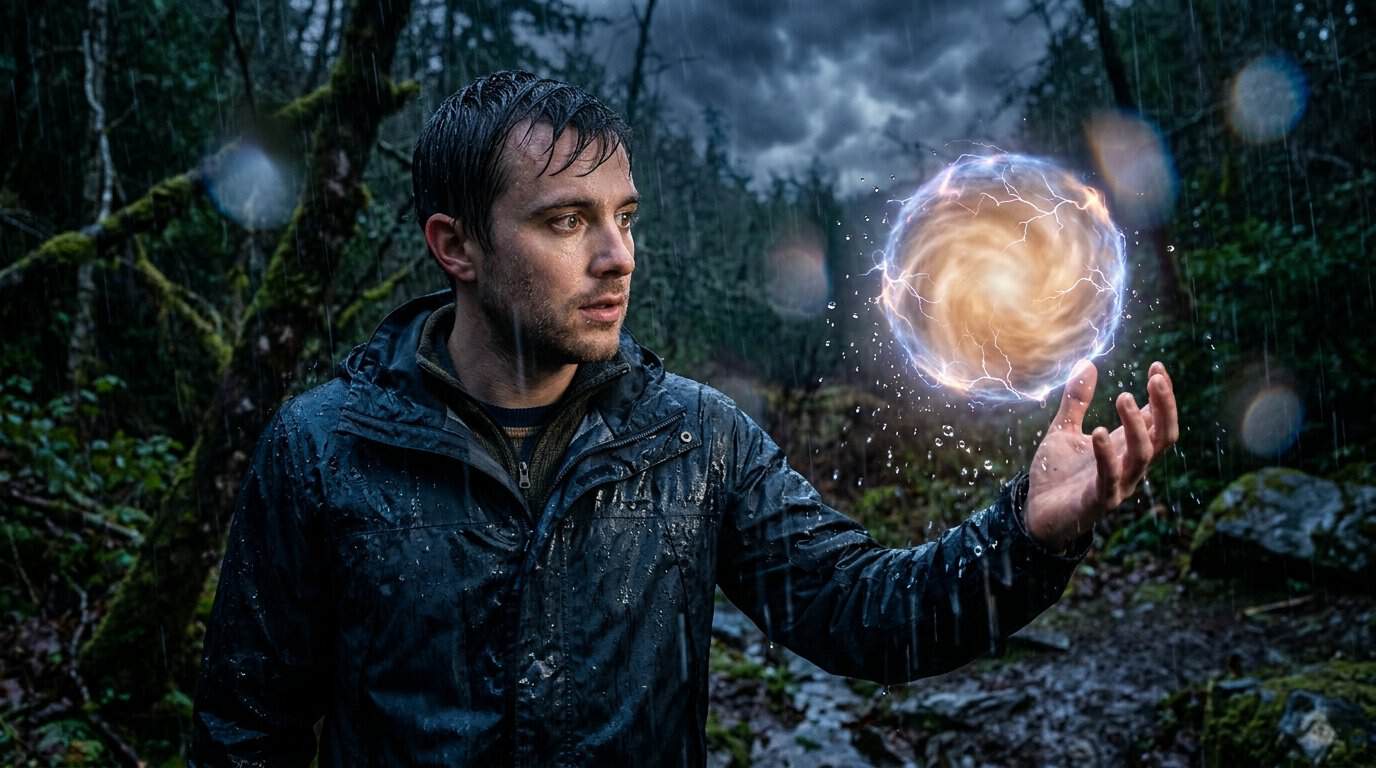
Eyewitness accounts give ball lightning its human history, from storm watchers who described glowing spheres drifting across fields to modern witnesses who reported lights moving through rooms, along wires, or near damaged buildings. Across historical records and recent investigations, several details appear again and again: a rounded shape, a bright glow, slow movement, and a connection with thunderstorms. Researchers can use these patterns to compare reports, identify possible misidentifications, and guide laboratory experiments. Yet memory can change, poor lighting can distort appearances, and electrical equipment or reflections may create convincing false impressions. For that reason, a vivid story can suggest that something unusual occurred without proving that every account describes the same phenomenon.
The strongest reports are recorded soon after the event by more than one observer and include clear details about distance, duration, weather, movement, and nearby objects. Instrument readings, photographs, video, and physical traces would make such accounts far more valuable, but very few cases include reliable measurements, and no accepted theory explains all reported features. This leaves room for an atmospheric or electrical phenomenon while also allowing that some cases may be misidentified events or sensor artifacts. Folklore can preserve clues about how people experienced strange lights, but it cannot serve as scientific proof on its own. Readers are invited to share carefully documented observations or discuss which details make an account convincing without turning mystery into evidence.
What Eyewitnesses Say About Ball Lightning
Eyewitness accounts of ball lightning form a striking pattern across centuries and cultures. People often describe a glowing sphere appearing during or after a storm, moving slowly, changing direction, and sometimes vanishing without an obvious cause. These stories connect folklore with observations that seem surprisingly consistent, yet memory, poor visibility, lightning flashes, and electrical equipment can also shape what witnesses believe they saw. The lack of reliable instruments during most encounters makes it difficult to separate a genuine atmospheric event from a misidentification or sensor artifact.
Even so, the evidence does not require every account to be dismissed. Some reports may describe a real electrical or atmospheric phenomenon, while current laboratory work offers possible clues without producing a complete explanation. Ball lightning remains an open scientific mystery, one in which careful testimony and modern measurements are equally important. As researchers continue searching for stronger evidence, readers can consider which eyewitness accounts seem most convincing and whether future storm observations will finally reveal what witnesses have been seeing.
Frequently Asked Questions
1. What is ball lightning?
Ball lightning is a rare, glowing object that witnesses often describe as a floating sphere appearing during or shortly after a thunderstorm. Reports include white, orange, blue, or reddish lights that move slowly, hover near the ground, or vanish suddenly. Its true nature remains unsettled because scientists have very few reliable observations.
2. What do ball lightning eyewitness accounts usually describe?
Many witnesses report a bright orb that lasts for several seconds and moves quietly through open spaces, rooms, fields, or aircraft cabins. Some accounts describe the object passing through windows, changing direction, or fading without an explosion. Similar details across centuries make the reports difficult to dismiss, although memory, poor visibility, and electrical effects can shape what people see.
3. Has ball lightning ever been scientifically recorded?
Yes, but convincing records are extremely rare. In 2012, researchers in China captured video and light measurements of a luminous ball after a lightning strike, with the findings later reported in Physical Review Letters. That observation supports the possibility of a real atmospheric phenomenon, but it does not explain every historical account.
4. How long does ball lightning last?
Most eyewitnesses describe ball lightning lasting only a few seconds, although some reports claim longer events. Duration is difficult to verify because witnesses rarely have accurate timing during a frightening storm. A brief flash, electrical glow, or reflection may also seem longer when it is remembered later.
5. Can ball lightning move through windows or walls?
Some eyewitnesses say glowing spheres entered rooms through open windows, chimneys, or other openings, while a few describe them appearing to pass through solid surfaces. These details are not confirmed by controlled evidence, so they may involve visual confusion, reflections, or unusual electrical activity. They remain among the most mysterious features in the historical record.
6. What causes ball lightning, according to scientists?
No single explanation has gained universal acceptance. Proposed ideas include burning particles formed when lightning strikes soil, glowing plasma, electrical activity near strong fields, and chemical reactions involving vaporized minerals. Researchers continue to compare these models with eyewitness details, including reported colors, motion, smell, heat, and sudden disappearance.
7. How can someone tell whether a sighting was really ball lightning?
A careful report should record the storm conditions, location, time, color, size, movement, duration, sound, smell, and distance from the observer. Photographs, video, weather records, witness statements, and damage reports can make the account more useful. Even with strong documentation, a sighting may remain uncertain because aircraft lights, power arcs, reflections, lightning afterimages, and other rare electrical effects can look similar.