Uncovering The Occult Secrets Of Black Forest Carvings
Deep within the freezing, isolated mountains of 17th-century Germany, local farmers found a unique way to survive the bitter winter months. Using the endless supply of timber surrounding their homes, they began whittling simple household tools to pass the dark evenings, unknowingly sparking a legendary craft. Today, these intricate Black Forest carvings are famous around the world, most commonly recognized as the iconic cuckoo clocks ticking away on living room walls. Yet, beyond the quaint wooden birds, there is a much deeper history hidden within the elaborate sculptures and towering furniture pieces born from this tradition.
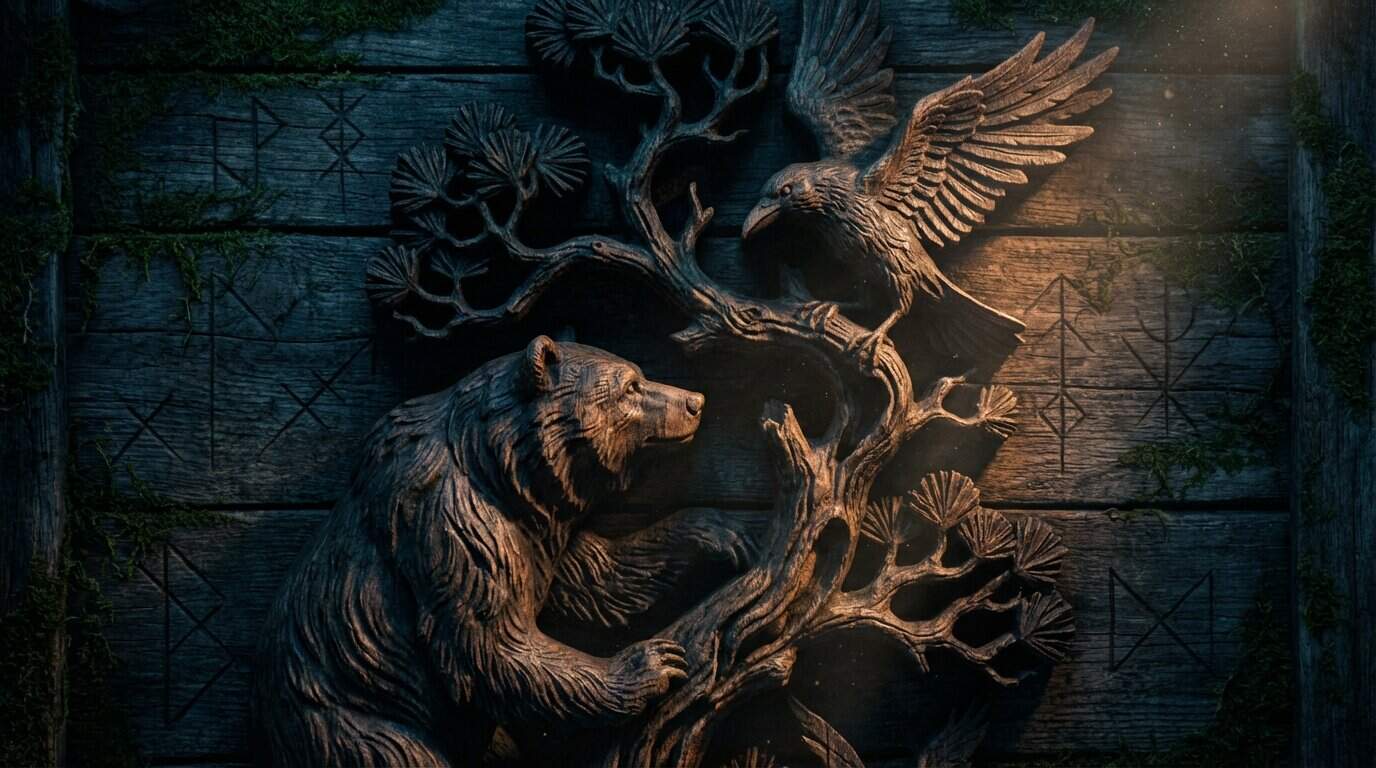
As the 1800s arrived, this humble winter pastime transformed into a sophisticated art form that completely captivated Victorian high society. Artisans in regions like Brienz, Switzerland, began shaping the mysterious folklore of the deep woods into breathtakingly detailed bears, majestic stags, and sprawling natural scenes. Looking closely at the lifelike details, some folklore enthusiasts wonder if these master carvers captured more than just wildlife, perhaps preserving the ancient, unspoken secrets of the shadowy mountains in the very grain of the wood.
Key Takeaways
- What began as a humble winter survival tactic for 17th-century German farmers evolved into a globally recognized art form prized by Victorian high society.
- Beyond the famous decorative cuckoo clocks, the deep timberlands of southwestern Germany conceal ancient geometric runes and mysterious symbols etched into trees and stones.
- Folklore suggests these intricate carvings served as magical protective wards against evil spirits, while historians argue they functioned as practical navigational markers and property boundaries.
- Scientific methods like tree-ring dating confirm these enigmatic woodland markings are hundreds of years old, blending documented history with unexplained phenomenon.
A Craft Shaped by Winter and Trade
The history of Black Forest carving is often linked with the practical demands of rural life. Long winters gave farmers time to work with the wood close at hand, making spoons, utensils, and household objects before turning their skill toward decoration. In the Black Forest, local fir and other available timber supplied a familiar material. As the craft grew, carved clocks offered more than a way to tell time: their moving figures and forest scenes gave visitors a small, vivid impression of mountain life.
Brienz, beside Lake Brienz in Switzerland, developed its own celebrated woodcarving tradition during the nineteenth century. Local accounts commonly attribute an important early role to Christian Fischer, a farmer whose carving work helped establish the craft in the village. His example came at a time when travellers were discovering the Alpine landscape, creating demand for carved souvenirs and finely made objects. The lake and surrounding mountains gave artists a rich catalogue of animals and scenery, while growing tourism brought their work to a wider audience.
As workshops expanded, carving became a skilled trade rather than only a winter pastime. The Huggler and Ruef names are associated with the broader Brienz carving tradition, where family workshops could pass designs and techniques from one generation to the next. When several craftsmen, including brothers, contributed to a single piece, identifying one maker could be difficult; some works are attributed to a workshop or family rather than an individual. That fact helps explain why a finely carved bear may be easier to recognize by its style than by the name of the person who shaped it.
Ancient Runes Or Modern Myths
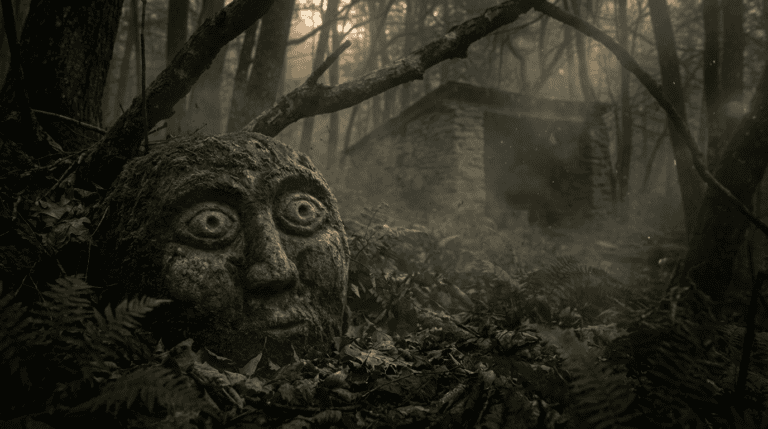
Deep within the dense, shadowed timberland of southwestern Germany, explorers often stumble upon strange symbols etched into ancient tree trunks and mossy stones. These Black Forest carvings look nothing like the famous decorative clocks and wooden bears sold to tourists in local villages. Instead, they feature sharp geometric shapes and winding lines that closely resemble forgotten languages or ancient pagan runes. Hikers who venture far off the beaten path report finding these enigmatic markings arranged in deliberate, circular patterns in the most isolated parts of the woods. The deep grooves show immense age, with tree bark slowly growing around the mysterious symbols over countless decades.
The chronological history of these peculiar symbols remains a hotly debated topic among regional historians and folklore experts. According to regional historical archives, the earliest written records of these woodland markings date back to the late seventeenth century. Early farmers and loggers documented finding the strange glyphs while searching for timber, often attributing them to lost ancient cultures or druidic tribes that once roamed the region. However, modern researchers suggest a different timeline, noting that some of the geometric patterns align perfectly with the hidden symbols used by secret societies during the Victorian era. This conflicting documentation leaves investigators wondering if the carvings are truly ancient relics or the remnants of a more recent, clandestine group conducting rituals in the dark woods.
While skeptics are quick to dismiss these discoveries as elaborate hoaxes or the bored whittling of lost travelers, the sheer consistency of the symbols points to something much more organized. The recurring pagan motifs suggest a hidden history that mainstream science might be overlooking. It is entirely possible that an unknown occult group has been quietly passing down these specific carving rituals through generations, leaving their physical traces hidden in plain sight. As more hikers continue to photograph and map these bizarre woodland runes, the puzzle only grows more complex. What do you think these mysterious forest markings might mean, and could they be the key to revealing a forgotten chapter of human history?
The Occult Significance Of Woodland Symbols

Hidden within the thick timberlands of southwestern Germany, local legends suggest that early Black Forest carvings held a much darker and more mysterious purpose than simple decoration. Before the craft became a booming nineteenth-century tourist trade, isolated farmers and woodworkers might have chiseled intricate symbols into wood to serve as powerful protective wards. Folklore historians note that these remote mountain communities were steeped in superstition, often fearing the unseen forces that supposedly roamed the dark woods at night. By etching specific animal motifs and twisted vines into their household items, these early artisans likely hoped to keep evil spirits and wandering witches at bay. Some researchers even propose that certain antique pieces contain hidden geometric patterns, hinting at a secret language used by practitioners of ancient folk magic.
The idea that these wooden artifacts double as magical talismans connects to a broader history of hidden occult practices found in secluded forests across Europe. Similar to the mysterious witch marks carved into the beams of old English cottages, Black Forest wooden figures often feature exaggerated claws and unblinking eyes that seem designed to watch over a room. Occult scholars suggest that these specific design choices were not merely artistic flair but actual ritualistic markers used in secret woodland ceremonies. When exploring the deep history of European witchcraft, it becomes easier to see how a seemingly innocent wooden bear or owl could act as a physical anchor for a protective spell. This fascinating theory paints a picture of a hidden society where ordinary woodcarvers secretly practiced ancient magical traditions right under the noses of the modernizing world.
While art historians generally view the evolution of Black Forest carving simply as a clever way for farmers to survive harsh winters, the strange symbols left behind leave room for a more mystical interpretation. It is entirely possible that these practical woodworking skills were quietly blended with old pagan beliefs that refused to fade away in the isolated mountain valleys. Physical traces of unknown woodland rituals continue to surface in private antique collections today, challenging our understanding of this famous craft. The line between a simple decorative clock and a carefully constructed magical ward might be much thinner than anyone previously guessed. What hidden meanings do you think might be hiding in the intricate wooden carvings passed down through your own family tree?
Reading the Carving Without the Legend
A close look at a traditional carved animal can reveal how much patient work its maker invested. The shape of the body may be blocked out first, followed by the finer details of fur, feathers, or antlers. A bear’s open mouth or a stag’s carefully branched horns can make the figure seem alert, even though it is still wood. These details reflect observation and skilled craftsmanship, but they can also invite stories about the spirit of the animal or the forest it represents.
That difference matters when considering claims about hidden meanings. An animal motif on a clock or piece of furniture is not, by itself, proof of a ritual purpose. A maker might choose an owl because it suited the woodland theme, because a customer requested it, or because the bird carried a familiar meaning in local folklore. Without a written record or a clear link to a specific ceremony, the interpretation remains open. The mystery is most compelling when the documented craft and the legends are kept in view together.
Scientific Analysis Of The Bark And Stone
To understand the true origins of these enigmatic Black Forest carvings, researchers turn to the natural world for answers. Botanists and forestry experts use a method called tree-ring dating to examine the living canvas of the arborglyphs. By carefully analyzing the rings inside the trees, scientists can pinpoint exactly when the mysterious symbols were carved into the bark. For the stone etchings found nearby, geologists study weathering patterns to measure how wind and rain have worn down the rock over time. These objective scientific methods help strip away some of the folklore, revealing that many of these markings are indeed hundreds of years old.
While local legends often point to occult rituals, historians offer more practical explanations for these woodland symbols. According to European forestry researchers, early travelers and farmers frequently used specific carvings as navigational markers to survive the dense, confusing timberlands. Other scholars suggest that the intricate stone etchings served as ancient property boundaries for isolated communities. These logical alternatives paint a picture of survival and territorial claims rather than dark magic. People living in these remote regions needed reliable ways to communicate and mark their land long before modern maps existed.
Even with these scientific explanations, a sense of deep mystery still surrounds many of the Black Forest carvings. Some of the symbols found on the oldest trees and stones do not match any known navigational signs or family crests. Anthropologists studying the region admit that certain etchings strongly resemble ancient protective wards meant to keep unseen forest spirits at bay. Science can tell us when these marks were made, but it cannot always tell us why the creators chose such strange and unsettling designs. What do you think these forgotten woodland travelers were trying to communicate, and could there be a deeper truth hidden in the bark?
There is also an important difference between dating a mark and explaining it. Tree rings may help establish when a tree grew, while the condition of a carved surface can offer clues about exposure and age. Neither method can identify the carver’s intention on its own. A mark could have been made for a practical reason, as an act of personal expression, or as part of a tradition no longer remembered. Photographs, careful location notes, and comparisons with dated local records can help researchers build a stronger account without turning every unusual shape into evidence of the supernatural.
The Unexplained Magic of Black Forest Carvings
The strange Black Forest carvings continue to walk a fascinating line between documented history and unexplained magic. While historians can trace the origins of traditional woodcraft in these regions, the more mysterious symbols etched into ancient trees point to a hidden culture that defies simple explanation. Researchers have cataloged these peculiar woodland markings for decades, noting how they often align with both natural phenomena and local folklore. It is entirely possible that these intricate designs serve as physical remnants of forgotten rituals or secret societies that operated deep within the timberlands. This captivating mix of tangible evidence and occult possibility ensures that the legend of these remote woodland carvings remains alive today.
Exploring the quiet depths of the woods often reveals secrets that challenge modern understandings of history. Every newly discovered carving adds another puzzle piece to a much larger mystery waiting to be solved by curious minds. Investigators are always eager to hear about new discoveries from fellow explorers and outdoor enthusiasts. Readers who have stumbled upon strange symbols, unusual tree markings, or mysterious carvings while hiking through remote forests are warmly invited to join the conversation. Everyone is encouraged to drop their own experiences and theories in the comments section below so the community can continue to unravel these woodland mysteries together.
Frequently Asked Questions
1. Where did Black Forest carvings originally come from?
These intricate wooden creations began in the freezing mountains of 17th-century Germany. Local farmers started whittling simple household tools to pass the dark winter evenings. Over time, this humble survival tactic evolved into a legendary craft known around the world.
2. What are the most common types of Black Forest carvings?
The most famous examples are the iconic cuckoo clocks that tick away in many living rooms today. However, artisans eventually expanded their craft to include towering furniture pieces and breathtaking sculptures of bears, stags, and sprawling natural scenes.
3. How did this local craft become popular worldwide?
As the 1800s arrived, this winter pastime blossomed into a highly sophisticated art form. Victorian high society became completely captivated by the lifelike details and mysterious woodland folklore captured in the wood. Swiss artisans in regions like Brienz helped push the craft into the global spotlight.
4. Are there secret symbols hidden in the Black Forest?
Explorers wandering off the beaten path often discover strange geometric shapes etched deep into ancient tree trunks and mossy stones. These mysterious markings closely resemble forgotten languages or ancient pagan runes. The deep grooves show immense age, with tree bark slowly growing around them over countless decades.
5. Do Black Forest carvings hold ancient secrets?
Folklore enthusiasts believe master carvers captured much more than just local wildlife in their detailed sculptures. Looking closely at the lifelike grain, some researchers suggest these artists preserved the unspoken, shadowy secrets of the deep woods. It is entirely possible that ancient mountain myths are quite literally carved into these wooden masterpieces.
6. Where were the most detailed wildlife carvings made?
While the tradition started in southwestern Germany, the most breathtakingly detailed wildlife sculptures actually emerged from Brienz, Switzerland. Artisans in this region specialized in shaping the mysterious folklore of the deep woods into majestic stags and lifelike bears.
7. What do hikers find in the isolated parts of the woods?
Adventurers venturing deep into the shadowed timberland report finding enigmatic markings arranged in deliberate circular patterns. These ancient carvings look absolutely nothing like the decorative wooden bears sold to tourists. They invite curious minds to wonder if forgotten pagan rituals once took place among the ancient trees.