The Dropa Stones Discovery And The Search For Ancient Astronauts
High in the frigid peaks of the Baian-Kara-Ula mountains, a team of explorers allegedly stumbled upon a discovery that challenges the standard understanding of human history. In 1938, the dropa stones discovery revealed hundreds of mysterious granite discs tucked away in a series of remote caves. Alongside these artifacts, researchers reportedly found the remains of frail, small-statured beings with unusually large skulls, sparking a mystery that has endured for decades.
Each stone disc features a strange double spiral groove, leading many to wonder if they are ancient musical records or perhaps a forgotten form of technology. While mainstream science often views these objects with skepticism, the haunting details of the find continue to captivate those searching for the truth about the past. Whether these discs are evidence of an extraterrestrial visit or a clever historical puzzle, the story of the Dropa remains one of the most intriguing legends of the twentieth century.
Key Takeaways
- The 1938 discovery in the Baian-Kara-Ula mountains revealed 716 granite discs and the remains of small-statured beings with oversized skulls, suggesting a potential encounter with an unknown civilization or extraterrestrial visitors.
- Microscopic spiral grooves on the Dropa stones reportedly contain hieroglyphic records detailing a spacecraft crash and the subsequent survival of a group known as the Dropa among local tribes.
- Laboratory tests conducted in the 1960s identified high concentrations of cobalt and rhythmic vibrations in the discs, indicating they may have functioned as sophisticated ancient technology or electrical components.
- Despite the disappearance of physical evidence and lack of official records for the primary researchers, the legend remains a foundational element of ancient astronaut theory and continues to challenge traditional archaeological narratives.
The Mysterious Caves Of Chi Pu Tei
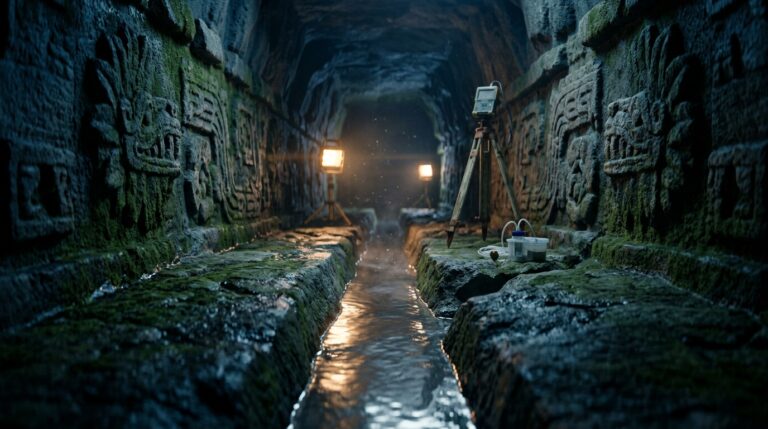
In 1938, a high-altitude expedition led by archaeologist Chi Pu Tei ventured into the rugged Baian-Kara-Ula mountains on the border of China and Tibet. The team discovered a series of interconnected caves that appeared to have been artificially carved into a complex underground system. Inside these dusty chambers, they found rows of small graves containing the skeletal remains of beings standing only four feet tall. These skeletons possessed unusually frail frames and oversized, bulbous skulls that did not match any known human ethnic group in the region. Local legends hinted at cloud people who had descended from the sky, leaving the researchers to wonder if they had stumbled upon an entirely new branch of humanity or something far more exotic.
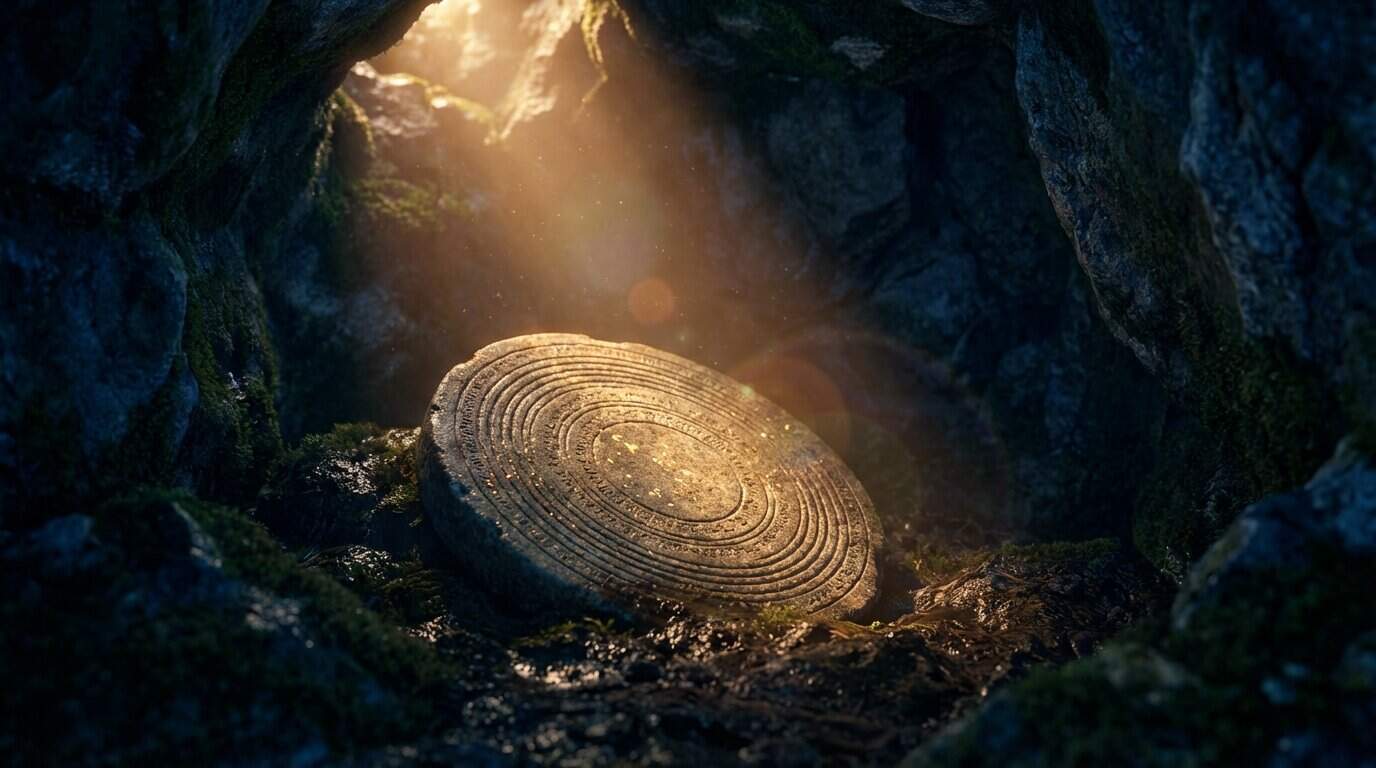
The mystery deepened when the team unearthed a collection of 716 granite discs buried half-submerged in the cave floor. Each disc measured roughly one foot in diameter and featured a hole in the center, resembling a modern phonograph record. Upon closer inspection, researchers found a continuous double-spiral groove consisting of tiny, microscopic characters that wrapped from the center to the outer edge. These artifacts, later known as the dropa stones discovery, defied local geological explanations because the granite was exceptionally hard and the markings were incredibly precise. Historical reports suggest a level of technological sophistication that seemed impossible for a primitive mountain culture.
As the expedition documented the site, they also noticed vivid rock art on the cave walls depicting the sun, moon, and stars connected by lines of small dots. These celestial maps appeared to show the path of travelers moving toward Earth, further fueling the theory that the caves were a crash site or a long-term refuge. The peculiar combination of the small-statured remains and the intricate stone discs created a compelling bridge between ancient history and extraterrestrial possibilities. While skeptics often point toward a lack of physical evidence today, the original accounts of the Chi Pu Tei expedition remain a cornerstone of investigative research into lost civilizations. Do you believe these discs were ancient records of a cosmic voyage, or is there a terrestrial explanation yet to be uncovered?
Tsum Um Nui And The Extraterrestrial Translation

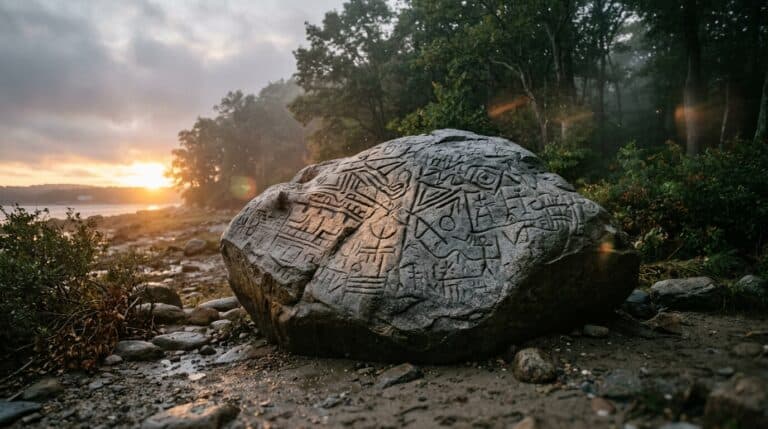
In 1962, a researcher named Tsum Um Nui stepped into the spotlight with a claim that would forever link the Baian-Kara-Ula mountains to the stars. After years of studying the mysterious granite discs, he alleged that the microscopic spiral grooves were actually a form of ancient hieroglyphic records. His translation suggested that the stones were a record of a spacecraft crash landing in the remote mountains thousands of years ago. According to his findings, the survivors were members of a group called the Dropa who were unable to repair their ship. This narrative transformed the stones from mere archaeological curiosities into a tale of survival and extraterrestrial tragedy.
The story told by Tsum Um Nui described the local Ham tribes as being initially fearful of the strange, small beings that emerged from the craft. As the translation progressed, it revealed that the Dropa eventually gained the trust of the locals through peaceful intentions, despite their otherworldly appearance. While the Beijing Academy of Prehistory initially prohibited the publication of these findings, the report eventually leaked, sparking an international debate about ancient history. Skeptics often point to the lack of official records regarding the professor himself, yet the vivid details of the translation continue to captivate those who believe ancestors had company from above.
Investigating the validity of these claims requires a delicate balance between scientific scrutiny and an open mind toward the unknown. While modern researchers often categorize the story as a daring piece of folklore, the consistent description of the small, large headed skeletons found in the caves adds a layer of physical mystery to the written account. If these discs truly are a library of alien origin, they represent one of the most significant archaeological finds in human history. Whether the story is a literal translation or a modern myth, it challenges us to look at the silent peaks of the Himalayas with a renewed sense of wonder. What do you think happened in those isolated caves so long ago?
Russian Lab Tests And The Cobalt Connection
In 1968, the mystery of the Dropa stones took a scientific turn when researcher Vyacheslav Saizev conducted a series of tests on the discs. By placing the artifacts on a special turntable, he discovered that they contained high concentrations of cobalt and other metallic elements. This composition was highly unusual for granite stones, suggesting they might have been engineered rather than naturally formed. Saizev reported that when the discs were exposed to an oscillator, they began to vibrate in a strange, rhythmic pattern. These findings hinted that the stones could have once functioned as part of an ancient power source or a sophisticated recording device.
The chemical analysis provided by Saizev offered a bridge between the physical artifacts and the theories of extraterrestrial origins. If these stones were indeed thousands of years old, the presence of refined metals like cobalt would imply a level of technology far beyond what was available to ancient mountain tribes. Curiosity grew as researchers wondered if the double spiral grooves were actually microscopic scripts waiting to be decoded. Saizev suggested that the stones might have been subjected to high voltages in the distant past, which would explain their unique properties. This investigative lead transformed the story from a simple archaeological discovery into a puzzle involving lost space travelers.
While some modern skeptics view these laboratory reports with caution, the rhythmic vibrations described by Saizev remain a central piece of the Dropa legend. The idea that a stone could hum with energy challenges the traditional understanding of ancient history and the capabilities of ancestors. It forces a closer look at the intersection of geology and advanced technology to see if a hidden truth lies within the spiral grooves. Whether these discs are genuine alien relics or a sophisticated mystery, the cobalt connection adds a layer of scientific intrigue that is hard to ignore. What do you think the purpose of these vibrating stones could have been for a stranded civilization?
Modern Skepticism And The Legend Of The Dropa

While the story of the Dropa stones reads like a script for a high stakes adventure film, modern investigators often struggle to find a paper trail for the researchers involved. The legend centers on Professor Chi Pu Tei and later a scholar named Tsum Um Nui, who allegedly deciphered the spiral grooves to reveal a tragic tale of crashed extraterrestrial explorers. However, many skeptics point out that these names do not appear in official archaeological records or university faculty lists from that era. This lack of documentation creates a wall for those trying to verify the initial discovery in the mountains. Even without a confirmed identity for the scientists, the detailed descriptions of the small skeletons and the precise technical nature of the discs keep the mystery alive for curious minds worldwide.
The physical evidence of the 716 granite discs has also become a point of significant contention and intrigue. Reports from the mid-twentieth century claim the stones were sent to various museums or even to the Soviet Union for study, yet their current locations remain unknown. Some researchers suggest that the artifacts were simply misplaced during the chaos of historical conflicts, while others believe they are being held in private collections away from public view. This disappearance of the primary artifacts makes it difficult for modern science to perform carbon dating or material analysis. Without the original discs to examine, the narrative survives primarily through second-hand accounts and a few rare photographs that continue to fuel the debate between skeptics and believers.
Despite the missing links and the shadow of doubt cast by modern historians, the legend of the Dropa remains a cornerstone of ancient astronaut theory. The idea that a lost tribe of celestial travelers could have left behind a library of stone records is too compelling for many to ignore. It invites us to look at the remote corners of the planet with a sense of wonder, questioning if we have truly uncovered all the secrets of ancestors. Whether the stones are a complex modern myth or a genuine piece of cosmic history, they represent a deep-seated desire to connect with something beyond our own world. Do you believe the lack of physical evidence proves the story is a hoax, or could the truth simply be hidden away in a forgotten archive?
The Lasting Legacy of the Celestial Discs
The legacy of the Dropa stones continues to captivate those who look toward the stars for answers about the past. These 716 granite discs, with their mysterious spiral grooves and tales of a crashed celestial vessel, represent a fascinating intersection of archaeology and extraterrestrial lore. While skeptics point to the lack of physical evidence and the absence of official records, the narrative of the small, large headed beings remains a cornerstone of ancient astronaut theory. Much like the ancient mystery of other artifacts found across Asia, this story challenges the understanding of human history and suggests that the mountains of China may have once played host to visitors from another world. Whether the discs are tangible artifacts lost to time or a beautifully crafted modern myth, they serve as a powerful reminder of the desire to find company among the cosmos.
The debate surrounding the Baian Kara Ula discovery highlights the tension between scientific rigor and the allure of the unexplained. Researchers often find themselves caught between the requirements of traditional archaeology and the compelling circumstantial details that keep this mystery alive. Even without the physical stones to examine today, the legend persists through decades of storytelling and investigative curiosity. It invites us to consider if there are chapters of the human story that have been intentionally erased or simply forgotten by the passage of centuries. This enduring puzzle ensures that the Dropa remains one of the most debated mysteries in the field of pseudoarchaeology.
As we look back at the strange events reported in 1938, we are left to weigh the possibilities. Do you believe these discs were genuine records of a stranded alien race, or do you see them as a masterful piece of archaeological folklore? The idea of an ancient tribe living in isolation with advanced celestial knowledge is a difficult image to dismiss entirely. We invite you to share your thoughts on whether these artifacts could be the anachronistic artifact of ancient visitation or just a clever tall tale. Your perspective helps keep the spirit of investigation alive as we continue to explore the world’s most baffling secrets.
Frequently Asked Questions
1. What exactly was found during the 1938 expedition?
Archaeologist Chi Pu Tei and his team discovered 716 granite discs buried in the floors of remote mountain caves. These stones were found alongside the remains of small, frail beings with unusually large skulls, suggesting a mystery that goes beyond traditional human history.
2. Where are the Baian-Kara-Ula mountains located?
These rugged and frigid peaks are situated on the border between China and Tibet. The remote location and high altitude of these caves helped keep the artifacts hidden from the world for centuries until the 1938 discovery.
3. What do the Dropa stones look like?
Each granite disc measures approximately one foot in diameter and features a hole in the center, similar to a modern phonograph record. The most fascinating detail is a double spiral groove that winds from the center to the outer edge, containing tiny, mysterious characters.
4. Who were the beings found in the caves?
The skeletons belonged to beings that stood only four feet tall and possessed bulbous, oversized skulls. Local legends in the region tell stories of cloud people who came from the sky, leading many to believe these remains could be of extraterrestrial origin.
5. Are the Dropa stones considered a form of ancient technology?
Many researchers believe the spiral grooves are actually a form of ancient record-keeping or even a type of forgotten technology. While mainstream science remains skeptical, the precise carvings on the hard granite suggest a level of sophistication that is difficult to explain for that time period.
6. Why is the Dropa stone discovery often met with skepticism?
Mainstream scientists often view the story as a legend because the original artifacts and expedition logs have been difficult to verify over time. However, the haunting details and consistent reports from the region continue to fuel the belief that a significant event occurred in those mountains.