Houska Castle Haunting: The Gateway to Hell Legend Examined
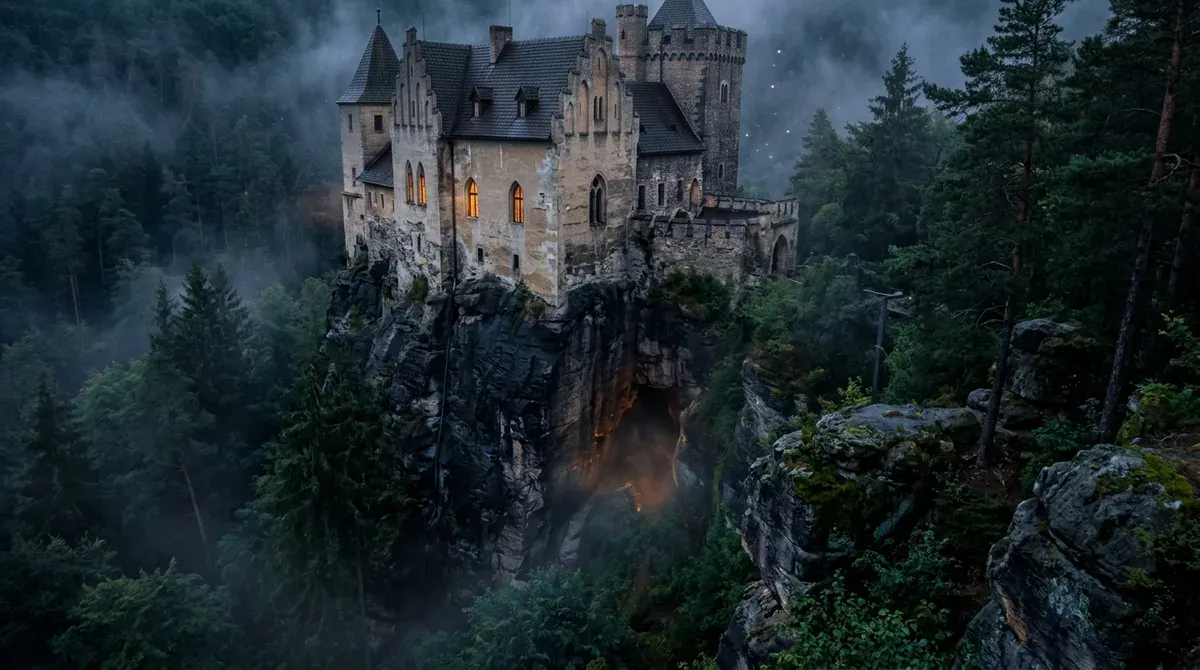
The Houska Castle haunting is a legend, not a verified paranormal finding. It centers on a pit, restless spirits and a faceless black monk at a medieval castle in Central Bohemia. Czech tourism sources describe these elements as folklore tied to the site, presenting the pit as a supposed gateway to hell. The oldest written version of the tale appears in a chronicle that places its events in 878, while the castle’s official history dates its foundation to the first half of the 13th century.
Still, the story keeps drawing people through the gates. The castle opened to the public in 1999, and adult admission is 180 CZK. Its carved Inferno exhibit, a moving scene 12 metres long, turns the hell motif into a visitor attraction. Set against a past that includes medieval origins, restoration in the 1920s and wartime use, the legend invites readers to weigh the chronicle, the building record and the visitor experience for themselves.
Key Takeaways
- The Houska chronicle reflects the attitudes of its own time, so readers should treat the 878 date as storytelling rather than record.
- Houska Castle served as a depository for seized books from 1943 while under German military control.
- Houska Castle’s chapel was restored in 1928, placing repair work at the exact spot the legend says hides a fissure.
- Houska Castle’s Inferno exhibit is a separate stop costing 80 CZK, so visitors wanting the full legend should add it to the guided tour.
Is Houska Castle Really Haunted?
Heritage listings and tourism material both frame the pit beneath the castle and the faceless black monk as traditional stories attached to the site, which makes folklore the right starting point for any investigation.
The core of the story is easy to name. A pit opens below the grounds, spirits roam the castle, and a black monk without a face stands watch over the entrance to hell. Each element has its own tale, and together they form a narrative that has been told and retold for centuries.
The legend also comes with a physical address. The National Heritage Institute of the Czech Republic says the legend places a fissure leading to hell beneath the castle chapel, and it recounts stories of underground passages, rooms and buried remains. Those details help explain why the tale feels so convincing to people walking through the old stone halls.
Folklore like this rarely needs proof to matter. A ghost story gives a building a memory, and a gateway to hell gives a visit a sense of descent. Václav Hájek, the chronicler behind the tale, described spirits appearing in the form of animals, a detail that shows how the imagery of the haunting has been shaped by storytelling.
Skeptics point out that the legend offers no measurable evidence. Believers see a place where the line between past and present feels thin. Both reactions have helped the story survive, and it is worth noticing which parts of the tale come from the stones and which come from the people who retold them.
What Did the Old Chronicle Really Say?
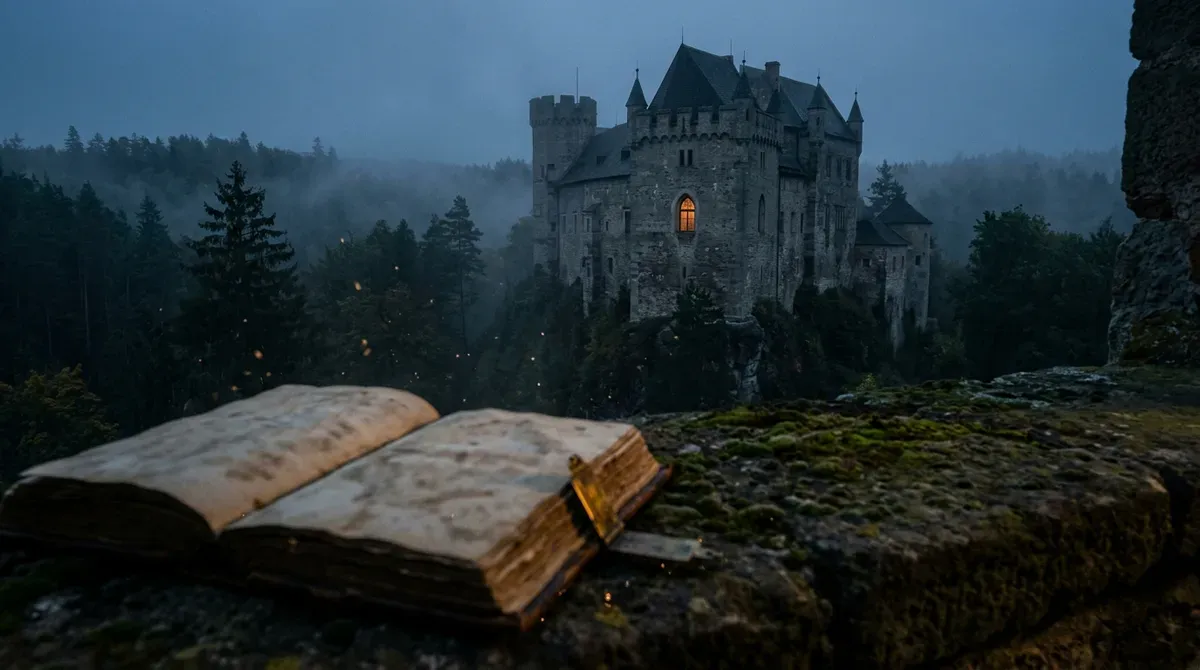
The oldest written version of the Houska tale comes from Kronika česká, a chronicle compiled by Václav Hájek of Libočany. It is there that the story of a hole near Houska first appears in print. Hájek describes a dark opening in the ground and spirits that move through the area in the shape of animals. These vivid details give the legend a sense of age that modern visitors find hard to resist.
A chronicle, however, is not a camera. Its writer gathered stories, shaped them and set them in a far older past. The date 878 attached to the events is best read as part of that narrative, not as a reliable record of what happened that year. Medieval chroniclers often wrote local tales to give them weight and history, so the date tells us as much about the writer’s world as about the setting.
A master’s thesis from the Technical University of Liberec, written by Barbora Dvořáková in 2015, reproduces Hájek’s account and examines it closely. The thesis makes a point that is easy to miss: chronicle stories generally describe the period in which they were written, not the period in which they are set. For readers of the Houska legend, the pit and the animal spirits may say more about the attitudes of Hájek’s own time than about the ground beneath the castle.
Careful readers can hold two ideas together. The chronicle shows that the story of the hole was already being told when it was written. The events it places in 878 remain part of the legend, and each reader must decide how much of the past they reflect.
When Was Houska Castle Built?
Houska Castle’s official history places its foundation in the first half of the 13th century, based on archaeological findings. The castle is attributed to Přemysl Otakar II, the Bohemian king whose name is tied to many fortified sites in the region. Houska sits in Central Bohemia in the Czech Republic, and its documented story begins there.
That gives the castle a firm starting point. Walls, foundations and layers of earth can be studied and dated, so historians can place the building within a known window of time.
The legend follows a different calendar. The chronicle that describes the pit and the spirits places its events in 878, centuries before the castle was founded. Readers are left with two timelines. One is anchored in excavated stone and medieval records. The other is anchored in a story that was written down long after the year it names.
Neither timeline settles the question of what lies beneath the chapel. The gap between them is the key tension. Does a legend that reaches back to 878 tell us about the early medieval period, or does it tell us more about the people who first wrote it down in a castle that did not yet exist in that form?
How Did World War II Touch Houska?
The wartime years add a documented chapter to the castle’s story, one that stands apart from the legend. Hrad Houska’s history says the German army used the castle until 1945, so the building was not simply left to its ghosts during the war. The castle’s official timeline places its seizure in the years 1939 to 1945, a period that followed the outbreak of the war and ended with its collapse in Europe.
From 1943, the castle was put to a different and troubling use. It served as a depository for Jewish and Masonic books, storing collections gathered from communities and organizations that the occupying authorities targeted. The books were not lost in the rooms of a haunted house. They were held in a building under military control, in a region where persecution shaped daily life.
The gap between the chronicle and the wartime record is striking. The chronicle’s pit and animal spirits belong to stories told by people reflecting on their own times, while the wartime years belong to records of soldiers, seized property and a regime that took both books and lives. Readers do not need to choose between the two to see why the castle carries weight. The legend asks what lies beneath the chapel, while the wartime record asks what people did above it. Which of those questions feels more pressing when you picture the castle halls?
Restoration Under Josef Šimonek, 1924 to 1939
In 1924, according to the castle’s owners, Josef Šimonek bought Houska, and the building began a new chapter. The chapel was restored in 1928. That work carried extra weight, because the chapel is the spot where the legend places the fissure leading to hell, so the repairs took place right at the heart of the old tale.
Reconstruction was completed in 1930. Over the next nine years, until 1939, the castle served as a family summer residence and a representative residence, a place for household life and formal receptions rather than a ruin on the edge of the countryside.
It is easy to picture those summers: family members moving between rooms, guests arriving for visits, and the pit and the black monk existing only as stories told in the region.
The postwar years brought a quieter role. From 1950, the State Library housed its archives at the castle, so the halls that once hosted family gatherings became storage for documents. The castle opened to the public in 1999, and visitors have walked its corridors ever since.
Tickets, Tours and the Inferno Exhibit
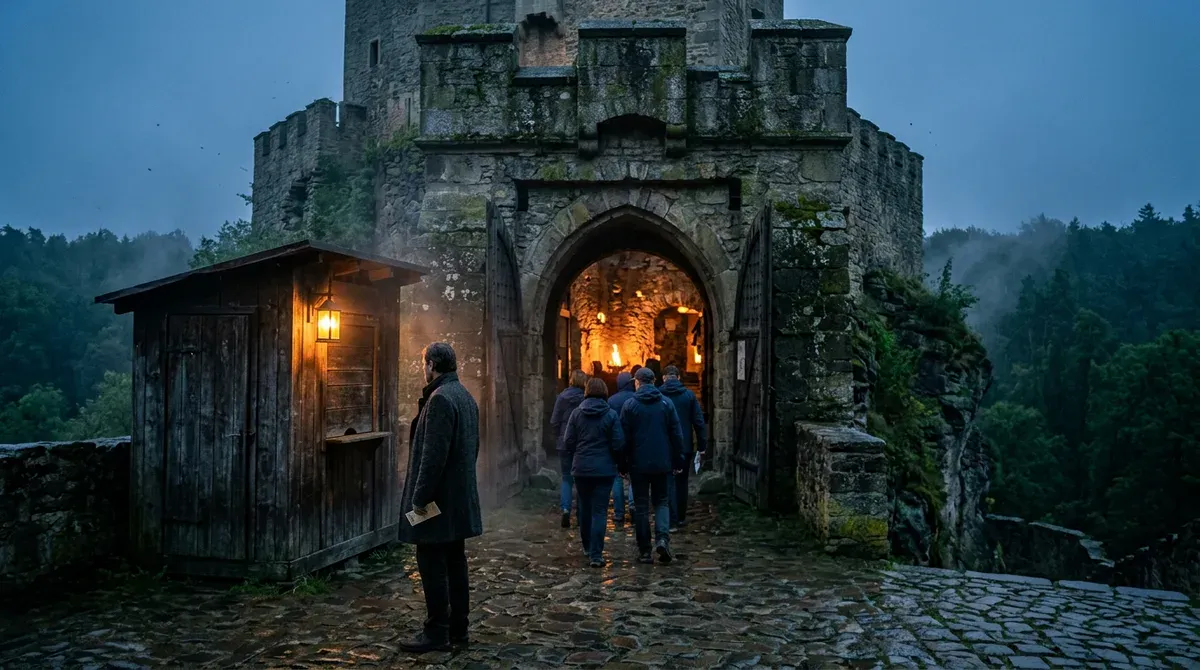
Visitors planning a trip will find the posted admission prices easy to compare. An adult ticket costs 180 CZK, while children up to 15, seniors and students pay 130 CZK. A family of two adults and two children pays 520 CZK in total.
– Adult: 180 CZK – Children up to 15, seniors and students: 130 CZK – Family (two adults, two children): 520 CZK – Inferno exhibit: 80 CZK
The Inferno is the castle’s most unusual attraction. It is a hand-carved, moving installation 12 metres long and 2 metres high, with 11 scenes that bring the hell motif to life. Because the Inferno is shown separately from the main tour, the 80 CZK fee covers a distinct stop rather than part of the standard route. Visitors who want the full picture of the legend may find it worth taking both.
The 2026 season opened on April 3, 2026, with a new children’s game and a trail that winds around the castle and its surroundings. Families can spend time outdoors as well as indoors, and the trail gives the grounds a new way to be explored.
Guided tours run every hour, so visitors can plan their day around the schedule. The last tour departs, and entry to the outer courtyard closes, one hour before closing time. Arriving early leaves room for a full tour, the Inferno and a walk along the trail before the gates close.
Why the Gateway to Hell Legend Endures
Houska looks the part of a legend. Thick stone walls, a chapel set into the castle and narrow passages make it easy to imagine a story unfolding in the shadows. A medieval setting gives a tale about hidden places a natural home, and many visitors arrive half expecting to feel something.
Stories about underground passages, sealed rooms and buried remains do much of the work. Each one suggests that the castle keeps secrets below its floors, and the idea of a hidden stairway into the earth is hard to shake once it has been told.
Ghost content has its own momentum online. Videos, forum threads and photo collections about haunted castles reward curiosity, and a place like Houska fits neatly into that world of dark corridors and open questions. A mystery that invites people to investigate travels quickly when it can be shared and debated.
The Inferno installation pushes the legend in a different direction. By carving hell into a visitor attraction, the castle turns a frightening idea into something to walk through and study up close. Its name also echoes Dante’s Inferno, the medieval poem that describes a journey down through circles of punishment. That resonance is striking, and readers are free to decide what the connection means.
Weighing the Legend for Yourself
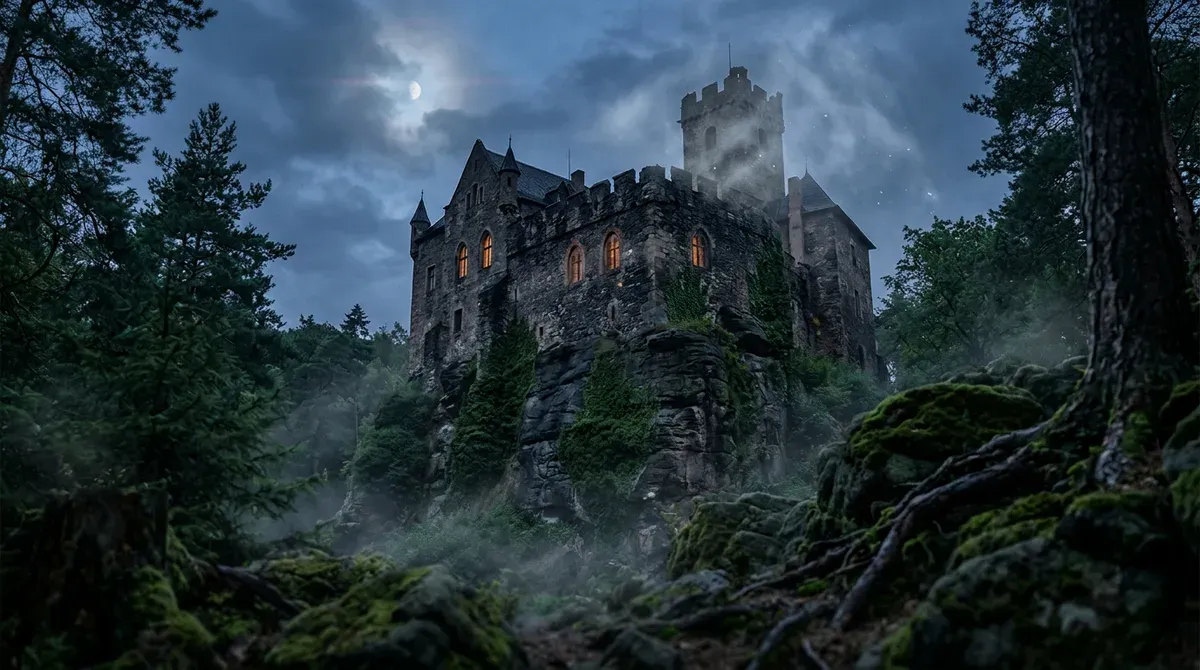
The documented timeline begins with a foundation in the first half of the 13th century and runs through German military use until 1945. The legend begins elsewhere, with a pit, wandering spirits and a faceless monk, first recorded in a chronicle that names the year 878. The two stories rarely meet.
Try comparing the chronicle with the building record yourself. Picture the chapel, where the fissure is said to lie, and ask which details the stones could confirm and which could only have come from the storyteller.
What kind of evidence would change your mind? Would a sealed passage found beneath the chapel convince a skeptic, and would a believer accept an empty one as proof?
Put the Legend to the Test
Start with a notebook and a simple test before you go. Write down the three claims that define the legend: the pit beneath the chapel, the spirits in animal form and the faceless black monk. Beside each one, note whether it appears in the old chronicle, in the castle’s documented history, or only in later retellings.
On the day, plan around the hourly guided tours so you have time to stand in the chapel without rushing. Listen for which details the guide ties to excavated stone and recorded repairs, and which belong to the folklore. Ask what physical evidence exists for the fissure, then write the answer down exactly as it was given.
Finish with the Inferno, and read its carved scenes with your notes in hand. Ask whether the hell on display tells you more about medieval imagination or about what today’s visitors expect to feel. Then tell us in the comments which part of the legend you think holds up best, and why.
Frequently Asked Questions
1. Is Houska Castle open during the winter months?
Houska Castle runs on a seasonal calendar that begins with a season opening, so it is not necessarily open year-round. Visitors planning a winter trip should check the castle’s official website for current opening days and hours before setting out.
2. Are the underground passages from the legend open to visitors?
The underground passages, rooms and buried remains appear in the castle’s listings only as part of the legend, and no visitor access to them is described. The guided tours and the Inferno exhibit are the attractions the castle presents to the public.
3. How long does a guided tour of Houska Castle take?
The castle’s schedule lists guided tours departing every hour, but the length of a single tour is not stated in the available information. Visitors who want an exact figure should ask the castle directly or check its official website before planning the rest of their day.
4. Does Houska Castle host ghost tours or night events?
The castle’s listed offerings are hourly guided tours, the Inferno exhibit and a trail around the castle and its surroundings. No ghost tours or night events are described in the available information, so anyone hoping for an after-dark visit should confirm with the castle first.