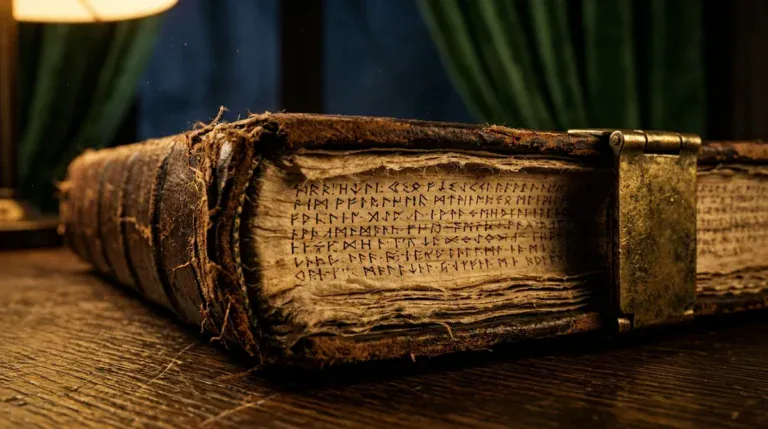

Roman Curse Tablets: Whispered Grievances Sealed in Lead
Roman curse tablets were thin sheets of metal, usually lead, inscribed with appeals to supernatural powers against rivals, thieves, and other enemies. The Romans called them defixiones, and the Greeks called them katadesmoi. People across the empire left more than 1,000 examples in temples, tombs, wells, and sacred springs. Many were rolled or folded, often pierced with nails, and then buried or sunk, trusting that the gods would read the message.
Few places preserve these voices more vividly than Bath in England. Between the 2nd and 4th centuries AD, 130 people left written prayers in the hot spring of Aquae Sulis. Some asked for justice against a stolen cloak or a missing purse, while others named suspects and begged the goddess Sulis to act. Their words, pressed into metal, have become a treasured national record, and they still speak to readers almost two thousand years later.
Key Takeaways
- Roman curse tablets, called defixiones in Latin and katadesmoi in Greek, were usually thin sheets of lead inscribed to call on supernatural powers against rivals, thieves, and other enemies.
- Between the 2nd and 4th centuries AD, 130 people left written prayers in the hot spring of Aquae Sulis, asking the goddess Sulis to act against thieves and other wrongdoers.
- Lead and tin alloys resisted water and soil far better than papyrus or wood, which is why so many scratched curse sheets survived for centuries in springs and tombs.
- Scholars still debate whether curses against thieves count as prayers for justice, because a 2022 study in Greece & Rome argues that the evidence from the Roman West does not support a rigid line between these tablets and other curse tablets.
- Many Roman curse tablets can only be partly read, since corrosion, faint scratches, and spelling mistakes mean translators must make careful judgements about what the writers meant.
What Were Roman Curse Tablets?
Roman curse tablets were inscribed objects, most often thin sheets of lead, that called on supernatural powers to bind an enemy, a thief, or a rival. The Romans called them defixiones, a Latin term tied to fixing or pinning something in place. Greek speakers called them katadesmoi, meaning bindings. Both names capture the core idea: a curse pinned an opponent down so that he could not win, act, or escape.
The people who wrote them had many reasons. A Heidelberg University announcement describes them as usually lead objects with binding spells, buried to influence litigants, athletic opponents, and romantic rivals. The same kind of text also turned up against rivals in trade, against neighbours in dispute, and against anyone suspected of taking property that did not belong to them.
The custom was far older than the Roman state. Tablets of this kind were already in use centuries before the empire, and the Romans adopted and adapted the practice. The finds stretch over roughly five centuries, from the 5th century BC to the 5th century AD, and they have been recovered from North Africa and England to Syria and Spain. That range suggests the habit was not the hobby of a few eccentrics but a shared way of seeking help when ordinary routes failed.
Scholars often describe this magic as practised outside state-sanctioned religion. Public temples, priests, and civic festivals served the official gods of Rome, while curse-writing was a private act. Individuals carried it out without needing permission from the authorities. A 2022 study in Greece & Rome explains that magic was not institutionalised in the way that official cult was.
That privacy is part of what makes the tablets so compelling. Each one was a small, personal message, written by someone who had decided that a few lines of lead might accomplish what a court, a neighbour, or a magistrate could not. What would push a person to place such a hope in the hands of the gods?
What Were Roman Curse Tablets Made Of?
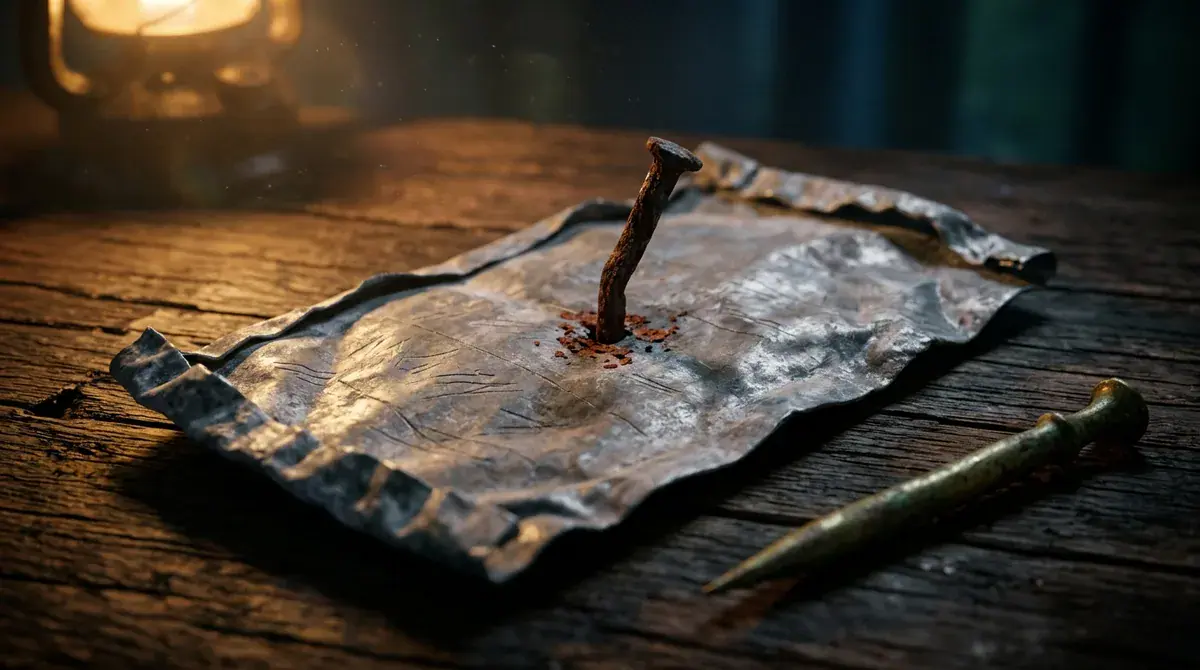
Roman curse tablets were made mostly of lead, and the Bath tablets were inscribed on lead or pewter, a metal alloy that is largely tin. Metal suited the task because it could be cut into small sheets, scratched with a sharp point, and carried to a sacred spring without breaking.
Tab.Sulis 10 shows what this looked like in practice. The tablet was found in 1979 in a votive deposit from the hot spring and Roman reservoir beneath the Kings Bath. Its record describes it as a tin alloy. It survives as four joined fragments that together measure 70 by 100 mm, a little larger than a playing card. That size was big enough to hold a full petition and small enough to fold or roll before it was dropped into the water.
Writing on such a sheet required no ink or brush. A writer pressed letters into the soft surface with a stylus, leaving thin lines that could be read by anyone holding the metal up to the light. The method was quick, and a person who could not afford a skilled scribe could still produce a message in their own hand.
Durability was the other great advantage. Papyrus and wood rot in wet ground, and most organic writing materials do not last long once they are buried or submerged. Lead and tin alloys resist water and soil far better, which is why so many scratched sheets came up from the sediment of springs and tombs centuries later, their grievances still legible.
Why Did the Bath Tablets End Up in the Hot Spring?
The tablets ended up in the hot spring because people believed the water belonged to the goddess Sulis, and that she would hear a petition pressed into metal and act on it. The spring at Aquae Sulis, the Roman town that grew up where Bath now stands, rose hot from the ground. The Romans treated it as sacred ground dedicated to Sulis.
Between the 2nd and 4th centuries AD, 130 individuals left their prayers in those waters. Each person scratched a message onto a sheet of lead or pewter, and the sheet was dropped into the spring or the reservoir beside it. There it sank into the silt and stayed hidden for centuries.
One of the most vivid examples is a tablet found in 1880 that names ten suspected thieves. Its writer asked that whoever had taken the petitioner’s property become “as liquid as water,” a striking image for a spring that was itself always moving.
Such tablets did not stay buried for good. Excavators gradually brought sheets up from the spring’s deposits, and each recovered piece added another voice to a growing collection of ordinary people’s worries about money, property, and trust.
By 2014 the importance of the collection had been recognised well beyond the city. That year the Roman Curse Tablets from Bath were inscribed on the UK Memory of the World Register, and the collection is held by Bath and North East Somerset Council. A place once sacred to a goddess now keeps the grievances of its visitors as a public record.
The writers wanted justice, but they also trusted the water to carry their words to a power that no magistrate could match. Whether Sulis ever answered is a question that no surviving record settles.
Who Stole the Hooded Cloak? Reading Tab.Sulis 10
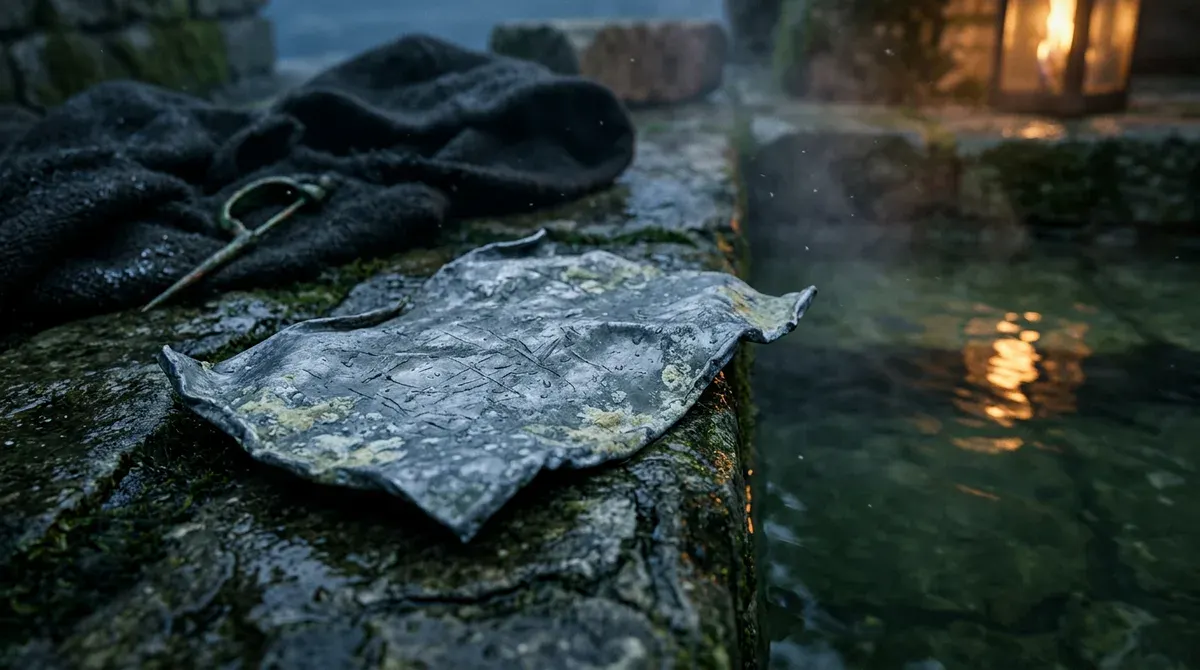
Picture Docilianus at the edge of the spring, reaching for the hooded cloak he had left nearby and finding nothing there. The tablet does not describe the scene, but the loss was clearly serious enough to send him to the goddess rather than to a court. He pressed his grievance into metal and asked Sulis to act.
His request is precise. He asks that the thief be deprived of sleep, so that every night the robber lies awake, and of children, a curse that reaches for what a Roman household most hoped to keep. The punishment is conditional. It lasts only until the cloak is returned to Sulis’s temple, which makes the goddess both the judge and the place where the stolen property must end up.
Docilianus never names the thief. He writes “whoever” took the cloak, and that single word leaves the door open. Anyone who carried it off, hid it, bought it, or knew where it lay could fall under the curse. In a busy town of bathers, servants, and travellers, that wording cast a wide net and turned one stolen garment into a question that everyone nearby had to face.
Did the cloak ever return to the temple? The tablet cannot say. It leaves us with a man’s anger, a household’s fears, and a goddess asked to decide what the law of the town could not.
Are Theft Curses Really Prayers for Justice?
Scholars disagree, and the answer depends on how narrowly the category is drawn. Some researchers call curses against thieves “prayers for justice,” but a 2022 study argues that the evidence from the Roman West does not support a rigid line between these tablets and other curse tablets.
The numbers help explain why the debate is hard to settle. In 1904, Auguste Audollent gathered curses against thieves and slanderers into a separate category, and that group held only 20 known examples. Just five of them came from the Latin West, the region where the Bath tablets were written. A category built on so few objects leaves plenty of room for doubt.
The Bath collection adds a much larger body of evidence. Its 130 petitions show ordinary people turning to the goddess Sulis over stolen goods, insults, and disputes. They allow scholars to compare theft curses with the rest of the collection rather than judging them in isolation.
Some Roman British theft tablets also go further than a simple wish for punishment. They divide the stolen property between the petitioner and the deity, promising the goddess a share if the goods are recovered. That arrangement drew on Roman legal ideas about ownership and obligatio, the bond that makes one party owe something to another. The appeal to the god therefore reads almost like a contract, with the writer offering a reward in exchange for help.
Even so, these tablets were never legal documents. Writing a claim onto a sheet of lead did not give a petitioner a case in court, and no judge was bound by what a worshipper dropped into the spring. The writers borrowed the vocabulary of legal dealings because it was the clearest language people had for fairness, but they operated in a different arena, one where the verdict belonged to a goddess.
Did the people who wrote these promises believe the gods would honour a bargain struck in lead? The tablets suggest they did, and that belief may tell us more about Roman justice than any court record.
Can Roman Curse Tablets Be Read Accurately Today?
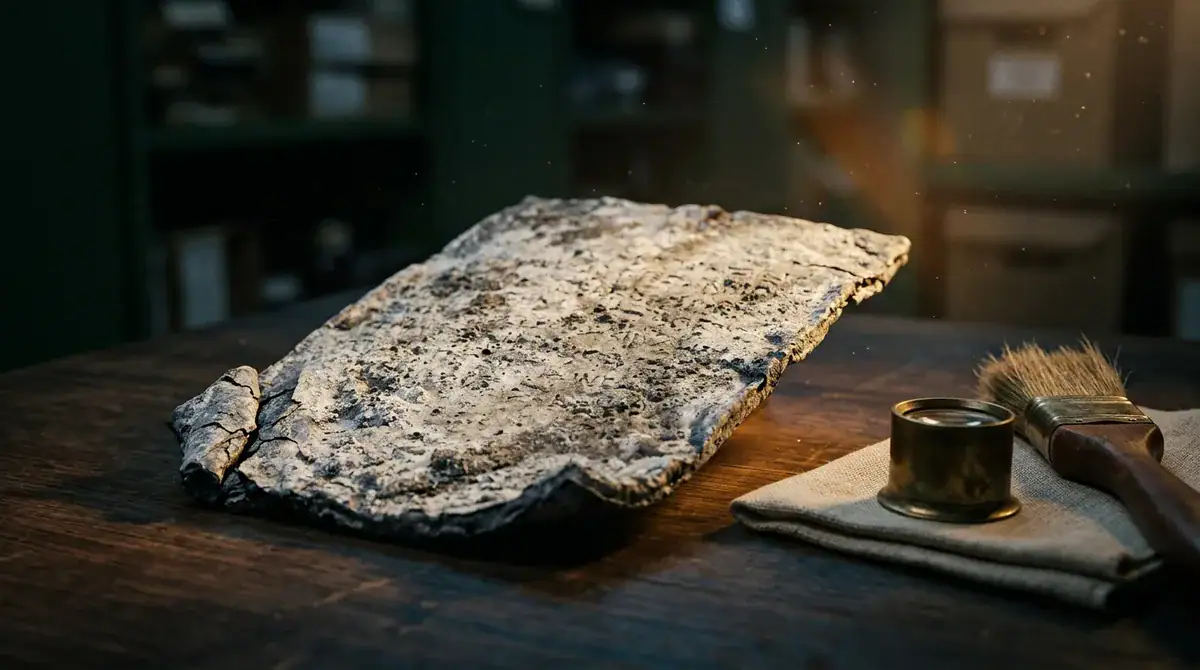
Roman curse tablets can be read, but only with patience, and translators have to treat many lines as careful judgements rather than certainties. Centuries in wet soil have bent, cracked, and corroded the metal, so some letters are missing or nearly erased.
Scratched letters are often faint, and a single stroke can change a word. Writers were not always skilled at spelling, and they sometimes mixed Latin with everyday local speech or dropped word endings. One passage may therefore support several plausible readings.
Tab.Sulis 4 shows the problem clearly. Its writer lists ten suspected thieves and asks that the guilty party become “as liquid as water,” a vivid image in English. Each name must still be checked against the surviving letters, and the words around it must be weighed too.
Good translation separates what is clear from what is still debated. The request for stolen goods to be returned, or the naming of a goddess, can usually be read with confidence. Unclear names, disputed verbs, and gaps in the curse formula remain open, and scholars continue to argue over them.
Readers should see this uncertainty as part of the story. A translation is a reconstruction, and the most useful versions show where the metal is clear and where the writer’s meaning has slipped out of reach.
What Did the 2026 Heerlen Decipherment Reveal?
The 2026 Heerlen decipherment revealed a second-century AD lead curse tablet, inscribed in ancient Greek in an Egyptian style, whose text had remained hidden for centuries. Heidelberg University announced the result on 17 June 2026, adding a new voice to the Roman curse record.
The tablet is small, measuring 9.3 by 4.8 cm, and it was found at Heerlen in the Netherlands, a town the Romans knew as Coriovallum. Its Greek lettering combines the language of the eastern Mediterranean with visual habits associated with Egyptian magic. That mix shows how far such practices could travel along the Roman trade routes.
The breakthrough came from reflectance transformation imaging, or RTI. The method takes many photographs of the same object, each lit from a different angle, and then combines them into one image. Scratches that vanish in ordinary light can stand out this way, and the researchers used it to identify three separate groups of characters.
What do those characters say? The tablet bears three magical symbols and the names of two men and two women. In curse-writing, a name was essential, because a spell needed a clear target. Naming four people suggests the writer wanted the curse aimed at specific individuals rather than at a vague enemy.
Whether those four were rivals, business partners, or family members is not something the metal reveals. Each new decipherment, though, shows how much of the ancient world still waits in small sheets of lead.
Decide What the Lead Still Remembers

Three threads run through the tablets: the metal that carried them, the grievances pressed into it, and the argument over whether theft curses were a kind of justice. Lead and tin kept the words for centuries. Docilianus begged Sulis to rob a thief of sleep and children, and scholars still debate whether petitions like his deserve a category of their own.
Many tablets remain unread or only partly read. Faint scratches, corroded edges, and missing names keep parts of their messages hidden, and new imaging methods may still reveal more.
Try comparing two kinds of request. Set Docilianus’s stolen cloak beside a rivalry curse aimed at a competitor in trade or a rival for someone’s affection. Which one reads more like a legal complaint, and which one reads more like a private war? Where would you draw the line?
Then ask yourself whether Sulis ever acted on the petitions in the spring, or whether writing them gave frightened and angry people a place to put their frustration. Which explanation feels more convincing to you, and why?
Test Your Own Reading
Start by choosing one tablet and testing your own reading against the translation. Pick Tab.Sulis 4, which names ten suspected thieves, and make a two-column list. In the first column, note the names or phrases that seem clear. In the second, note the ones that feel uncertain, such as damaged letters or words that could be read in more than one way.
Then compare that with Docilianus’s request on Tab.Sulis 10. Write down the exact words he uses for the thief, the punishment, and the condition for lifting it. Ask yourself whether the wording reads more like a complaint sent to a court or a plea sent to a goddess.
Next, look for the reflectance transformation images that Heidelberg researchers used on the Heerlen tablet. Before you read any caption, try to find the letters yourself in the shifting shadows. Then ask whether the four names suggest a family, a business partnership, or a bitter feud.
Finally, write three questions the metal cannot answer, such as whether the cloak returned to the temple or whether Sulis ever acted. Keep that list beside you as you read the next curse tablet, and notice which writer sounds angriest, most hopeful, or most doubtful.
Frequently Asked Questions
1. Why were Roman curse tablets rolled, folded, or pierced with nails before they were buried?
Writers rolled, folded, or nailed their tablets to pin the curse in place, which matched the Latin idea of defixiones, or fixing something down. Burying or sinking the metal was meant to hand the message to the gods or spirits below the ground or water. The physical damage was part of the spell, not just a way to store the sheet.
2. Were curse tablets also used against athletes and lovers in Roman Britain?
Curse tablets across the Roman world were buried to influence litigants, athletic opponents, and romantic rivals, so these uses were part of the wider practice. The Bath petitions that have been studied most closely focus on stolen goods, insults, and disputes over property. Readers who want to see British examples of rivalry curses should compare the Bath texts with other British finds.
3. What does the phrase “as liquid as water” mean on the Bath curse tablets?
The phrase on Tab.Sulis 4 wishes that the named thief would become as liquid as water, losing solidity and being scattered or dissolved. It is a vivid image for a writer who dropped the curse into a spring that was always moving and rising. The exact intention behind the wording is still debated among scholars.
4. Could anyone write a curse tablet, or was it limited to certain people?
Anyone who wanted to write a curse could do so, because the practice was a private act that did not require permission from Roman authorities. Scratching a message into soft lead or tin needed only a sharp stylus, not ink or a skilled scribe. This openness helps explain why the Bath collection contains the prayers of 130 different individuals from many walks of life.