
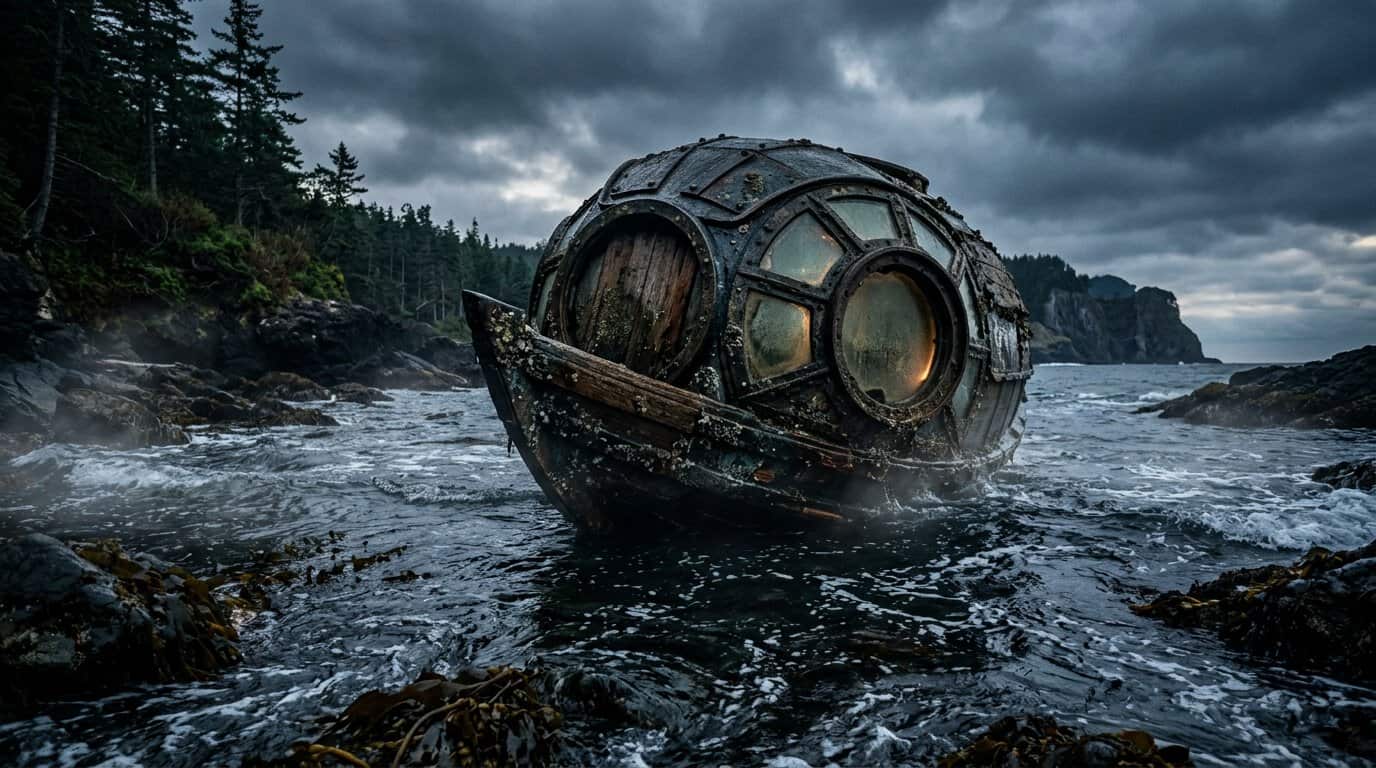
Utsuro Bune Legend: The Edo Era Mystery Explained
In 1803, fishermen on Japan’s Hitachi coast reportedly found a strange, rounded vessel drifting ashore. At the center of the Utsuro bune legend was a young foreign-looking woman, an unknown language, a sealed box, and mysterious markings covering the craft. The story resembles an early UFO encounter, but its roots may reach deeper into Edo-period folklore and fears of the unfamiliar.
Surviving illustrated manuscripts preserve parts of the account, offering clues without proving that an otherworldly visitor arrived in Japan. The vessel’s glass-like windows, metal panels, and unusual design raise questions about maritime technology, foreign contact, and how extraordinary stories develop. Between documented history and speculation, Utsuro bune remains one of Japan’s most haunting mysteries.
Key Takeaways
- The Utsuro bune legend describes a rounded vessel that reportedly washed ashore in Hitachi Province on February 22, 1803, carrying a foreign-looking woman, a sealed box, unknown writing, and unusual features such as glass-like windows and metal panels.
- The story survives through several Edo-period illustrated manuscripts, including Ume no Chiri, Toen Shōsetsu, and Hyōryūki-shū, but their conflicting details show that the account changed through retelling.
- The surviving records establish a tradition of strange-tale storytelling, not proof of an extraterrestrial landing or a precisely documented historical event.
- Utsuro bune may reflect folklore, fears of foreign contact, a misunderstood maritime incident, or a combination of these influences; its UFO-like qualities are compelling but remain speculative.
Introduction To Utsuro Bune Legend
On February 22, 1803, fishermen in Hitachi Province, now known as Ibaraki Prefecture, reportedly saw a strange vessel drift toward the shore. The rounded craft was described as a hollow boat, or utsuro bune, with dark metal panels, glass-like windows, and mysterious markings on its surface. Inside, according to later Edo-period manuscripts, they found a young woman with unfamiliar features, clothing, and language. She held a small box and reportedly refused to let anyone examine it, adding secrecy to an already unusual encounter.
The account survives through illustrated records and strange-tale collections rather than a single eyewitness report preserved from the day itself. These documents describe details such as food, water, and writing inside the vessel, but they differ in wording and appearance. That makes the story difficult to verify as a literal historical event. Some researchers view the tale as folklore shaped by older hollow-boat traditions, rumors of foreign ships, and fears about outsiders arriving by sea. Others wonder whether an unfamiliar maritime craft, perhaps damaged or misidentified, inspired the story.
That uncertainty has helped make the Utsuro bune legend one of Japan’s most intriguing unexplained encounters. Modern readers sometimes compare the vessel’s windows, metal body, and unknown visitor to an early UFO report, while historians generally treat it as evidence of Edo-period storytelling and cultural anxiety. The surviving records prove that people recorded and circulated the tale, but they do not prove that an extraterrestrial craft landed on the Japanese coast. Was Utsuro bune a carefully shaped piece of folklore, a misunderstood maritime event, or an early glimpse of a UFO story?
The 1803 Hitachi Shore Encounter
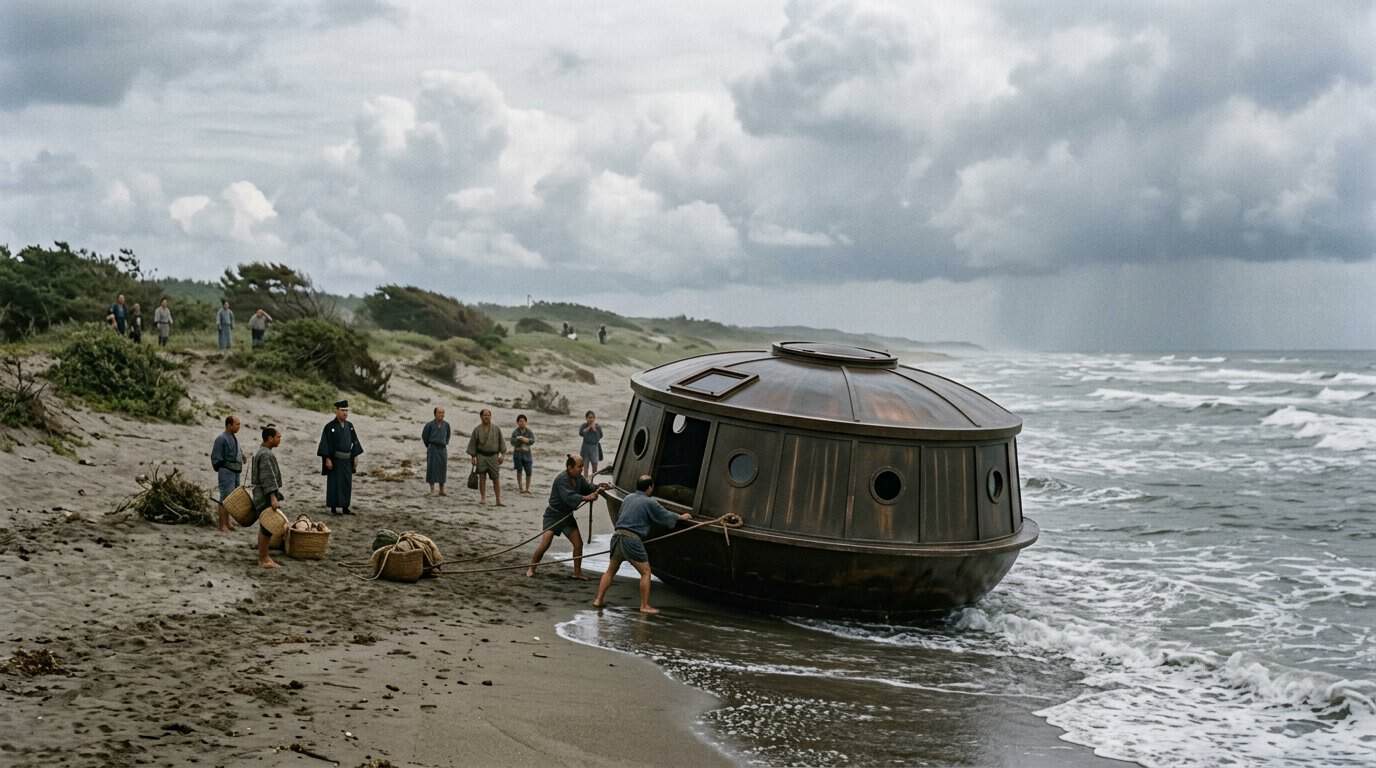
On February 22, 1803, fishermen working off the coast of Hitachi Province, in modern Ibaraki Prefecture, noticed a rounded craft drifting toward shore. Edo-period accounts describe the vessel as a hollow, bowl-like boat with dark metal panels and glass-like windows. When the fishermen pulled it onto the beach, they found a young woman inside rather than an empty cabin. The scene would have seemed startling even in a region familiar with ships, storms, and stories of strange objects at sea.
The woman reportedly looked foreign to the villagers and wore unusual clothing that did not match local styles. She held a small box close to her and would not allow anyone to inspect it, adding another layer of mystery. Records say she spoke an unknown language, while the fishermen could not understand her words or make themselves understood. Accounts such as Toen Shōsetsu and other later manuscripts also describe food and water inside the craft, along with markings on its surface that no one could explain.
Unable to communicate with her, the villagers reportedly returned the woman and her vessel to the sea rather than keeping her ashore. The story survives through illustrated Edo-period documents, including versions written decades after the alleged event. Historians therefore cannot confirm every detail or prove that the encounter happened exactly as described. Some readers see the rounded craft and its windows as signs of an early UFO sighting, while others connect the tale to maritime rumors, fears of foreign contact, and older Japanese stories about hollow boats. Like other unexplained mysteries, the Utsuro bune legend remains intriguing because its details invite both historical investigation and open-minded speculation.
Inside The Hollow Boat
The vessel described in the Utsuro bune legend was round, low, and shaped like a wooden bowl or incense burner drifting on the sea. Records such as Toen Shōsetsu and Hyōryūki-shū describe a dark or reddish upper section with several glass-like windows, features that would have seemed remarkable in coastal Japan in 1803. Its lower half was said to be covered in metal plates, giving the craft a sealed and unusual appearance. An illustration could show the bowl-like form from the side, with its curved shell, windows, and plated base.
Inside, the fishermen reportedly found supplies that made the object seem less like ordinary wreckage. Accounts mention food, water, and a young foreign-looking woman who held a small box and spoke an unknown language. The craft also carried mysterious markings, sometimes described as dark symbols or writing around its surface, although the surviving drawings do not match perfectly. These details invite comparisons with a damaged boat, a ritual object, or, for those drawn to the unexplained, an unfamiliar craft built for travel beyond the known world.
The manuscripts should still be read with care because they were written down after the reported landing and preserve different measurements and details. An illustration caption might read, “Surviving manuscripts give slightly different measurements and descriptions of the Utsuro bune.” That uncertainty does not erase the story’s historical value. The documents reveal how Edo-period writers recorded strange maritime reports and fears about outsiders. They also leave room for discussion: did the accounts preserve a real encounter at sea, or did folklore reshape an unusual piece of driftwood, foreign technology, or rumor into a mystery?
Edo Manuscripts And Historical Evidence
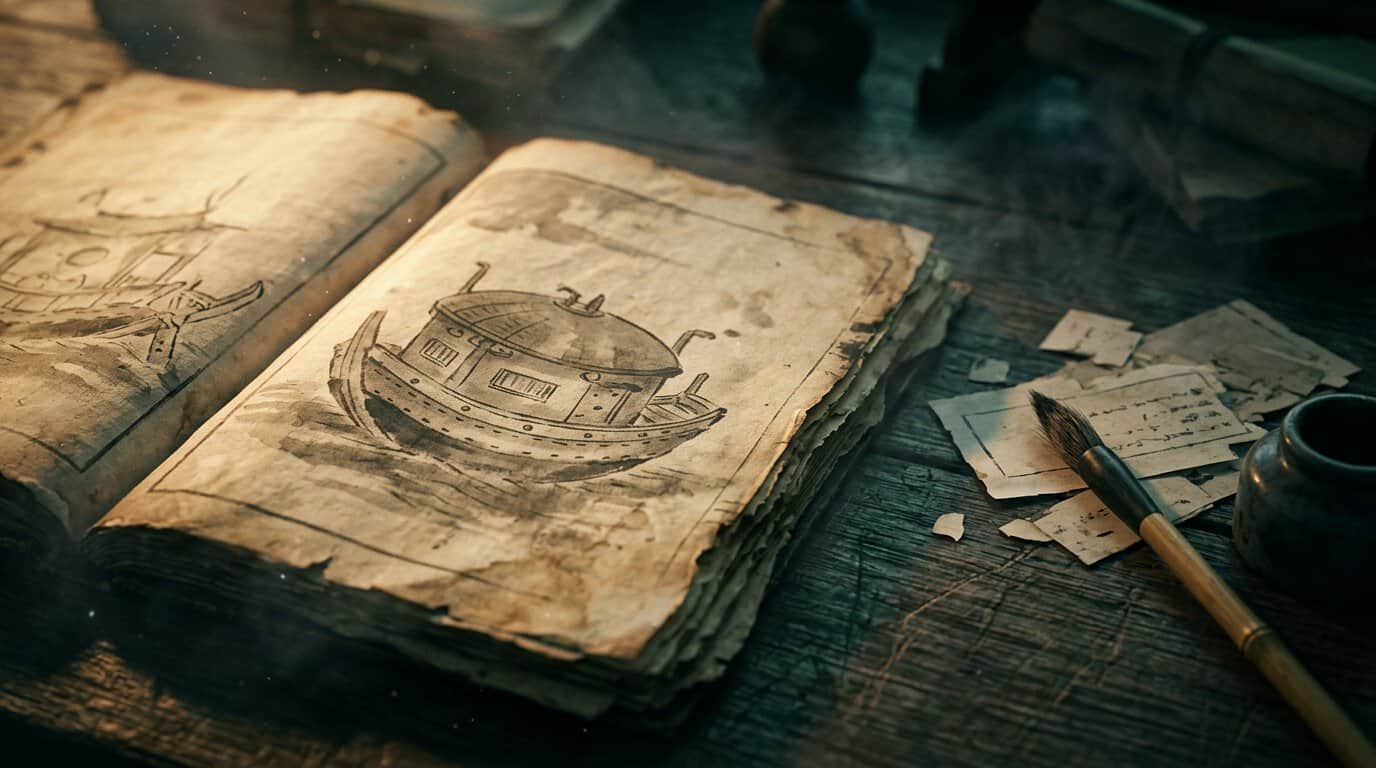
The Utsuro bune story survives in several illustrated Edo-period manuscripts rather than one original eyewitness report. Works such as Ume no Chiri, Toen Shōsetsu, and Hyōryūki describe a rounded vessel that reached the coast of Hitachi Province, modern Ibaraki Prefecture, in 1803, with a foreign-looking woman inside. Their pictures show a dark, polished craft with windows, metal fittings, and markings that can seem surprisingly modern at first glance. Yet the manuscripts differ in details such as the woman’s clothing, the vessel’s shape, the symbols on its surface, and parts of the landing story. Those changes suggest that the account moved through retellings, local reports, and the Edo fascination with unusual tales.
The differences matter because they reveal how people of the period understood strange encounters, foreign visitors, and objects arriving from the sea. They also leave room for questions: could the story preserve a real maritime incident, or did older hollow-boat traditions and rumors gradually shape it into a legend? The documents confirm a genuine body of strange-tale records, but they do not provide physical evidence that an extraterrestrial craft landed in Japan. Readers comparing Utsuro bune with other Japanese folklore, foreign-contact legends, or unexplained historical encounters can decide how much weight to give the historical record and how much to the mystery that remains.
Folklore Or Early UFO Encounter
The Utsuro bune story is often dated to February 22, 1803, when fishermen in Hitachi Province, now Ibaraki Prefecture, reportedly found a rounded vessel drifting ashore. Several Edo-period manuscripts, including Ume no Chiri and Toen Shōsetsu, describe a young foreign-looking woman inside, along with glass-like windows, metal fittings, food, water, and mysterious writing. The accounts may have grown from maritime rumors about wrecked boats or unknown visitors arriving from overseas. In an era when Japan closely controlled foreign contact, the strange woman and her guarded box could also reflect fears about outsiders and distant countries.
Older Japanese stories already included hollow boats, floating vessels, and unusual visitors from the sea. Local religious traditions sometimes treated mysterious arrivals as signs, spirits, or messengers. These ideas offer a cultural explanation without requiring a modern spacecraft, and the details changed across the surviving versions rather than forming one consistent eyewitness report. At the same time, modern readers naturally notice features that sound familiar from UFO accounts, including a smooth craft, transparent openings, an unknown language, unexplained symbols, and a seemingly nonhuman origin. Those similarities make the legend compelling, but they do not prove that the people of Hitachi witnessed an extraterrestrial vehicle.
The evidence consists of later written and illustrated records, not a recovered craft, physical material, or independently verified testimony from 1803. Historians therefore cannot establish whether the event happened as described, whether it began as a real maritime incident, or whether it was reshaped by storytellers and publishers. Scientific investigation is limited for the same reason, since no object remains for testing and the drawings may reflect artistic convention rather than precise observation. Even so, Utsuro bune remains valuable as a window into Edo-period fears, beliefs, and curiosity about the unknown. Its strange details continue to invite the question of whether folklore sometimes preserves a fragment of an event that history no longer understands.
Conclusion On Utsuro Bune Legend
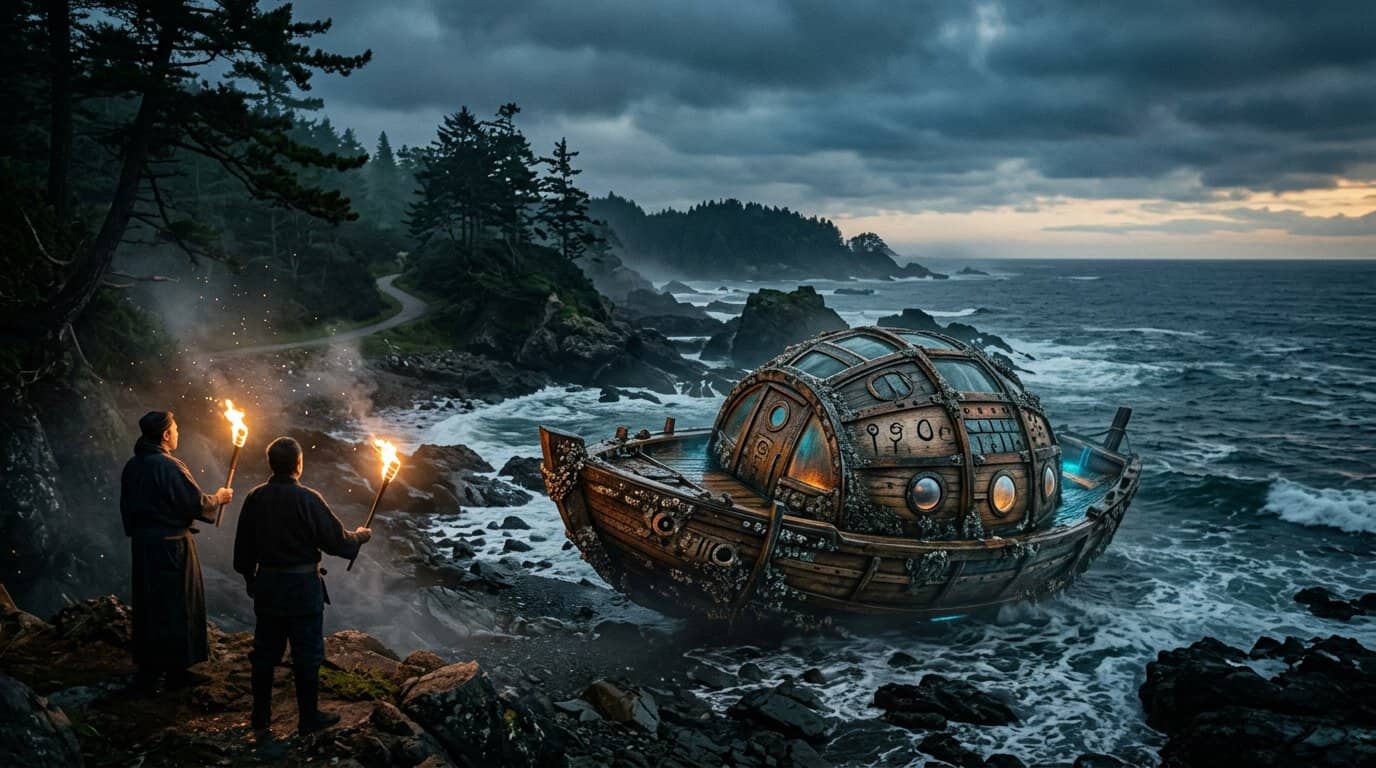
The Utsuro bune legend describes a striking arrival on February 22, 1803, when a rounded craft reportedly drifted onto the coast of Hitachi Province, in modern Ibaraki Prefecture. Fishermen were said to have found a foreign-looking woman inside, along with food, water, glass-like windows, metal fittings, and a small box she refused to surrender. Her language was unknown, and the markings on the vessel added to the mystery. These details survive in several Edo-period manuscripts, including illustrated accounts, but the records were written or copied after the reported event. They confirm a tradition of storytelling rather than proving that the landing happened exactly as described.
That uncertainty is what keeps the Utsuro bune legend alive. It may reflect folklore about hollow boats, rumors of shipwrecked foreigners, or fears surrounding contact with distant lands. Yet a distorted real encounter cannot be ruled out, especially in a busy coastal region. Modern readers may also see the strange craft as Japan’s early version of an unexplained aerial encounter, although the surviving evidence does not establish an extraterrestrial origin. Is Utsuro bune best understood as folklore, a changed account of a real event, or a remarkable early mystery with similarities to UFO reports?
Why the Utsuro Bune Legend Still Endures
The Utsuro bune legend remains one of Japan’s most intriguing unexplained encounters because it stands between documented history and folklore. On February 22, 1803, according to several Edo-period manuscripts, fishermen in Hitachi Province, now Ibaraki Prefecture, discovered a rounded, hollow vessel carrying a young foreign-looking woman. The accounts describe glass-like windows, metal panels, strange markings, food, water, and a small box that she refused to release. These details make the story feel surprisingly familiar to modern readers, yet the surviving evidence confirms illustrated records and repeated storytelling, not proof of an extraterrestrial landing.
Several explanations remain possible, including a drifted foreign vessel, a local tale shaped by fears of outside contact, or an older hollow-boat tradition given new life in the Edo period. The woman’s unknown language and unusual craft invite comparisons with UFO encounters, while the historical setting encourages a careful reading of how rumors traveled through coastal communities. Utsuro bune is therefore best understood as a mystery with genuine cultural and historical value, even though its ultimate truth cannot be established. Whether viewed as folklore, a misunderstood maritime event, or a glimpse of something beyond its time, the legend still leaves one question open: what might the fishermen of Hitachi have believed they saw that day?
Frequently Asked Questions
1. What is the Utsuro bune legend?
The Utsuro bune legend tells of a strange, rounded vessel that reportedly washed ashore in Hitachi Province, now Ibaraki Prefecture, on February 22, 1803. Fishermen allegedly found a young foreign-looking woman inside, along with a sealed box, unfamiliar writing, and unusual features such as glass-like windows and metal panels.
2. Where did the Utsuro bune incident supposedly happen?
The story is linked to the coast of Hitachi Province, an area now located in Ibaraki Prefecture, Japan. The exact beach remains uncertain because surviving Edo-period records describe the location in different ways and do not provide a single verified eyewitness record.
3. What did the woman inside the vessel look like?
Edo-period accounts describe her as a young woman with unusual features, clothing, and language. She reportedly held a small box and refused to let the fishermen inspect it, making her identity and purpose central to the mystery.
4. What did the Utsuro bune vessel look like?
The vessel was described as rounded or hollow, with dark panels, glass-like windows, and strange markings across its surface. Some illustrations show a design that resembles a modern capsule, but the drawings differ between manuscripts and cannot be treated as exact technical records.
5. Is the Utsuro bune story evidence of an ancient UFO encounter?
The story has features that resemble a UFO encounter, including an unfamiliar craft, a mysterious occupant, and unknown writing. However, the surviving evidence does not prove an extraterrestrial origin. Historians also consider explanations involving a foreign boat, misunderstood maritime technology, or folklore about outsiders arriving from the sea.
6. Which historical records preserve the Utsuro bune legend?
The account appears in several Edo-period illustrated manuscripts and strange-tale collections rather than one original report from 1803. Works such as Toen Shōsetsu, Hyōryūki-shū, and Ume no Chiri preserve related versions, but their differences show that the story changed as it was copied, retold, and interpreted.
7. What was inside the box carried by the woman?
No surviving version provides a confirmed answer, and the woman was said to keep the box closed. Its contents may have been a storytelling device representing danger, privacy, or a foreign secret, although the possibility of a real personal container remains open.
8. Why does the Utsuro bune legend still matter today?
Utsuro bune sits at the meeting point of documented history, folklore, maritime mystery, and early ideas about visitors from beyond Japan. Its details invite careful comparison with Edo-period fears of foreigners while leaving enough unanswered questions for modern readers to consider whether the tale preserves a distorted real event or a powerful traditional mystery.