Fairy Circles Namibia Science Termites And Desert Mystery
Across Namibia’s dry grasslands, strange circles of bare earth appear in near-perfect patterns, each bordered by a ring of taller grass. These fairy circles have raised questions for decades. Are they shaped by termites, hidden life beneath the soil, or grasses competing for every drop of rain? Their regular spacing feels mysterious, but it may also reveal a remarkable natural system.
Recent research increasingly points to rainfall, soil-water movement, and grass competition as the main forces behind the pattern. Termites and other organisms may still play a supporting role. The evidence is strong but not conclusive, leaving room for further investigation and allowing the landscape’s mystery to endure.
Key Takeaways
- Namibia’s fairy circles are most likely formed by rainfall, soil-water movement, and competition among grasses for scarce moisture, creating bare centers surrounded by taller grass.
- Termites and other soil organisms may influence or maintain some circles, but they do not fully explain the formations across all regions.
- The circles typically measure about 2–12 meters across and occur in broad bands along Namibia’s eastern Namib Desert, extending into southern Angola and parts of South Africa.
- The formation process is not conclusively settled; further field experiments are needed to determine how plants, insects, soil, and changing weather interact.
Introduction To Namibia Fairy Circles
Across the Namibian grassland, circles of bare earth appear like carefully placed marks across a vast ochre carpet. Each patch is often evenly spaced and surrounded by a ring of taller, denser grass that stands out against the low vegetation. From the ground, the pattern feels deliberate. From above, it reveals an almost geometric design stretching toward the horizon. Known as fairy circles, these formations have inspired scientific investigation and older supernatural interpretations. Some local stories connect the circles with spirits, hidden forces, or mysterious footprints across the land.
The central question is how such striking patterns form without any obvious hand arranging them. Termites were once considered the leading explanation because underground colonies can change soil and remove competing plants. Other researchers point to grasses competing for limited water, with bare centers helping nearby plants collect and use rainfall more efficiently. Recent evidence favors a self-organized pattern shaped mainly by rainfall, soil-water movement, and competition among grasses. Termites and other soil organisms may still influence some circles.
Research has not solved the mystery completely, and that uncertainty keeps the landscape compelling. Scientists still need more direct experiments to separate the roles of plants, insects, soil, and changing weather across Namibia’s dry regions. The circles may be less a single puzzle with one answer than a visible record of several natural forces working together. For visitors and observers, their regular shapes remain a reminder that familiar grasslands can conceal patterns that are both measurable and deeply mysterious.
Mapping Namibia Bare Grassland Circles
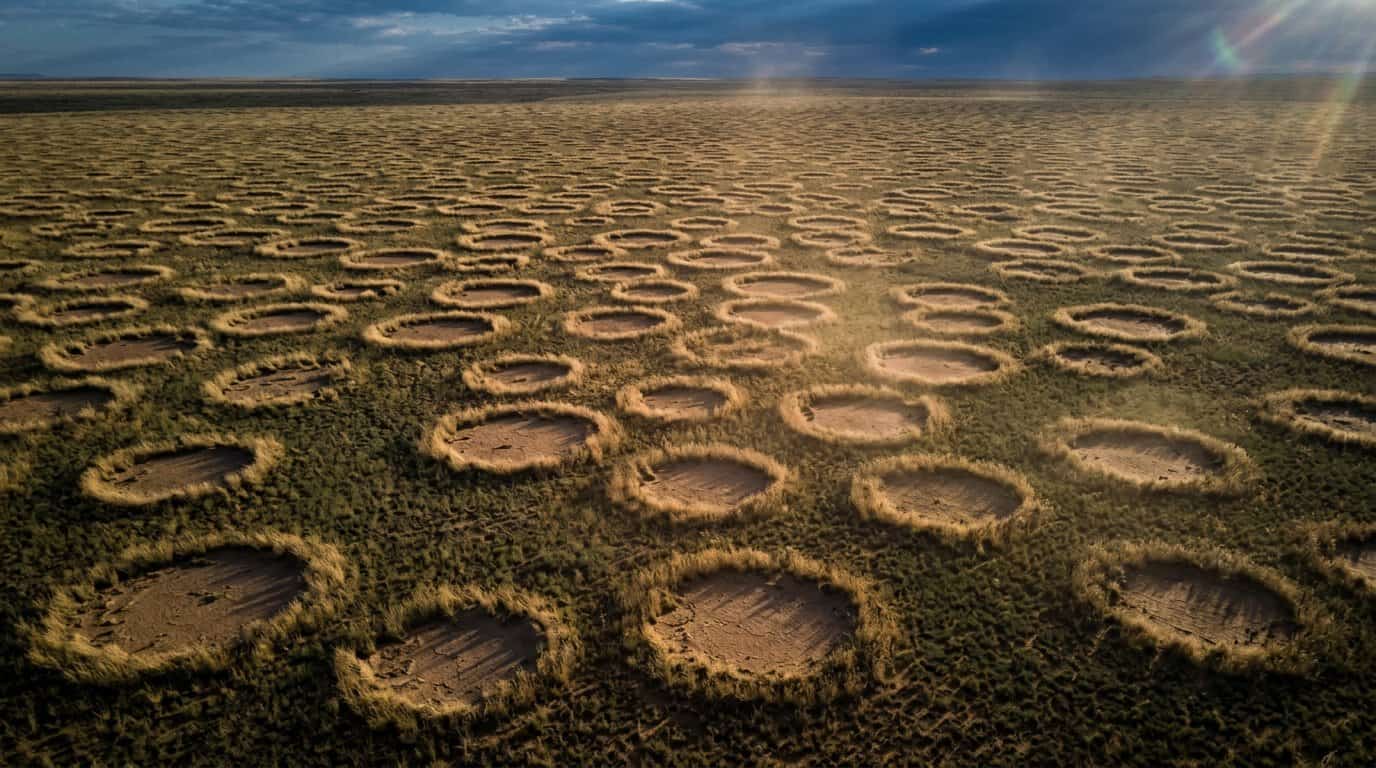
Namibia’s fairy circles appear as near-perfect circles of bare soil set within otherwise sparse grassland. Most measure roughly 2 to 12 meters across, with a clean, open center and a surrounding ring of taller, denser grass. From the ground, some look like dry patches, but aerial views reveal their repeated spacing and striking regularity. Their pattern raises an immediate question: how can such similar circles form across a landscape shaped by heat, wind, and scarce rain?
The circles stretch along the eastern edge of the Namib Desert, forming broad bands that continue into southern Angola and parts of South Africa. A map of this range shows that the phenomenon is not limited to one isolated valley. An aerial photograph can capture the contrast between dark grass rings and pale, empty centers. The distribution also suggests that rainfall, soil conditions, and the movement of water through the ground may help determine where circles appear. Together, these views reveal the scale of the mystery, from one unusual patch to a landscape-wide design.
For years, termite activity offered one of the most compelling explanations, while local stories sometimes gave the circles a supernatural meaning. Recent ecological research favors a pattern created mainly by grasses competing for limited water, although termites and other soil organisms may still shape or reinforce some circles. Scientists have not reached a final answer, and the balance between climate, plants, insects, and unexplained local variations remains under investigation. That uncertainty connects Namibia’s circles to other natural mysteries, leaving readers to consider whether the pattern is an elegant survival strategy, an insect-made landscape, or a combination of forces.
Termites And Namibia Fairy Circles
The termite theory gained attention when botanist Norbert Jürgens proposed that sand termites, especially Psammotermes allocerus, might create Namibia’s fairy circles from below the surface. An underground colony could feed on grass roots, leaving a round patch of bare soil while nearby plants remained untouched. As termites tunnel and reshape the soil, they may also change how water drains, spreads, or collects after rare desert rain. This offered a compelling explanation for patterns that had inspired older supernatural stories.
Field studies have found termites and signs of termite activity in some fairy circles, particularly where underground moisture may help colonies survive. Yet this evidence does not prove that termites created every circle. Researchers have also observed circles in places where the insects are absent or difficult to detect. Other studies point to grasses competing for limited rainfall, with bare patches helping nearby plants capture water and form regular patterns. The strongest current view is cautious: termites may help form or maintain some circles, while soil moisture, rainfall, and plant competition appear to play a major role across the wider landscape.
The mystery becomes more interesting when both explanations are considered together. Termites could alter the soil first, while grasses and water movement preserve the circle’s shape long after the original activity has faded. A related article about termite mounds and desert insects offers more context on how small underground animals can influence harsh environments. Until researchers conduct more controlled experiments, Namibia’s fairy circles remain a living debate rather than a solved puzzle.
Rainfall Soil Water And Grass Competition
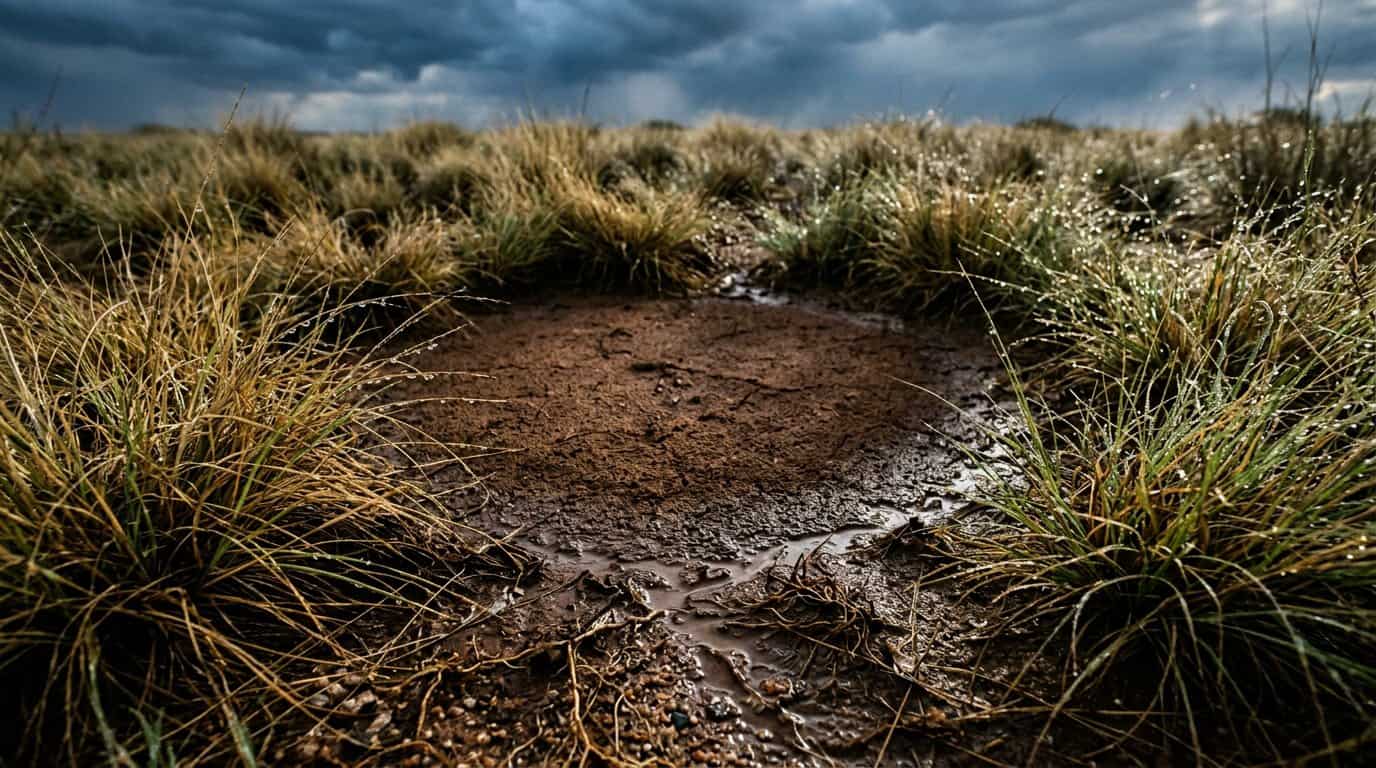
Rainfall may be the quiet force shaping Namibia’s fairy circles. In this leading self-organization theory, sparse grasses compete for limited water, and stronger plants take more water from the surrounding soil. Deep, sandy ground can carry moisture beyond the point where rain first lands, allowing taller grass around each circle to draw water from the bare center. The result is a natural pattern in which plants benefit from moisture at the edge while too little water remains for grass to grow inside.
After a shower, the bare patch may act like a small collection area rather than a dead zone. Without roots and leaves to absorb water quickly, rainfall can soak deeper and move outward through the sand toward nearby grasses. As grass density changes, this balance may repeat across the landscape, creating circles that appear surprisingly regular without a central designer. Researchers studying fairy circles in Namibia have found that rainfall, soil depth, and root competition can explain much of this spacing, although conditions vary from one region to another.
That explanation does not end the mystery completely. Termites and other soil organisms may influence some circles, and local stories have long given the patterns a supernatural meaning, much like other unexplained natural landscapes. Current research generally favors vegetation and water movement as the main drivers, but scientists still need more field experiments to test how these forces interact. The open question is whether every circle follows the same pattern or whether Namibia’s fairy circles reflect several natural processes working together.
Namibia Fairy Circles Folklore And Fieldwork
Across Namibia’s dry grasslands, fairy circles appear as near-perfect bare patches ringed by taller grass, an arrangement that can look designed rather than grown. Older supernatural interpretations have linked these marks to spirits, hidden forces, or the footsteps of beings moving through the desert. Local stories and explanations vary between communities and should not be treated as one universal tradition. These cultural readings give the circles meaning and mystery, but they are different from scientific claims about how the patterns form. For a wider look at similar questions, readers can explore related mysteries involving unexplained landscapes and desert patterns.
Field researchers approach the circles by comparing what can be seen from above with what happens on the ground. Satellite images reveal their spacing and changes over time. Soil tests measure moisture, nutrients, and signs of insect activity, while plant surveys record which grasses survive around each bare patch. Long-term observations also show how rainfall affects the circles, since surrounding grasses may compete for limited water and leave dry centers behind. Current evidence increasingly supports a self-organized pattern shaped mainly by rainfall, soil-water movement, and grass competition, although termites and other soil organisms may influence or strengthen some circles.
The investigation remains open because Namibia’s fairy circles do not behave exactly the same way in every place or season. Researchers still need more field experiments that alter water, plants, or termite activity to test which causes matter most, rather than relying only on patterns that look similar in photographs. This careful process does not erase the folklore, because a scientific explanation can describe formation without replacing the cultural stories attached to the land. As new satellite surveys and field notes accumulate, the circles continue to invite a useful question: do the strongest clues lie in the soil, the weather, or the way people read a mysterious landscape?
Conclusion On Namibia Fairy Circles
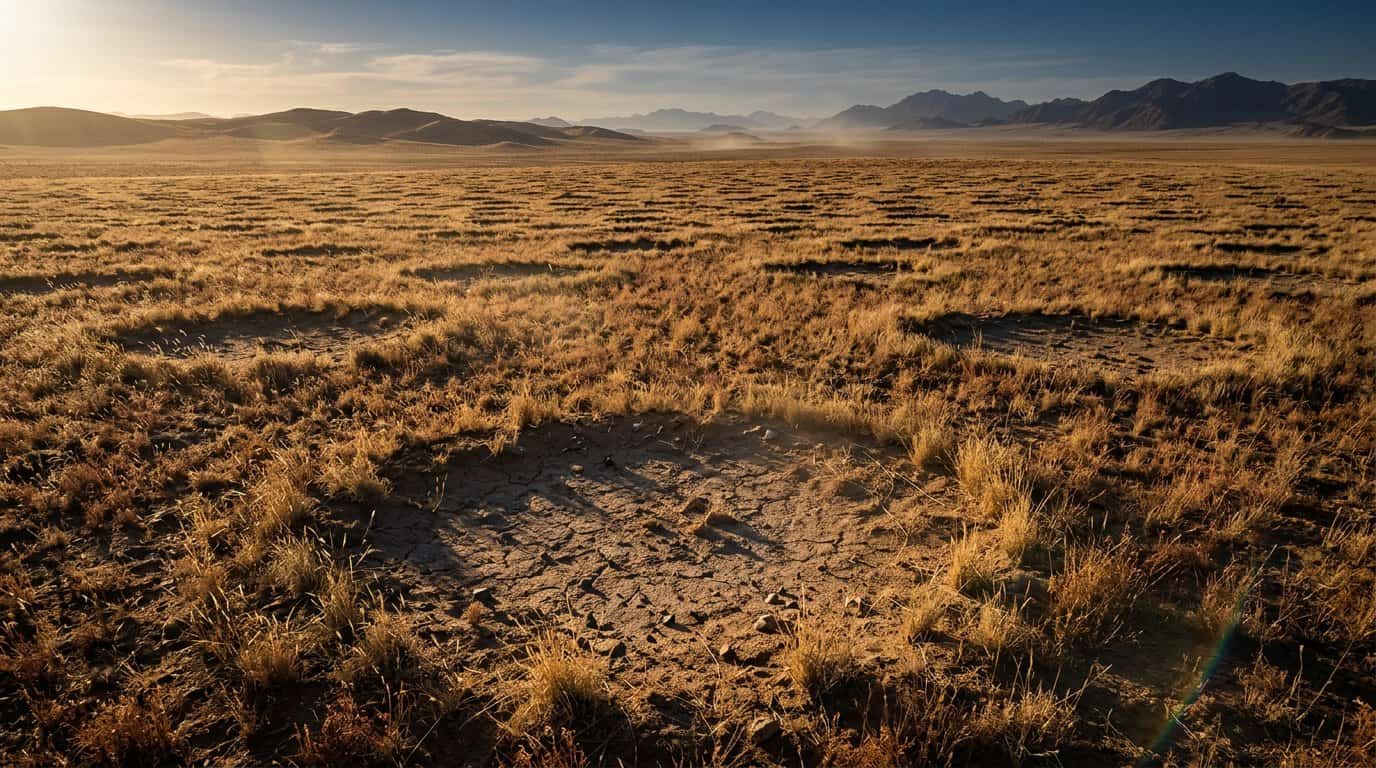
Current research on Namibia’s fairy circles points most strongly to a natural pattern shaped by rainfall, soil-water movement, and competition among grasses. In dry years, surrounding plants may draw water toward their roots, leaving the center too dry for new grass to survive. The bare patch may also help nearby plants access limited moisture. This explanation fits the circles’ regular spacing and the taller grass often found around their edges. Termites and other soil organisms may still affect individual circles, especially by changing soil structure or plant growth, but they do not yet appear to explain every pattern on their own.
Even with stronger scientific evidence, the landscape retains a sense of wonder rooted in local stories and older supernatural interpretations of unusual ground. The mystery has also changed over time as researchers compare plants, insects, weather, and soil while recognizing that no single answer has settled every detail. Perhaps the enduring fascination with Namibia’s fairy circles comes from both what science can measure and what the human mind sees in a nearly perfect ring of empty earth. Readers may therefore ask whether the strongest explanation must be entirely scientific or whether the mystery also lives in the stories and meanings people bring to a remarkable landscape.
Namibia’s Fairy Circles: Mystery Meets Science
Fairy circles in Namibia remain one of the desert grassland’s most captivating mysteries. These near-perfect bare patches, often edged by taller grass, appear in regular patterns across the Namib and have inspired stories of spirits, hidden forces, and supernatural marks on the land. Modern research increasingly points to rainfall, soil-water movement, and competition between grasses as the main forces shaping them. Termites and other soil organisms may still affect some circles, but the evidence does not support a single explanation for every site.
What makes Namibia’s fairy circles so fascinating is the way scientific evidence and older interpretations continue to meet in the same landscape. The patterns may be natural systems responding to scarce water, yet their unusual spacing and long-lasting appearance leave room for questions about local variations that researchers have not fully explained. Future field experiments may show how plants, termites, climate, and soil work together, rather than treating one theory as the complete answer. As investigations continue, readers can decide which possibility they find most convincing and share whether the circles seem like an elegant natural pattern, an overlooked ecological process, or something still waiting to be understood.
Frequently Asked Questions
1. What are fairy circles in Namibia?
Fairy circles are round patches of bare soil scattered across Namibia’s dry grasslands. Most are surrounded by a ring of taller, denser grass, creating a pattern that looks almost designed when viewed from above.
2. Where can fairy circles in Namibia be found?
They are mainly found across the dry grasslands along parts of Namibia’s Namib Desert region. Their exact appearance and spacing can vary with rainfall, soil conditions, and the type of grass growing nearby.
3. How do Namibia’s fairy circles form?
The strongest current explanation is that grasses compete for limited rainfall while water moves through the soil toward the plants around each bare patch. This can leave a dry center and help the surrounding grass grow taller, creating a repeating natural pattern.
4. Do termites create the fairy circles?
Termites may influence some fairy circles, but they are not considered the only explanation. Research by scientists including Norbert Jürgens has linked certain circles with sand termites, while studies by Stephan Getzin and other researchers show that rainfall, soil-water movement, and grass competition can also produce similar patterns.
5. Are fairy circles caused by supernatural forces?
Some local stories connect the circles with spirits, mysterious footprints, or hidden powers, which helps explain their lasting cultural appeal. Scientific evidence points toward natural processes, but the unusual regularity of the formations still leaves room for curiosity and careful investigation.
6. Why is the grass taller around each circle?
The bare center may allow rainfall to spread outward through the soil instead of being used by plants in the middle. Grass around the edge can then collect this moisture, giving it an advantage over plants growing farther away and producing the raised green ring.
7. Do fairy circles change or disappear over time?
Yes, fairy circles can expand, shrink, fade, or become less visible as rainfall and grass cover change. After wetter seasons, vegetation may grow into a circle, while dry periods can make the bare patches and their surrounding rings stand out more clearly.
8. Can visitors see Namibia’s fairy circles in person?
Visitors can sometimes see fairy circles across suitable grassland areas in Namibia, especially from elevated viewpoints or during scenic flights. Access depends on land ownership, conservation rules, road conditions, and seasonal weather, so responsible travelers should use approved routes and avoid disturbing the soil or vegetation.