Dead Internet Theory Evidence: Bots, AI, And The Human Web
A strange feeling has settled over the web: familiar posts appear again and again, conversations seem oddly hollow, and waves of AI-made content fill every corner. That is why people are searching for Dead Internet Theory evidence and asking whether most online activity is still human. The strongest version of the theory claims that bots have replaced real users, but credible proof for that sweeping idea remains elusive.
Still, the internet is becoming undeniably machine-heavy. Automated accounts, recommendation systems, fake engagement, scraping tools, and AI-generated media can shape what people see and believe, creating a digital world that feels less alive even when humans remain part of it. The real question is not whether the internet is completely “dead,” but how much of it is being quietly directed by machines and what the evidence reveals.
Key Takeaways
- Credible evidence does not support the strongest Dead Internet Theory claim that most online users and conversations have been replaced by coordinated bots. Human communities and unpredictable interactions remain widespread online.
- The internet is nevertheless becoming increasingly machine-driven, with automated traffic, scraping, fake engagement, recommendation algorithms, coordinated campaigns, and AI-generated content shaping what people see and believe.
- Automated traffic statistics measure machine requests—not fake people or bot-created conversations—so high bot traffic cannot by itself prove that most online activity is artificial.
- Repeated language, synchronized activity, nonstop posting, copied media, and sudden engagement spikes can signal automation, but multiple patterns and independent sources are needed before labeling an account or campaign as inauthentic.
Dead Internet Theory Evidence Introduction
A person opens a familiar comment section and finds the same short replies repeated beneath every post. Nearby, a video recommendation feels strangely familiar, while its voice and images seem almost, but not quite, human. Moments like these can make the internet feel less like a public conversation and more like a room filled with automated echoes. They also raise the central question behind the Dead Internet Theory: is online life truly being replaced, or is a living internet simply being shaped more heavily by machines?
The theory exists in two forms, and the difference matters. Its strongest version claims that most posts, accounts, and interactions are created by coordinated bots, leaving very little genuine human activity behind. Credible evidence does not support that sweeping conclusion, but the weaker claim is harder to dismiss. Bots, automatic posting tools, recommendation systems, fake engagement, and AI-generated media now influence what people see and how they respond.
Evidence of this shift can be measured in rising automated traffic, waves of spam, identical comments, and online images or articles produced with little human oversight. At the same time, real people still create communities, share personal experiences, and challenge content that feels artificial. The mystery is not whether machines exist online, but how much power they have over attention, trust, and public conversation. Examining that question means separating documented changes in internet behavior from the more dramatic idea that the human internet has already disappeared.
Dead Internet Theory Origins And Claims
Dead Internet Theory began as a loose idea in online discussions during the late 2010s, when users noticed that social feeds felt repetitive, strangely timed, and less personal than before. The theory grew from questions about fake accounts, automated posts, search manipulation, and the sudden spread of identical phrases across different platforms. Its strongest version claims that corporations, governments, or coordinated networks replaced much of the human web with bots designed to shape opinion and create the illusion of public activity. That claim is dramatic, but it remains unsupported by credible evidence showing that most users and conversations are artificial.
The suspicion is not entirely baseless, because automated systems are plainly active across the internet. Security researchers regularly document bot networks that scrape websites, send spam, inflate engagement, steal content, or imitate real users. Academic researchers have also tracked organized social media manipulation in many countries. These findings show that some online activity is manufactured, but they do not prove that a single hidden operation controls the entire web. Human users still create personal posts, maintain communities, buy products, share news, and respond to events in ways that are difficult to explain as one coordinated bot campaign. The mystery comes from the gap between real automation and the much larger conclusion drawn from it.
A weaker interpretation offers a more measurable picture: the internet may not be dead, but it is increasingly machine-heavy. Recommendation systems decide what people see, automated accounts amplify selected messages, scraping tools copy information at enormous scale, and generative software can now produce convincing text, images, and video. Traffic reports and platform disclosures consistently show that bots make up a significant share of online visits, although the exact figure changes by website and cannot be treated as proof that most online users are fake. In that sense, Dead Internet Theory works best as a warning about invisible automation and commercial incentives, not as established evidence that human life has vanished from the web.
Automated Traffic As Internet Evidence
Traffic statistics offer one of the clearest clues that the modern internet is becoming more machine-driven. Recent industry estimates suggest that automated traffic exceeded 53% of global web traffic in 2025, up from 51% in 2024. This category includes search crawlers, data scrapers, security checks, fraud systems, and software that monitors websites. The rise may feel like evidence of a “dead” internet, but the numbers measure automated requests, not the number of fake people or invented conversations.
| Year | Human traffic | Automated traffic |
|---|---|---|
| 2024 | 49% | 51% |
| 2025 | 47% | 53% |
The pattern is still important because a small number of automated systems can create a very large volume of activity. A crawler may visit millions of pages, while a scraper can copy content at a speed no individual could match, making raw traffic totals look more human than they really are. At the same time, this evidence does not prove that most social media users, comments, or private conversations are fake. It shows that machines occupy a major share of the internet’s background traffic, while leaving the human share of online life harder to measure.
That uncertainty gives the weaker version of Dead Internet Theory some support without proving its strongest claim. Automated accounts, recommendation systems, AI-generated material, and commercial tools can shape what people see, repeat, and believe, even when real users remain involved. The internet may therefore be less “dead” than crowded with invisible machinery operating behind human activity. When online popularity is increasingly shaped by both people and programs, which parts of the internet still feel unmistakably human?
AI Content And Algorithmic Amplification
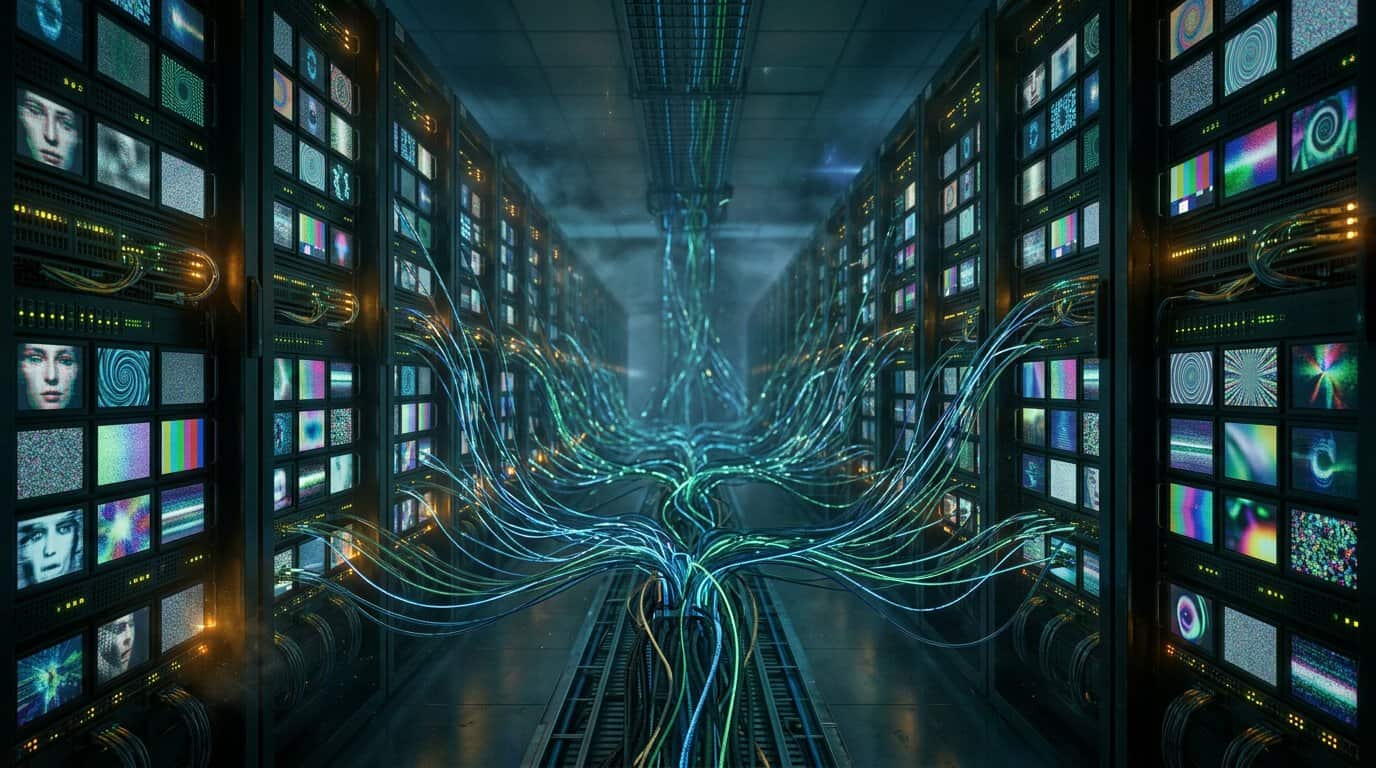
A familiar scroll can now feel strangely repetitive, with similar headlines, images, and comments appearing across different platforms. Generative AI makes it easier to produce large volumes of low-cost posts, while recommendation systems tend to promote content that earns quick clicks, shares, or watch time. Engagement farms and automated accounts can add another layer, creating the impression that an idea is more popular or widely supported than it really is. The site’s articles on AI deepfakes and social media manipulation examine how synthetic media and coordinated activity can blur the line between genuine interest and engineered attention.
Still, these patterns do not prove the strongest version of the Dead Internet Theory, which claims that most users and conversations have been replaced by organized bots. Studies of web traffic, platform activity, and automated accounts show that machines play a growing role, but they do not show that human participation has disappeared. Search engines and social platforms can also amplify machine-made material simply because it is frequent, timely, or optimized for their systems, not because a single hidden group controls everything. This makes the weaker theory more credible: the internet may be increasingly machine-heavy, commercially shaped, and difficult to read.
That uncertainty becomes clearer in cases of online astroturfing, where organized campaigns imitate ordinary public support through repeated posts, copied language, or suspiciously synchronized accounts. Researchers can identify clues such as unusual posting patterns, recycled images, sudden bursts of activity, and networks of accounts that behave alike, yet those clues do not always reveal who is behind them or how much influence they achieved. Human users still create communities, argue, joke, and share original experiences, even as algorithms decide which parts of that activity receive the most attention. When an online trend feels too uniform to be real, is it evidence of a manufactured crowd, or simply the result of systems rewarding the same behavior everywhere?
Testing The Human Internet
Researchers test the Dead Internet Theory by looking for patterns that ordinary users are unlikely to create at scale. Bot-detection studies examine posting speed, repeated language, account age, sudden bursts of activity, and connections between large groups of accounts. An account that posts around the clock, repeats the same message, and links to hundreds of similar profiles may raise suspicion, especially when many accounts act together. These clues can demonstrate that automated or coordinated activity exists, but they cannot prove that every suspicious account is a bot or that one hidden group controls it.
Platform disclosures and independent audits offer another way to investigate the mystery. Public reports may reveal networks removed for fake engagement, coordinated influence, spam, or misleading behavior, while outside researchers can compare account behavior with traffic data and archived posts. Researchers also study how recommendation systems amplify content, since a small automated campaign can appear much larger when algorithms repeatedly place it in front of human users. Such evidence can show that machines shape what people see and discuss, but it often cannot reveal the true identity, purpose, or full reach of every account.
The clearest picture is therefore a machine-heavy internet, not an entirely human-free one. Automated writing tools, scraping systems, fake followers, and commercial engagement networks are measurable trends, while the stronger claim that most users have been centrally replaced remains unsupported by credible research. Human conversations still leave varied timing, personal context, disagreement, and unpredictable connections that are difficult to reproduce perfectly at massive scale. The mystery becomes more useful when treated as a question about who controls attention, rather than as proof that no real people are left online.
Dead Internet Theory Evidence Conclusion
The strongest version of the Dead Internet Theory remains unsupported by credible evidence. There is no reliable proof that most users, posts, or conversations have been replaced by a coordinated network of bots controlled by a single group. Still, the suspicion did not appear from nowhere, since researchers and online platforms continue to document automated traffic, fake accounts, coordinated campaigns, and large volumes of machine-made content. These findings point to a manipulated and increasingly automated internet, but not an entirely human-free one.
The weaker warning is harder to dismiss. Recommendation systems decide which voices receive attention, automated accounts can imitate real discussion, and generative AI can produce articles, images, comments, and videos at a speed no person could match. Commercial incentives often reward constant posting and strong emotional reactions, which can make online spaces feel repetitive, crowded, and strangely hollow. The evidence therefore supports the idea of a machine-heavy internet, where human participation still exists but is filtered, amplified, and sometimes buried by automated systems.
That leaves a more interesting question than whether the internet is literally dead. Can an online space remain socially meaningful when people still take part, but bots, algorithms, and AI increasingly shape what they see and believe? Readers may find clues in their own feeds, from familiar-looking comments to sudden waves of similar content, while related mysteries about online influence raise even deeper concerns. The internet may not be empty, but its human character could depend on how carefully people learn to recognize what is genuine.
What the Evidence Really Reveals
The evidence behind the Dead Internet Theory points to a machine-heavy internet, not an entirely artificial one. Bots crawl websites, automated accounts spread posts, recommendation systems shape what people see, and AI tools can produce convincing text, images, and comments at remarkable speed. Fake engagement and coordinated campaigns are real problems, but there is no credible proof that most online users or conversations have been replaced by a hidden network of operators. The strongest version remains speculation, while the weaker version reflects measurable changes in how the internet now works.
That distinction makes the theory more useful as a question than as a proven fact. Online spaces may feel strangely repetitive or empty because algorithms reward familiar content, businesses automate communication, and genuine discussion is often buried beneath advertising, spam, and recycled material. Human users are still creating, arguing, sharing, and building communities, even as machines increasingly shape the path those interactions take. The mystery remains open enough to invite careful observation, so readers can ask themselves which parts of their daily online experience feel human and which seem designed by a system.
Frequently Asked Questions
1. What is Dead Internet Theory evidence?
Dead Internet Theory evidence refers to signs that bots, algorithms, and AI-generated content shape a large share of online activity. Repeated comments, sudden waves of similar posts, fake engagement, and highly automated accounts can support the weaker version of the theory. They do not prove that most human activity has disappeared.
2. What is the strongest evidence that the internet is becoming machine-driven?
The clearest evidence is the growth of automated traffic, fake accounts, recommendation systems, and mass-produced AI content. Industry reports have repeatedly found that automated traffic represents a very large share of internet requests, although traffic volume does not equal the number of posts or real users. Independent research has also documented coordinated networks that use fake accounts and repeated messages to influence online discussion.
3. Does evidence prove that most online posts are written by bots?
No credible evidence proves the strongest version of Dead Internet Theory, which claims that most online activity comes from bots. Automated posting is widespread, but public data usually measures traffic, accounts, or content samples rather than every human interaction across the internet. The available evidence supports a machine-influenced internet, not a completely artificial one.
4. Why do comment sections and social feeds sometimes feel fake or repetitive?
Several forces can create that feeling, including spam networks, copied marketing language, coordinated political messaging, and recommendation systems that reward familiar phrases. AI tools can also produce thousands of similar comments in a short time, making genuine conversation harder to recognize. A repetitive feed may signal automation, but it can also result from humans copying trends or platforms narrowing what users see.
5. How can someone tell whether an account or post is automated?
Warning signs include unusually frequent posting, identical wording across many accounts, activity at all hours, sudden bursts of engagement, and a profile with little personal history. Reverse image searches, account timelines, and comparisons across platforms can reveal copied material or manufactured identities. No single clue is conclusive, so several patterns should be checked before labeling an account a bot.
6. How does artificial intelligence contribute to Dead Internet Theory concerns?
Generative AI makes it cheap and fast to create articles, images, videos, comments, and realistic profile material at scale. This can flood search results and social feeds with content that appears original but adds little new information, a pattern often called AI slop. AI content alone does not show that humans are gone, but it makes the boundary between human and machine activity harder to see.
7. Are recommendation algorithms part of the evidence for Dead Internet Theory?
Yes, recommendation systems can make the internet feel less like a collection of personal choices and more like a machine-curated environment. Platforms study clicks, watch time, and reactions, then repeatedly promote material likely to hold attention, including sensational or highly repeated content. These systems do not replace human users, but they can strongly shape what humans encounter and discuss.
8. What does Dead Internet Theory reveal about the future of online life?
The theory points to a real challenge: online spaces may remain populated by humans while becoming increasingly directed by software, commercial incentives, and organized influence campaigns. The most important question is not whether the internet is literally dead, but whether authentic conversation can remain visible beneath automated noise. Careful source checking, slower sharing, and direct contact with real communities can help preserve that human layer.