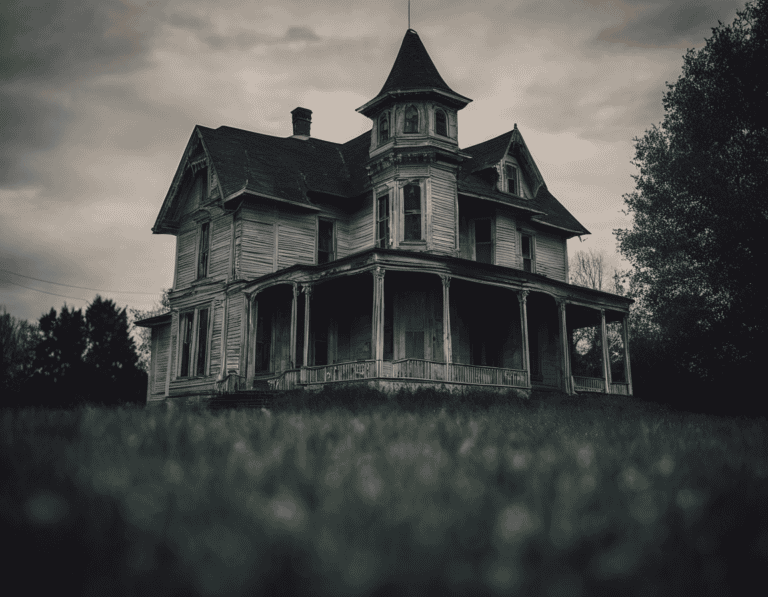
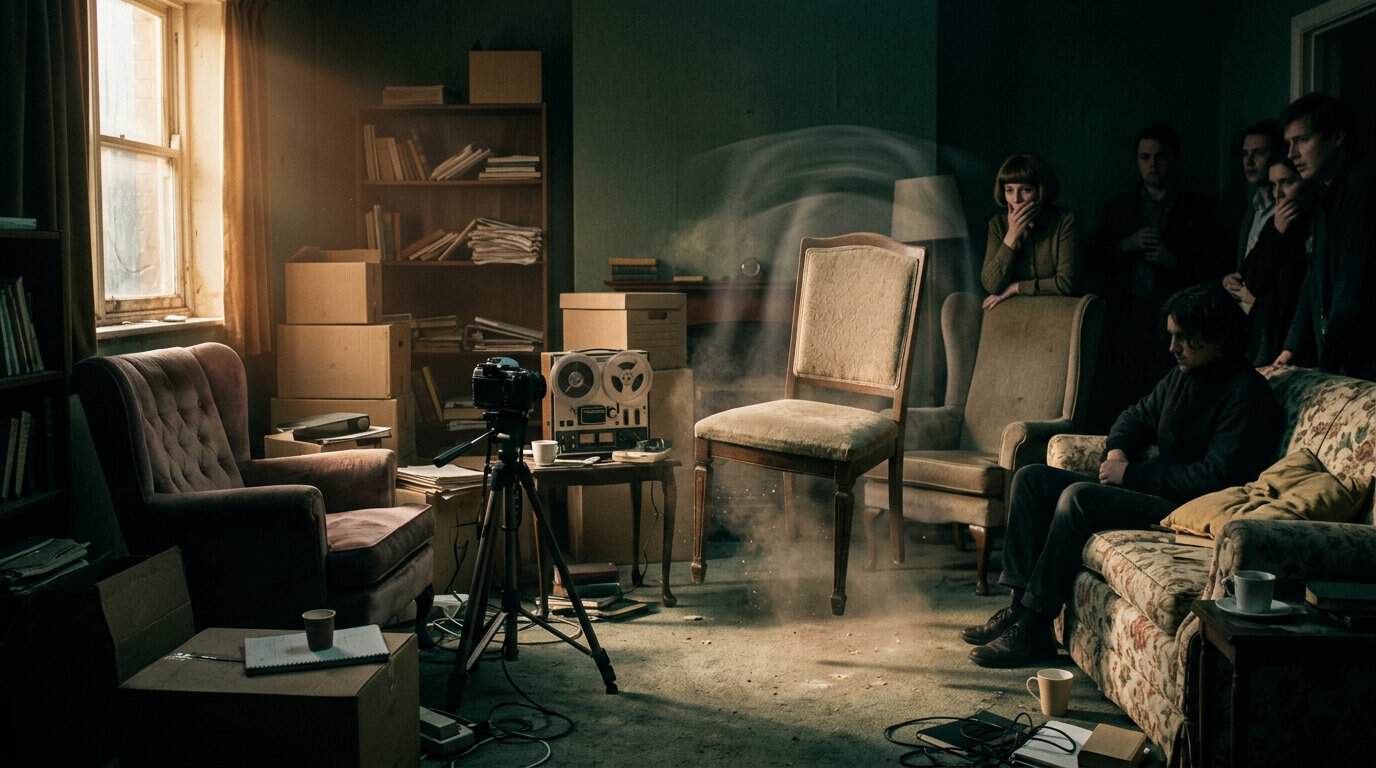
Enfield Poltergeist Case: Evidence, Witnesses, And Unanswered Questions
The Enfield poltergeist case began on August 31, 1977, when strange knocks and moving furniture unsettled the Hodgson family at their home in north London. Reports soon became more dramatic: objects flew, fires appeared, and a harsh male voice seemed to come from young Janet Hodgson. Investigators made hundreds of visits, making the case one of the best-documented haunting claims of its time.
Documentation, however, does not prove a paranormal cause. Witnesses described frightening events, while investigators also noted weak controls, media pressure, and signs that some incidents may have been staged. The lasting mystery lies between those possibilities. Was Enfield evidence of something unexplained, a family in genuine distress, or a troubling mixture of both?
Key Takeaways
- The Enfield disturbances began in 1977 at the Hodgson family home in north London, involving reported knocking, moving furniture, thrown objects, fires, and a deep male voice associated with Janet Hodgson.
- The case generated extensive documentation, including hundreds of investigator visits, more than 180 hours of audio, photographs, notes, and testimony from police, neighbors, journalists, and researchers.
- Extensive records and eyewitness accounts show that disturbing events occurred, but they do not prove a paranormal cause because many incidents lacked controlled observation and recordings cannot establish their source.
- Admitted hoaxes, possible pranks, family stress, suggestion, and media influence support ordinary explanations, while some reports remain unresolved; the fairest conclusion is that genuine distress and ambiguous or staged events may have been mixed together.
Introduction To The Enfield Poltergeist Case
On August 31, 1977, strange disturbances were reported at 284 Green Street in Brimsdown, Enfield, north London. The Hodgson family described knocking sounds, shifting furniture, thrown objects, and other unsettling events inside their home. Attention soon focused on sisters Margaret and Janet. Janet reportedly spoke in a deep male voice and appeared to experience some of the most dramatic incidents. Their story quickly became one of Britain’s best-known haunting investigations.
The case drew lasting interest because it produced an unusual amount of witness testimony, investigator notes, photographs, and recordings. Investigators reportedly made hundreds of visits and gathered more than 180 hours of audio. Neighbors, journalists, police officers, and other visitors also encountered events they found difficult to explain. Supporters view this record as evidence that something unusual happened in the house, even if every incident cannot be verified. The family’s fear and disruption were real, regardless of whether the cause was paranormal.
At the same time, the Enfield poltergeist case remains deeply disputed. Some incidents were not observed under controlled conditions, and Janet later acknowledged that she and her sister had faked or exaggerated certain events, although she maintained that not everything was a trick. Possible human explanations include deliberate mischief, family stress, suggestion, and media influence. Paranormal theories point to the voice, repeated disturbances, and reports from independent witnesses. No scientific or legal finding confirmed a paranormal cause, so this article considers the evidence with curiosity while keeping both the family’s distress and the case’s unanswered questions in view.
The 1977 Hodgson Family Disturbances
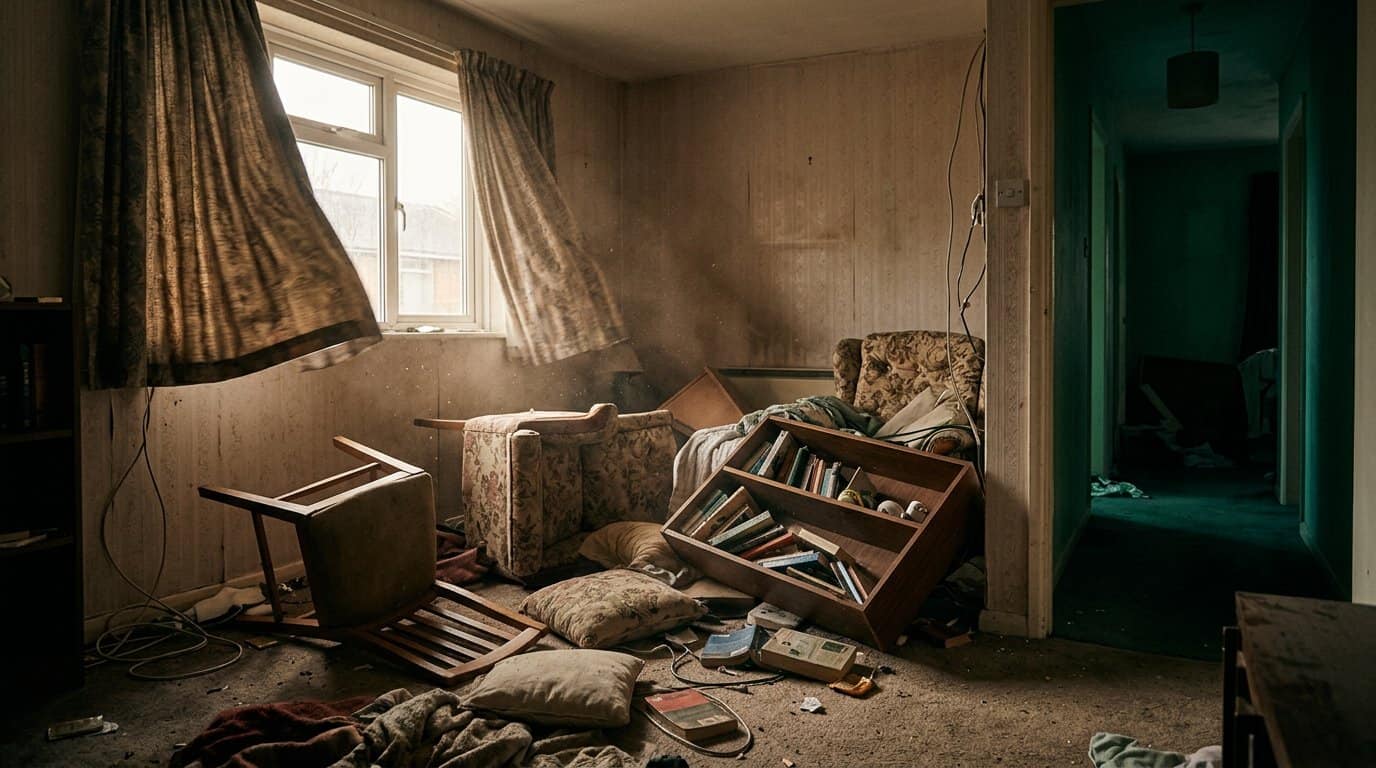
On August 31, 1977, the Hodgson family at 284 Green Street in Brimsdown, Enfield, reported strange knocking inside their home. Peggy Hodgson and her children said the sounds moved around the house. A chest of drawers also appeared to shift against a wall and block the bedroom door. The family first tried to explain the incidents as ordinary household problems, but the repeated bangs and moving furniture soon made that difficult. Fear grew as the children struggled to sleep and the family began calling neighbors for help.
Neighbors arrived to find the Hodgsons frightened and unsure what to do next. When police were called, one officer later reported seeing a chair move across the room. The incident was not recorded under controlled conditions, and the police did not declare the house haunted. These early accounts gave the story unusual weight because they came from people outside the family, yet they still left room for mistakes, suggestion, or deliberate movement. The contrast between the family’s alarm and the limited observations by outsiders became central to the Enfield poltergeist case.
In the days that followed, investigators, journalists, and curious visitors began paying closer attention to the house. Maurice Grosse and Guy Lyon Playfair later documented hundreds of visits, recordings, and claims involving the Hodgson children, especially Janet, including the harsh male voice said to come from her. Supporters saw the early police report and later recordings as signs that something unexplained may have been present. Critics pointed to possible tricks, inconsistent observation, and the pressure of public attention. The first night therefore remains both a frightening family emergency and an uncertain piece of evidence, leaving readers to weigh distress, deception, and the possibility of a genuine haunting.
Janet Hodgson Voice And Reported Phenomena
Janet Hodgson became the focus of the Enfield poltergeist case when a deep, rough voice appeared to come from her, despite her being an eleven-year-old girl. The family said the voice called itself “Bill” and spoke through Janet during frightening episodes at 284 Green Street. Investigators Maurice Grosse and Guy Lyon Playfair recorded many of these sessions, while visitors described hearing the voice directly rather than relying only on family stories. Skeptics noted that Janet and her sister Margaret were sometimes caught bending spoons, making noises, or attempting other tricks. These incidents raised the possibility that some performances helped create or shape the voice.
The Hodgsons also reported physical disturbances, including knocking, moving furniture, objects thrown across rooms, small fires, and items appearing in unexpected places. Police officers and other visitors said they saw some objects move, although these observations were brief and rarely took place under controlled conditions. Claims that Janet was lifted from her bed or thrown across a room became some of the case’s most dramatic stories, but no independent test established that she had truly levitated. Much of the evidence came from family accounts, investigator notes, photographs, and more than 180 hours of recordings. Each source offers clues, but none provides a final explanation.
The difficult task is separating events witnessed by outsiders from incidents that were never independently verified. Some visitors considered the voice and movements convincing, while others suspected Janet and Margaret of using simple deception, especially after investigators discovered apparent hoaxes. Even so, deliberate tricks do not automatically explain every report or the family’s evident distress. The Enfield poltergeist case therefore sits between documented experience and disputed interpretation, with genuine disturbances, human behavior, and media attention possibly combining to create a story that still resists a clear conclusion.
Investigators Recordings And Witnesses
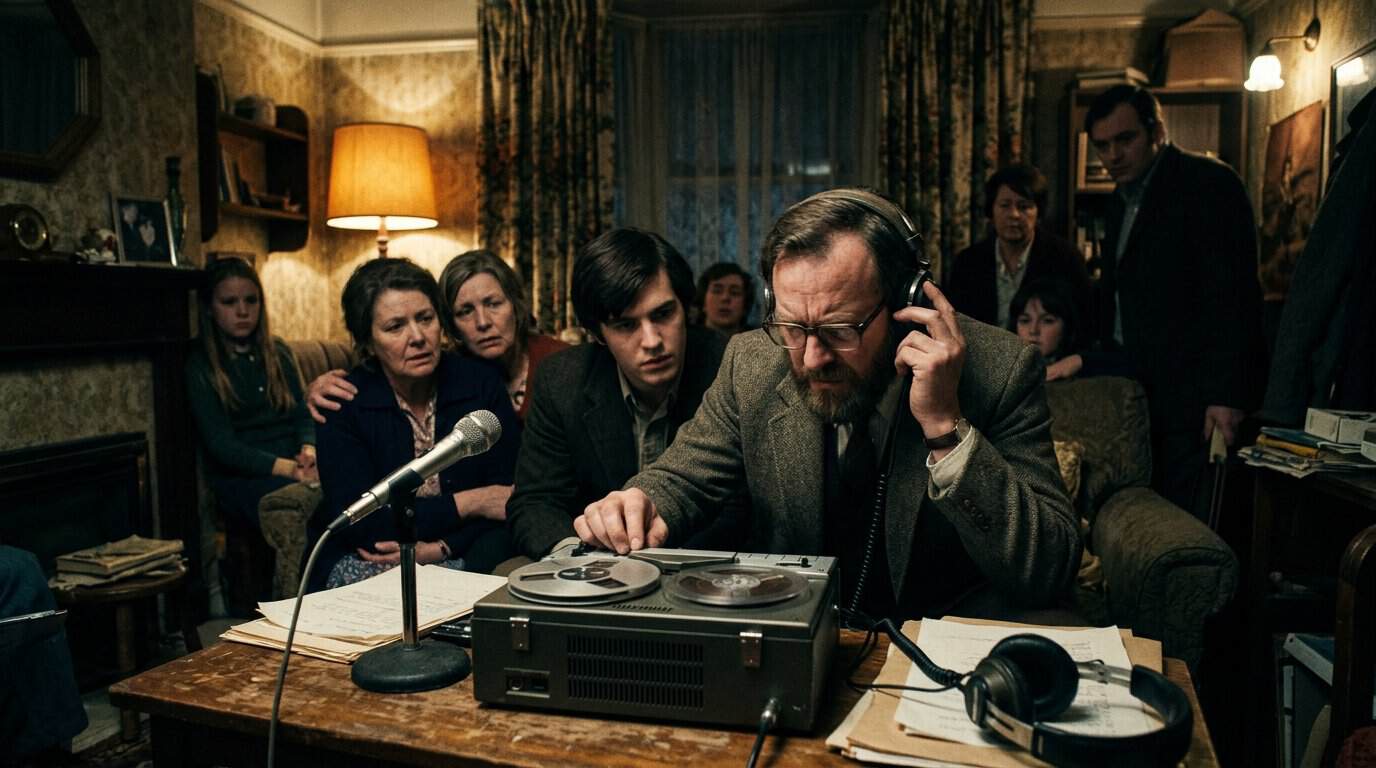
A psychical research society became involved after the first reports from the Hodgson family in August 1977. Maurice Grosse, a member of the society, made repeated visits to the house, while journalist and researcher Guy Lyon Playfair documented events alongside him. Their work produced a large collection of written notes, photographs, witness statements, and more than 180 hours of audio recordings. The tapes included knocking, arguments, and the deep male voice said to come from Janet Hodgson, giving later researchers material to examine rather than relying only on memory. Grosse and Playfair believed they had witnessed events they could not easily explain, although their conclusions remained personal judgments rather than scientific proof.
Police officers, journalists, neighbors, clergy, and other visitors also entered the story, creating a wide circle of eyewitnesses. Two officers reportedly saw a chair move during an early visit, but their observation lasted only briefly and did not establish what caused it. Reporters described thrown objects and strange sounds, while family members spoke of fear, exhaustion, and repeated disruption inside the home. At the same time, investigators sometimes suspected the children of moving objects, making noises, or staging incidents. Janet later acknowledged that she and Margaret had tricked observers on some occasions. These conflicting accounts are central to the Enfield poltergeist case because they support both the possibility of unusual experiences and the possibility that human behavior shaped the story.
Even a substantial archive cannot remove the limits of an investigation conducted in a busy family home. Many incidents were not observed from several angles, the rooms were rarely sealed, and witnesses often knew what investigators expected to find. Recordings preserve sounds, but they do not always reveal their source. Photographs can show an event without proving how it happened. The evidence therefore remains intriguing but mixed, with genuine distress, possible staged tricks, media attention, and unexplained moments existing side by side. For readers exploring other mysteries on the site, the case offers a useful question: how much weight should eyewitness testimony and recordings carry when controlled conditions are missing?
Trickery Evidence And Paranormal Claims
The Enfield poltergeist case includes details that have kept the haunting debate alive for decades. Investigators Maurice Grosse and Guy Lyon Playfair recorded hundreds of visits and more than 180 hours of audio, including the strange, deep voice said to come from Janet Hodgson. Witnesses also described knocking, moving furniture, thrown objects, fires, and possible levitation, while a police officer reported seeing a chair move in the house. To supporters, the number of witnesses and the variety of reported events suggest more than a single family prank. They argue that some incidents happened when investigators were present and remain difficult to explain with certainty.
Yet the same record contains strong evidence of human action. Janet later admitted that she and her sister had tried to fool investigators by creating noises and staging some events, although she insisted that not everything was fake. Investigators were often watching several rooms at once, and many incidents took place in a crowded, emotionally charged home rather than under controlled conditions. Media attention may also have shaped expectations, encouraging dramatic interpretations of ordinary sounds, family conflict, or youthful experimentation. Even sincere witnesses can misread ambiguous events, especially when fear, exhaustion, and repeated questioning are involved.
The case therefore sits in an uncomfortable middle ground between a documented experience and an unproven supernatural claim. Recordings and witness statements show that something disturbing happened at the Hodgson home, but they do not establish that a spirit caused it. The possibility of trickery does not automatically explain every report, just as unexplained moments do not prove a haunting. With admitted hoaxes, changing accounts, media influence, and limited controls, the available documentation supports uncertainty rather than a final verdict.
Conclusion On The Enfield Poltergeist Case
The Enfield poltergeist case began on August 31, 1977, at 284 Green Street in north London, where the Hodgson family reported knocking, thrown objects, moving furniture, and other disturbances. Attention soon centered on sisters Margaret and Janet, particularly after Janet appeared to speak in a harsh male voice. Investigators made hundreds of visits and reportedly collected more than 180 hours of recordings. Neighbors, journalists, police officers, and relatives also described troubling events. These accounts give the story unusual depth, but they do not prove that a supernatural force caused the disturbances.
The evidence becomes harder to judge when the disputed incidents are considered alongside the family’s clear distress. Some events were witnessed by investigators, while others occurred outside controlled observation. Janet and Margaret were also seen bending spoons, moving objects, or attempting tricks. Those moments support the possibility of attention seeking, imitation, or deliberate deception, yet they do not automatically explain every report or erase the fear experienced inside the house. No scientific or legal finding confirmed paranormal activity, so the most careful conclusion is that the case may have involved genuine emotional suffering, ambiguous events, media influence, and at least some hoaxing mixed together.
For readers who want to explore the subject further, useful next steps include internal articles on famous haunted houses, alleged poltergeist activity, and methods for evaluating paranormal evidence. Comparing witness statements with recordings, timing, and independent observation can reveal why the Enfield story remains both compelling and uncertain. The case still invites curiosity because it sits between a family crisis and one of the best-known haunting claims of the modern era. Does it seem more convincing as a genuine haunting, a carefully sustained hoax, or a complicated mixture of both?
The Enfield Case: Evidence, Doubt, and Mystery
The Enfield poltergeist case remains one of the most closely examined haunting reports of the 20th century. Beginning on August 31, 1977, at 284 Green Street in north London, the disturbances reportedly affected the Hodgson family through knocking sounds, moving furniture, thrown objects, small fires, and an unusual voice linked to Janet Hodgson. Investigators recorded hundreds of visits and more than 180 hours of audio, while neighbors, journalists, police officers, and researchers witnessed some events. This large body of testimony makes the case difficult to dismiss as a simple rumor, but it does not prove that a supernatural force was responsible.
At the same time, reports of Janet and Margaret trying to trick investigators, along with the lack of consistently controlled observations, leave room for ordinary explanations. The family may have experienced real fear and disruption, while some incidents could have involved pranks, attention, suggestion, or media influence. No scientific or legal finding has confirmed that the events were paranormal, so the fairest conclusion is that the Enfield story contains both documented mysteries and serious doubts about its evidence. Whether readers see it as a haunting, a misunderstood family crisis, or a mixture of genuine events and deliberate tricks, the case continues to invite one important question: how much should witness testimony and recordings shape belief when certainty remains out of reach?
Frequently Asked Questions
1. What was the Enfield poltergeist case?
The Enfield poltergeist case was a series of disturbing events reported at the Hodgson family home in north London. Beginning on August 31, 1977, the family described knocking sounds, moving furniture, flying objects, small fires, and a harsh male voice connected with Janet Hodgson.
2. Where and when did the Enfield haunting begin?
The reported disturbances began at 284 Green Street in Brimsdown, Enfield, on August 31, 1977. The activity continued for months and attracted attention from neighbors, police officers, journalists, and paranormal investigators.
3. Who was Janet Hodgson in the Enfield case?
Janet Hodgson was one of the two sisters at the center of the investigation, along with Margaret Hodgson. Witnesses said Janet sometimes spoke in a deep male voice and appeared to be involved in the most dramatic incidents, although skeptics argued that some behavior may have been conscious or unconscious play-acting.
4. What evidence was collected during the Enfield investigation?
Investigators recorded witness statements, photographs, notes, and more than 180 hours of audio during hundreds of visits. Maurice Grosse and Guy Lyon Playfair documented many reports, but the evidence was gathered under imperfect conditions and does not establish a paranormal cause.
5. Did police officers witness anything unusual at the Enfield house?
Police officers visited the house after the Hodgson family reported the disturbances. One officer, WPC Caroline Heeps, described seeing a chair move, but the police did not confirm that the events were caused by a ghost or another supernatural force.
6. Was the Enfield poltergeist case proven to be real?
The case was never proven to have a paranormal explanation. Many people, including investigators and visitors, believed the family experienced genuinely frightening events, while critics pointed to weak controls, media attention, and signs that some incidents may have been staged.
7. Could the Enfield events have been caused by something other than a ghost?
Several explanations remain possible, including deliberate tricks, unconscious behavior, family stress, suggestion, and ordinary sounds or movements misinterpreted during a frightening period. None explains every report with certainty, which is why the case remains more complicated than either a simple haunting or a simple hoax.
8. Why is the Enfield poltergeist case still famous?
The case remains famous because it combined dramatic claims with an unusually large record of interviews, recordings, photographs, and investigator visits. Its lasting power comes from the unresolved tension between credible witnesses, possible evidence of unusual activity, and serious concerns about observation and staging.