Beyond the Bermuda Triangle: Unraveling the Dragon’s Triangle Anomaly
Deep in the Pacific Ocean off Japan’s southern coast lies a stretch of water shrouded in ancient mystery and modern dread. Mariners have whispered stories of strange fogs, sudden whirlpools, and ships vanishing without a trace for centuries. This treacherous region, known locally as Ma no Umi or the Devil’s Sea, is home to the mysterious Dragon’s Triangle anomaly. Sailors and pilots alike have long reported unexplainable compass failures and bizarre ocean phenomena that seem to defy simple logic.
Ancient regional folklore blamed these violent ocean churns on colossal dragons lurking far beneath the waves. While modern scientists often point to active underwater volcanoes and unpredictable weather, the sheer number of documented disappearances keeps the mystery alive. From missing fishing boats to research vessels that vanished into thin air, these waters continue to puzzle ocean explorers. Whether driven by hidden natural forces or something far more unusual, the region remains one of the Pacific’s most captivating unsolved puzzles.
Key Takeaways
- Known as Ma no Umi or the Devil’s Sea, Japan’s Dragon’s Triangle has a centuries-old reputation for unexplained maritime vanishings, dating from ancient dragon legends to the catastrophic destruction of Kublai Khan’s invading fleets.
- Submarine volcanic activity along the Izu-Bonin ridge releases underwater gas plumes that rapidly drop water density and sink ships, while iron-rich volcanic rock causes severe localized magnetic disruptions.
- The sudden 1952 destruction of the Japanese oceanographic vessel Kaiyo Maru No. 5 led officials to designate the area an official hazard zone and cemented its global reputation as the Pacific counterpart to the Bermuda Triangle.
- While modern satellite navigation and weather forecasting have significantly improved safety, the unique intersection of volatile geological forces and navigation disruptions keeps parts of the deep Pacific highly unpredictable.
Ancient Myths and the Vanished Mongol Fleets
Long before modern radar began tracking Pacific anomalies, ancient mariners spoke of a treacherous stretch of ocean south of Japan with quiet dread. Local folklore attributed the sudden storms, thick fogs, and giant whirlpools of the Devil’s Sea to massive dragons resting in underwater caverns. According to early Japanese legend, these aquatic monsters would rise from the ocean floor to pull unsuspecting fishing vessels beneath the surface. Japanese fishermen historically referred to this turbulent area as Ma no Umi, meaning dangerous sea, because unpredictable weather seemed to appear out of nowhere. This rich oral history established the region as a place where nature and supernatural forces appeared to merge seamlessly.
The most famous historical mystery in this cursed region unfolded during the late thirteenth century, when the Mongol emperor Kublai Khan launched two massive fleets to conquer Japan. In both 1274 and 1281, thousands of warships carrying tens of thousands of soldiers vanished into the waters of the Dragon’s Triangle. Japanese historical records document that sudden, fierce typhoons devastated the invading armadas almost instantly, saving the nation from foreign conquest. While modern historians identify these violent tempests as natural seasonal storms known as the divine wind, the sheer destruction of thousands of ships in the exact same oceanic zone raised haunting questions. Some researchers wonder if unusual ocean currents and environmental conditions in the triangle made these storms far more deadly than normal weather events.
Over the centuries, mariners navigating these volatile waters continued to report strange occurrences that defied simple explanations. Historical ship logs and local maritime records highlight several repeating phenomena that fed the legend of the sea dragon:
- Sudden atmospheric shifts that created dense, blinding fogs without warning
- Unexplained whirlpools that seemed to draw water straight down into the ocean floor
- Localized compass disruptions that threw ancient navigational tools off course
While modern science points to active underwater volcanoes and magnetic anomalies along the Izu-Bonin ridge, the eerie overlap between ancient dragon myths and real naval disasters leaves room for wonder. These combined elements create a fascinating intersection where proven history meets unexplained Pacific lore, proving that the ocean still holds secrets that science is working to fully understand.
Modern Disappearances and the Lost Kaiyo Maru
During the mid-twentieth century, a series of mysterious ship vanishings turned local sea legends into a matter of international intrigue. Japanese fishing crews and naval vessels navigating the treacherous waters south of Tokyo began reporting unusual occurrences, including sudden fog banks and spinning compass needles. According to historical records from the Japanese Maritime Safety Agency, several vessels vanished completely without sending distress signals or leaving behind oil slicks. These frequent, unexplained losses led local mariners to whisper that ancient sea dragons were awakening beneath the ocean floor once again. As rumors spread across the Pacific, researchers began asking whether magnetic variations or unknown deep-sea forces were responsible for pulling ships into the abyss.
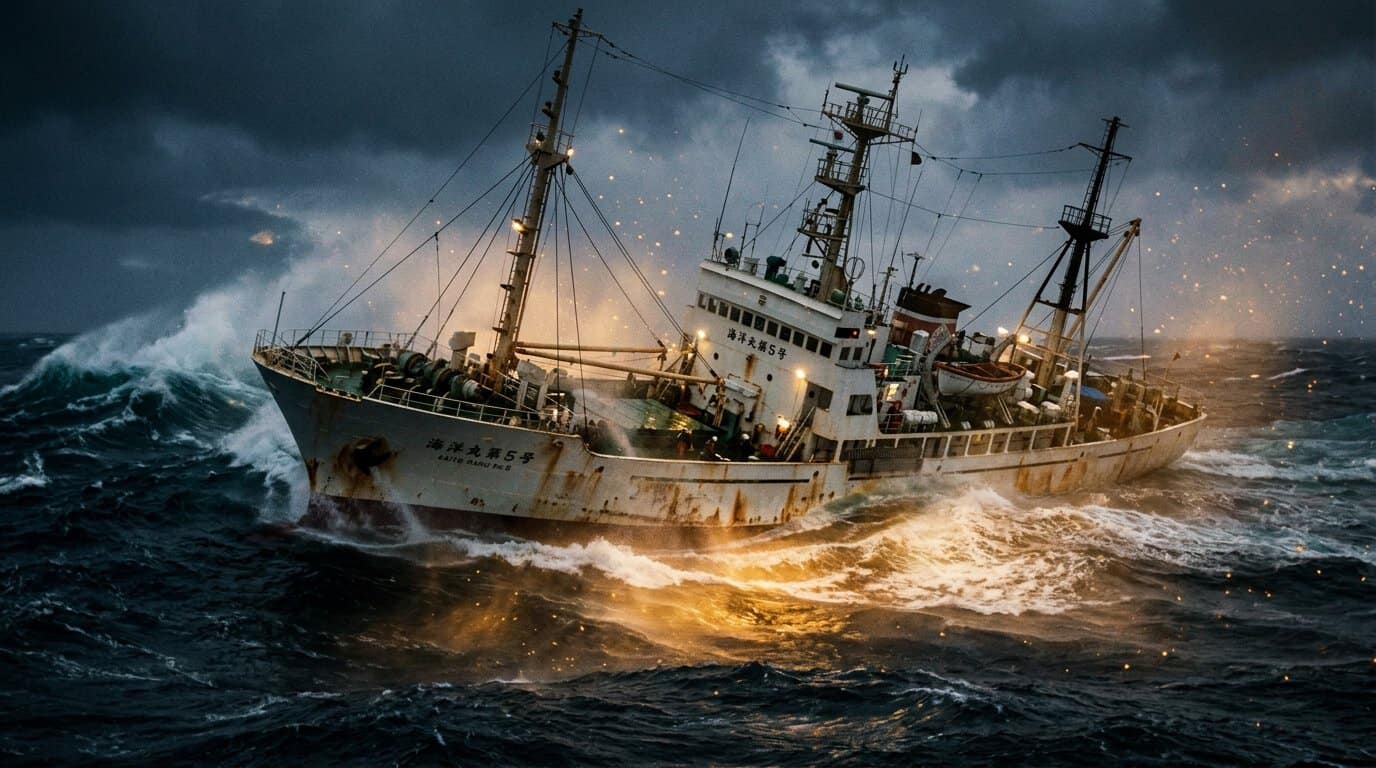
The mystery reached a dramatic peak in September 1952 when Japan sent the Kaiyo Maru Number 5, a dedicated oceanographic research vessel, to investigate underwater volcanic activity in the area. Carrying thirty-one scientists and crew members, the ship was equipped with advanced technology designed to map the churning seafloor near the Myojin-sho volcano. Without any warning, radio contact with the ship cut out entirely, sparking an intensive search and rescue mission across the Pacific. Search teams eventually discovered small pieces of wreckage and oceanographic equipment floating in the water, confirming that the ship had met a catastrophic end. The loss was so severe and terrifying that Japanese officials officially declared the surrounding waters an active hazard zone, warning all commercial craft to stay far away.
- Official government classification of the area as a dangerous sea zone
- Total loss of thirty-one scientists and crew members during the mission
- Discovery of floating wreckage suggesting a sudden, massive force from below
While modern oceanographers often point to violent underwater volcanic eruptions as the primary cause of the Kaiyo Maru disaster, many questions still linger. Researchers studying regional acoustic data noted that sudden gas explosions could instantly sink a ship by dropping water density, yet this does not fully explain the strange magnetic glitches reported by nearby craft. The dramatic nature of these mid-century events firmly cemented the Dragon’s Triangle as a Pacific counterpart to the famous Bermuda Triangle. Today, scientists and alternative historians alike continue to debate whether natural volcanic forces or something far more exotic commands these unpredictable ocean depths. The tragic voyage of the Kaiyo Maru remains a powerful reminder that the ocean holds secrets capable of overwhelming even our best technology.
Submarine Volcanoes and Magnetic Ocean Anomalies
Beneath the restless surface of the Devil’s Sea lies an unstable underwater terrain carved by active underwater volcanoes and deep ocean trenches. Marine geologists studying the Izu-Bonin ridge have documented explosive submarine eruptions that can instantly boil surrounding waters and alter navigation charts. These subterranean bursts frequently release massive pockets of trapped methane gas that rush toward the surface in giant plumes. When these huge gas bubbles burst beneath a vessel, they dramatically lower the density of the water, causing ships to suddenly lose buoyancy and sink within moments. The tragedy of the Japanese research vessel Kaiyo Maru No. 5 in 1952 serves as a sobering reminder of this danger, as the ship was destroyed while investigating an active undersea volcano in the region.
- Sudden water density drops caused by rising volcanic gas plumes
- Localized magnetic variations that disorient ship and aircraft compasses
- Uncharted volcanic islands that rapidly form and vanish beneath the waves
Beyond violent eruptions, this mysterious zone in the Pacific is famous for strange magnetic behavior that has confused sailors for centuries. Oceanographic surveys reveal that the sea floor here contains heavy deposits of magnetized basalt and iron-rich volcanic rock. These dense geological structures trigger localized magnetic anomalies, causing traditional compass needles to spin erratically or point away from true north. Mariners navigating through these turbulent waters often report sudden radio failures right before thick, unexpected fogs roll across the waves. While modern science attributes these disturbances to shifting tectonic plates, the sheer intensity of these magnetic distortions leaves room to wonder if something even stranger is at play beneath the ocean floor.
Naval records from both local fishing fleets and military vessels document decades of unexplained gear failures and phantom radar readings in this shadowy stretch of water. The volatile combination of shifting sea floors and magnetic forces creates a natural trap where human technology quickly becomes unreliable. Even with advanced satellite mapping available today, parts of this deep Pacific basin remain remarkably unpredictable and difficult to monitor in real time. The boundary between known Earth science and unexplained marine mysteries becomes pleasantly blurred when deep sea forces strike with such swift precision. These powerful underwater forces remind us that the ocean still holds vast territories where nature reigns supreme.
Where Ocean Science Meets Ancient Legend
The Dragon’s Triangle remains one of the most intriguing oceanic mysteries, bridging the gap between natural science and ancient naval legends. Beneath its treacherous waters lies a complex world of active underwater volcanoes, powerful ocean currents, and localized magnetic shifts that can easily confuse modern navigation systems. Yet, even as researchers offer logical explanations for lost vessels and strange atmospheric events, the sheer volume of unexplained vanishings keeps the mystery alive. Mariners who have navigated these turbulent waters off the Japanese coast often describe an unpredictable environment where the ocean seems almost alive. This delicate balance between known oceanographic facts and persistent maritime lore ensures that the region continues to captivate researchers and ocean enthusiasts alike.
Exploring the vast reaches of the Pacific Ocean reveals that Atlantic anomalies are not the only oceanic areas with a sinister reputation. The waters surrounding the Izu and Bonin Islands remind us of how much about our planet’s deep oceans remains unseen and unmapped. While science explains many whirlpools and sudden storms, certain phantom ships and sudden instrument failures still lack definitive answers. Perhaps the ancient tales of ocean dragons churning the sea floor were simply early attempts to explain forces that we are only beginning to understand today. Embracing these strange possibilities allows room for both scientific inquiry and the timeless wonder of maritime history.
As researchers continue to study this captivating patch of water, the debate between natural phenomena and hidden secrets remains wide open. Every historical account and sudden magnetic variation invites observers to look deeper into the secrets hidden beneath the surface of the Pacific Ocean. The mystery raises fascinating questions about whether known geological forces can fully explain every vanishing recorded over the centuries. What do you believe is responsible for the mysterious vanishings in the Dragon’s Triangle? Do you lean toward hidden volcanic forces, or could something far less understood be at work beneath the waves?
Frequently Asked Questions
1. What exactly is the Dragon’s Triangle?
The Dragon’s Triangle, also known locally as the Devil’s Sea or Ma no Umi, is a mysterious stretch of the Pacific Ocean located off the southern coast of Japan. For centuries, sailors and pilots have reported unexplained compass failures, sudden whirlpools, and ships vanishing without a trace in these turbulent waters. It shares a striking reputation with its Atlantic counterpart, the famous Bermuda Triangle.
2. Why is this ocean region called the Devil’s Sea or Dragon’s Triangle?
Ancient folklore claimed that colossal aquatic dragons lived in cavernous dens deep beneath the ocean floor. Local fishermen believed these mythical beasts rose to the surface to create violent churns and drag unsuspecting vessels beneath the waves. Over time, these dark legends inspired the chilling names Ma no Umi, which means dangerous sea, and the Dragon’s Triangle.
3. What famous historical events took place in the Dragon’s Triangle?
One of the most legendary mysteries occurred in the late thirteenth century when the Mongol empire attempted to invade Japan with massive fleets. Devastating storms swept through the Dragon’s Triangle, destroying hundreds of ships and claiming thousands of soldiers. Many ancient observers believed these sudden typhoons were summoned by supernatural forces protecting the Japanese islands.
4. Can science explain the strange vanishings in these waters?
Scientists point to active underwater volcanoes, sudden methane gas releases, and wildly unpredictable weather patterns as strong explanations for lost ships. Eruptions on the ocean floor can rapidly alter water density and trigger violent, sudden whirlpools without warning. While these natural forces clarify many incidents, a few bizarre disappearances still defy easy scientific answers.
5. Do navigational compasses really fail inside the Dragon’s Triangle?
Yes, numerous mariners and aviators throughout history have reported strange electromagnetic disruptions while passing through this corridor. Intense underwater volcanic activity and localized magnetic anomalies are thought to cause modern instruments and traditional compasses to spin in disorienting circles. These sudden electronic glitches leave travelers completely blinded in an instant.
6. Is the Dragon’s Triangle still considered dangerous to navigate today?
Modern satellite navigation and advanced weather forecasting have made traveling through the area much safer for commercial vessels today. However, localized ocean currents and deep volcanic eruptions still create sudden hazards for smaller boats. Oceanographers and experienced mariners continue to treat this unpredictable stretch of water with immense respect.
7. How does the Dragon’s Triangle compare to the Bermuda Triangle?
Both locations are globally famous for unexplained ship disappearances, severe magnetic disturbances, and sudden rogue waves. Interestingly, both triangles sit at similar latitude lines on opposite sides of the planet, prompting some fringe theories about linked magnetic grid lines. Regardless of the underlying cause, both regions remain two of the ocean’s greatest living mysteries.