Hidden Depths Of The Joshua Tree Underground Base Mystery
Underneath the twisted limbs of ancient yucca trees and the towering granite monoliths of the Mojave, a modern legend whispers of a hidden world. For decades, hikers and late-night stargazers have shared stories of a secret Joshua Tree underground base tucked away beneath the desert floor. While the park is famous for its stunning landscapes, many visitors arrive searching for something more elusive: the truth behind strange hums, mysterious lights, and heavy iron doors that seem to lead into the very heart of the earth.
This vast desert is a patchwork of forgotten history and unexplained phenomena. With over 300 abandoned mine shafts and bizarre structures like the Iron Door Cave scattered across the terrain, the line between historical fact and high-tech conspiracy often blurs. Whether these tunnels once housed pioneer dynamite or currently shield something far more advanced, the rugged canyons of Joshua Tree hold secrets that continue to defy simple explanations.
Key Takeaways
- Joshua Tree’s extensive network of over 300 abandoned mines and unique structures like the Iron Door Cave provide a physical foundation for theories regarding repurposed subterranean military infrastructure.
- Persistent reports of low-frequency hums, ground vibrations, and mysterious lights suggest active underground operations that utilize the Mojave’s hard rock for insulation against satellite and seismic detection.
- Historical figures like George Van Tassel and modern industrial efforts like the Music Valley Project serve as focal points for claims that the desert surface hides a vast, interconnected network of high-tech facilities.
- The proximity of the Marine Corps Air Ground Combat Center to the national park fuels speculation that secret tunnels link public lands to restricted military zones for classified defense or research purposes.
Mining History And The Iron Door Cave
The landscape of Joshua Tree is famously scarred by over 300 abandoned mines, remnants of a rugged era when pioneers chased gold and silver through the desert heat. These deep shafts and winding tunnels create a massive network beneath the surface that fuels speculation about what might be hidden even deeper. While many of these sites are now sealed for safety, the sheer volume of underground voids provides a physical foundation for rumors of secret infrastructure. Local legends suggest that some of these historical entrances may have been repurposed or expanded into something far more sophisticated than a simple mining operation.
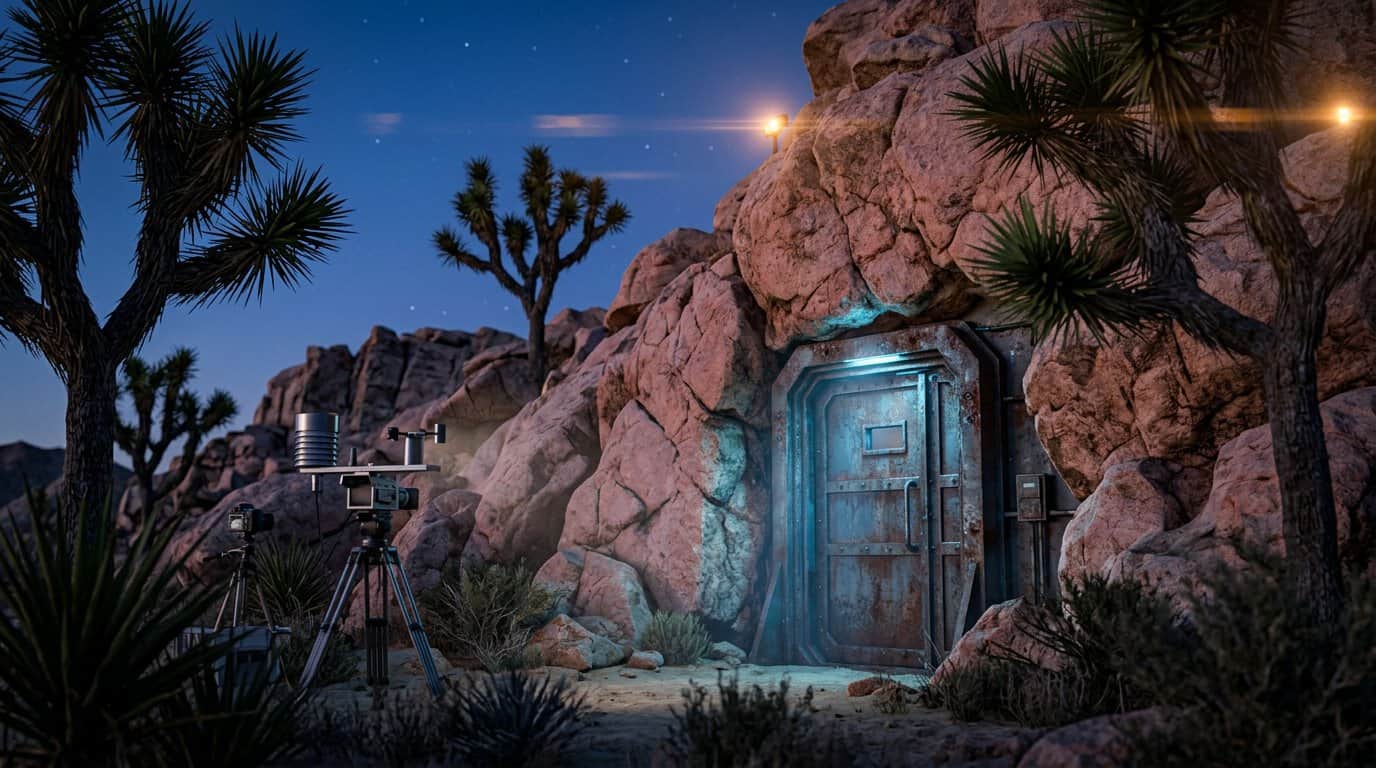
One of the most compelling landmarks in this mystery is the legendary Iron Door Cave, a site that feels like it was pulled straight from an adventure novel. This cave features a heavy, man-made iron door that can be barred from the outside, leading many to wonder why such a secure structure exists in the middle of the wilderness. Historians often point to the work of local pioneer Bill Keys, suggesting he built the door for dynamite storage or as a cold room for food. However, the unusual level of security and the remote location continue to spark theories that the cave serves as a hidden access point to a much larger subterranean military installation.
The proximity of these rugged mining sites to active military zones adds another layer of intrigue to the story. It is not uncommon for hikers to report strange hums or vibrations that seem to emanate from the ground itself, far from any visible machinery. While skeptics argue these are merely echoes of the desert wind or distant training exercises, others believe the government is utilizing the existing geological framework to hide advanced technology. Whether these tunnels lead to forgotten history or high-tech bunkers, the mystery of what lies beneath the Mojave remains one of the desert’s most enduring secrets.
Van Tassel And The Integratron Connection
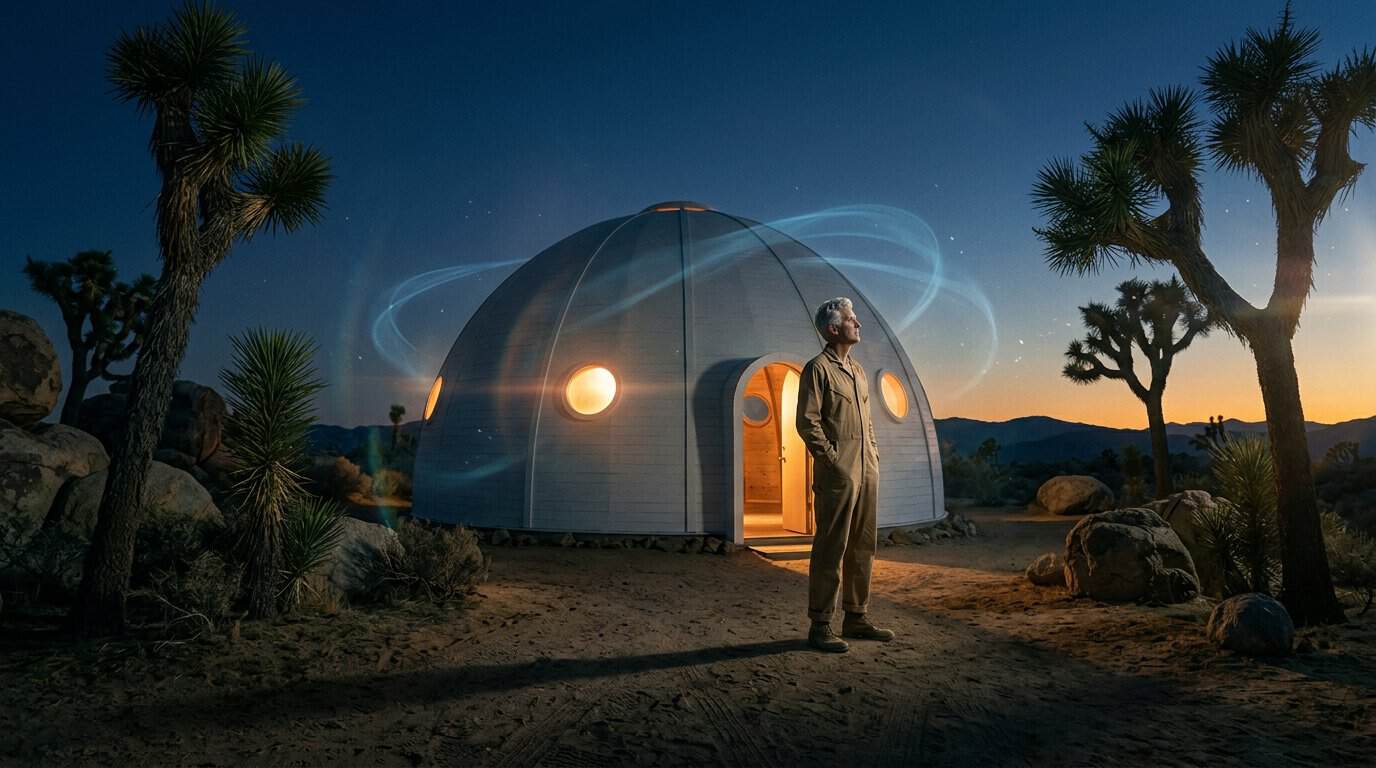
The story of hidden desert infrastructure often begins with George Van Tassel, an aeronautical engineer who claimed to have received telepathic instructions from extraterrestrials. In the 1950s, Van Tassel began construction on the Integratron, a massive wooden dome located just north of Joshua Tree in Landers. He believed the structure was a high-voltage electrostatic generator capable of rejuvenation and time travel, fueled by the unique magnetic properties of the region. Many researchers suggest that the Integratron was not just a standalone building but rather the surface entry point or energy source for a much larger subterranean network. These theories propose that the dome functions as an antenna, communicating with a deep-seated military or alien facility hidden beneath the desert floor.
Van Tassel’s famous Giant Rock meetings drew thousands of enthusiasts, further cementing the idea that the ground beneath their feet held more than just sand and stone. Witnesses often reported strange lights and vibrations emanating from the earth, leading to speculation that the mystery of Giant Rock hid a sophisticated underground laboratory. Local legends suggest that the military took a keen interest in Van Tassel’s work, possibly incorporating his findings into secret construction projects that stretch toward the national park. The proximity of large military training grounds only adds fuel to these claims, as the vast, restricted area provides the perfect cover for heavy machinery and hidden entrances. While the Integratron remains a popular tourist destination today, its original purpose as a gateway to the unknown continues to inspire those searching for a hidden world below.
Rare Earth Projects And Modern Base Theories
Recent industrial ventures in the high desert have reignited long standing rumors about what might be hiding beneath the rocky terrain of Joshua Tree. The Music Valley Project, a modern rare earth mineral exploration initiative, has drawn significant attention from those who believe these digs are a cover for something deeper. While the official focus is on harvesting essential minerals for green technology, the scale of the machinery and the remote locations of the survey sites suggest a different story to local observers. Many theorists argue that these industrial permits provide a legal shield for expanding a pre-existing network of high tech subterranean facilities. These modern projects breathe new life into old legends, suggesting that the government is utilizing advanced boring technology to connect distant desert outposts.
The geography of the Mojave Desert makes it a prime candidate for secret infrastructure because the hard rock provides excellent insulation against satellite detection and seismic sensors. Speculation often points to the proximity of the Marine Corps Air Ground Combat Center at Twentynine Palms, leading some to believe a massive tunnel system links the park to military grounds. Descriptions of these supposed bases often include multi level complexes capable of housing thousands of personnel or even non human entities. While geologists point to the natural fault lines and old mine shafts as the source of strange underground echoes, others remain convinced that the unexplained sound of heavy machinery indicates an active, hidden city. The transition from historical mining to high stakes mineral extraction creates a blurred line between corporate interests and classified defense operations.
Do you believe these modern drilling projects are strictly for resource gathering, or could they be a front for expanding a hidden underground world? The mystery of Joshua Tree continues to grow as new fences go up and heavy equipment moves into the quiet corners of the valley. It is easy to dismiss these ideas as mere fantasy, yet the history of the American West is full of secrets that were eventually brought to light. Much like the bizarre legend of Mel’s Hole, whether these tunnels are used for military strategy or something more extraterrestrial, the desert floor holds its secrets well. We encourage you to share your thoughts on whether the government is hiding a vast subterranean network beneath the Joshua Tree landscape.
Shadows and Secrets Beneath the Desert Floor
The legend of a hidden fortress beneath the Mojave Desert refuses to fade, fueled by a mixture of abandoned mine shafts and high-tech military neighbors. While the National Park Service documents hundreds of historical mining sites, many believe these tunnels serve as mere entry points to something far more modern and expansive. The proximity of massive military installations adds a layer of credibility to these whispers of subterranean activity. Local residents often report strange lights and low-frequency hums that seem to vibrate from the earth itself rather than the sky. These persistent anomalies suggest that the rugged desert floor might be a sophisticated camouflage for a world we are not meant to see.
Navigating the line between historical fact and modern mystery requires an open mind and a healthy dose of curiosity. The Iron Door Cave and the strange stories surrounding the Integratron remind us that Joshua Tree has always been a magnet for those seeking the unconventional. Whether these underground rumors describe a secret government laboratory or a facility of extraterrestrial origin, the mystery of the Joshua Tree portal remains a core part of the region’s identity. The desert has a unique way of swallowing secrets, leaving behind only fragments of truth for the dedicated investigator to find. As long as the sand holds its silence, the mystery of the underground base will continue to draw searchers to the high desert.
What do you think is hidden beneath the granite boulders and twisted branches of Joshua Tree? Have you ever experienced something in the park that felt like it came from deep underground rather than the world above? Many explorers have shared stories of feeling watched or discovering ventilation pipes in the middle of nowhere. We invite you to share your theories and personal encounters in the comments below. Your story might be the missing piece of the puzzle that finally reveals the desert secrets that lie beneath the floor.
Frequently Asked Questions
1. What exactly is the Iron Door Cave?
The Iron Door Cave is a mysterious site in Joshua Tree featuring a heavy, man-made iron door that can be barred from the outside. While some believe it was a storage area for pioneer dynamite, its sturdy construction fuels theories that it serves as a hidden entrance to a larger subterranean network.
2. Are there really 300 abandoned mines in Joshua Tree?
Yes, the desert landscape is home to over 300 abandoned mine shafts left behind by pioneers who once searched for gold and silver. These historical tunnels provide a vast physical foundation for rumors about secret infrastructure hidden deep beneath the park floor.
3. Why do people believe there is a secret base in Joshua Tree?
The legend persists because hikers and stargazers frequently report strange hums, mysterious lights, and heavy metal structures in remote areas. These unexplained phenomena, combined with the region’s history of secret military testing, lead many to believe a high-tech facility exists underground.
4. Is it possible that old mines were repurposed into a modern base?
Local legends suggest that some of the historical mining entrances may have been expanded or modernized into sophisticated facilities. Using existing underground voids would be a logical way to hide advanced operations from public view while maintaining a connection to the surface.
5. Is it safe to explore the abandoned mines in the park?
Exploring abandoned mines is extremely dangerous and many have been sealed off by the National Park Service for public safety. While these sites are fascinating, they often contain unstable tunnels and hidden drops that make them hazardous for even experienced hikers.
6. What scientific evidence exists for these underground anomalies?
While clear photographic evidence of a base remains elusive, acoustic recordings of low-frequency hums and documented sightings of unidentified aerial lights provide a basis for further study. Researchers often look to these physical clues to separate historical mining activity from more modern, unexplained developments. Some even suggest that Joshua Tree portals and desert rifts could explain why certain areas of the desert seem to defy conventional physics.