The Mystery Of The Panxian Cave Giants
High atop a windswept mountain in China’s Guizhou Province, a massive cavern holds a secret that challenges our understanding of the prehistoric world. Known as Panxian Dadong, this site has gained international fame for the discovery of the so-called panxian cave giants, leaving experts to wonder how massive creatures ended up in such an inaccessible place. While some imagine tales of ancient human titans, the physical evidence reveals something even more incredible: a world where ten-foot primates and four-ton elephants ruled the mountains.
The mystery deepens when one considers the sheer logistics of how these massive animals reached a cave nestled 1,600 meters above sea level. Excavations have pulled thousands of fossils from the earth, including the remains of the legendary Gigantopithecus blacki and ancient rhinoceroses. These findings suggest a time when the boundaries between myth and reality were blurred, pointing to a lot ecosystem that was home to some of the largest land mammals to ever walk the earth.
Key Takeaways
- The Panxian Dadong Cave in Guizhou Province contains a baffling collection of megafauna fossils, including 10-foot-tall Gigantopithecus blacki and four-ton Stegodons, located at an improbable elevation of 1,600 meters.
- The discovery of sophisticated, oversized stone tools alongside butchered remains suggest that early humans or powerful hominid relatives possessed the advanced social organization and physical strength required to transport massive carcasses up steep mountain terrain.
- The presence of these giants in such a rugged, high-altitude environment challenges traditional evolutionary timelines and forces a reconsideration of the physical capabilities of prehistoric inhabitants.
- Physical evidence from the site bridges the gap between myth and science, suggesting that ancient legends of giants may be rooted in the real-world coexistence of early humans and massive primates.
Massive Teeth And The Gigantopithecus Legend
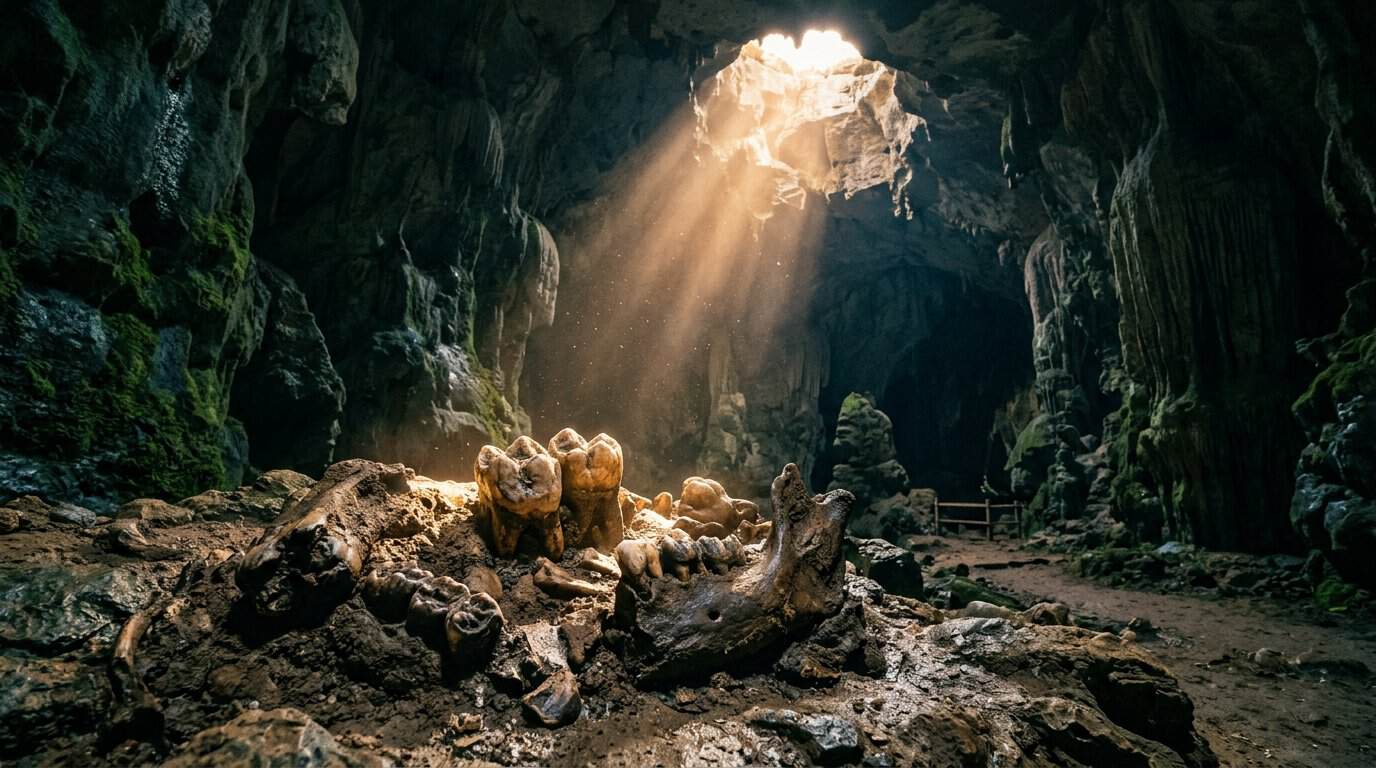
Deep within the karst terrain of Guizhou Province, the Panxian Dadong Cave sits high on a mountain slope, hiding secrets that challenge our understanding of prehistoric life. Researchers exploring this massive cavern have unearthed a staggering collection of fossils belonging to megafauna that seems out of place in such a rugged, elevated location. Among the remains of four ton Stegodons and prehistoric rhinoceroses, the discovery of oversized primate teeth has fueled intense speculation about the creatures that once called these mountains home. These findings point toward the existence of Gigantopithecus blacki, an ancient relative of humanity that stood ten feet tall and weighed over a thousand pounds.
The presence of these massive primates and giant herbivores in a cave 1,600 meters above sea level presents a fascinating archaeological mystery. Scientists at the Chinese Academy of Sciences have noted that many of these animals were far too large to have climbed the steep terrain or wandered into the cave on their own accord. This has led to intriguing theories about whether these giants were brought into the cave by other intelligent beings or if the geography has shifted dramatically over hundreds of thousands of years. The physical evidence of large scale tools found alongside these bones suggests that early humans may have lived in the shadow of these towering primates, creating a world where legends of giants were a daily reality.
While some researchers view these remains as a simple record of extinct wildlife, the sheer scale of the fossils invites us to imagine a much stranger ancient world. The intersection of physical evidence and evolutionary mystery keeps the legend of the Panxian cave giants alive, as each new tooth discovered adds a piece to the puzzle of our planet’s hidden history. These discoveries remind us that the line between myth and science is often thinner than we think, especially when exploring the dark corners of the earth. What do you think happened in these high altitude caverns to bring such massive creatures together in one place?
Impossible Logistics Of The Panxian Megafauna
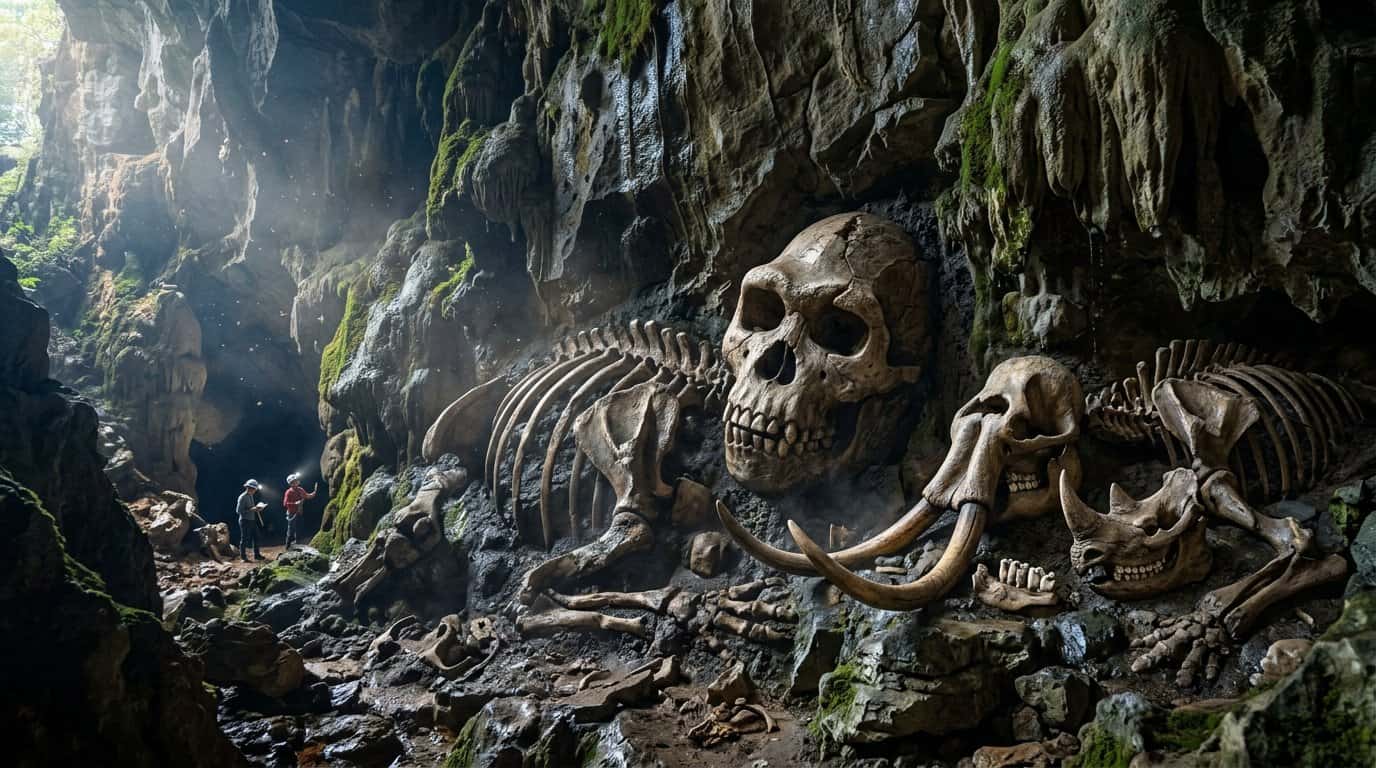
The sheer height of the Panxian Dadong Cave presents a physical puzzle that continues to baffle modern researchers. Situated sixteen hundred meters above sea level on a steep mountain slope, the cave is almost impossible to reach even for agile hikers today. Yet, deep within its chambers, archaeologists have discovered the massive remains of four-ton Stegodons and prehistoric rhinoceroses. These animals were not natural cave dwellers, and their presence at such a high, inaccessible elevation defies standard biological behavior. The steep terrain would have made it nearly impossible for an elephant-like creature to climb, leaving experts wondering how these heavy carcasses arrived at the site.
One compelling theory suggests that these massive animals did not wander into the cave on their own. Instead, some researchers believe they were brought there by powerful predators or highly skilled ancient hunters. The discovery of stone tools alongside these bones indicates that early humans, or perhaps their larger ancestors, were active in the area. If prehistoric beings were dragging four-ton carcasses up a mountain, it suggests a level of physical strength and social organization that challenges our current understanding of human evolution. This evidence has led many to speculate about the existence of giant hominids capable of such incredible feats of labor.
The mystery deepens when considering the presence of Gigantopithecus blacki, the largest primate to ever walk the Earth. Standing ten feet tall and weighing over a thousand pounds, this massive creature lived in the same region and would have possessed the raw power to navigate such difficult terrain. While mainstream science often views these giants as peaceful herbivores, the overlapping evidence of massive bones and primitive tools creates a fascinating intersection of archaeology and legend. Could these giants have been the ones responsible for moving the megafauna into the heights of Panxian? Exploring these impossible logistics forces us to reconsider what ancient inhabitants were truly capable of achieving.
Ancient Tools And Evidence Of Giant Slayers
Deep within the Panxian Dadong Cave, researchers discovered a collection of stone tools that challenge our understanding of prehistoric capabilities. These artifacts were found alongside the butchered remains of massive Stegodons and ancient rhinoceroses, animals that weighed several tons and were certainly not natural cave dwellers. The presence of these heavy carcasses on a steep mountain slope suggests that someone, or something, possessed the incredible strength to haul these giants up the incline. Archaeologists like Huang Weiwen have noted that the sheer volume of bones indicates this was a sophisticated butchering site rather than a series of natural accidents. The precision of the tool marks on the bones points to a group of hunters who were experts at taking down the largest land mammals of their time.
The mystery deepens when considering the size of the prey compared to the height of average ancient humans. While standard evolutionary theories suggest small groups of Homo erectus occupied the cave, the physical evidence of dragging four-ton elephants into a mountain cavern sparks theories about a much larger cousin. Some researchers point to the nearby presence of Gigantopithecus blacki, a primate standing ten feet tall, as a potential candidate for these feats of strength. If these giant human ancestors or massive primates were responsible for the hunt, it would redefine our view of the prehistoric food chain. The tools themselves are larger and more robust than typical finds, leading many to wonder if they were crafted for hands much bigger than our own.
Could a lost lineage of giants have thrived in the mountains of China, ruling over the megafauna of the Pleistocene? The combination of massive teeth and evidence of heavy lifting creates a compelling case for a forgotten chapter in human history. While mainstream science looks for simpler explanations, the physical reality of the Panxian finds leaves the door open for more extraordinary possibilities. We have to ask ourselves if we are looking at the remains of early humans or the legendary giants that haunt our oldest myths. What do you think the size of these tools says about the hands that held them?
Evolutionary Anomalies In The Guizhou Highlands
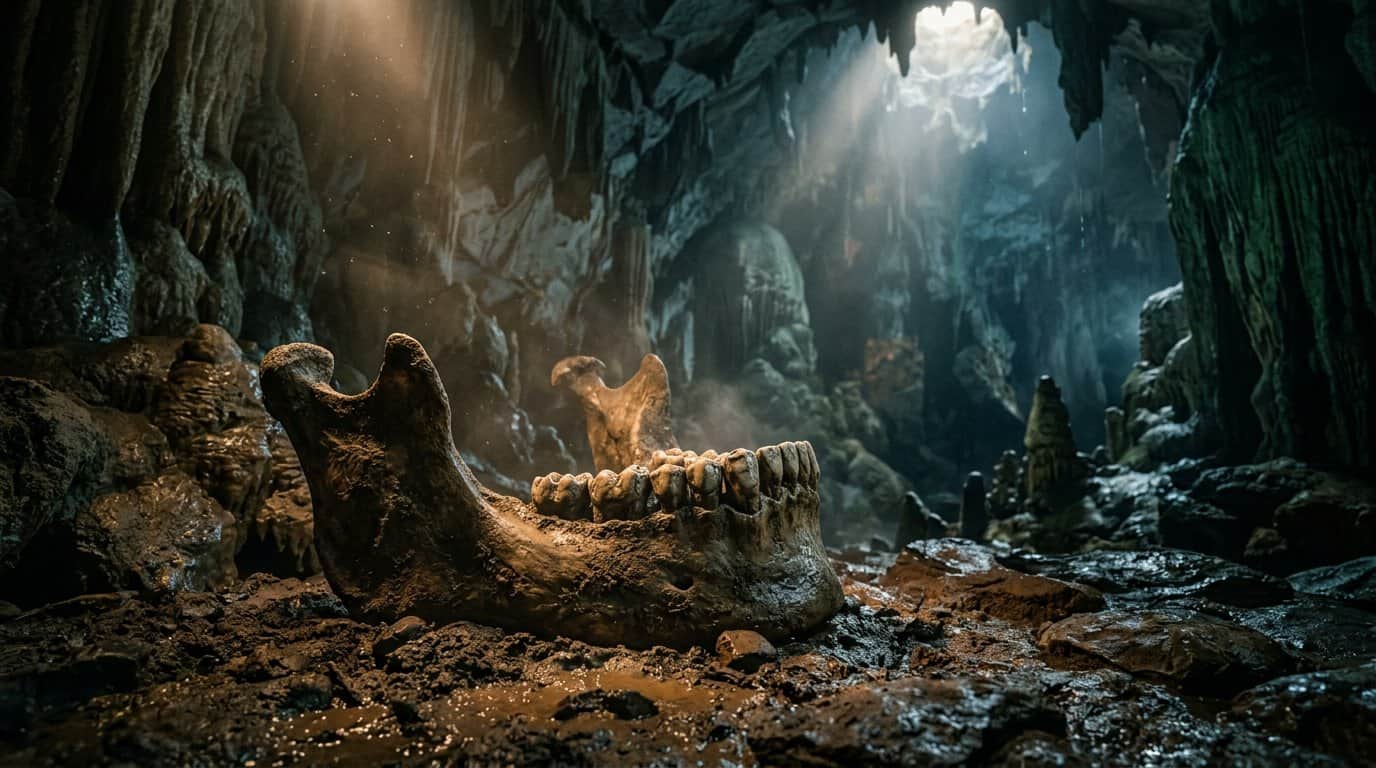
Deep within the karst mountains of Guizhou, the Panxian Dadong Cave sits perched over a mile above sea level, guarding secrets that challenge our understanding of prehistoric life. When archaeologists began excavating this massive cavern, they did not just find small stone tools, they discovered the remains of true giants. Massive prehistoric rhinoceroses and four ton Stegodons, which were elephant like creatures of incredible size, were found buried deep inside the cave. The presence of these heavy animals in a high altitude mountain cave is a baffling mystery because the steep terrain would have been nearly impossible for such heavy creatures to climb. Researchers led by scientists like Huang Weiwen have spent years trying to determine how these massive skeletons ended up in such an inaccessible location.
The discovery of these megafauna has fueled local legends and sparked intense debate about the existence of giant human ancestors in the region. Many researchers point to the nearby presence of Gigantopithecus blacki, a massive primate that stood ten feet tall and weighed over one thousand pounds, as a possible candidate for these giant myths. While some scientists suggest that natural forces or predators dragged the animal remains into the cave, others wonder if a larger, more powerful species of early human played a role. The sheer scale of the bones and the sophisticated stone tools found alongside them suggest a world where humans lived in the shadows of titans. This intersection of hard fossil evidence and ancient folklore leaves us wondering if the stories of giants in the highlands are more than just tall tales.
What do you think is the most likely explanation for these massive animals ending up so high in the mountains? Do you believe these findings point toward a lost branch of giant human relatives, or is there a simpler scientific answer waiting to be found? We would love to hear your theories on these ancient mysteries in the comments below.
Unearthing the Secrets of Ancient Giants
The wonders of Panxian Dadong remind us that history is full of surprises, leaving us to wonder what other secrets remain hidden deep within the earth. The presence of massive teeth and sophisticated stone tools alongside the remains of prehistoric megafauna suggests a world much more complex than we once imagined. Whether these findings point toward the legendary Gigantopithecus or an undiscovered branch of giant human ancestors, the evidence challenges our current understanding of evolution. These caves serve as a silent library, holding the stories of massive beings that once walked the rugged terrain of ancient China. Scientists continue to piece together these fragments, but many questions about how such large creatures lived and interacted still remain unanswered.
The mystery of the Panxian Cave giants invites us to keep an open mind about the possibilities of the past. Every discovery of an oversized molar or a heavy-duty tool pushes the boundaries of what we thought was possible for early inhabitants of our planet. It is a thrilling reminder that the fossil record is far from complete and that groundbreaking evidence could be resting just beneath the surface of the next cavern. These discoveries bridge the gap between scientific archaeology and the enduring legends of giants that have persisted for generations. As we look toward future excavations, we are left to ponder what other massive figures might be waiting to be brought back into the light of day. Much like the Dropa stones discovery in the remote mountains of China, these findings force us to reconsider the true history of our world.
What do you think about the evidence found within the depths of Panxian Dadong? Do you believe these massive remains belong to a known species of ape, or could they be proof of a lost lineage of giant early humans? The intersection of myth and science often leads to the most incredible breakthroughs in our shared history. We would love to hear your thoughts on these prehistoric mysteries and whether you think more giants are still waiting to be found. Join the conversation below and share your theories on what might still be hiding in the world’s deepest caves.
Frequently Asked Questions
1. What exactly are the Panxian cave giants?
The Panxian cave giants are not mythical humans, but rather massive prehistoric animals like the Gigantopithecus blacki. This ancient primate stood ten feet tall and weighed over a thousand pounds, sharing the cave with other megafauna like four ton Stegodons.
2. Where is the Panxian Dadong cave located?
This remarkable archaeological site is located high in the mountains of the Guizhou Province in China. It sits at an impressive elevation of 1,600 meters above sea level within a rugged karst environment.
3. How did such large animals get into a cave so high up?
The presence of these massive creatures at such a high altitude remains one of the greatest mysteries of the site. Researchers are still investigating whether the animals climbed the steep slopes themselves or if natural forces moved their remains into the cavern over thousands of years.
4. What kind of evidence was found inside the cave?
Excavations have uncovered thousands of fossils, including oversized primate teeth and the bones of ancient rhinoceroses. These physical remains provide clear evidence that a unique ecosystem of giant mammals once thrived in this elevated region.
5. Is there a connection between these giants and human history?
While the giants were actually great apes and large herbivores, they lived during a time when early humans were also present in the region. The discovery of these fossils helps scientists understand the incredible world our own ancestors encountered alongside massive creatures.
6. Why is the discovery of Gigantopithecus blacki so significant?
Finding Gigantopithecus blacki remains in Panxian Dadong proves that the largest primate to ever walk the Earth lived in diverse and challenging environments. It challenges previous theories about where these ten foot tall creatures could survive and how they moved across the ancient world. Much like the modern Florida Skunk Ape encounters, these findings suggest that massive, bipedal primates have long captured the human imagination through physical evidence.