The Coso Artifact And The Mystery Of The 500,000 Year Old Spark Plug
On a chilly February morning in 1961, three gem hunters wandering the Coso Mountains of California stumbled upon a rock that seemed to defy the laws of time. Encased within a hard shell of fossilized sea life sat a mysterious mechanical object, sparking decades of debate regarding the Coso Artifact origin. While it looked like a piece of modern machinery, the surrounding geode was estimated by the finders to be half a million years old.
The discovery sent shockwaves through both the scientific and paranormal communities, raising the possibility of advanced ancient civilizations or even time travel. At its heart lay a porcelain cylinder and a magnetic metal core, appearing far more sophisticated than any primitive tool. This strange relic challenges our understanding of history, forcing us to wonder if a 1920s engine part somehow traveled back to the dawn of humanity.
Key Takeaways
- The Coso Artifact consists of a 1920s-era Champion spark plug encased in a mineral concretion that was initially misidentified as a 500,000-year-old geode.
- X-ray analysis and expert identification confirm the object’s internal components—including a porcelain cylinder and magnetic shaft—match the mechanical specifications of parts used in Ford Model T engines.
- Rapid geological encrustation can occur through chemical processes where iron minerals form a hardened, rock-like shell around metallic debris in just a few decades.
- The artifact remains a central case study in ‘forbidden archaeology,’ highlighting the tension between sensationalist claims of ancient technology and grounded scientific explanations.
A Startling Discovery In The Coso Mountains
On a crisp February morning in 1961, Wallace Lane, Virginia Maxey, and Mike Mikesell set out on a routine search for geodes in the rugged Coso Mountains of California. The trio owned a local gem shop and were experienced prospectors, scouring the landscape near the dry bed of Owens Lake for unique specimens to sell. Among the many stones they collected that day, one particular nodule stood out due to its unusual weight and shell-encrusted surface. It appeared to be a standard geode at first glance, but the secrets hidden within its rocky shell would soon challenge everything they knew about history.
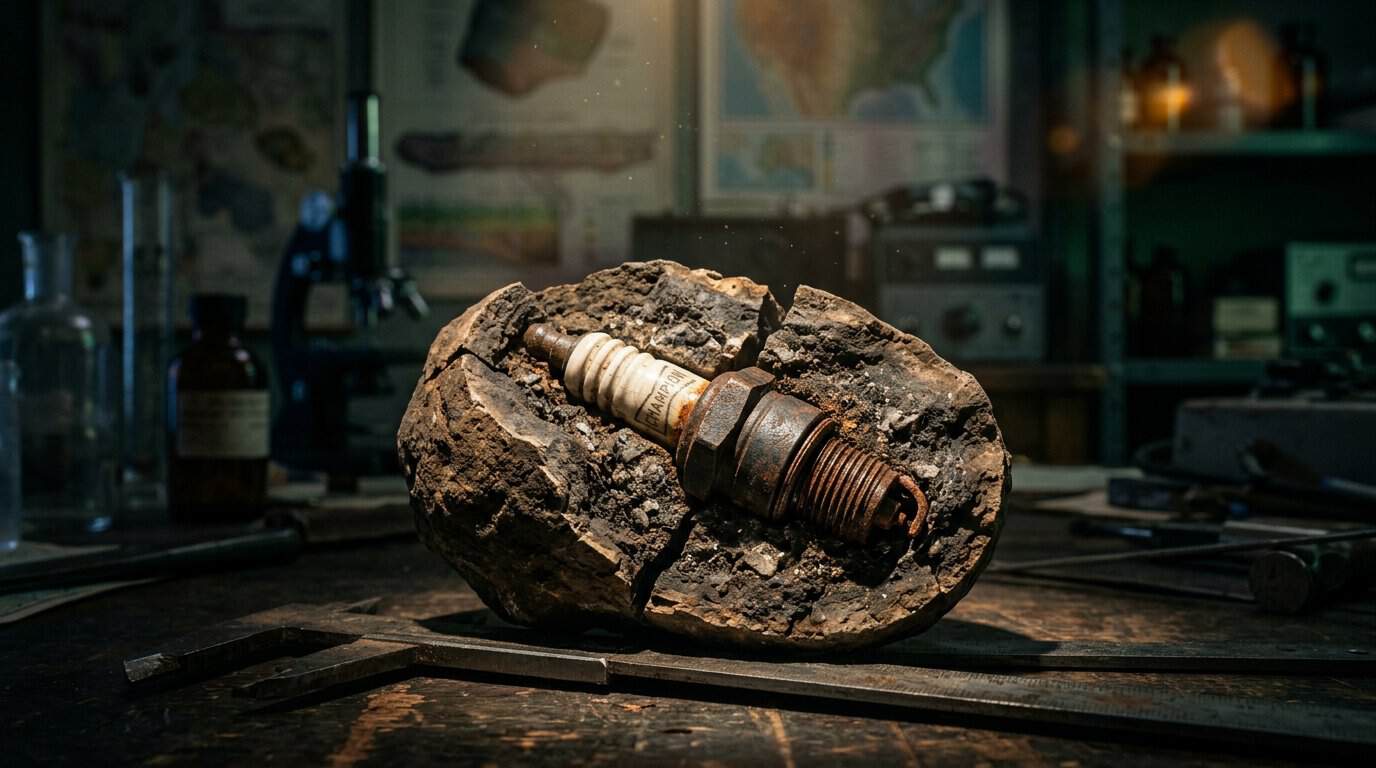
The following day, Mike Mikesell ruined a diamond saw blade while attempting to cut the mysterious object open in their workshop. Instead of a hollow center filled with crystals, the blade struck a hard, metallic core that defied expectations. When the nodule finally split, the discoverers found a white porcelain cylinder surrounding a tiny magnetic metal shaft. This inner mechanism was encased in a hexagonal copper sheath, looking remarkably like a piece of advanced machinery trapped inside a prehistoric stone.
Local interest peaked when the discoverers claimed an unnamed geologist had dated the surrounding rock to at least 500,000 years old. This startling discovery suggested that a piece of high technology existed long before humans were known to have developed even the simplest tools. While later investigations by researchers and spark plug enthusiasts would point toward a 1920s Champion spark plug, the initial discovery remains a cornerstone of forbidden archaeology. The idea of a modern engine component being swallowed by ancient geology continues to fuel debates about lost civilizations and the true timeline of our planet.
Forbidden Archaeology And The Half Million Year Claim
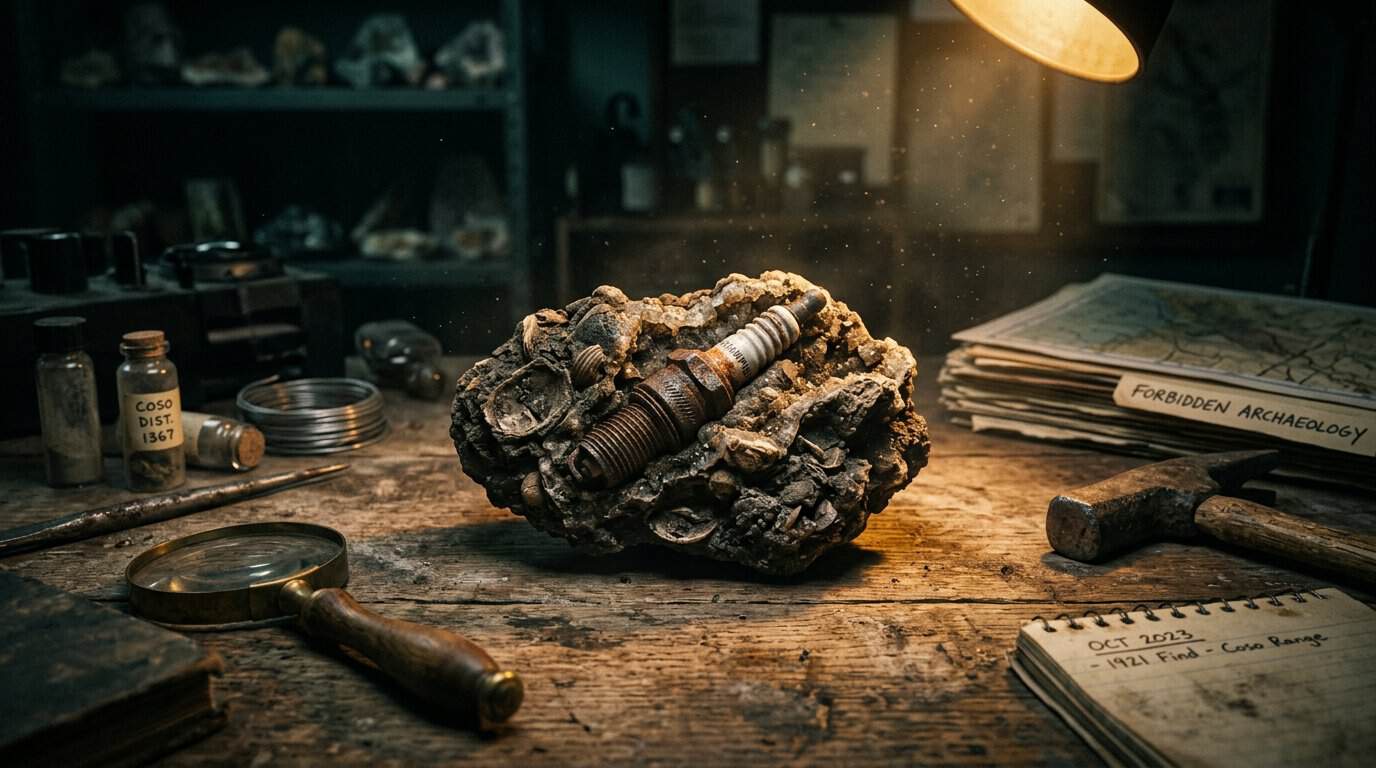
The discovery of the Coso Artifact began on a winter morning in 1961 when three gem shop owners were searching for geodes in the California mountains. Wallace Lane, Virginia Maxey, and Mike Mikesell found what appeared to be a typical nodule, but their diamond saw soon struck something far more resilient than rock. Upon opening the specimen, they revealed a porcelain cylinder and a magnetic metal shaft that looked remarkably like modern technology. This strange object was found near the dry bed of Owens Lake, a location known for its ancient geological history. The sheer contrast between the primitive stone exterior and the metallic interior immediately sparked questions about how such an item could exist.
Whispers of a prehistoric advanced civilization began to circulate after an unnamed geologist reportedly examined the surrounding casing. This expert allegedly determined that the shell-encrusted rock was at least 500,000 years old, a timeline that predates recorded human history. If this estimate held true, it suggested that an intelligent society possessed internal combustion technology long before the Stone Age. This staggering claim became a cornerstone for researchers of forbidden archaeology who believe our planet’s timeline is much more complex than mainstream science suggests. The idea of a half-million-year-old spark plug challenged every established rule regarding the evolution of human tools and engineering.
While the age of the rock remains a point of intense debate, the mystery of how a mechanical part became encased in such a hard mineral crust is undeniable. Some enthusiasts suggest that the artifact is evidence of time travel or visitors from another world who left their mark in the distant past. Others point to the unique chemical processes that can form rapid mineral deposits, though the 500,000-year figure continues to fuel the imagination of those seeking hidden truths. This anachronistic artifact forces us to look closer at the earth beneath our feet and wonder what other secrets might be hiding in plain sight. Does this object represent a lost chapter of human achievement or a strange fluke of natural chemistry?
Deciphering The Porcelain Cylinder And Magnetic Shaft
The internal structure of the Coso Artifact reveals a level of precision that seems almost impossible for a rock estimated to be half a million years old. When the discoverers performed an X-ray on the specimen, they found a central metallic shaft measuring exactly two millimeters in diameter, surrounded by a white ceramic or porcelain cylinder. This internal core was further protected by a hexagonal copper sheath, a design that mirrors the intricate components found in modern machinery. The presence of these specific materials suggests a purposeful engineering intent rather than a random geological formation. Such high-tech characteristics have led many researchers to wonder if the object was a piece of ancient technology lost to time.
Detailed comparisons between these measurements and industrial parts from the early twentieth century have provided a fascinating perspective on the object’s identity. Experts from the Spark Plug Collectors of America examined the X-ray images and noted a striking resemblance to a 1920s-era Champion spark plug. The dimensions of the porcelain insert and the magnetic shaft align almost perfectly with the mechanical specifications used during that era of automotive history. While this identification offers a grounded explanation, it does not fully solve the mystery of how such a tool became encased in a rock that appeared to be thousands of centuries old.
The contradiction between the object’s modern design and its ancient-looking exterior continues to fuel debates within the forbidden archaeology community. If the item is indeed a common spark plug, the process that led to its rapid encasement in a hardened shell remains a significant point of interest for geological study. Some believe this proves that certain chemical processes can create fossils or geodes much faster than traditional science suggests. Others hold onto the possibility that the artifact is a remnant of a sophisticated civilization that existed long before recorded history. What do you think happened in the Coso Mountains to create such a strange fusion of the modern and the ancient?
Modern Identification And The 1920s Champion Connection
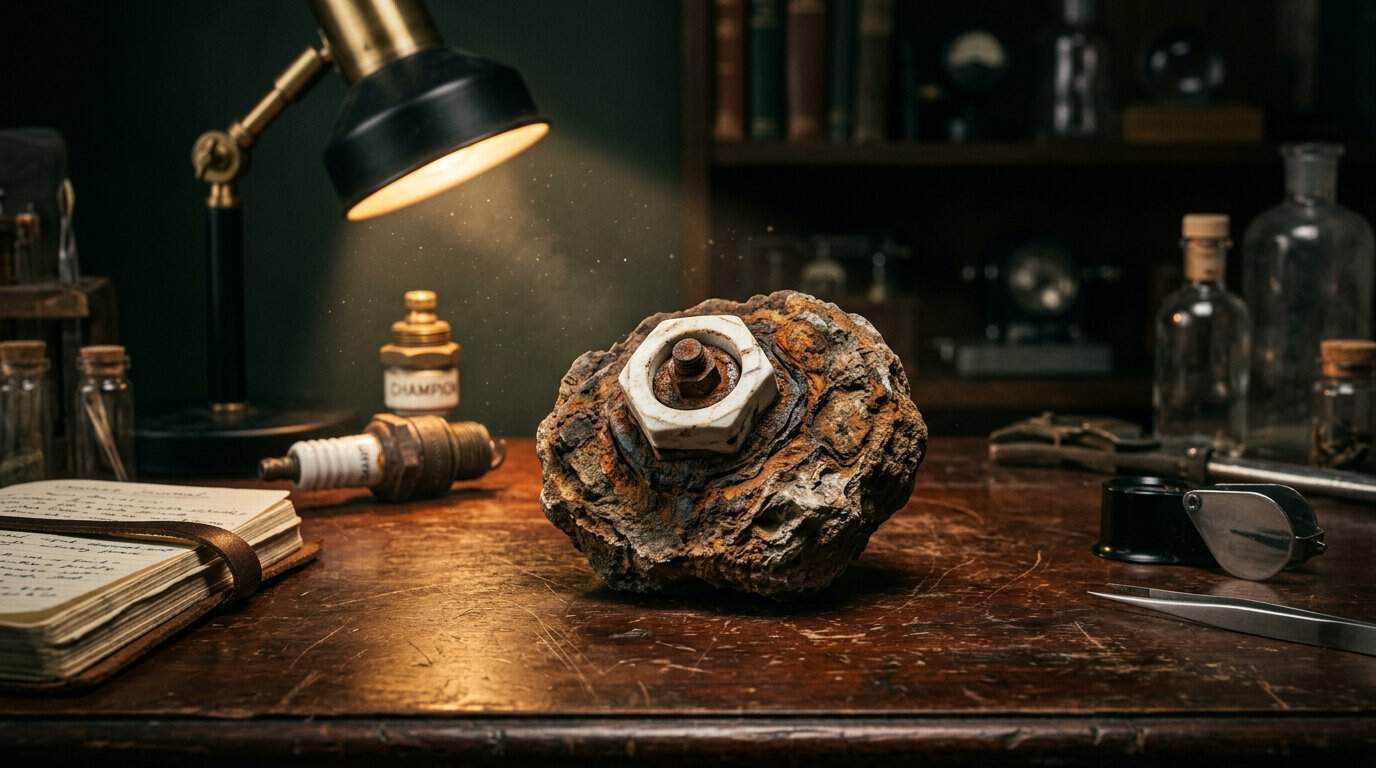
The mystery of the Coso Artifact took a fascinating turn when members of the Spark Plug Collectors of America stepped in to examine the evidence. After reviewing x-rays and detailed descriptions of the object, these dedicated historians recognized something very familiar beneath the layers of hardened minerals. They determined that the core of the supposed ancient technology was actually a standard internal combustion engine component. Specifically, the internal design matched the architecture of a 1920s-era Champion spark plug. This identification provided a tangible link between a modern industrial object and what many had thought was a prehistoric relic.
The connection to the 1920s Champion spark plug is particularly compelling because of how common these parts were during the early days of automotive history. These specific plugs were widely used in the engines of the legendary Ford Model T, which frequently traversed the rugged California terrain. Experts from the collector group noted that the porcelain insulator and the brass nut found in the x-rays were identical to the models manufactured by Champion during that decade. While the discovery site in the Coso Mountains seemed remote, it was a hub of mining activity where such machinery was routinely utilized. This historical context suggests that a discarded part from a vintage vehicle may have simply become naturally encased over time.
Even with this practical explanation, the artifact continues to spark debate among those who believe in advanced ancient civilizations. The central question remains how a modern mechanical part could become so thoroughly embedded in a shell that appeared to be 500,000 years old. While researchers suggest that natural chemical processes can create hard mineral crusts quite rapidly, the visual evidence of the artifact is still used to challenge conventional timelines. This intersection of mechanical history and geological anomaly leaves us wondering if we have truly solved the mystery or if there is more to the story of the Coso Mountains. Do you think a simple piece of trash could really transform into a legendary ancient mystery in just a few decades?
The Mystery of the Ancient Spark Plug
The journey of the Coso Artifact remains one of the most intriguing chapters in the study of out of place objects. While many researchers point to the 1920s Champion spark plug as the definitive answer, the initial discovery within a supposedly ancient geode continues to fuel debate. This intersection of modern mechanical debris and prehistoric geological formations challenges our standard understanding of how objects become fossilized. For those who believe in advanced ancient civilizations, the artifact serves as a tantalizing piece of evidence that history might be much older than textbooks suggest. Even with a clear identification of the object itself, the mystery of how it became encased in such a hard, shell-like exterior remains a point of fascination.
The divide between geological anomalies and historical reality often comes down to how one interprets the timeline of the Coso Mountains. Skeptics argue that natural chemical processes can create rapid encrustations, making a modern object appear ancient in just a few decades. On the other hand, the original claim of a 500,000 year old origin suggests a world where technology and deep time collide in ways we do not yet fully comprehend. This balance of scientific analysis and fringe possibility ensures that the artifact stays relevant in discussions about forbidden archaeology. Every piece of evidence provides a new way to look at the relationship between human invention and the earth beneath our feet.
Ultimately, the Coso Artifact invites every curious mind to weigh the evidence and decide where the truth lies. Is this a simple case of a discarded car part being reclaimed by the earth, or does it hint at a forgotten chapter of human achievement? The story encourages us to keep questioning the world around us and to remain open to the strange wonders found in the desert. We would love to hear your perspective on this enduring California mystery. Do you believe the case is closed with the identification of the spark plug, or do you think the geological context points to a deeper, unsolved puzzle from our distant past?
Frequently Asked Questions
1. What exactly is the Coso Artifact?
The Coso Artifact is a mysterious object discovered inside a hard nodule that resembles a modern spark plug. It features a white porcelain cylinder, a tiny magnetic metal shaft, and a copper ring, all encased in a shell of fossilized sea life. This strange combination of mechanical parts and ancient geology has puzzled researchers for decades.
2. Where was the Coso Artifact originally found?
Three gem hunters discovered the object while exploring the Coso Mountains of California near the dry bed of Owens Lake. Wallace Lane, Virginia Maxey, and Mike Mikesell were searching for geodes to sell in their local shop when they stumbled upon this heavy, shell-encrusted stone. The rugged landscape of this region is known for its unique geological formations and ancient history.
3. How old is the Coso Artifact supposed to be?
The discoverers estimated the rocky shell surrounding the artifact to be roughly 500,000 years old based on the fossilized remains and geological context. If this date is accurate, it would mean the mechanical object existed long before humans developed the technology to create it. This massive age gap is what fuels the debate between ancient technology and modern explanations.
4. What did the internal components of the object look like?
When Mike Mikesell cut the nodule open, he found a sophisticated inner mechanism that looked like advanced technology machinery. The core consisted of a porcelain cylinder that appeared to be a high-quality insulator, surrounding a central metal pin that responded to magnets. To the naked eye, these parts seem almost identical to the components found in internal combustion engines.
5. Is there a scientific explanation for the artifact?
Many researchers and skeptics believe the object is actually a 1920s Champion spark plug that became encased in a natural concretion. Over several decades, iron minerals and nearby debris can form a hard, rock-like shell around metal objects, creating the illusion of ancient age. While this is a popular theory, some still wonder how the object became so deeply embedded in such a short amount of time.
6. Could the Coso Artifact be evidence of time travel or ancient aliens?
The discovery has led many to speculate that the artifact is an out-of-place object left behind by an advanced ancient civilization or a visitor from the future. Because the mechanical parts appeared so modern despite being found in ancient earth, it remains a favorite piece of evidence for those exploring the fringes of history. Much like the ancient metal orbs found in South Africa, whether it is a simple piece of trash or a cosmic mystery, it continues to spark curiosity about our past.