The Green Stone Enigma And The Quest For Psychic Archaeology
Deep within the sun-scorched ruins of Hattusa, the ancient capital of the Hittite Empire, sits a polished monolith that defies explanation. Known as the green stone enigma, this massive cube of gleaming nephrite stands in stark contrast to the rough limestone and gray granite of the Great Temple. While the surrounding city crumbled into history over three thousand years ago, this mysterious artifact remains perfectly intact, drawing visitors who claim it possesses a strange, healing energy.
Archaeologists have spent decades trying to determine why this specific stone was transported over vast distances to rest in such a sacred space. No ancient texts explain its presence, and no other stones like it exist within the empire’s borders. It sits as a silent witness to a forgotten ritual, blending geological rarity with a sense of the supernatural. The mystery lies in whether it was a gift from a distant land or a powerful tool used by ancient priests to bridge the gap between worlds.
Key Takeaways
- The Green Stone of Hattusa and the Meonia artifact represent a category of ‘enigma stones’ that defy local geological origins and traditional archaeological explanation.
- Psychic archaeology emerged in the 1980s as a methodology that combines rigorous historical research with intuitive practices like remote viewing to locate lost physical artifacts.
- The Meonia conspiracy posits that a secret network of guardians has protected ancient, potent artifacts to preserve a hidden British heritage linked to the Knights Templar and Robin Hood.
- These artifacts serve as physical anchors for a ‘hidden history,’ suggesting that human consciousness and folklore are essential tools for uncovering truths that excavation alone cannot reveal.
Graham Phillips And The Meonia Sword Discovery
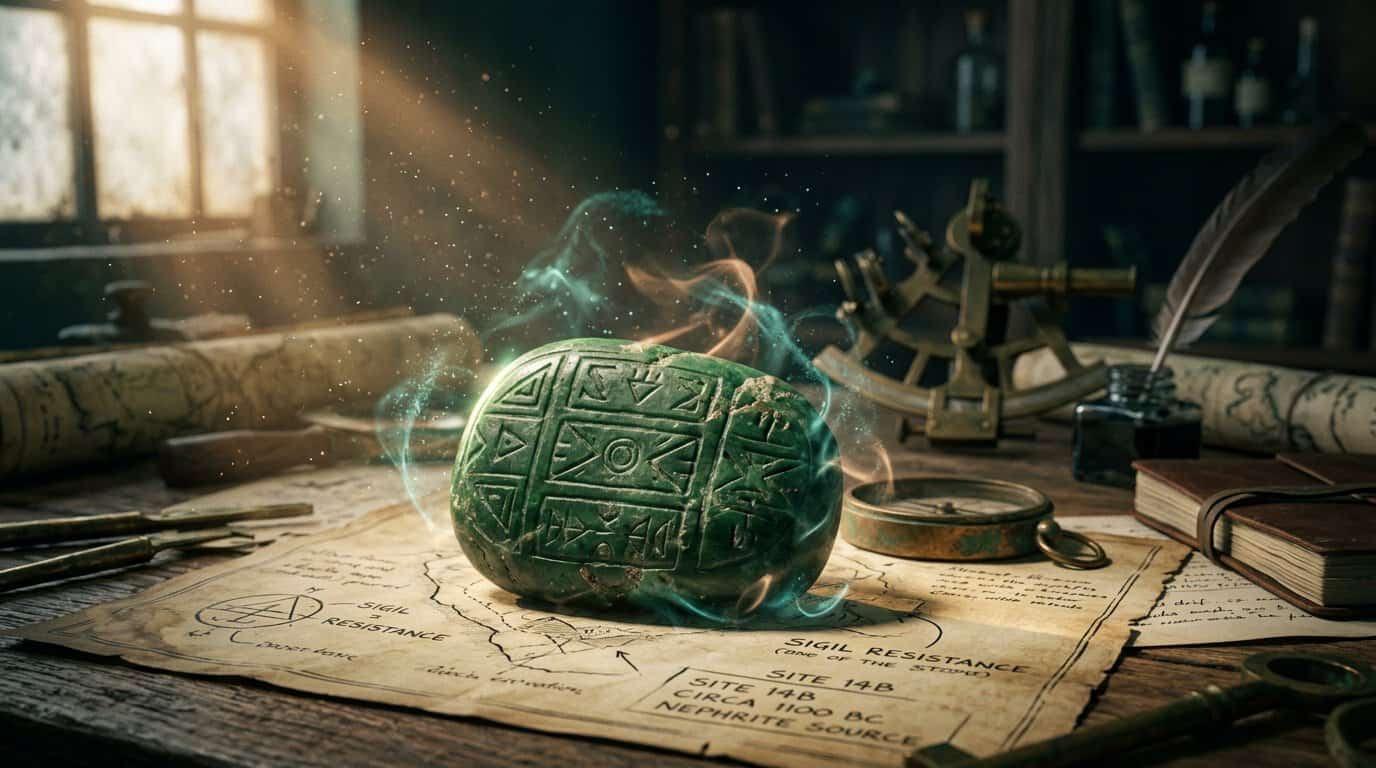
In the early 1980s, author Graham Phillips and a small team of researchers followed a path that blurred the lines between history and the paranormal. Following a series of vivid psychic visions experienced by a member of the group, they were led to a specific location in the British countryside. The search was fueled by the belief that ancient artifacts remained hidden, waiting for those with the right spiritual connection to find them. According to the narrative detailed in the research, these visions eventually guided the team to a small, mysterious green stone. This discovery was not just a geological find, but the first step in unraveling a much larger historical puzzle involving medieval secrets.
This peculiar green stone was believed to be a vital component of a legendary 13th-century weapon known as the Meonia artifact or sword. Through their investigation, the researchers linked the artifact to a hidden tradition involving the historical figures behind the Robin Hood legends and the Knights Templar. The stone was thought to possess a strange energy, acting as a key or a symbolic heart for the ancient blade. By blending historical research with psychic archaeology, the team presented a version of British history that felt both magical and grounded in physical evidence. This narrative suggests that certain objects are intentionally concealed to protect their power from the uninitiated.
The story of the green stone enigma challenges conventional archaeological methods by placing value on intuition and unconventional guidance. While mainstream historians often remain skeptical of such methods, the physical recovery of the stone provides a tangible focal point for the theory. It invites us to consider if there are layers of our past that cannot be found through digging alone, but require a deeper understanding of folklore and human consciousness. Whether the stone truly holds mystical properties or serves as a symbolic relic, it remains a fascinating example of how deep-seated mysteries can reshape our view of the world. What do you think about the idea of using psychic visions to uncover lost pieces of history?
Psychic Archaeology Tactics In The 1980s
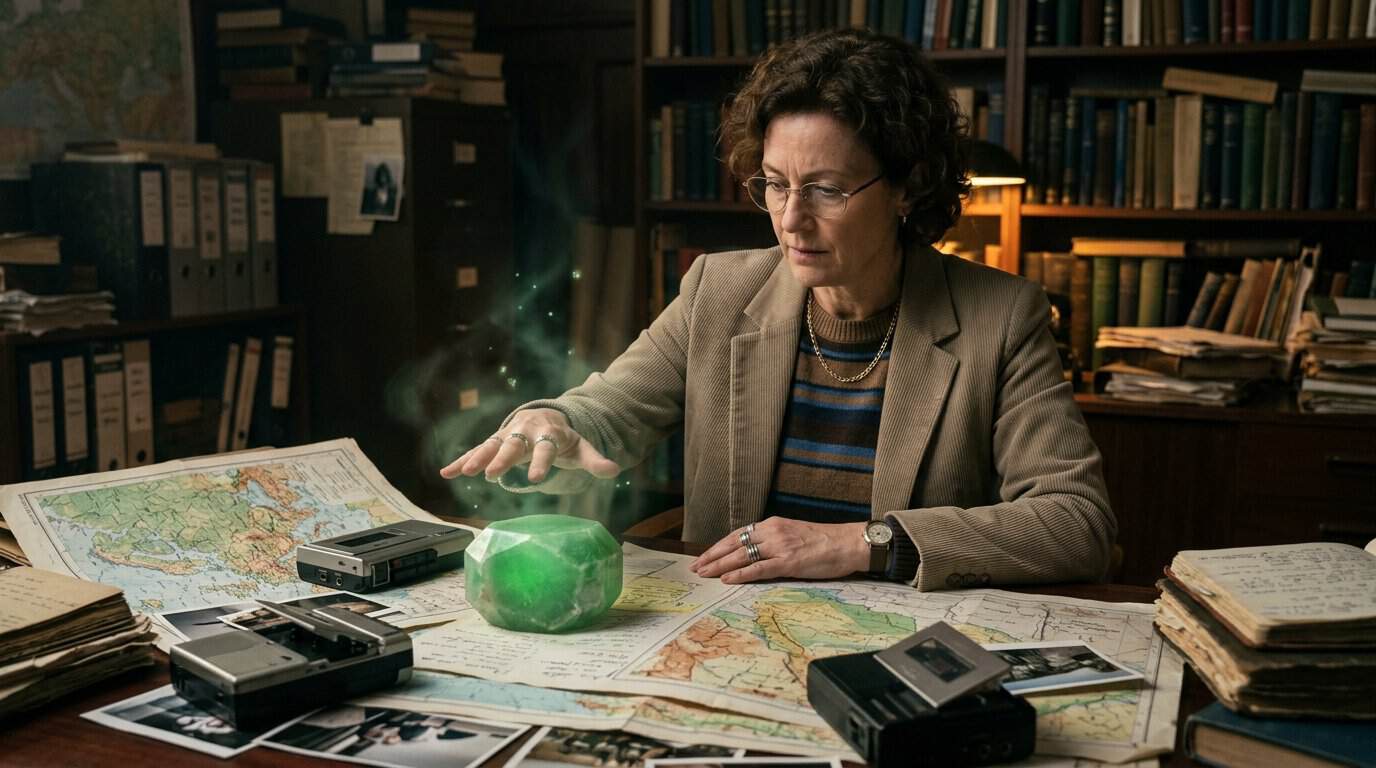
During the 1980s, a movement known as psychic archaeology began to take hold among independent British researchers who felt that traditional science was moving too slowly. These investigators believed that the human mind could tap into a collective memory or energy field to find lost historical artifacts. By using techniques like dowsing with copper rods and remote viewing, they attempted to see through layers of earth and time. This era was defined by a unique partnership between rigorous library research and extrasensory perception. Many participants felt that the green stone enigma could only be solved by looking beyond what was visible to the naked eye.
The process often began with a sensitive individual hovering their hands over ancient maps to feel for energetic hotspots. Once a location was identified, these psychic pioneers would travel to the site to pinpoint the exact coordinates of buried treasures. While mainstream academics remained skeptical, these groups claimed to find specific items that had been lost for centuries by following their intuition. They argued that historical objects like the polished nephrite stones found in ancient temples acted as anchors for psychic energy. This approach allowed them to bypass the expensive and time consuming process of traditional excavation.
These 1980s sessions were often documented with great care to prove that the findings were more than just lucky guesses. Researchers like Graham Phillips and Martin Keatman explored these unconventional methods while investigating historical mysteries. They suggested that the ancient world was connected by a web of knowledge that modern society had simply forgotten how to access. Even today, the results of these psychic surveys continue to spark debate among those who wonder if we are missing a larger part of our history. Do you think it is possible for the human mind to locate physical objects through intuition alone, or is it all just a series of coincidences?
Deciphering The Meonia Conspiracy And Hidden History
The Meonia conspiracy suggests that a secret group has operated in the shadows of British history for centuries, acting as guardians of a profound and ancient wisdom. According to researchers like Graham Phillips and Martin Keatman, this group sought to protect a sacred legacy that predates the established narratives of the British Isles. At the center of this mystery lies the green stone, a small but potent artifact that reportedly functions as a symbolic key to unlocking hidden truths. This stone is not merely a geological curiosity but is believed to be a physical link to a forgotten heritage that connects the landscape of England to a deeper, mystical past.
The narrative surrounding the green stone often intersects with legendary figures, suggesting that the artifact was once held by individuals who shaped the destiny of the nation. Some theories propose that the stone was linked to the historical Mary Magdalene or even the elusive figures of the Arthurian legends, serving as a talisman of power and protection. These claims are supported by accounts of psychic archaeology, where practitioners used intuitive methods to locate the stone and other hidden relics. By following these unconventional leads, investigators have pieced together a map of secret societies that have supposedly kept the flame of this hidden history alive through the generations.
Exploring the Meonia conspiracy requires a blend of historical research and an open mind toward the unexplained aspects of our world. While skeptics might view these tales as modern folklore, the intricate connections between specific historical sites and the movements of the green stone suggest a deliberate pattern at play. This hidden British heritage challenges our understanding of the past and invites us to look closer at the symbols carved into our ancient monuments. Does the green stone truly hold the power to reveal a suppressed timeline of human events, or is it a beautifully crafted myth designed to keep the spirit of wonder alive in the modern age?
The Lasting Echoes of Psychic Archaeology
The legacy of the Green Stone Enigma serves as a compelling reminder that history is often much deeper and more mysterious than what we find in standard textbooks. This 1980s British mystery pushed the boundaries of traditional investigation by blending physical artifacts with the unconventional practice of psychic archaeology. It suggests that the past might leave behind echoes or imprints that can only be accessed through a unique connection between the human mind and ancient objects. While mainstream science often looks for tangible data, this narrative invites a more sophisticated look at how we define historical truth. Even decades later, the story remains a standout example of how hidden histories can challenge our conventional understanding of the world.
Whether these discoveries represent a genuine breakthrough in human perception or a series of incredibly elaborate coincidences remains the central question for many researchers. The precision of the findings during the original search often defies simple explanation, leaving a door open for those who believe there is more to our reality than meets the eye. It is easy to be dismissive of the fringe, but the consistent details of the Green Stone account suggest a level of complexity that is hard to ignore. Much like the ancient technology found in other parts of the world, these relics force us to reconsider the capabilities of our ancestors. By maintaining an open but critical mind, we can appreciate the intrigue of a mystery that refuses to be neatly tucked away. This story proves that the pursuit of knowledge is often just as much about the journey into the unknown as it is about the final answer.
What do you think about the strange events surrounding this hidden British mystery? Do you believe that specialized sensitivity can actually help uncover lost artifacts, or is this simply a case of historical facts being woven into a clever narrative? Perhaps there is a middle ground where the power of suggestion and historical research meet in unexpected ways. We would love to hear your perspective on whether these findings are evidence of a psychic link to the past or just a fascinating legend. Share your thoughts in the comments below and let us know if you think some secrets are meant to stay hidden within the earth.
Frequently Asked Questions
1. What exactly is the Green Stone of Hattusa?
The Green Stone is a massive, polished cube of nephrite jade located within the ruins of the Great Temple in Hattusa, Turkey. It stands out because its smooth, gleaming surface is completely different from the rough limestone and granite found throughout the rest of the ancient Hittite capital.
2. Where did the Green Stone come from?
The origin of the stone remains a geological mystery because nephrite is not native to the surrounding region. Archaeologists believe it was transported over vast distances, though no ancient records explain why the Hittites went to such lengths to bring it to their sacred temple.
3. Does the Green Stone possess healing powers?
Many visitors who touch the stone claim to feel a strange, vibrating energy or a sense of healing. While science has not confirmed these supernatural properties, the stone has been a focal point for spiritual pilgrims and curious travelers for centuries.
4. Who is Graham Phillips and how is he connected to the mystery?
Graham Phillips is a historical researcher and author who investigated a different but related green stone in the British countryside during the 1980s. His work suggests that these unique artifacts may be linked to medieval secrets and legendary objects like the Meonia sword.
5. What was the purpose of the Green Stone in ancient times?
While its exact use is unknown, the stone likely played a central role in Hittite religious rituals. Some theories suggest it served as a gift from a foreign dignitary or a powerful tool used by priests to communicate with the divine. This search for meaning in ancient ruins mirrors the questions raised by the significance of Göbekli Tepe and its impact on our understanding of early civilization.
6. Is the Green Stone of Hattusa related to the Meonia sword?
Researchers have explored the idea that specific green stones found across the globe are part of a larger historical puzzle. In his investigation, a small green stone was discovered via psychic visions and identified as a missing piece of the legendary 13th-century Meonia sword.