

The Mystery Of The Johan Richter Artifacts And Pre-Columbian America
In the early 1700s, a Swedish traveler named Johan Richter stepped into the sun-drenched squares of Venice and saw more than just a city; he saw a masterpiece waiting to be captured. Today, the surviving Johan Richter artifacts offer a rare window into a world of gondolas and grand marble palaces that has largely vanished. These paintings and drawings are not just art pieces, but historical treasures that record the heartbeat of 18th-century Italy.
While some of his works act as precise maps of the past, others lean into a sense of mystery by blending real buildings with imaginary landscapes. This unique style has made his surviving works highly sought after, with some pieces fetching over half a million dollars at major auctions. Collectors and historians alike remain fascinated by how a northern outsider became one of the most important visual biographers of the Venetian Golden Age.
Key Takeaways
- Johan Richter’s 18th-century Venetian paintings serve as vital historical records, blending precise architectural mapping with imaginative landscapes to document Italy’s vanished Golden Age.
- The discovery of the ‘Richter stone relics’ in North America presents a significant archaeological mystery, featuring European-style engravings and linguistic patterns that suggest pre-Columbian transoceanic travel.
- Sophisticated inscriptions on these artifacts, resembling ancient scripts like Ogham or Runic, challenge the traditional historical timeline and suggest the existence of a forgotten library left by early European explorers.
- The ongoing debate between scientific skeptics and alternative historians regarding the Richter artifacts highlights a fundamental tension in archaeology between established peer-reviewed records and physical evidence of ancient global interaction.
The Discovery Of The Richter Stone Relics
The discovery of the Richter stone relics began when a series of unusual carvings were unearthed in a remote region, immediately sparking a wave of curiosity among local researchers. These artifacts featured intricate engravings that appeared strikingly out of place within the context of the surrounding North American landscape. Upon closer inspection, observers noted that the markings bore a remarkable resemblance to European-style craftsmanship and symbolic motifs. The precision of the stone work suggested a level of sophisticated tooling that was not typically associated with the known indigenous populations of that specific era. This initial find raised immediate questions about whether a forgotten group of travelers had reached these shores much earlier than the history books claim.
Local historians and independent researchers were particularly drawn to the specific linguistic patterns and geometric shapes etched into the stone surfaces. These markings seemed to mirror Old World traditions, leading some experts to suggest a direct connection to early European explorers or settlers whose stories have been lost to time. While traditional academic circles often view such out of place artifacts with extreme caution, the physical evidence of the Richter stones presents a compelling archaeological mystery that is difficult to ignore. The presence of these European-style relics in an unexpected geographic location challenges the established timeline of transoceanic travel. By examining the weathered grooves and specific artistic choices found on the stones, investigators continue to piece together a narrative that hints at a much more complex history of ancient global interaction.
Could these stone carvings be the definitive proof that European voyagers established a presence in North America centuries before the arrival of Columbus? The debate over the Richter artifacts highlights the ongoing tension between traditional archaeological records and physical evidence that suggests a different story. As more researchers apply modern analysis to these ancient carvings, the possibility of an early cultural exchange becomes an intriguing subject for further study. We encourage you to look at the evidence yourself and consider how these small stone relics might reshape our understanding of the past. What do you think these European-style markings reveal about the true explorers of the ancient world?
Analyzing The Controversial Richter Inscriptions
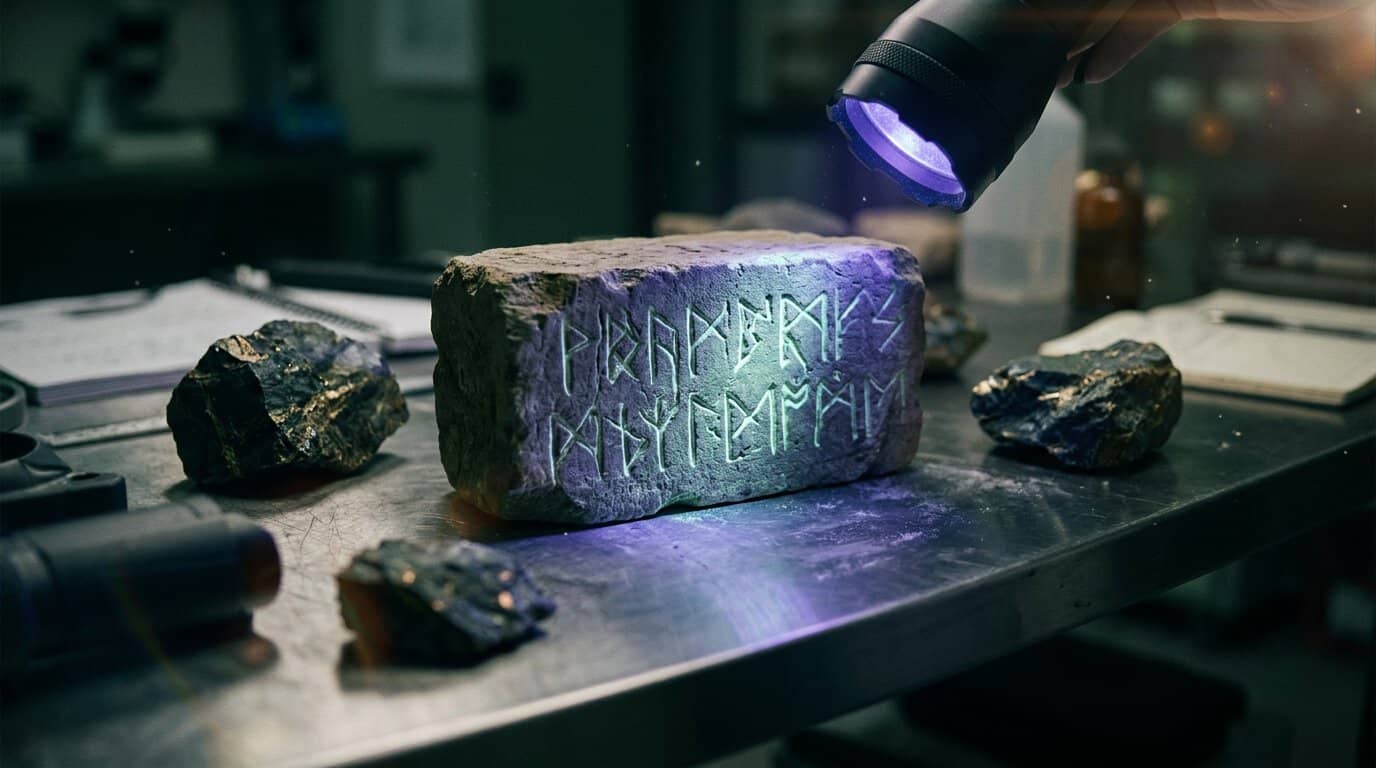
The inscriptions found on the Johan Richter artifacts present a fascinating puzzle for linguistic researchers and historians alike. Unlike standard colonial records, these markings consist of a strange blend of symbols that some experts believe mirror ancient scripts like Ogham or early Runic characters. While mainstream archaeology often classifies these as natural weathering or modern hoaxes, a careful analysis reveals a consistent syntax that suggests a deliberate form of communication. Proponents of the artifacts argue that the precision of the carvings points to a sophisticated understanding of language that predates the arrival of Christopher Columbus. This has led many to wonder if these stones serve as a forgotten library left behind by early trans-atlantic explorers.
Comparing these symbols to known ancient European languages opens a door to a history that many textbooks have overlooked. Some researchers have pointed out striking similarities between the Richter scripts and the maritime dialects used by seafaring cultures in the North Atlantic centuries ago. If these connections hold true, it would provide strong evidence for a pre-Columbian European presence in North America that was much more extensive than once thought. The possibility that these artifacts represent a lost chapter of human migration is a concept that gains more traction as new imaging technology allows for more detailed study of the etchings. These findings challenge the established historical theory and suggest that the ocean was a bridge rather than a barrier for ancient travelers.
The debate surrounding the Johan Richter artifacts continues to bridge the gap between scientific investigation and historical mystery. While some scholars remain skeptical of the inscriptions, the sheer uniqueness of the script makes it difficult to dismiss the items entirely as mere curiosities. Every new discovery regarding the chemical composition of the stone and the depth of the engravings adds another layer to the narrative of early exploration. Whether these are the remnants of a lost colony or evidence of a specific expedition, they force us to reconsider what we know about the ancient world. Does the presence of these symbols suggest that history is much more complex than the stories we have been told for generations?
Scientific Skeptics Versus Alternative History Claims
Mainstream archaeologists often classify the Johan Richter artifacts as clever modern hoaxes, arguing that the geological context of the finds does not match established historical records. These skeptics point out that there is no verified evidence of a large scale European colony in North America during the era these items supposedly represent. They suggest that the tools and inscribed stones were likely planted to create a sensational story or to boost local tourism. By focusing on the lack of peer reviewed excavation data, traditional scientists remain firm in their belief that the Richter relics are simply out of place objects with no scientific validity.
Independent researchers and alternative historians view these same objects as groundbreaking evidence of a hidden chapter in human exploration. They argue that the specific craftsmanship and unique markings on the artifacts suggest a sophisticated European presence that predates Christopher Columbus by centuries. These proponents believe that the rigid nature of academia often prevents scholars from seeing the truth behind unconventional discoveries. To these enthusiasts, the artifacts are not fakes but are instead vital clues that could rewrite the entire timeline of the Western Hemisphere. Much like America’s Vikings, the possibility of early Norse or European expeditions remains a subject of intense scrutiny and fascination.
The debate continues to captivate the public because it touches on the very core of how we understand our global heritage. While the scientific community demands rigorous proof and clear chains of custody, the mystery of the Johan Richter artifacts keeps the possibility of a forgotten past alive. New testing methods and digital imaging may eventually provide a definitive answer, but for now, the items remain a fascinating bridge between myth and history. Does the existence of these relics suggest that our ancestors were far more adventurous than we have been taught to believe?
The Lasting Legacy of the Richter Relics
The mystery of the Johan Richter artifacts leaves us at a fascinating crossroads between accepted history and radical new possibilities. While mainstream scholars often categorize these finds as mere curiosities or later misidentifications, the physical evidence continues to challenge the established timeline of European exploration. If these relics are truly authentic, they suggest that bold travelers reached the shores of North America centuries before the history books claim. Such a discovery does not just add a footnote to our past, but instead demands a complete reevaluation of how interconnected the ancient world really was.
Each piece of evidence invites us to look past the comfort of traditional narratives and embrace the thrill of the unknown. Science and archaeology provide the tools for analysis, yet the enduring questions surrounding these artifacts remind us that much of our heritage remains buried or misunderstood. Whether they are proof of early contact or a complex historical puzzle, they serve as a testament to the human spirit of discovery. The story of these controversial objects is far from over, as every new study brings us closer to the truth behind our continent’s earliest visitors.
Do these artifacts provide the definitive proof needed to overturn centuries of historical teaching, or are they simply a misunderstood part of a much larger story? We want to hear what you think about this controversial discovery and the explorers who might have left these marks behind. Is it time for us to finally rewrite the history of North America to include these early voyages? Share your thoughts and theories in the comments below to join the conversation about our mysterious past.
Frequently Asked Questions
1. Who exactly was Johan Richter?
Johan Richter was a Swedish traveler who lived during the early 1700s and became a master painter of Venetian life. He is celebrated for capturing the Golden Age of Italy through detailed artworks that blend real architecture with imaginative scenes.
2. What makes the Richter stone relics so unusual?
These stone relics feature intricate carvings and European style motifs that seem out of place in the North American landscape where they were found. The sophisticated tooling and geometric shapes suggest a level of craftsmanship that challenges traditional history books regarding early travelers.
3. How much are Johan Richter paintings worth today?
The surviving artworks are highly prized by collectors and historians for their historical accuracy and artistic beauty. Some of his most significant pieces have sold for over half a million dollars at major international auctions.
4. Is there evidence that Johan Richter traveled to North America?
While his famous paintings focus on Venice, the discovery of the Richter stone relics has sparked a fascinating mystery about potential early European contact. Researchers are currently studying the linguistic patterns on these stones to see if they link back to Richter or his contemporaries.
5. What is the artistic style of the Johan Richter artifacts?
His work is known for a unique style called veduta, which often mixes precise geographical maps with dreamlike, imaginary landscapes. This creates a sense of mystery that makes his visual biographies of the 18th century both beautiful and intriguing.
6. Why are these artifacts considered historical treasures?
These pieces act as a rare window into a world of grand marble palaces and gondolas that has mostly disappeared. They serve as essential records of the heartbeat of 18th century Italy, preserved through the eyes of a talented northern outsider.