The Engineering Enigma Of The Ramesseum Colossal Statues
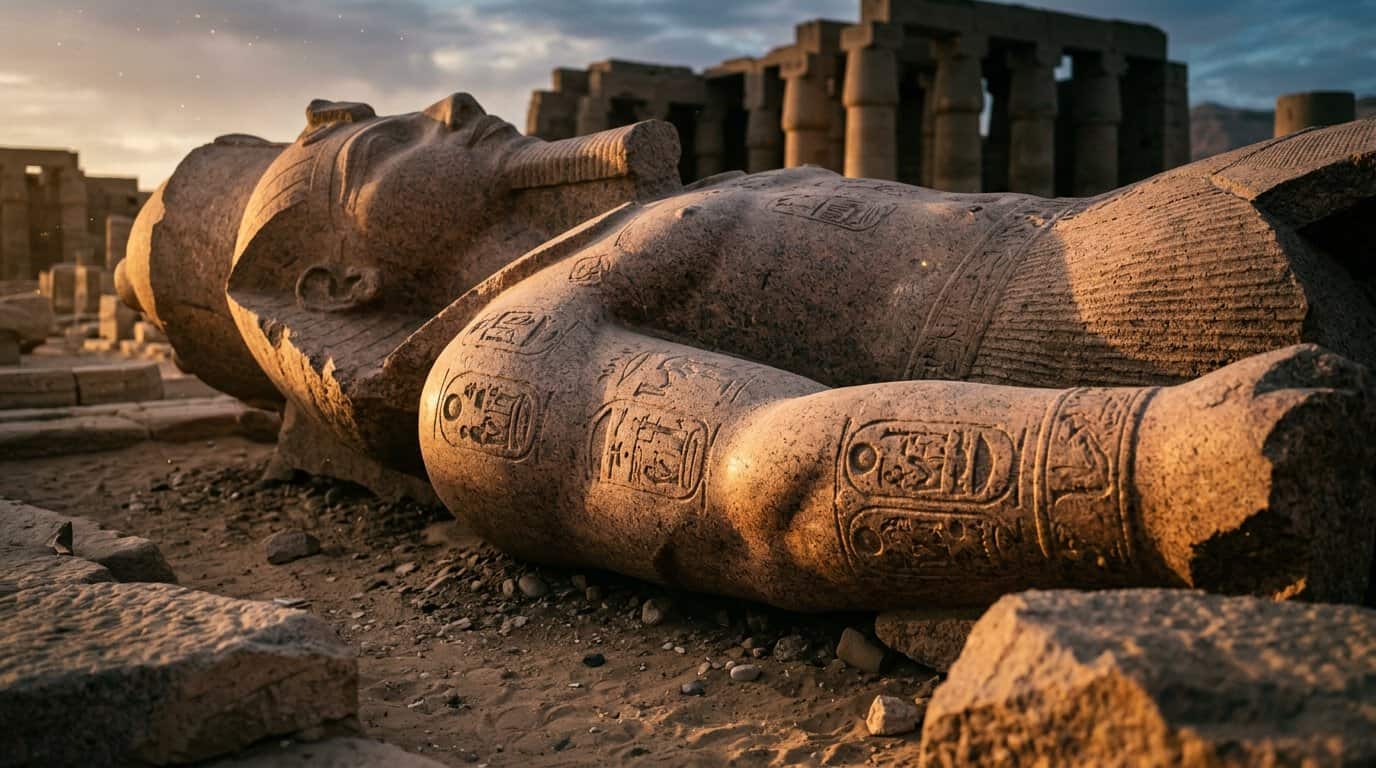
Deep in the heart of ancient Luxor, a shattered giant lies across the dusty floor of a temple that once defied time itself. These ramesseum colossal statues, carved from single blocks of pink granite, were designed to broadcast the eternal power of Ramesses II to anyone who dared look upon them. Today, the most famous of these figures rests in massive fragments, a thousand-ton puzzle that has captivated explorers and poets for centuries. It is a haunting sight that forces us to wonder how such a monumental feat of engineering was even possible over 3,000 years ago.
Recent restoration breakthroughs across Egypt have breathed new life into these ancient mysteries, offering fresh clues about the fallen Ozymandias colossus. While mainstream history points to incredible manual labor and sledges, the sheer scale of moving a 1,000-ton block over 200 kilometers hints at lost knowledge or techniques we are only beginning to rediscover. As we look at the weathered face of the king, the line between historical fact and the nearly impossible begins to blur. The Ramesseum remains a place where the physical reality of the past feels almost supernatural.
Key Takeaways
- The fallen Ozymandias colossus, weighing over 1,000 tons and carved from a single block of pink granite, represents one of the most significant engineering mysteries of the ancient world.
- Transporting these massive monoliths over 200 kilometers from the Aswan quarries to Luxor suggests a sophisticated mastery of mechanics and logistics that challenges conventional historical explanations.
- The mathematical symmetry and mirror-like finish of the granite surfaces indicate a level of precision carving that rivals modern industrial machining standards.
- While mainstream archaeology attributes these feats to massive manual labor, the sheer scale and technical perfection of the Ramesseum ruins hint at the possibility of lost ancient technologies or advanced stone-shaping methods.
The Thousand Ton Granite Mystery Of Ozymandias
The fallen colossus of Ramesses II lies in the dust of the Ramesseum, yet its sheer scale continues to challenge our understanding of ancient capabilities. This massive figure was carved from a single block of pink syenite granite and originally stood nearly sixty feet tall. Modern estimates suggest the statue weighed over one thousand tons, making it one of the heaviest monolithic objects ever moved by human hands. It is the very ruin that inspired the famous poem Ozymandias, serving as a silent witness to a level of engineering that seems almost supernatural. The precision required to shape such hard stone without modern steel tools remains a significant point of interest for researchers today.
Transporting this thousand ton giant presented a logistical challenge that defies conventional explanation. The granite was sourced from the quarries of Aswan, located more than two hundred kilometers away from its final resting place in Luxor. Moving a single block of this magnitude across such a distance would require incredible stability and power, especially when considering the soft riverbanks of the Nile. While mainstream theories suggest the use of wooden sleds and thousands of laborers, the sheer physics of friction and weight distribution lead many to wonder if a lost technology was involved. The feat of logistics suggests that the builders possessed a sophisticated grasp of mechanics that has been lost to time.
Recent studies and restoration efforts at other Egyptian sites have brought renewed attention to the incredible craftsmanship found within the Ramesseum. Archeologists like Christian Leblanc have spent decades documenting these ruins, yet the mystery of the statue’s creation only seems to deepen with each discovery. When we look at the perfectly smooth contours of the granite, it is difficult to imagine these were achieved simply by pounding stone against stone. The level of symmetry and detail preserved in the fragments suggests a mastery over the material that rivals modern industrial machinery. Could the ancient Egyptians have utilized methods of stone manipulation that we are only beginning to rediscover?
Precision Carving And The Lost Technology Debate
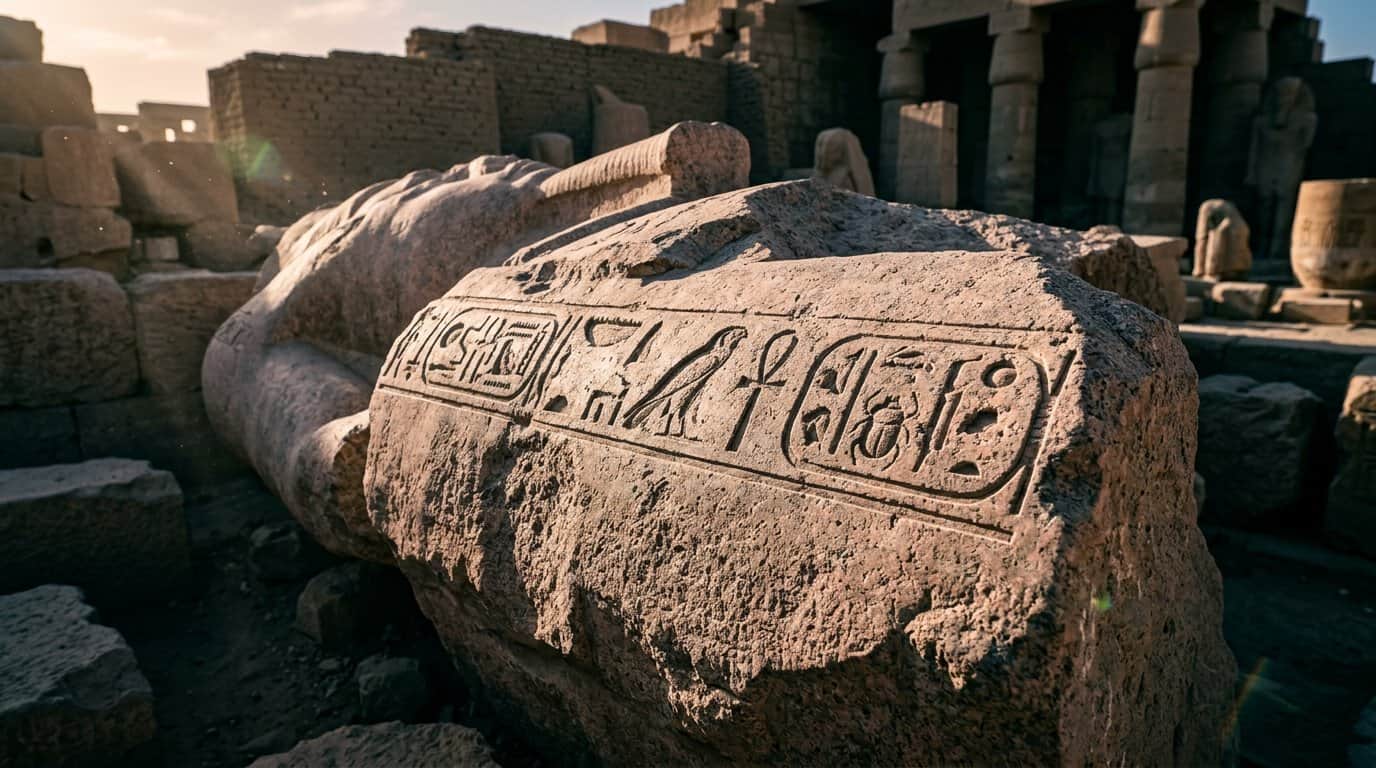
The sheer scale of the fallen Ozymandias colossus is enough to leave any modern engineer in awe. Carved from a single block of pink granite weighing over 1,000 tons, the statue displays a level of precision that seems impossible for a civilization supposedly limited to copper chisels and stone hammers. When researchers examine the contours of the face and the perfect symmetry of the features, they find mathematical consistency that suggests the use of advanced geometry. Granite is one of the hardest stones on Earth, yet the surfaces at the Ramesseum are polished to a mirror-like finish. This level of craftsmanship hints at a mastery of material that goes far beyond basic hand tools.
The debate over lost technology intensifies when looking at the intricate details that have survived thousands of years of erosion. Some alternative historians and engineers, such as Christopher Dunn, have pointed out that the precision found in Egyptian granite work often rivals modern industrial machining standards. If the ancient builders only had access to soft metal tools, the time and effort required to achieve such flawless curves would be astronomical. This leads to the fascinating theory that the Ramesseum might be a remnant of a much older, technologically sophisticated era. The idea of high-speed lathes or ancient power source theories is often dismissed by mainstream archaeology, yet the physical evidence in the stone remains difficult to explain.
While traditional Egyptology maintains that sheer manpower and patience achieved these results, many visitors find that answer unsatisfying when standing before the massive fragments. The logistical nightmare of transporting a 1,000-ton block from the Aswan quarries across 200 kilometers of desert and river is a mystery in itself. Every cut in the stone appears intentional and perfectly executed, leaving no room for the errors typical of manual labor. This leaves us to wonder if we are looking at the peak of human persistence or the fingerprints of a forgotten science. What do you think is more likely: an army of thousands working for decades, or a mysterious engineering method of softening and shaping stone that we have yet to rediscover?
The Younger Memnon And Belzonis Impossible Feat
The removal of the seven ton granite bust known as the Younger Memnon was once considered an impossible task for the technology of the early nineteenth century. When explorer Giovanni Belzoni arrived at the Ramesseum in 1816, he was tasked with transporting this massive fragment from Luxor to the Nile River for shipment to England. Using nothing more than wooden rollers, levers, and a team of hundreds of local laborers, Belzoni managed to move the red granite giant over several weeks of grueling effort. His success proved that humanity could still manipulate these massive stones, yet it also highlighted the sheer difficulty of moving even a small portion of what was originally a much larger monument.
While Belzoni was able to drag a seven ton fragment across the sand, his feat pales in comparison to the original placement of the complete colossus. The full statue originally stood over sixty feet tall and weighed an incredible one thousand tons, all carved from a single block of pink granite. Modern engineers remain puzzled by how the ancient builders transported such a concentrated mass over one hundred miles from the Aswan quarries without the use of modern steel cranes or engines. The precision required to move and then upright a thousand ton monolith suggests a level of mechanical mastery that seems to go beyond the simple wooden tools described in traditional history books.
The sheer scale of these statues hints at a lost era of engineering that defies our current understanding of ancient capabilities. When looking at the shattered remains of the Ozymandias colossus, it is hard not to wonder if prehistoric builders possessed specialized knowledge or tools that have since been forgotten. Some researchers suggest that the Egyptians may have used sophisticated harmonic or liquid based techniques to reduce friction, allowing them to glide these giants across the ground with ease. Could there be a missing chapter in our technological history that explains how these massive megaliths were handled with such grace? What do you think was the secret behind moving these thousand ton giants across the desert sands?
The Engineering Mystery of the Fallen Giant
The shattered remains at the Ramesseum serve as a silent reminder of a sophisticated past that still keeps its most impressive secrets hidden from the modern world. Even in its broken state, the thousand ton colossus of Ramesses II challenges our understanding of ancient capabilities. Moving a single block of granite over two hundred kilometers from Aswan would be a monumental task for any modern engineering crew. The sheer precision required to carve such hard stone into a masterpiece suggests that the builders possessed techniques we have yet to rediscover. These fragments are not just ruins but are evidence of a lost era of high technology.
Looking at the massive torso and head lying in the dust, one cannot help but feel that history is missing a vital chapter. While traditional archaeology explains these feats through sheer manpower and simple tools, the mathematical perfection of the statues hints at something more advanced. Much like the stories surrounding The Curse of Tutankhamun’s Tomb, the mysteries of the Ramesseum continue to capture the public imagination and fuel endless speculation. Recent restoration efforts on similar giants across Egypt continue to reveal new details about how these monuments were originally positioned and polished. Each discovery brings us closer to understanding how a civilization could manipulate such immense weight with such apparent ease. The Ramesseum remains a place where the physical evidence of the past seems to outpace our current scientific explanations.
What do you think was the true secret behind the incredible engineering seen at the Ramesseum? Is it possible that the ancient Egyptians used a form of lost technology that has since vanished from the historical record? The mystery of how they transported and shaped these thousand ton stones continues to spark debate among researchers and enthusiasts alike. Similar questions arise when studying levitating stones and other megalithic wonders found across the globe. We invite you to share your theories and join the conversation about these fascinating ancient wonders. Your perspective might just be the piece of the puzzle that helps us see the full picture of this remarkable history.
Frequently Asked Questions
1. What exactly are the Ramesseum colossal statues?
These are massive figures carved from single blocks of pink granite that represent the Pharaoh Ramesses II. They were designed to stand as eternal guardians of his mortuary temple in Luxor. Today, the most famous of these statues lies in giant fragments, weighing over one thousand tons and serving as a testament to ancient ambition.
2. How much does the fallen Ozymandias statue actually weigh?
Modern estimates place the weight of the fallen colossus at over one thousand tons. This makes it one of the heaviest monolithic objects ever handled by human beings in history. Its sheer mass challenges our modern understanding of how such a weight could be moved across hundreds of kilometers of desert terrain.
3. Where did the granite for these massive statues come from?
The pink syenite granite used for these figures was sourced from quarries in Aswan. This means the ancient builders had to transport the thousand ton blocks over 200 kilometers down the Nile to reach the Ramesseum. The logistics of moving such a heavy object over that distance remain a fascinating mystery for engineers and historians alike.
4. Why is the fallen statue associated with the name Ozymandias?
Ozymandias is the Greek name for Ramesses II, which inspired the famous poem by Percy Bysshe Shelley. The poet wrote about the shattered visage and trunkless legs of stone to reflect on the nature of power and time. The ruin at the Ramesseum is the direct physical inspiration for that legendary literary work.
5. How did the ancient Egyptians carve such hard stone without steel tools?
The precision of the carving on hard pink granite suggests a level of craftsmanship that seems almost supernatural for its time. While mainstream history points to the use of dolerite pounders and copper tools, the perfect symmetry and smooth finish lead some to wonder if lost techniques were involved. Researchers continue to study the weathered face of the king to find clues about these ancient methods.
6. What makes the engineering of the Ramesseum statues so mysterious?
The mystery lies in the combination of extreme weight and the delicate precision required to shape the stone. Moving a one thousand ton block across a distance of 200 kilometers using only sledges and manual labor is a feat that pushes the boundaries of known physics. This blend of massive scale and fine detail hints at a sophisticated understanding of mechanics that we are still trying to fully grasp.