The Midnight Wraith Of Indiana And The Crawfordsville Monster Sighting
In September 1891, the quiet town of Crawfordsville, Indiana, was gripped by terror when a bizarre shape appeared in the night sky. Two local workers were the first to report the crawfordsville monster sighting, describing a massive, headless white entity that seemed to swim through the air. This Midnight Wraith measured eighteen feet long and moved with a ghostly, wheezing sound that left witnesses frozen in disbelief.
The mystery deepened when a local reverend and his wife also spotted the strange, shroud-like creature circling above the rooftops. While some believe it was merely a misidentified flock of birds, the vivid descriptions of side fins and a flaming red eye suggest something far more unusual. This historical enigma remains one of the most fascinating cases of an atmospheric beast ever recorded in the American Midwest.
Key Takeaways
- The 1891 Crawfordsville monster sighting involved multiple credible witnesses, including city workers and a local reverend, who described a headless, 18-foot-long white entity swimming through the night sky.
- Physical descriptions of the ‘Midnight Wraith’ suggest a biological atmospheric beast characterized by side fins, a pulsating shroud-like body, and a single glowing red eye.
- While the ‘killdeer bird theory’ suggests a flock of birds was disoriented by new electric streetlights, it fails to fully account for the specific anatomical details and rhythmic wheezing sounds reported by experienced woodsmen.
- The incident remains a foundational case in American folklore and atmospheric biology, challenging standard zoological classifications and the boundaries between natural phenomena and the unexplained.
Terror From The Sky In September 1891
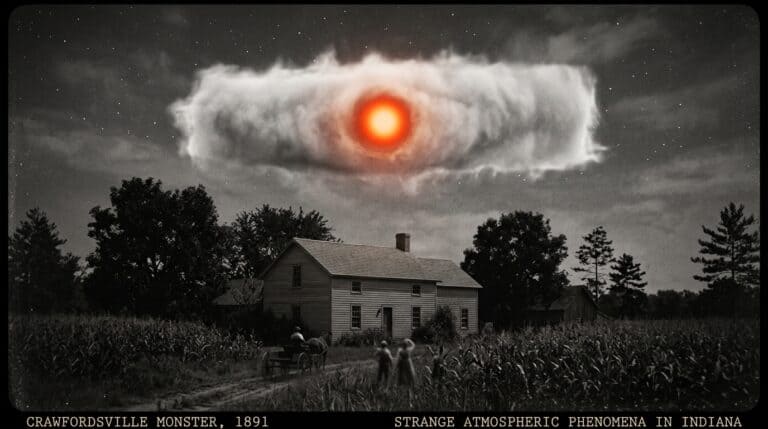
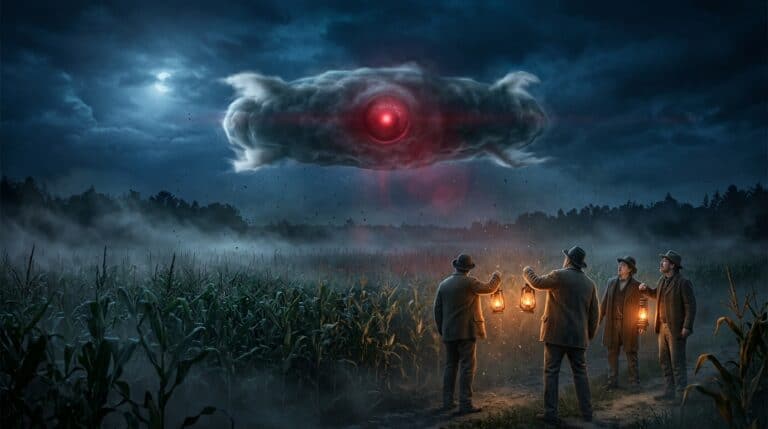
The quiet streets of Crawfordsville, Indiana, were forever changed in the early morning hours of September 4, 1891. Two local ice delivery men, Marshall McIntyre and Bill Gray, were finishing their rounds when they looked up to see a sight that defied explanation. Hovering three hundred feet above them was a massive, white, shroud-like entity that appeared to be roughly eighteen feet long and eight feet wide. This strange visitor moved through the sky with a peculiar swimming motion, propelled by several pairs of side fins. The men watched in awe and terror as the headless creature circled the town, emitting a haunting, wheezing sound that echoed through the silence of the night.
Word of the apparition spread quickly, but the ice men were not the only credible witnesses to this aerial mystery. Reverend G.W. Switzer and his wife also stepped outside to find the creature lingering above the rooftops, describing it as a mass of floating white drapery. The Reverend noted that the entity seemed to struggle against the air, moving with an organic grace that suggested it was a living biological organism rather than a mechanical craft. Some reports even mentioned a single, glowing red eye that peered down at the sleeping town below. These accounts from respected community members added a layer of legitimacy to the claims, sparking a local panic that lasted for days.
The crawfordsville monster sighting remains one of the most intriguing examples of what some researchers call atmospheric beasts, or creatures that spend their entire lives in the upper reaches of our sky. While skeptics often point to a flock of confused birds as the likely culprit, the detailed descriptions of fins and rhythmic wheezing suggest something far more exotic. The witnesses were adamant that the creature was a singular, massive entity that displayed deliberate movement and awareness. Whether it was a visitor from another world or a rare biological phenomenon from our own atmosphere, the events of that September night continue to fascinate those who look toward the stars with wonder. What do you think the people of Crawfordsville actually saw floating above their homes?
Anatomy Of The Headless Floating Wraith
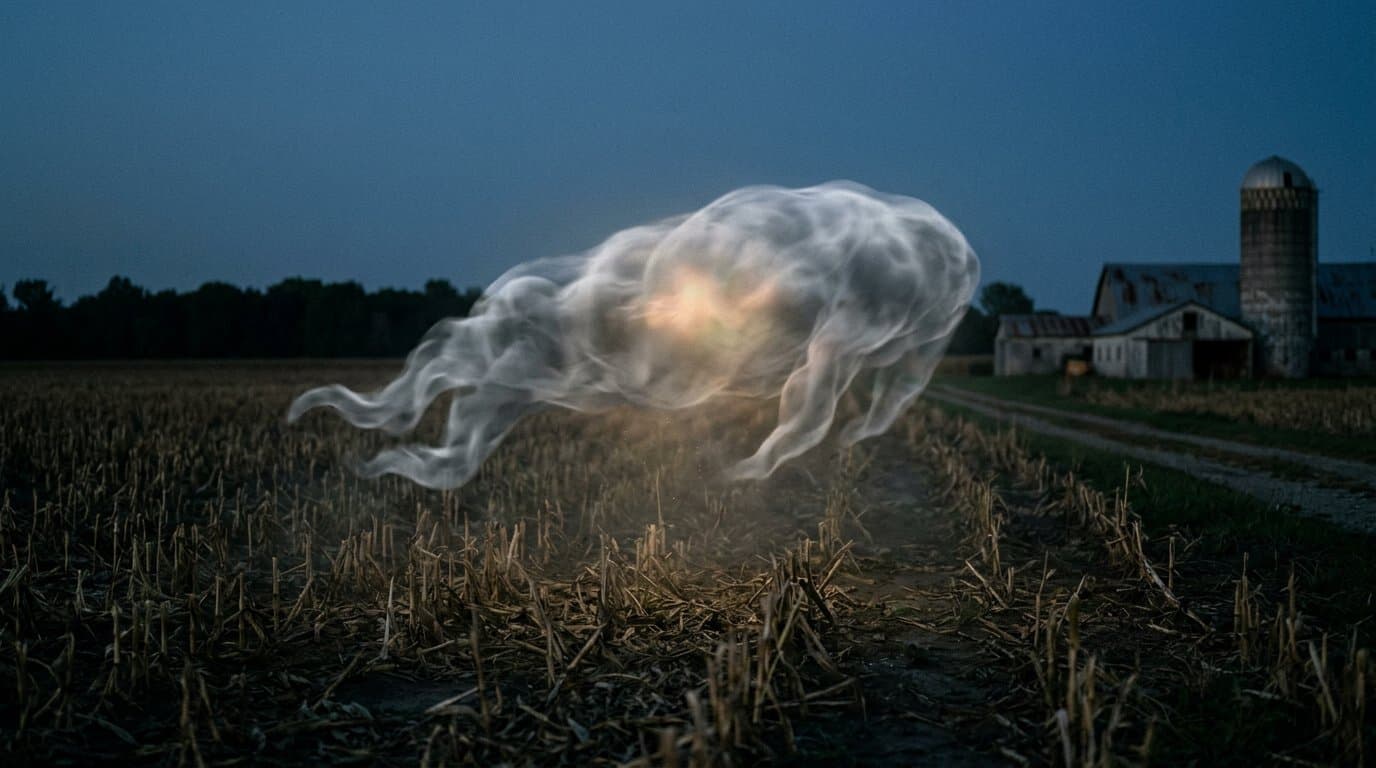
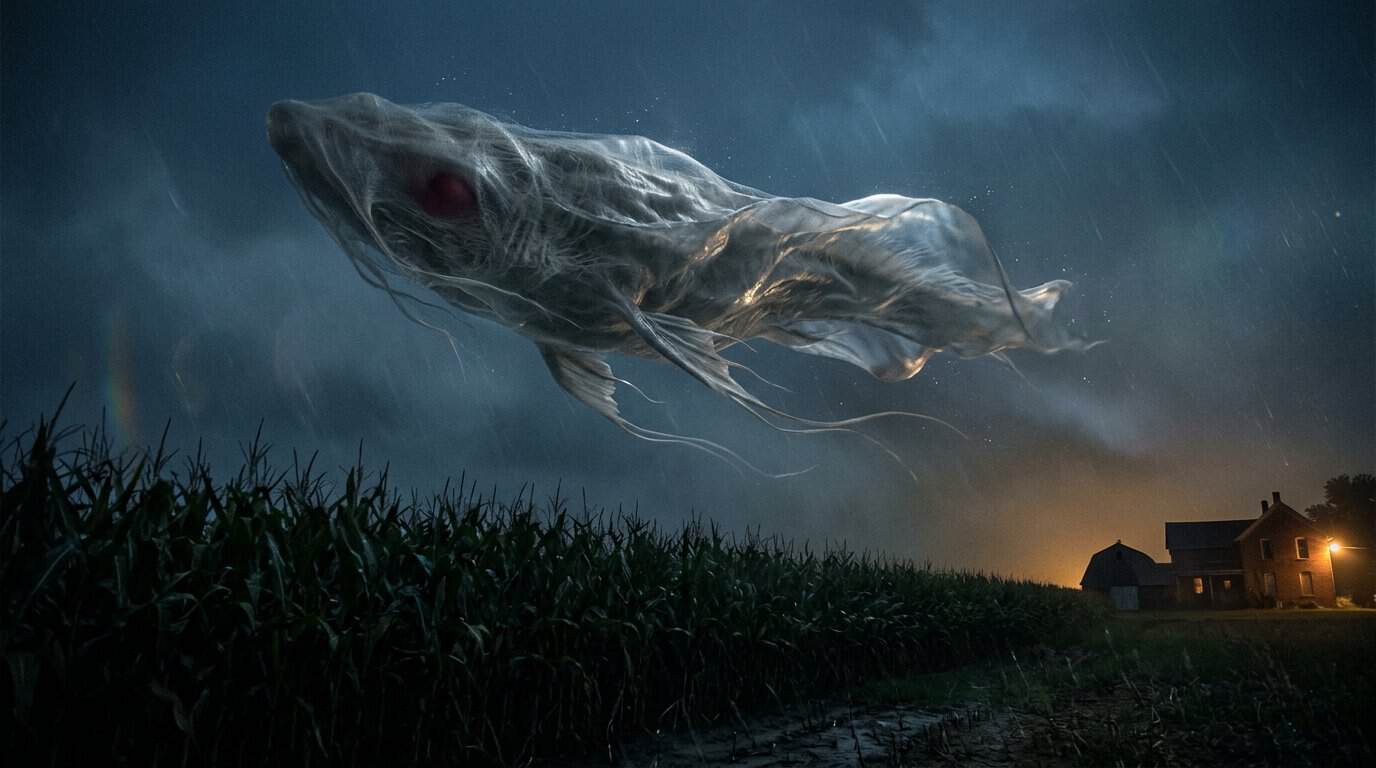
The physical makeup of the Crawfordsville Monster defied every known law of biology, appearing more like a ghostly shroud than a living animal. Witnesses like Marshall McIntyre and Bill Gray described a massive, rectangular entity measuring approximately eighteen feet long and eight feet wide. This pale, white creature lacked a discernible head or tail, giving it the appearance of a floating piece of drapery or a tattered rectangular sail. Instead of wings, the beast featured several pairs of side fins that moved in a rhythmic, swimming motion to propel it through the midnight air. This peculiar method of locomotion suggested an atmospheric beast that treated the Indiana sky like a vast, invisible ocean.
Beyond its strange shape, the creature emitted chilling sensory cues that left locals in a state of pure dread. As it circled the town, it produced a labored, wheezing sound that many described as a plaintive or mournful moan. This haunting noise was accompanied by a single, glowing red eye that flickered like a flame at the front of its undulating body. Some accounts from the time, including observations by Reverend G.W. Switzer, noted that the creature seemed to pulsate with a strange energy as it maneuvered around buildings. The combination of its rhythmic fins and its singular fiery gaze created an image of a sentient, atmospheric predator that felt entirely alien to the quiet Midwest.
The anatomy of this Midnight Wraith presents a fascinating puzzle for those interested in the fringe of atmospheric biology. While skeptics often point toward a coordinated flock of birds as a logical explanation, the specific details of the side fins and the glowing red eye remain difficult to dismiss entirely. If the reports were accurate, the creature possessed a soft, flexible structure that allowed it to hover and dive with eerie precision. Its lack of a skeletal frame and its shroud like skin suggest an entity perfectly adapted for life high within the clouds. Whether it was a biological anomaly or a visitor from another realm, the physical traits of the Crawfordsville Monster continue to spark debate among modern investigators.
Mass Hysteria And The Killdeer Bird Theory
The quiet streets of Crawfordsville were soon gripped by a collective frenzy as the bizarre sightings moved from isolated reports to a town-wide event. Hundreds of local residents gathered under the night sky to witness the strange, swimming entity as it circled the town for hours. Witnesses reported that the creature seemed to be in pain, emitting a haunting, wheezing sound that echoed through the air. The sight of a massive, shroud-like shape undulating above the rooftops created a sense of genuine panic. People were torn between the fear of a supernatural visitation and the wonder of discovering a new form of atmospheric life.
Seeking to calm the public, researchers like Professor Herbert Thompson from Wabash College stepped forward to offer a grounded explanation. He suggested that the monster was actually a large flock of killdeer birds that had become disoriented by the town’s recently installed electric streetlights. These birds have white underbellies that could easily reflect the bright glow of the new lamps, making them look like a single, glowing organism. The plaintive cries reported by the townspeople also matched the high-pitched, piping sounds that killdeer are known to make when they are distressed. According to this theory, the birds were simply trapped in the glare and unable to find their way back into the darkness.
While the killdeer bird theory provided a sigh of relief for many, it did not satisfy every witness who saw the Midnight Wraith up close. Skeptics pointed out that experienced woodsmen and residents were already familiar with local wildlife and would likely recognize a flock of birds, even in strange lighting. The description of a headless, eighteen-foot-long mass with side fins still feels like something far more alien than a simple avian migration. Whether it was a biological anomaly or a trick of the light, the event remains a fascinating example of how new technology can collide with the natural world. Do you think a simple flock of birds could truly be mistaken for a swimming sky monster, or was Crawfordsville visited by something much more mysterious?
Final Conclusion
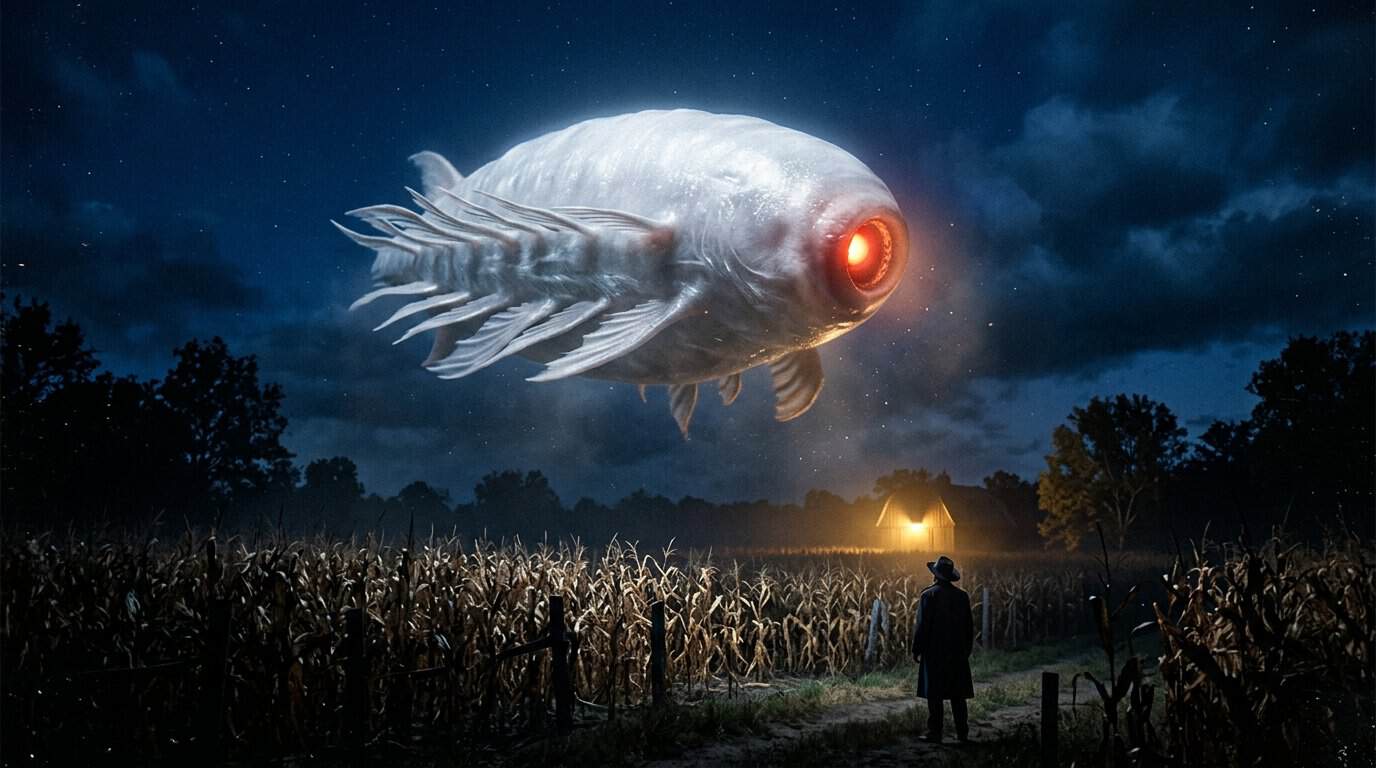
The legacy of the Crawfordsville Monster remains a captivating chapter in American folklore because it challenges our understanding of the natural world. This headless, swimming entity from 1891 serves as a foundational example of atmospheric biology, suggesting that the skies might hold life forms we have yet to categorize. While some historians point toward a disoriented flock of killdeer birds as the likely culprit, the vivid descriptions of pulsing fins and a singular red eye continue to spark the imagination. Its story has transitioned from a local newspaper sensation into a permanent fixture of high strangeness that refuses to be forgotten.
Whether the Midnight Wraith was a biological anomaly or a simple trick of the light, it reminds us that mystery often lingers just above our heads. The eyewitness accounts from respected members of the community, such as Reverend Switzer, provide a layer of sincerity that makes the event difficult to dismiss entirely. Even today, the image of a white, shroud like beast drifting through the Indiana night remains a cinematic and haunting vision. We are left to wonder if the ice delivery men witnessed a rare natural phenomenon or a visitor from a realm we still do not comprehend.
What do you think about this strange visitor from Crawfordsville’s past? Do you believe the witnesses were truly seeing a massive, wheezing creature of the air, or does the bird theory offer a more grounded explanation? Perhaps there is a middle ground where a natural event was amplified by the fear of the unknown. We invite you to share your theories and join the conversation about whether this was a misunderstood animal or a genuine monster of the sky.
The Legacy of Indiana’s Sky Monster
The Crawfordsville Monster remains one of the most unique chapters in American folklore, blending the eerie atmosphere of a ghost story with the strange possibilities of atmospheric biology. What began as a terrifying midnight encounter for two ice delivery men soon transformed into a town-wide mystery that captured the imagination of Indiana residents. Whether it was a headless, swimming entity or a misunderstood natural phenomenon, the detailed accounts from credible witnesses like Reverend Switzer suggest that something truly unusual occupied the skies that September. This 1891 sighting serves as a classic example of how the unexplained can bridge the gap between the physical world and the fringe of our understanding.
While skeptics often point toward a flock of disoriented killdeer birds as the logical explanation, the vivid descriptions of a wheezing, eighteen foot long shroud continue to fuel curiosity. Similar to the Van Meter Visitor, the idea of a living, breathing creature that inhabits the upper reaches of our atmosphere is a fascinating concept that challenges standard biological definitions. Even if the mystery was solved to the satisfaction of some scientists at the time, the legendary Midnight Wraith still holds a special place in the hearts of those who love a good mystery. It reminds us that there may still be wonders drifting above us that have yet to be fully categorized by science.
What do you think really hovered over the rooftops of Crawfordsville during those strange nights in 1891? Could a simple flock of birds truly be mistaken for a swimming, finned monster, or is it possible that a rare atmospheric creature briefly descended into our view? The history of the Crawfordsville Monster invites us to keep our eyes on the horizon and remain open to the unknown. Join the conversation in the comments below and share your thoughts on whether this was a case of mass misidentification or a genuine encounter with North American Thunderbirds or other cryptids from the clouds.
Frequently Asked Questions
1. When did the Crawfordsville monster sighting first occur?
The first sighting of this mysterious entity took place in the early morning hours of September 4, 1891. It gripped the quiet town of Crawfordsville, Indiana, with terror as residents looked to the night sky. Two local workers were the first to encounter the strange shape while finishing their delivery rounds.
2. What did the creature look like to witnesses?
Witnesses described the creature as a massive, white, shroud-like entity measuring approximately eighteen feet long and eight feet wide. It appeared to be headless and moved through the air with a swimming motion using several pairs of side fins. Some observers even noted a glowing, flaming red eye that added to its eerie appearance.
3. Who were the primary witnesses of the event?
Ice delivery men Marshall McIntyre and Bill Gray were the first to report the apparition while working their route. Their account was supported by Reverend G.W. Switzer and his wife, who watched the creature circle above the rooftops from their own home. These credible reports from respected members of the community helped cement the event in local history.
4. Did the monster make any sounds?
Yes, the entity was known for emitting a haunting, wheezing sound as it moved through the atmosphere. Many witnesses described this noise as a ghostly groan that echoed through the silent night. This sound accompanied its peculiar struggling motion as it seemed to swim against the air currents.
5. Is there a scientific explanation for what people saw?
While the descriptions were vivid, some skeptics at the time suggested the sighting might have been a large flock of killdeer birds. These birds have white underbellies that can reflect city lights, potentially creating the illusion of a single large organism. However, this theory fails to account for the specific descriptions of fins and the massive size reported by onlookers.
6. Why is this case considered a classic atmospheric beast mystery?
The Crawfordsville incident is a premier example of an atmospheric beast because the entity appeared to be an organic, living creature that inhabited the sky rather than a mechanical craft. Its shroud-like form and graceful, swimming movements suggest a biological mystery that defies standard zoological classification. It remains one of the most famous historical enigmas of the American Midwest.