The Invisible Stone Of Kyoto: Unlocking The Ryoanji Temple Garden Mystery
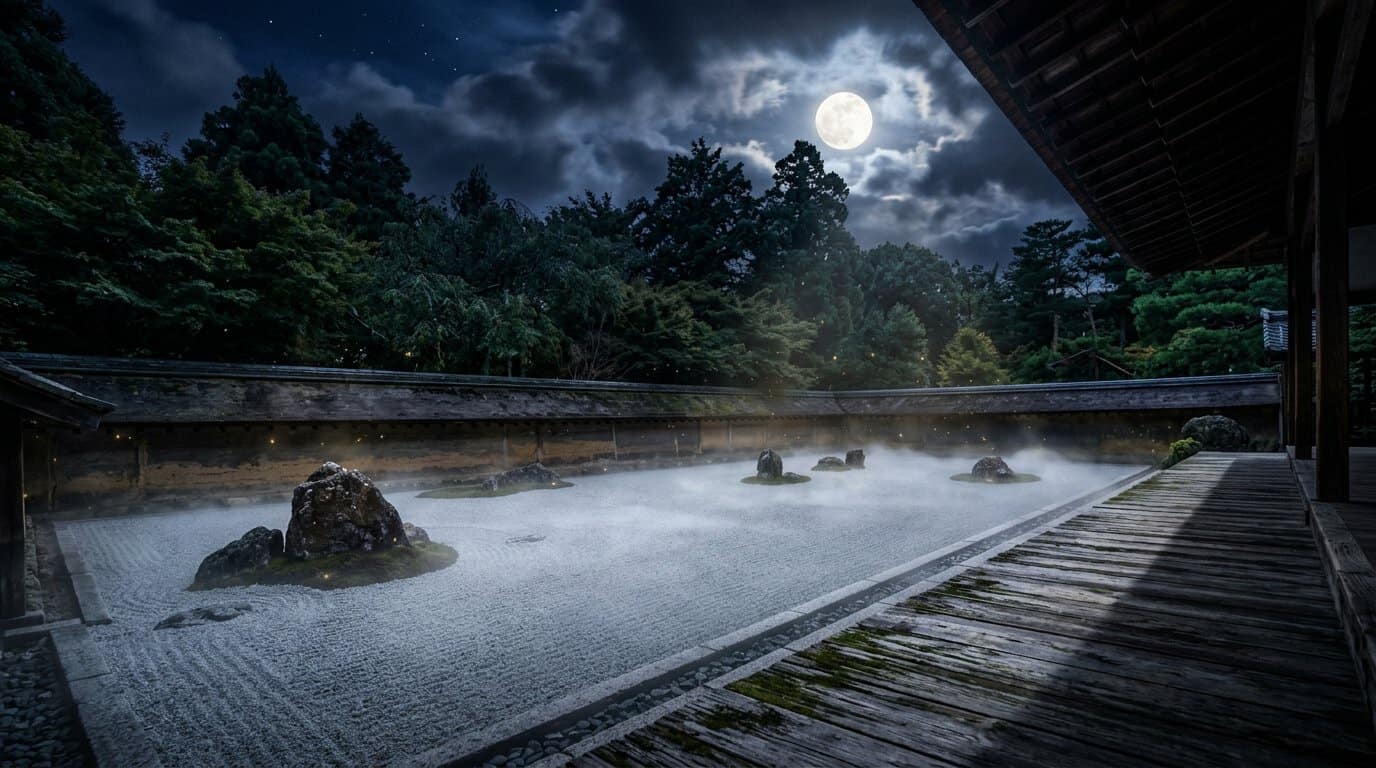
Tucked away in the quiet hills of Kyoto, Japan, a simple arrangement of rocks and gravel holds a secret that has puzzled visitors for centuries. The Ryōan-ji Temple garden mystery centers on fifteen carefully placed stones that seem to defy the laws of perspective. No matter where a person stands on the temple veranda, at least one stone remains hidden from sight, tucked away as if by magic.
In Zen tradition, the number fifteen represents a state of perfect completeness, yet this garden refuses to reveal its full self to the human eye. Scholars and monks have long debated whether this design is a clever visual trick or a profound lesson in the limits of our own perception. This world-famous dry landscape invites every observer to wonder if the truth is something that can be seen, or if it can only be found by looking inward.
Key Takeaways
- The Ryōan-ji garden utilizes a deliberate visual trick where at least one of its fifteen stones remains hidden from any vantage point on the temple veranda, serving as a physical metaphor for the limitations of human perception.
- In Zen tradition, the number fifteen represents spiritual completeness, and the intentional invisibility of the final stone suggests that true perfection can only be perceived through the mind’s eye rather than physical sight.
- The garden’s layout likely resulted from the craftsmanship of anonymous professional laborers known as kawaramono, whose mastery of sacred geometry created a landscape that bridges the gap between the material and spiritual worlds.
- The intentional blind spots and mathematical ratios within the rock arrangement are designed to quiet the observer’s mind, shifting focus from external observation to internal reflection and enlightenment.
The Architecture Of Perception And The Hidden Stone
The layout of Ryōan-ji is a masterclass in sacred geometry, designed to challenge the observer’s sense of reality through a deliberate visual trick. Within the rectangular plot of raked white gravel, fifteen carefully placed stones are meticulously placed in five distinct groups. According to historical records from Britannica, these stones are positioned so that at least one is always obscured by another from any vantage point on the temple veranda. This architectural secret creates a physical manifestation of an ancient puzzle, where the eyes are denied the full picture of the landscape. It suggests that the garden was built not just to be seen, but to be experienced as a riddle of perception.
In the realm of Eastern mythology and Zen philosophy, the number fifteen represents a state of perfect completeness and spiritual wholeness. By making the fifteenth stone invisible to the human eye, the architects provided a silent lesson on the limitations of the physical world. Legend suggests that only those who have reached true enlightenment can see all fifteen stones at once in their mind’s eye. This hidden geometry bridges the gap between what is physically present and what is spiritually understood. It turns a simple dry landscape into a profound narrative about the secrets that remain just out of reach for most people.
Modern observers often find themselves pacing the length of the wooden platform, trying to find the one magical spot where the hidden stone reveals itself. While some suggest this is merely a result of clever overlapping angles, others believe the design follows deeper mathematical principles intended to quiet the mind. This intentional blind spot forces a shift in focus from the external world to an internal reflection on what might be missing from our own awareness. The garden remains a timeless mystery, inviting visitors to consider whether the most important truths are the ones we cannot see. Does the hidden stone represent a flaw in our vision, or is it a reminder that perfection is something we can only carry within ourselves?
Sacred Numerology And The Quest For Completeness
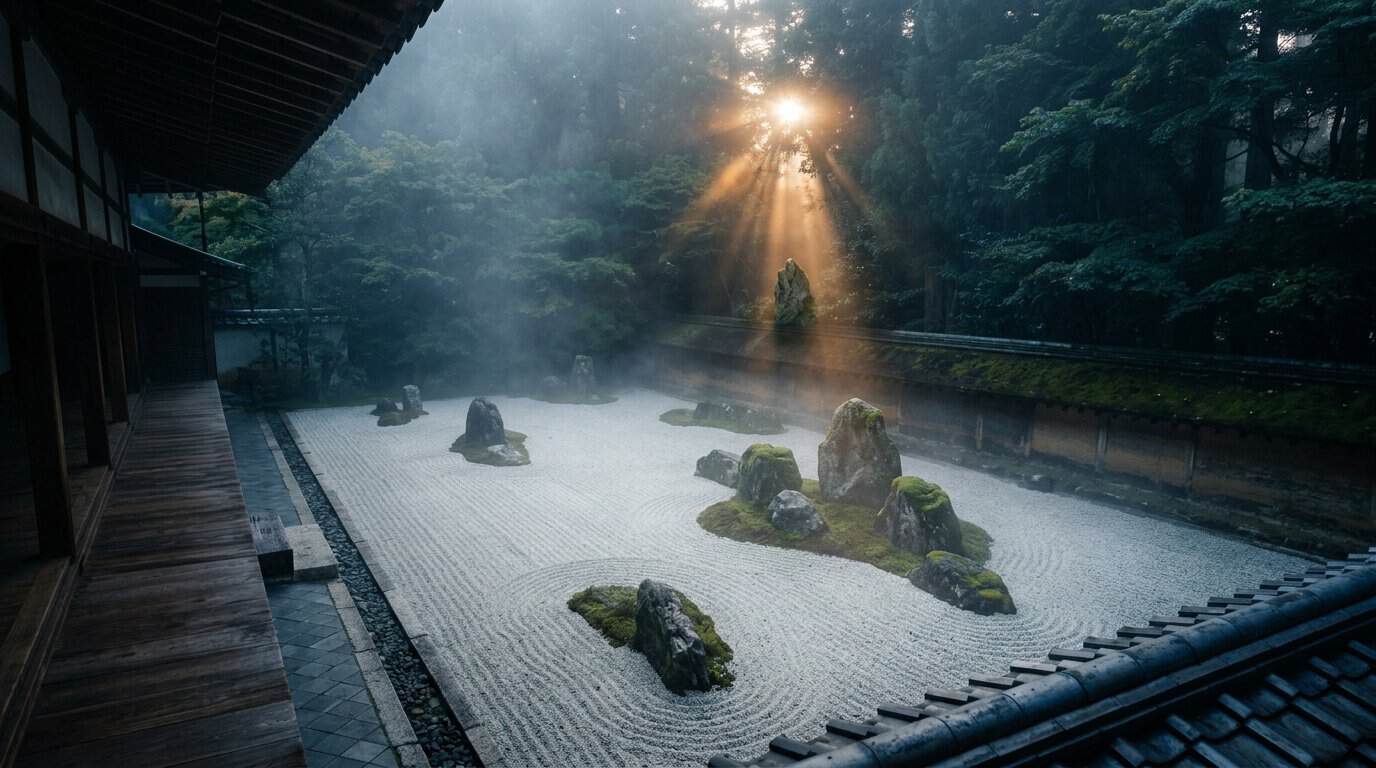
In the realm of Eastern mythology and sacred geometry, the number fifteen holds a profound significance that transcends mere counting. According to Zen tradition, this specific number represents totality, perfection, and the state of spiritual completeness. The architects of Ryōan-ji deliberately chose fifteen stones to mirror this cosmic ideal, yet they arranged them with a clever, ancient secret in mind. No matter where a visitor stands on the wooden veranda, at least one stone remains tucked away from sight. This architectural riddle suggests that while perfection exists in the universe, it is rarely accessible to the limited perspective of the human eye.
The garden serves as a living metaphor for the arduous journey toward enlightenment and the acceptance of our own imperfections. Ancient scholars and historians, such as those documenting the site for Britannica, have long debated if the hidden stone symbolizes the parts of our own spirits that remain unexamined. By blocking a full view of the stones, the garden forces the observer to use their mind rather than just their eyes to perceive the whole. It teaches a silent lesson that true completeness cannot be captured through physical sight alone but must be felt through internal realization. This sacred arrangement suggests that the world is always larger and more complex than what we can observe at any single moment.
This quest for the fifteenth stone invites a deeper look into how sacred geometry can influence the human psyche. Some researchers believe the stones are placed according to specific mathematical ratios that naturally calm the brain, a theory explored in various studies on Japanese aesthetics and spatial design. The mystery lies in whether the creators intended for us to eventually see all fifteen through a shift in consciousness or if they wanted us to find peace in the unseen. It remains a beautiful paradox where the missing piece is exactly what makes the experience feel complete. Do you believe the hidden stone is meant to represent a secret part of ourselves, or is it simply a test of our patience and perception?
The Anonymous Hands Behind The Raked Gravel
The identity of the person who designed this stone masterpiece remains one of Japan’s most enduring historical puzzles. While many credit the high ranking monk Hosokawa Katsumoto for the temple’s founding, the physical labor of placing the stones likely fell to anonymous professional laborers known as kawaramono. These skilled workers were often considered social outcasts, yet their deep understanding of sacred geometry and eastern mythology allowed them to create a space that transcends the physical world. Two names, Kotaro and Hikojiro, are carved into one of the stones, suggesting that these master craftsmen may have left a subtle signature on their work. Their contributions represent a bridge between the spiritual visions of Zen Buddhism and the practical artistry of ancient landscape design.
The layout of the fifteen stones is far more than a simple aesthetic choice, as it reflects a sophisticated grasp of perception and architectural secrets. According to local folklore and historical documentation from the temple’s records, the arrangement is designed so that the human eye can never perceive all fifteen stones at once from the veranda. This intentional blind spot serves as a physical manifestation of the Zen concept of incompleteness, suggesting that our worldly perspective is always limited. By hiding one stone, the creators forced the viewer to use their mind’s eye to achieve a sense of wholeness. This mystery invites us to wonder if the anonymous builders were teaching a lesson about the invisible forces that govern our universe.
Historians and enthusiasts continue to debate whether the garden was a collaborative effort or the singular vision of a forgotten genius. Some theories suggest that the garden’s geometry aligns with ancient mythological maps, while others believe it is a purely abstract representation of a mountain range above the clouds. Because no written blueprints exist from the fifteenth century, we are left to interpret the silent language of the raked gravel and mossy rocks. This lack of documentation adds a layer of intrigue, allowing every visitor to become part of the ongoing investigation into the garden’s true origin. Much like the ancient mystery of Dogu figurines, the lack of clear historical records often leads to fascinating theories about the true purpose of Japan’s most iconic artifacts. Do you believe the hidden fifteenth stone is a test of spiritual enlightenment, or simply a clever trick of ancient engineering?
The Hidden Geometry of the Fifteen Stones
The Ryōan-ji garden stands as a silent masterpiece that challenges the limits of human perception through its intentional design. By layering sacred geometry with ancient architectural secrets, the creators ensured that the fifteen stones remain an elusive puzzle. No matter where a visitor stands on the wooden veranda, at least one stone is always obscured from view. This physical impossibility serves as a profound metaphor for the unseen forces that govern our reality. It suggests that while we may strive for completeness, the full picture of the universe is rarely visible to the naked eye.
This intentional layout invites a deeper look into the relationship between eastern mythology and the physical world. Some researchers suggest the stones follow a mathematical pattern designed to soothe the mind, while others believe they represent a cosmic map hidden in plain sight. The garden acts as a bridge between the material and the spiritual, urging guests to look beyond what is merely in front of them. It is a reminder that ancient wisdom often used simple materials like rock and sand to explain complex truths about existence. Even after centuries of study, the true intent of the designer remains one of the world’s most beautiful secrets.
What do you see when you look upon this sea of raked gravel and ancient stone? Some visitors believe the arrangement mimics a mother tiger leading her cubs through a river, while others see a map of islands floating in an infinite ocean. Perhaps the hidden fifteenth stone is meant to symbolize the enlightenment that can only be found within oneself. We would love to hear your thoughts on this ancient architectural riddle. What is your personal theory regarding the true meaning behind the arrangement of the stones at Ryōan-ji?
Frequently Asked Questions
1. Why can visitors only see fourteen stones at a time?
The garden uses a clever arrangement where at least one stone is always hidden behind another from any spot on the veranda. This layout acts as a physical riddle designed to challenge the human eye and our sense of perspective.
2. What is the spiritual meaning behind the fifteen stones?
In Zen tradition, the number fifteen symbolizes perfect completeness and spiritual wholeness. By keeping one stone hidden, the garden teaches that the physical world is often incomplete and that true perfection remains just out of reach for the average observer.
3. Is it possible for anyone to see all fifteen stones at once?
Local legends suggest that only those who have achieved true enlightenment possess the spiritual vision to see all fifteen stones simultaneously. For everyone else, the full picture remains a mystery that can only be solved through inner reflection rather than outward sight.
4. Who designed this mysterious rock garden?
The exact creator of the garden remains a mystery, though historical records from Britannica suggest it was likely built during the late 15th century. Some believe it was the work of a famous monk, while others credit anonymous professional laborers known as kawaramono.
5. How does the garden use sacred geometry to trick the mind?
The stones are meticulously placed in five distinct groups within a sea of raked white gravel to create a masterclass in perception. This specific geometry forces the brain to fill in the gaps of what the eyes cannot see, turning a simple landscape into a profound psychological puzzle.
6. What should visitors focus on when sitting at the temple?
Observers are encouraged to look past the physical rocks and contemplate the space between them. The goal is to move beyond the visual trick and find a sense of peace, realizing that the truth of the garden is found by looking inward rather than just staring at the landscape. Much like exploring Yonaguni Monument origins, the study of these structures often reveals more about our own interpretations than the objects themselves. This cultural depth is also found in other legends, such as those surrounding Japan’s mischievous river spirits, which blend nature with the supernatural.