
The Mystery Of The Somerton Man Identity Solved
On a quiet morning in December 1948, a well-dressed man was found lifeless on Somerton Beach, leaning against a sea wall with a half-smoked cigarette on his collar. He carried no wallet, no name tags on his clothes, and a mysterious scrap of paper in a hidden pocket that simply read Tamám Shud, Persian for “it is finished.” For over seven decades, the Somerton man identity remained one of the world’s most haunting puzzles, fueling theories of international espionage and star-crossed lovers.
While the salt air once seemed to have swallowed his secrets forever, modern science finally broke the silence in July 2022. Using advanced DNA tracing, researchers identified the man as Carl Charles Webb, a Melbourne-born electrical engineer who had vanished from his ordinary life. This discovery provides a long-awaited name to a face that captivated the world, yet it also opens a new chapter of questions about how a quiet technician ended up alone on a distant shore.
Key Takeaways
- Advanced genetic genealogy and DNA tracing from a plaster death mask identified the Somerton Man as Carl Charles Webb, a Melbourne-born electrical engineer who disappeared in 1948.
- The presence of a hidden ‘Tamám Shud’ paper scrap and an unbreakable cipher in a rare book of poetry suggests a calculated effort to obscure his final intentions or identity.
- While the removal of all clothing labels and the proximity to a Cold War rocket range fueled decades of spy theories, his background as a technical professional in the midst of a personal domestic crisis offers a more grounded, tragic explanation.
- The identification of Webb solves the biological mystery of his name but leaves the ‘why’ behind his meticulous anonymity and coded messages as one of history’s most enduring puzzles.
The Tamám Shud Paper And The Spy Theory
The discovery of a tiny, rolled-up scrap of paper hidden deep within a secret fob pocket of the man’s trousers added a cinematic layer of intrigue to the investigation. Printed on the paper were the Persian words Tamám Shud, which translates to “it is ended” or “finished.” Investigators eventually traced the scrap to a rare edition of the Rubaiyat of Omar Khayyam, a book of twelfth-century poetry found in the back of an unlocked car near the beach. This discovery immediately suggested that the death was not a simple accident but perhaps a scripted final act. The cryptic nature of the message, combined with the lack of identification on the body, fueled the belief that the man was involved in high-stakes international affairs.
Inside the very book from which the paper was torn, police found a series of penciled letters that appeared to be a complex cipher. The five lines of capital letters, some of which were crossed out, defied every attempt by naval intelligence and amateur codebreakers to be decrypted. Because the death occurred in 1948 at the height of the Cold War and near a secretive rocket testing range at Woomera, many researchers suspected the man was a Soviet or British spy. The removal of all laundry tags from his clothing further supported the theory that he was a professional operative trained to leave no trace of his origins.
While modern DNA testing by researchers at the University of Adelaide eventually identified the man as Carl Webb, the spy theory remains a captivating part of his legacy. Even as we learn more about Webb’s life as an electrical engineer from Melbourne, the presence of a coded book and a hidden Persian phrase continues to spark debate. Was he a man caught up in a world of secrets, or was this just a tragic end for a private individual who valued his anonymity? The Somerton Man mystery remains one of the most compelling aspects of this beachside puzzle.
Genetic Genealogy Unmasks Carl Charles Webb
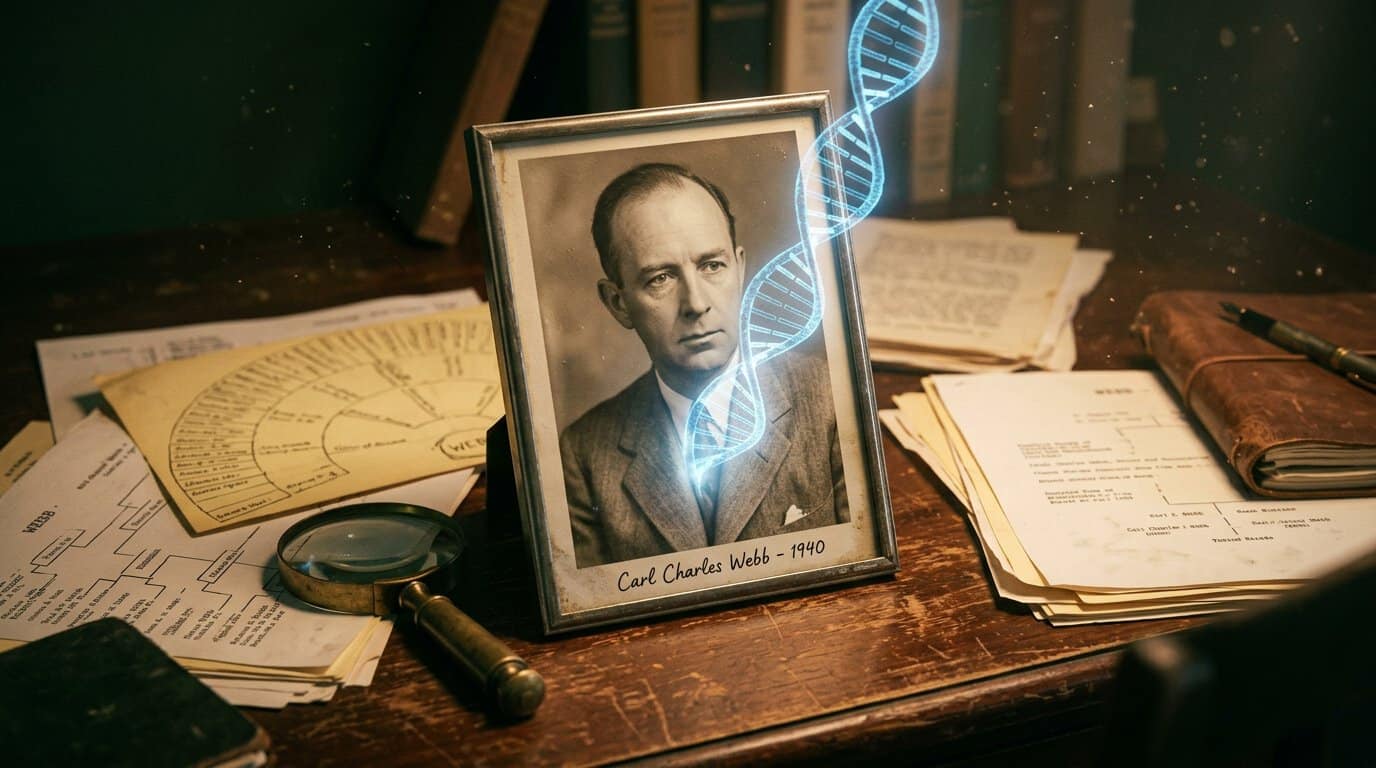
The breakthrough that finally unmasked the Somerton Man came not from a dusty police file, but from a single strand of hair trapped in a plaster death mask. Professor Abbott from the University of Adelaide spent years utilizing advanced DNA tracing to trace the man’s lineage through complex family trees. By comparing the DNA found in the hair samples with public genealogical databases, the team began to narrow down a list of potential relatives. This modern scientific approach allowed researchers to bridge a seventy year gap that traditional forensic methods simply could not cross. The results eventually pointed toward a specific family tree that had remained hidden from investigators since the late 1940s.
The investigation ultimately identified the mysterious figure as Carl Charles Webb, a Melbourne born electrical engineer who had seemingly vanished from his life. Records show that Webb was a man with a penchant for poetry and a background in electronics, which adds a fascinating layer to the items found on his body. While he was not the international super spy many theorists imagined, his quiet life and sudden disappearance still leave many questions unanswered. He had no official record of death, and his family had lost contact with him long before he was discovered on that South Australian beach. The identification has turned a legendary ghost into a real person with a name and a history.
Even with a name now attached to the body, the circumstances surrounding his final days remain shrouded in a sense of deep intrigue. We now know who he was, but we still do not fully understand why an engineer from Melbourne ended up dead on a beach hundreds of miles from home with all his clothing labels removed. The presence of the Persian phrase meaning “it is finished” suggests a man who was perhaps closing a final chapter of a secret life. Was this a simple case of a man wanting to disappear, or is there still a hidden story involving his specialized technical skills? What do you think prompted Carl Webb to leave everything behind and carry that mysterious scrap of paper to his grave?
The Disappearance Of An Ordinary Electrical Engineer
For decades, the man on the beach was a nameless enigma, but modern DNA research eventually revealed him to be Carl Charles Webb. Born in Melbourne in 1905, Webb was an ordinary electrical engineer who lived a relatively quiet life that left behind few public traces. However, underneath his professional exterior lay a deeply troubled personal life and a marriage that was falling apart. His wife, Dorothy Robertson, had reportedly filed for divorce and moved to South Australia, leaving Webb in a state of emotional turmoil. This personal crisis likely served as the catalyst for his mysterious journey from Melbourne to Adelaide in late 1948.
The circumstances surrounding his departure suggest a man who was perhaps looking for a fresh start or a final confrontation. Researchers found that Webb was a fan of poetry and betting on horses, which might explain the presence of the Rubaiyat of Omar Khayyam and the strange notations found in his possession. While some historians still wonder if his skills as an electrical engineer made him a candidate for secret government work, the evidence points more toward a domestic tragedy. He arrived in a city where he had no known friends, carrying only the remnants of a broken life and a scrap of paper that signaled the end.
Why do you think an ordinary man would go to such great lengths to hide his identity by removing the labels from his clothing? Was Carl Webb merely a heartbroken husband seeking anonymity, or could his background in engineering have involved him in something more secretive? The transition from a quiet suburban life to a legendary cold case remains one of the most fascinating transformations in Australian history. Much like how the mystery finally solved the identity of a long-unidentified woman in the United States, this identification invites us to share our thoughts on whether this truly closes the book on the Somerton Man or if it only opens a new chapter of questions.
The Name Found and the Mystery Remaining
The identification of Carl Webb as the Somerton Man marks a monumental achievement for modern forensic science, yet it serves as a bridge to even deeper questions. While we finally have a name to place on the headstone, the circumstances that led an electrical engineer from Melbourne to a lonely stretch of beach in Adelaide remain shrouded in shadow. The absence of labels on his clothing and the cryptic Tamam Shud scrap suggest a man who was meticulously erasing his trail. We are left to wonder if Webb was a simple man caught in a personal crisis or a figure entangled in the high stakes world of post-war espionage.
The artifacts found with Webb continue to fuel the imagination of historians and amateur sleuths alike. The rare edition of the Rubaiyat and the mysterious code written in its back cover do not easily fit the profile of a standard missing person. These details invite us to look closer at the hidden layers of the late 1940s, a time when secrets were a common currency. Even with DNA evidence providing a biological answer, the narrative of his final days feels like a puzzle with several missing pieces. The transition from an unidentified body to Carl Webb has only intensified the desire to unraveling the mystery of his final movements and the secret life he may have been leading.
How do you interpret the strange clues left behind now that we know the man’s true identity? Does the name Carl Webb make the story feel more grounded, or does it make the presence of the secret code and the torn paper even more suspicious? The resolution of his name is a victory for science, but the human story of the Somerton Man is far from finished. We invite you to share your theories on why a man like Webb would go to such great lengths to remain anonymous. Every new discovery in this case reminds us that even when the “who” is answered, the “why” can remain a haunting mystery.
Frequently Asked Questions
1. Who was the Somerton Man finally identified as?
The mysterious man was identified as Carl Charles Webb, a Melbourne born electrical engineer. Researchers led by Professor Abbott from the University of Adelaide used advanced DNA tracing in 2022 to solve the decades old puzzle.
2. What does the phrase Tamám Shud actually mean?
The phrase is Persian for “it is finished” or “it is ended.” It was found on a tiny scrap of paper hidden in a secret pocket of the man’s trousers, torn from the final page of a rare book of poetry.
3. Was the Somerton Man a secret spy?
While many believe his lack of identification and the cryptic cipher in his book point to espionage, his identity as an electrical engineer suggests a more ordinary life. However, the mysterious circumstances of his death and the unbreakable code continue to fuel theories of international intrigue.
4. How did investigators find the book linked to the crime scene?
A rare edition of the Rubaiyat of Omar Khayyam was found in the back of an unlocked car parked near Somerton Beach. Forensic testing confirmed that the scrap of paper found on the body was torn perfectly from that specific book.
5. Has anyone ever solved the code found in the book?
The five lines of penciled capital letters remain one of the world’s most famous unsolved ciphers. Despite decades of effort by military codebreakers and amateur sleuths, no one has successfully translated the hidden message.
6. Why did the Somerton Man have no labels on his clothing?
Every single identification tag had been carefully removed from his suit and belongings, which is a common tactic used by intelligence agents to avoid being identified. This deliberate act is one of the main reasons the mystery lasted for over seventy years since he was first found lifeless on Somerton Beach with no clues to his past.