The Shadow Of Saint Nicholas: Uncovering Terrifying Krampus Origins
Long before holiday displays were filled with twinkling lights and cheerful carols, a much darker figure haunted the snowy peaks of the Alps. While modern audiences might see him as a fun horror mascot, the terrifying krampus origins are rooted in ancient rituals and the jagged shadows of pre-Christian mythology. His name comes from the Old High German word for claw, a fitting title for a beast meant to punish the wicked during the coldest nights of the year.
The legend of the Christmas Demon began as a wild blend of pagan tradition and medieval folklore that predates modern holiday celebrations. Ancient communities whispered about the Wild Hunt, a ghostly procession of spirits that roamed the winter solstice with Krampus at the lead. This horned visitor served as a grim reminder that during the darkest time of the year, something primal and ancient was always watching from the woods.
Key Takeaways
- The Krampus legend originated from pre-Christian Alpine paganism and the ‘Wild Hunt’ mythology, representing the predatory and dangerous side of nature during the winter solstice.
- The Christian Church absorbed the figure during the Middle Ages, rebranding the chaotic spirit as the shackled servant of Saint Nicholas to enforce social order and religious discipline through fear.
- The modern Krampuslauf tradition serves as a sensory bridge to the past, using hand-carved masks and animal hides to reenact ancient rituals that confront universal fears of the dark.
- Krampus has evolved from a figure of genuine regional dread into a global pop-culture icon, reflecting a modern desire to reconnect with the wilder and more mysterious roots of the holiday season.
Ancient Roots In Pagan Winter Rituals
The terrifying figure of Krampus finds its earliest roots in the harsh winter of the pre-Christian Alpine regions. Long before the creature became a holiday icon, its name was forged from the Old High German word krampen, which translates directly to claw. This linguistic origin points to a primal, predatory nature that far predates modern holiday celebrations. According to historical documentation, this clawed entity was a central figure in the traditional folklore of Austria and Bavaria. It represented the dangerous and unpredictable side of nature during the darkest days of the year.
The legend of the Krampus is deeply intertwined with the chaotic spirits of the Wild Hunt, a supernatural procession that was said to race across the winter sky. During the winter solstice, ancient people believed the veil between worlds grew thin, allowing spirits to roam the earth and interact with the living. Krampus was often seen as a companion to the goddess Berchta, a powerful deity who oversaw the transition between the old and new year. While Berchta could be kind, she was also known for punishing the wicked with terrifying precision. This pairing suggests that the Krampus served as a guardian of order through fear, ensuring that communities remained disciplined during the cold months.
These ancient rituals were not merely stories told by a fire but were active parts of a spiritual life that respected the unknown. The transition from a pagan spirit to a Christmas demon was a slow process that occurred as medieval traditions began to blend with older beliefs. Many researchers suggest that the Krampus survives today because it touches on a deep, universal fear of the dark and the creatures that might inhabit it. By exploring these ancient roots to the solstice and the Wild Hunt, we begin to see the creature as more than just a costume. It is a lingering shadow from a time when the wilderness was a place of genuine mystery and peril.
The Church And The Christmas Demon
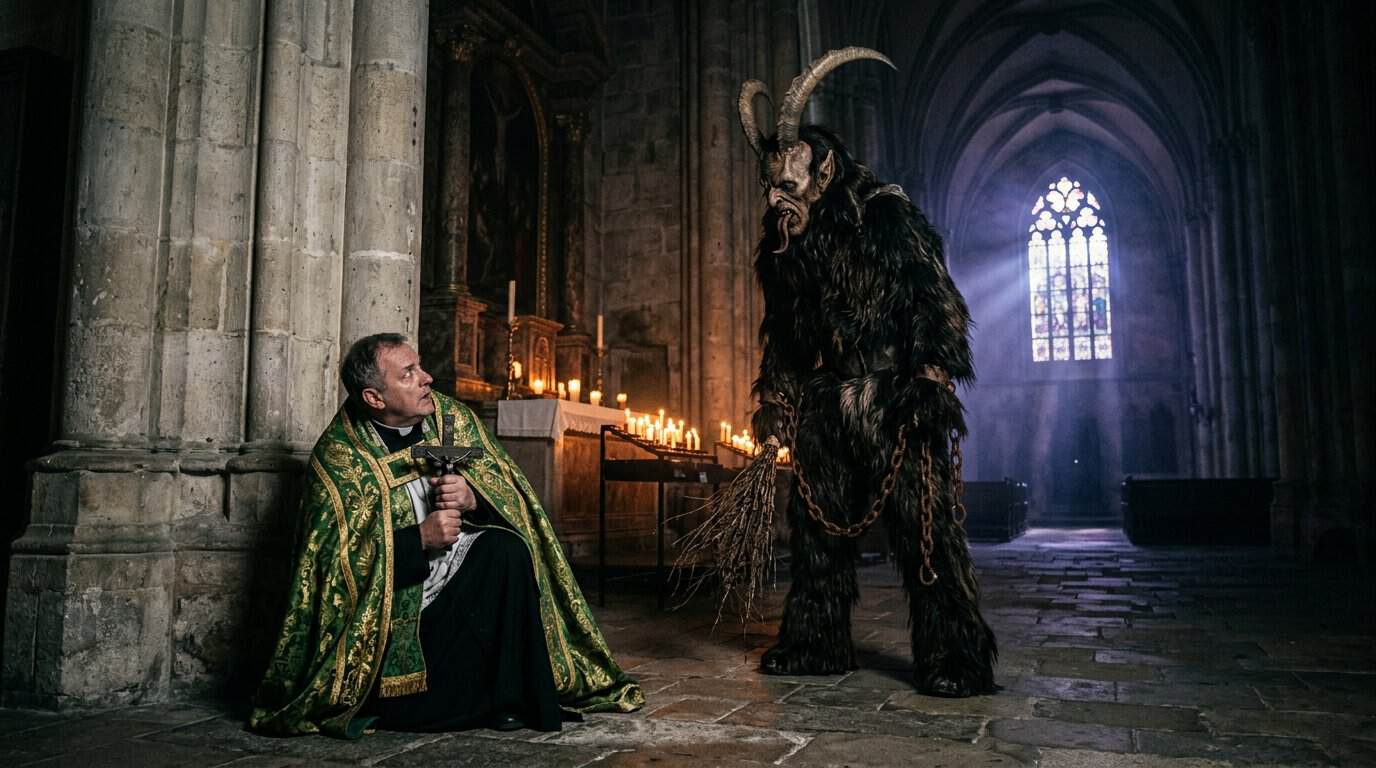
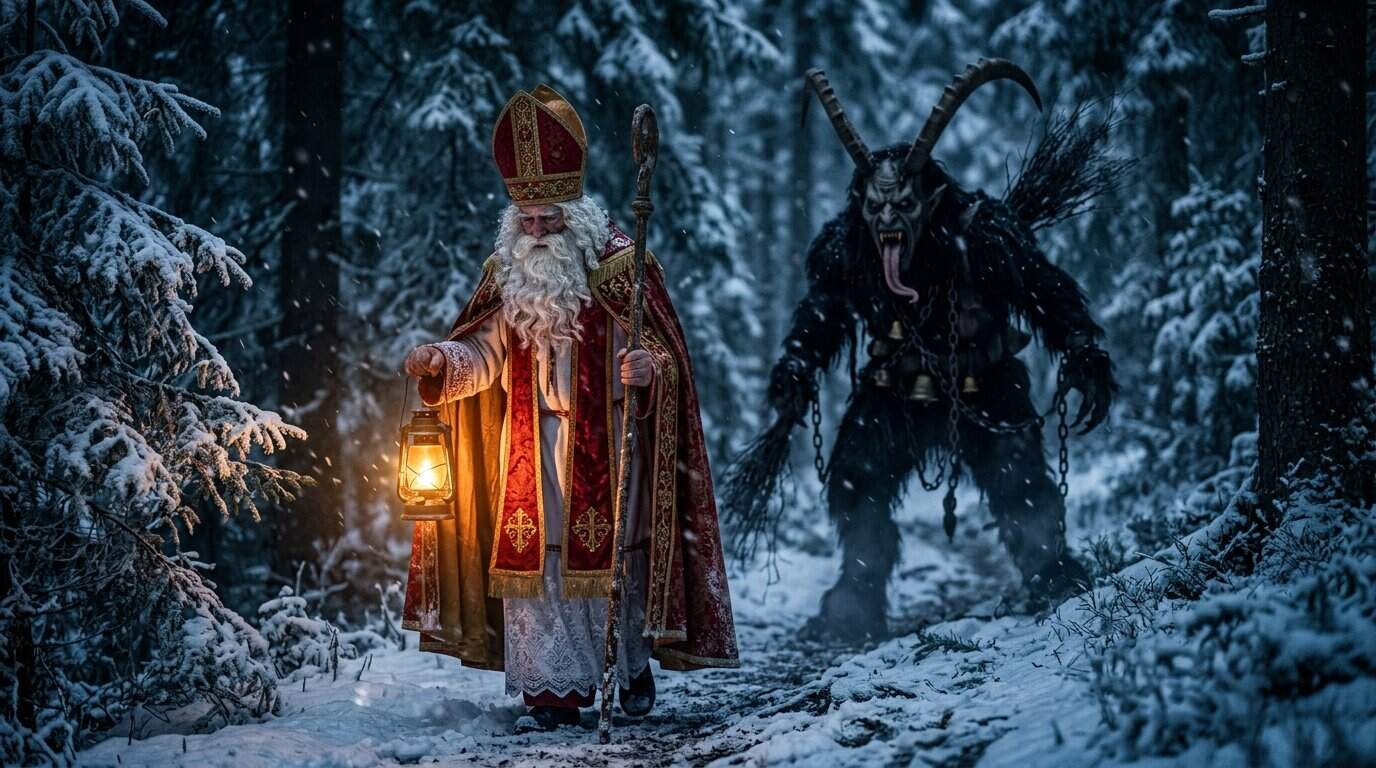
As Christianity began to spread through the rugged Alpine regions, the Church found itself in a struggle against deeply rooted pagan customs. The terrifying image of the clawed beast was too powerful to simply erase from the local imagination, so religious leaders chose to absorb the creature into their own moral framework. According to historical accounts from researchers at the Smithsonian Institution, the Church initially tried to ban these rowdy winter celebrations before realizing they could use the demon as a psychological tool. By the Middle Ages, the wild spirit of the mountains was officially tamed and rebranded as the shackled servant of Saint Nicholas. This transition turned a chaotic pagan entity into a guardian of social order who enforced values through fear.
The transformation of Krampus created a stark contrast between reward and punishment that defined the medieval holiday season. While Saint Nicholas offered gifts to the virtuous, his shackled companion provided a vivid and frightening reminder of the consequences of sin. Historical records from the National Geographic Society suggest that this pairing was designed to keep communities in line during the long, dark winter months. Parents often used the threat of the beast’s birch branches or his heavy chains to ensure their children remained obedient. This partnership allowed the Church to maintain control over the populace by blending ancient folklore with religious discipline, creating a tradition that was as much about survival as it was about celebration.
Even with its religious makeover, the figure of Krampus never fully lost its primal and mysterious edge. Many locals believed that the men dressing in heavy furs and carved masks were tapping into something much older and more dangerous than a simple church play. Some folklorists argue that these rituals served as a bridge between the physical world and the spirit realm, where the line between a costume and a real entity became blurred. This lingering sense of the supernatural is likely why the tradition survived centuries of attempted suppression and modern skepticism. Today, the legend continues to haunt the winter nights, leaving us to wonder if the Church truly tamed the beast or if they simply gave a name to something that was already watching from the shadows.
Modern Sightings And The Krampuslauf Tradition
The modern Krampuslauf tradition, or Krampus Run, transforms quiet Alpine villages into scenes of ancient nightmares as hundreds of masked figures storm the streets. These performers wear heavy, hand-carved wooden masks and real animal hides, creating a sensory experience filled with the scent of pine and the deafening clatter of cowbells. While many see this as a festive parade, the atmosphere often feels more like a primal ritual than a holiday celebration. Spectators frequently report a genuine sense of dread when a towering creature fixes its gaze upon them, blurring the line between a costumed actor and the ancient spirit of the Wild Hunt. This tradition serves as a living bridge to a darker past where the winter solstice was a time of true supernatural peril.
Beyond the traditional borders of Austria and Bavaria, the legend of the Christmas Demon has clawed its way into global pop culture and modern urban legends. Today, Krampus-themed events take place in cities across the United States and Europe, drawing thousands of enthusiasts who are drawn to the darker side of the season. Some researchers suggest that the creature’s name comes from the Old High German word krampen, meaning claw. This physical trait is a common thread in contemporary sightings, where witnesses describe a tall, hairy figure with cloven hooves and a long, pointed tongue. These modern encounters suggest that even in a world of bright lights and technology, the primal fear of a lurking winter shadow remains deeply rooted in our collective psyche.
The enduring fascination with this horned figure raises questions about whether the legend is merely a story or a reflection of something more tangible. As the tradition grows, many participants find themselves wondering if the masks they wear might be inviting an ancient spirit back into the modern world. Historical documentation points toward a complex blend of pre-Christian mythology and medieval Christian tradition that refuses to fade away. Whether viewed as a psychological outlet for winter anxieties or a lingering legend of the deep woods from the high mountains, the presence of Krampus continues to challenge our understanding of folklore. Do you believe these modern sightings are simply a tribute to the past, or could there be a grain of truth to the terrifying origins of the Christmas Demon?
From Alpine Terror to Holiday Icon
The enduring legacy of Krampus reminds us that the darkest nights of winter have always held a chilling fascination for humanity. This horned figure has traveled a long path from the ancient, snowy peaks of the Alps to the bright lights of modern cinema. While he was once a figure of genuine dread used to keep children in line, he now acts as a rebellious mascot for those who find the standard holiday season a bit too sweet. The shift from a shadowy pagan spirit to a global pop-culture icon shows how much we still crave a connection to the wilder, more mysterious parts of our history.
There is a strange comfort in the shadow of the Christmas Demon that a simple candy cane cannot provide. This legend taps into a primal curiosity about the things that go bump in the night during the winter solstice. Even as society moves further away from the ancient forests where these stories began, the image of the birch-wielding beast continues to capture the imagination. It suggests that deep down, many people still feel the pull of the old ways and the thrill of a good scare.
As the fire burns low and the winter wind howls outside, one has to wonder which version of the season feels more authentic. Some may prefer the polished, sugar-coated version of the holidays that we see in advertisements today. Others find themselves drawn to the thrill of the shadow and the ancient mysteries that Krampus represents. Do you find yourself reaching for the comfort of modern traditions, or do you feel the beckoning call of the wild Alpine woods?
Frequently Asked Questions
1. Where does the name Krampus actually come from?
The name is rooted in the Old High German word krampen, which translates directly to claw. This linguistic origin highlights the creature’s predatory nature and its role as a primal force of the winter wilderness.
2. How old is the legend of the Christmas Demon?
The terrifying origins of this figure predate modern holiday celebrations by centuries. It began as a blend of ancient pagan traditions and medieval folklore that haunted the Alpine regions long before the arrival of modern traditions.
3. What is the connection between Krampus and the Wild Hunt?
Ancient communities believed Krampus was a central figure in the Wild Hunt, a ghostly procession of spirits that raced across the winter sky. During the solstice, it was feared that the veil between worlds grew thin, allowing these primal entities to roam the earth.
4. Why did ancient people believe in such a frightening creature?
Krampus represented the dangerous and unpredictable side of nature during the harshest months of the year. According to historical documentation, the beast served as a grim reminder of the ancient spirits watching from the shadows of the woods.
5. Is Krampus related to any specific gods or goddesses?
In many traditional Alpine circles, the creature is closely linked to the goddess Perchta and other spirits of the winter landscape. These connections suggest he was originally part of a much larger spiritual ecosystem that governed the change of seasons.
6. What was the purpose of the Krampus figure in early rituals?
He served as a balance to the light, acting as a punisher of the wicked during the coldest nights. These rituals allowed ancient people to confront their fears of the dark and the unknown through physical representation and storytelling.