
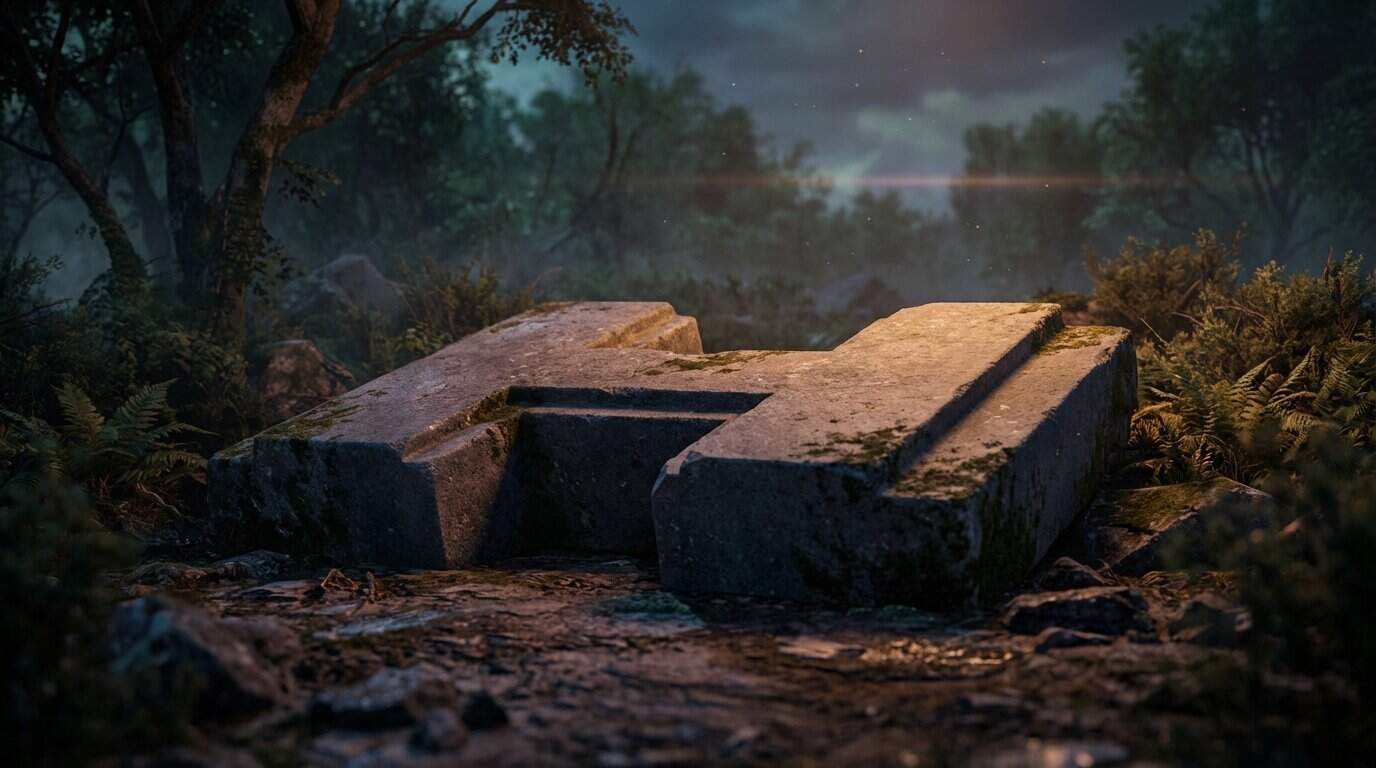
The Mystery of the Puma Punku Stones: Ancient Engineering Defying History
High in the Andes mountains, nearly 13,000 feet above sea level, sits an ancient site that continues to baffle modern engineers and historians alike. Here in the thin air of western Bolivia lies a mysterious complex built from some of the hardest rock on Earth. The legendary Puma Punku stones are scattered across this high-altitude plateau like a giant’s forgotten puzzle, featuring a level of craftsmanship that defies traditional history. Cut from massive slabs of solid rock, these blocks interlock so perfectly that not even a single sheet of paper can slide between their joints.
While mainstream archaeology suggests construction began around 536 AD, the sheer perfection of these ruins has sparked intense debate about their true origins. The ancient builders used andesite, a volcanic stone so incredibly hard it typically requires advanced modern tools to carve, yet they supposedly accomplished this feat long before the invention of the wheel. When looking at the impossibly smooth surfaces and perfectly drilled holes, it is hard not to wonder if an older, highly advanced chapter of human history is hidden right in front of us.
Key Takeaways
- The ancient site of Puma Punku features interlocking blocks of extremely hard andesite and sandstone carved with a level of precision that defies standard historical timelines.
- Transporting colossal stones weighing up to 131 tons across the rugged, high-altitude Andean terrain remains an unsolved logistical mystery, especially given the lack of trees for traditional wooden rollers.
- The highly standardized, prefabricated H-blocks at the site exhibit perfect right angles and seamless joints, suggesting an early form of mass production and advanced geometric planning.
- The stark contrast between the primitive tools of the accepted sixth-century timeline and the flawless, machine-like cuts of the stones continues to fuel theories of lost advanced ancient technologies.
Moving Massive Sandstone and Andesite Blocks
The sheer scale of the building materials at Puma Punku immediately challenges our understanding of ancient capabilities. The foundation of the site rests upon colossal slabs of red sandstone, with the largest block weighing an astonishing 131 tons. According to geological surveys, the quarry for these massive stones is located roughly ten kilometers away near Lake Titicaca. Moving a block of this magnitude over uneven, high-altitude terrain without the use of wheels or draft animals seems nearly impossible under standard historical timelines. Traditional archaeologists suggest the use of massive wooden rollers and thousands of laborers. However, the lack of trees in the harsh Andean environment makes this explanation highly debatable.
Beyond the massive foundations, the intricate superstructures of the site were carved from andesite, a volcanic rock renowned for its extreme hardness. Researchers have traced the origins of these incredibly tough stones to quarries located up to ninety kilometers away from the construction site. Transporting these heavy volcanic blocks across the rugged Bolivian Altiplano would have required an unimaginable logistical effort. Because traditional methods fail to fully explain how such a feat was accomplished at an altitude of over 12,000 feet, alternative researchers propose that the builders might have possessed advanced ancient technology. Some theories even suggest the use of sound levitation or lost energy manipulation techniques to glide the stones effortlessly across the terrain.
The transportation of both the massive sandstone and the unyielding andesite blocks remains one of the greatest engineering mysteries of the ancient world. Once these colossal stones finally arrived at Puma Punku, they were shaped with a level of precision that still baffles modern engineers. The flawless cuts and perfect right angles look as though they were machined with laser tools rather than chipped away with primitive stone hammers. This fascinating blend of impossible logistics and flawless execution naturally invites us to question the true timeline of human civilization. What kind of forgotten technology do you think the ancient builders could have used to move and carve these impossible mountain stones?
The Interlocking H-Blocks and Perfect Angles
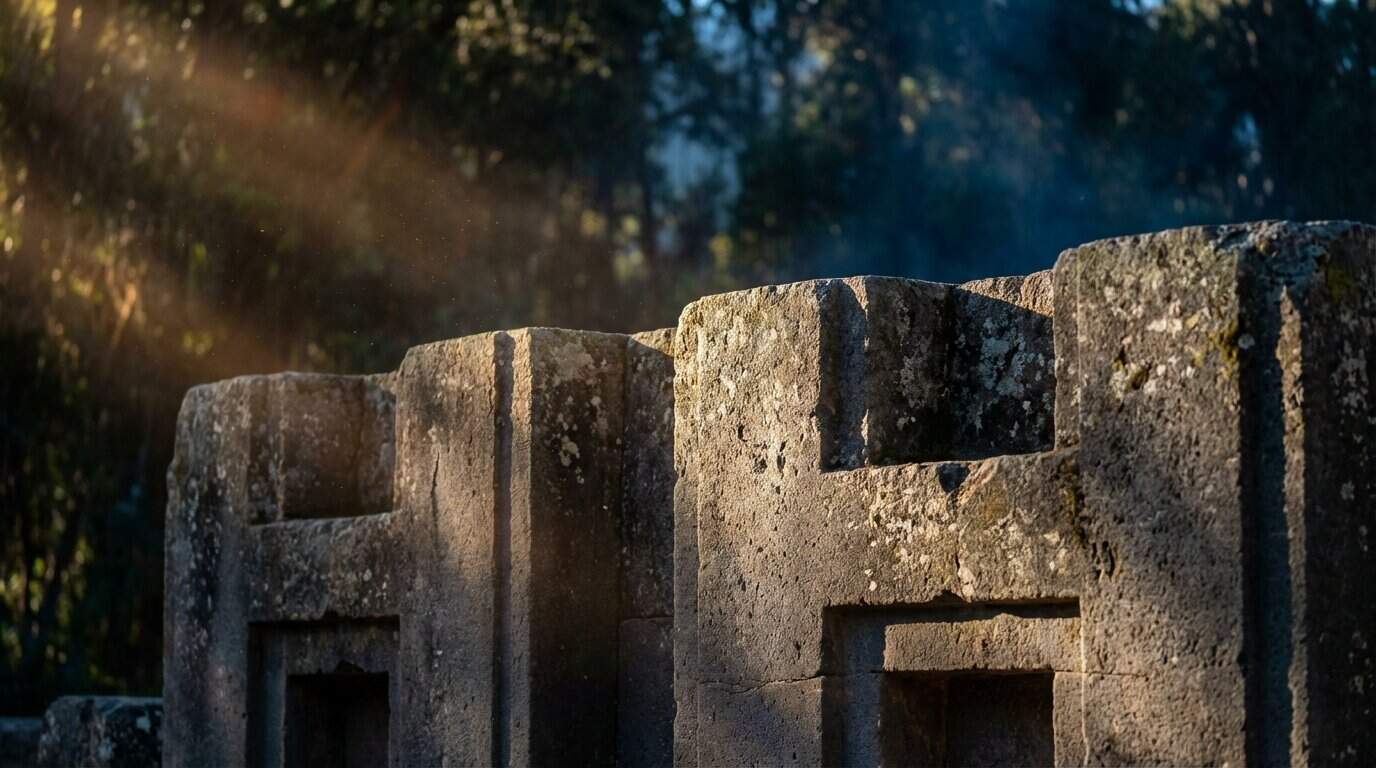
Among the scattered ruins of Puma Punku, the famous H-shaped blocks stand out as a true marvel of ancient engineering. Carved from andesite, a volcanic rock known for its extreme hardness, these stones feature perfectly straight lines and exact ninety-degree angles that baffle modern stonemasons. Researchers and engineers often point out that cutting such unyielding material with the primitive copper tools traditionally assigned to the sixth century would be nearly impossible. The precision is so flawless that a razor blade cannot fit between the joints where these massive stones once connected. This incredible level of exactness naturally invites fascinating theories about lost technologies or advanced tools that history has simply forgotten.
What makes these geometric stones even more remarkable is their striking uniformity, which strongly resembles an early form of mass production. Each H-block is carved to interlock seamlessly with its neighbor, creating a complex, puzzle-like fit designed to withstand the frequent earthquakes of the region. Archaeologists note that achieving this standardized shape across multiple massive stones requires a sophisticated understanding of geometry and planning. Instead of custom carving every single stone to fit a unique gap, the builders created identical, prefabricated pieces that could snap together on site. Finding this type of assembly line precision high in the Bolivian Andes challenges our standard historical timelines and suggests a highly organized, technologically capable society.
The exact methods used to quarry, transport, and machine these interlocking wonders remain one of the greatest archaeological mysteries in the world. While conventional science maintains that sheer human labor and decades of grinding achieved these results, the sheer perfection of the cuts tells a different story to many observers. Some alternative researchers suggest the builders might have used advanced machining techniques or even sonic technologies that have since been lost to time. Looking at the crisp inner corners and smooth surfaces, it is hard not to wonder if we are underestimating the capabilities of our ancient ancestors. How do you think these ancient engineers managed to achieve such flawless, standardized cuts in solid volcanic rock without the help of modern machinery?
Ancient Master Builders or Advanced Technology
The story of the Puma Punku stones begins high in the Bolivian Altiplano near Lake Titicaca. According to mainstream archaeologists and historical documentation, construction of this incredible complex started around 536 AD. The ancient builders used massive blocks of red sandstone for the foundations and an extremely hard volcanic rock called andesite for the detailed upper structures. Experts suggest these early Andean people used simple stone tools and ropes to carve and move the massive materials. However, a closer look at the actual ruins reveals details that make many researchers question this traditional timeline.
A close examination of the surviving andesite blocks reveals perfectly straight lines and smooth surfaces that look incredibly modern. The stones feature complex geometric shapes and interlocking joints that fit together like a massive puzzle without the use of mortar. Because andesite is one of the hardest rocks on the planet, alternative historians argue that simple copper chisels and stone hammers could never achieve such flawless precision. Instead, these researchers propose that the original builders must have possessed lost, highly advanced machining technology. Some theories even suggest the use of ancient power tools or laser-like cutting devices that have long since vanished from the historical record.
This fascinating debate leaves visitors and researchers caught between accepted archaeological timelines and the undeniable physical evidence on the ground. It is difficult to look at the exact right angles and perfectly drilled holes without wondering if human history is missing a major chapter. While science grounds the site in the sixth century, the sheer engineering mastery of the stones whispers a completely different story. Modern society may never fully understand how these ancient master builders achieved such impossible perfection with the tools supposedly available to them. What do readers think is the most likely explanation for the incredible precision found at Puma Punku?
Ancient Stones That Defy Standard Timelines
The ancient site of Puma Punku remains one of the most captivating archaeological mysteries in the world. Even with modern scientific studies dating the foundations to around 536 AD, the sheer perfection of these massive stones tells a story that seems to defy standard timelines. Builders working at an altitude of over 12,000 feet managed to shape extremely hard andesite rock with a level of exactness that still baffles engineers today. When looking at the interlocking blocks and incredibly smooth cuts, it is easy to understand why so many people suspect that advanced ancient technology played a role. The site stands as a quiet but powerful reminder that human history might be far more complex than traditional textbooks suggest.
Researchers continue to search for conventional tools that could explain this breathtaking stonework, yet the lack of clear answers leaves plenty of room for alternative theories. It is highly possible that a forgotten civilization possessed engineering methods that have simply been lost to time. Exploring these high-altitude ruins invites a fascinating blend of rigorous scientific analysis and open-minded wonder about the true capabilities of ancient builders. This enduring enigma leaves every curious mind with an exciting question to ponder. How do you balance the established archaeological evidence with the seemingly impossible precision of the Puma Punku stones?
Frequently Asked Questions
1. What are the Puma Punku stones?
The Puma Punku stones are part of a mysterious ancient complex located high in the Andes mountains of western Bolivia. Built from incredibly hard rock like andesite and red sandstone, these blocks feature smooth surfaces and perfectly drilled holes. They interlock so tightly that not even a single piece of paper can fit between their joints.
2. How old is the Puma Punku site?
Mainstream archaeologists often suggest that construction began around 536 AD. However, the sheer perfection and advanced carving techniques found at the site have many wondering if the ruins are actually much older. It is entirely possible that these stones belong to a highly advanced chapter of human history that has been lost to time.
3. Why is andesite so difficult to carve?
Andesite is a tough volcanic rock that is extremely difficult to shape without modern machinery. Today, cutting this type of stone usually requires advanced diamond-tipped tools. The fact that ancient builders achieved impossibly smooth surfaces long before the invention of the wheel remains a fascinating mystery.
4. How heavy are the stones at Puma Punku?
The foundation of the site is made of massive red sandstone slabs, with the largest block weighing a staggering 131 tons. Moving blocks of this immense size over uneven mountain terrain is a monumental feat. It completely challenges our understanding of ancient engineering and human capabilities.
5. Where did the builders get the massive stones?
Geological surveys show that the quarry for the massive sandstone blocks is located about ten kilometers away near Lake Titicaca. Transporting these colossal weights across high elevations without draft animals or wheels seems nearly impossible. While some experts suggest wooden rollers were used, the severe lack of trees in the harsh Andean environment makes that theory highly questionable.
6. Could a lost advanced civilization have built Puma Punku?
The incredible precision of the interlocking blocks has led many curious minds to look beyond traditional historical timelines. When you see stones carved with such flawless geometry in a time before modern tools, it naturally opens the door to theories about forgotten advanced civilizations. While traditional science looks for ordinary explanations, the undeniable perfection of Puma Punku keeps this extraordinary possibility alive.