The Mystery Of The San Pedro Mountains Mummy
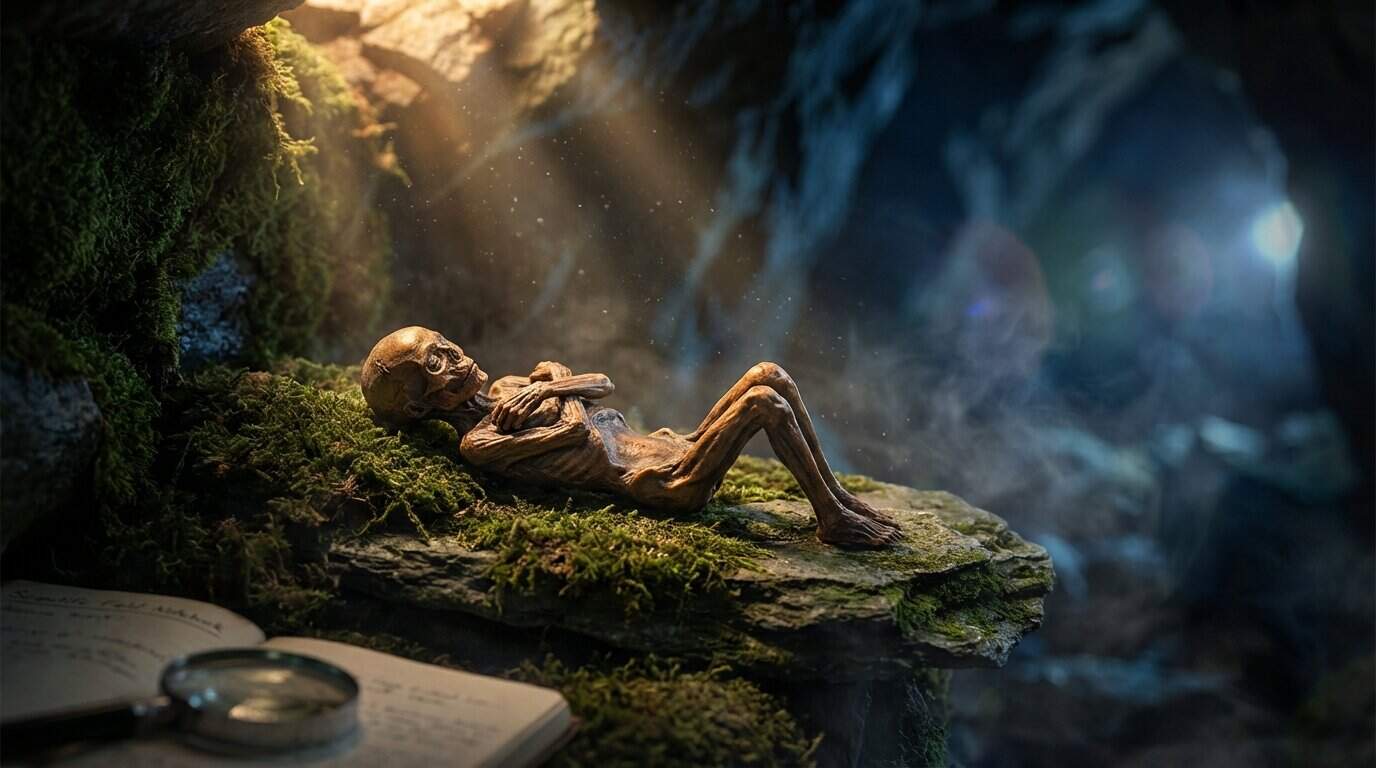
In 1934, two gold prospectors blasting through the granite of Wyoming’s rugged wilderness stumbled upon a sight that would baffle scientists for decades. Tucked away in a small, sealed cave, they found a tiny, leathery figure sitting upright on a stone ledge as if frozen in time. This sanpedro mummy discovery revealed a creature only six inches tall, sparking immediate questions about whether it was a long-lost pygmy ancestor or something even more mysterious.
The tiny figure, soon nicknamed Pedro, weighed less than a pound but carried the heavy weight of a massive archaeological enigma. With a flattened skull and large, dark eyes, the mummy looked less like a human infant and more like a relic from a forgotten legend. While some experts searched for medical explanations, others wondered if the prospectors had accidentally opened a door to a hidden chapter of high-altitude history that defies conventional logic.
Key Takeaways
- The discovery of the six-inch-tall San Pedro mummy in 1934 provides a tangible link to Shoshone and Crow legends regarding the Nimerigar, a mythical race of tiny, fierce mountain dwellers.
- X-ray analysis and scientific examinations suggest the mummy may be a human infant with anencephaly, a medical condition that explains its flattened skull and unique physical proportions.
- The mummy’s discovery in a sealed, high-altitude cave—carefully entombed in a seated position—challenges purely medical explanations and suggests deep cultural or historical significance.
- The disappearance of the physical remains in the mid-twentieth century has transformed the find into a permanent archaeological enigma, leaving only photographs and X-rays as evidence.
The Discovery In The San Pedro Mountains
In June 1932, two gold prospectors named Cecil Mayne and Frank Carr were blasting through thick rock in the San Pedro Mountains when they stumbled upon a discovery that would baffle scientists for decades. After the dust from their dynamite settled, they found a small, sealed cave that had been hidden from the world for a very long time. Sitting upright on a natural stone ledge was a tiny, mummified figure that looked like it was waiting for them to arrive. This little being was only about six and a half inches tall in its seated position, which is roughly the size of a modern smartphone. The men were stunned by how well preserved the figure was, as it appeared to be a miniature person frozen in time.
The physical features of the mummy, which later became known as Pedro, were remarkably lifelike and somewhat unsettling to those who first saw it. It had tan, wrinkled skin and a flattened skull, giving it the appearance of a very old man despite its tiny stature. Its dark, bulging eyes were topped by heavy eyelids, and a full set of teeth was visible inside its small mouth. The figure even had tiny, perfectly formed fingernails on its hands, which were folded neatly in its lap. According to early accounts from the Casper Tribune Herald, the sanpedro mummy discovery looked so realistic that many people wondered if it was a member of a legendary race of little people.
This strange find immediately connected with the oral traditions of the Shoshone and Crow tribes, who have long told stories of the Nimerigar, a race of tiny but powerful beings who lived in these mountains. While some observers thought it might be a clever hoax or a medical anomaly, the sheer detail of the remains made it hard to dismiss so easily. The mummy weighed only about three quarters of a pound, yet it carried the weight of a massive archaeological enigma. Its discovery suggested that there might be more truth to ancient legends than modern science was prepared to admit. This tiny figure served as a bridge between the physical world and the whispered histories of the American West.
Shoshone Legends And The Nimerigar People
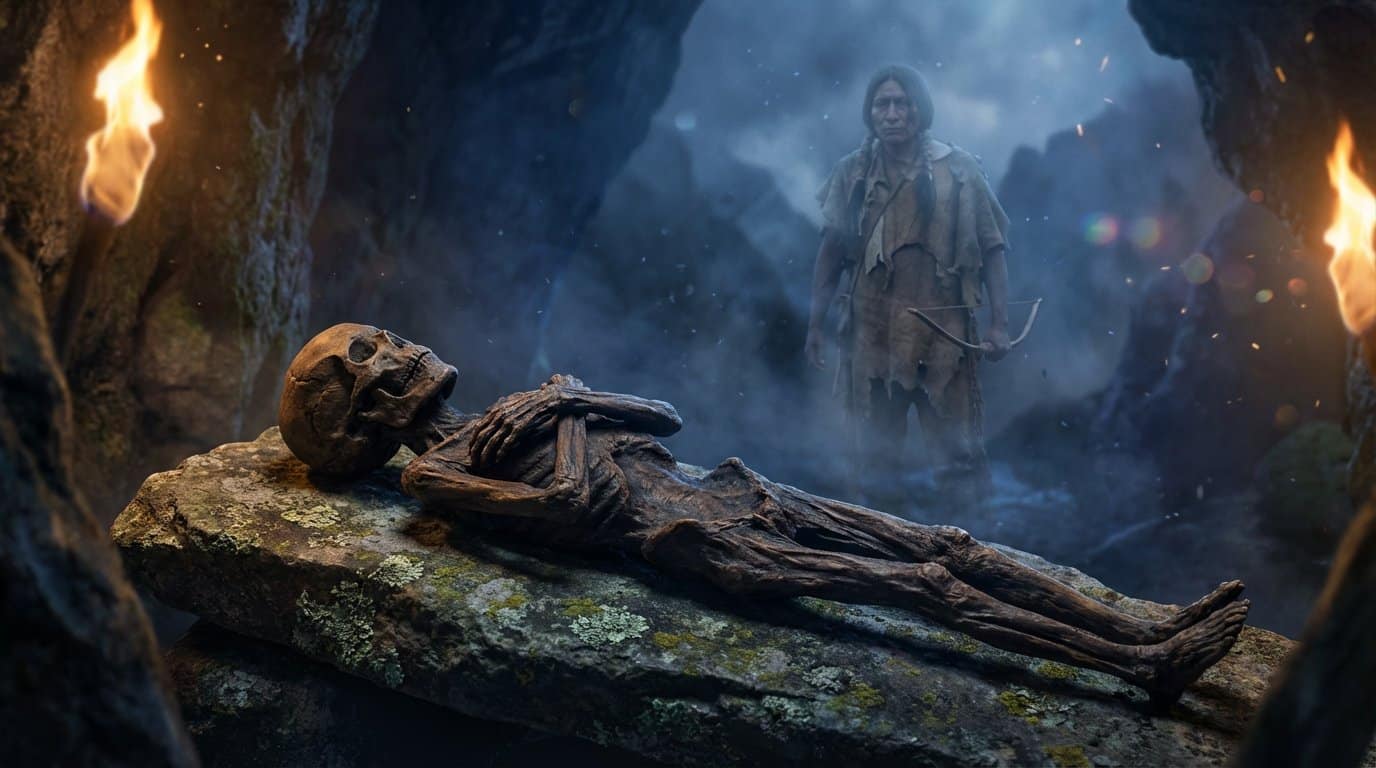
For many generations, Shoshone elders have shared stories of the Nimerigar, a race of tiny but incredibly fierce people who lived in the San Pedro Mountains. These legendary beings were said to be roughly eighteen inches tall and possessed a reputation for being formidable warriors who used poisoned arrows to defend their territory. According to oral traditions documented by historians and anthropologists, the Nimerigar were known to be highly protective of their mountain homes, often clashing with the Shoshone. These stories were long considered to be purely symbolic or mythological until the physical discovery of the San Pedro mummy in 1934 forced a reexamination of the folklore. The seated figure seemed to provide a tangible link to these ancient tales, suggesting that the legends might have been rooted in a physical reality.
The discovery of the tiny mummy, often called Pedro, immediately reignited interest in the specific details of the Nimerigar legends. Shoshone tradition describes these little people as having immense strength and a complex social structure that existed long before modern tribes arrived in the region. When the gold prospectors Cecil Mayne and Frank Carr shared their find with the world, the physical dimensions of the mummy matched the descriptions of the mythical mountain dwellers almost perfectly. Much like the moon-eyed people in Appalachian folklore, these legends describe unique inhabitants whose origins and physical traits remain a subject of intense debate. While some researchers suggest the remains could represent a medical condition, many local enthusiasts and historians find the coincidence between the find and the folklore too significant to ignore. This intersection of physical evidence and ancient storytelling creates a bridge between the scientific world and the rich tapestry of Native American history.
Whether the San Pedro mummy is a member of a hidden race or a unique archaeological anomaly remains one of Wyoming’s greatest mysteries. The Nimerigar legends continue to thrive, kept alive by those who believe the mountains still hold secrets that modern science has yet to fully uncover. By looking at the mummy through the lens of Shoshone history, the discovery transforms from a mere curiosity into a potential piece of a lost cultural puzzle. This connection invites us to wonder how many other legends might be based on truths waiting to be unearthed beneath the earth. What do you think about the connection between ancient legends and physical finds like Pedro, and do you believe more evidence of the Nimerigar is still hidden in the mountains?
Scientific Testing And The Anencephaly Theory
When the tiny remains were first analyzed by scientists in the 1950s, the results offered a fascinating glimpse into the biology of the San Pedro Mountains Mummy. Using X-ray technology, researchers at the American Museum of Natural History found a complete skeleton inside the leathery skin, including a spine, ribcage, and skull. These early examinations revealed that the figure possessed a full set of teeth and what appeared to be a heavy meal in its stomach at the time of death. While some observers felt these features pointed toward a fully grown adult from a legendary race of little people, others began to look for a more grounded medical explanation.
The most prominent scientific theory suggests that Pedro was not a mystical being, but rather a human infant with anencephaly. This medical anomaly occurs when the skull and brain do not develop fully during pregnancy, often resulting in the distinct, flattened head shape seen on the mummy. Dr. George Gill, a noted anthropologist, later examined the remains and concluded that the physical evidence strongly supported the idea of a tragic premature birth. This perspective frames the discovery as a heartbreaking medical reality rather than a supernatural find, though it does not entirely erase the mystery of why the body was so carefully entombed in a mountain cave.
Despite the medical evidence, the debate remains alive because the physical characteristics of the mummy align so closely with the Nimerigar legends of the Shoshone people. These oral traditions speak of a tiny, aggressive race that lived in the mountains and possessed great strength. While the anencephaly theory provides a biological answer for the mummy’s appearance, it fails to explain the cultural significance and the strange circumstances of its discovery. Much like The Enigma of the Green Children of Woolpit, the scientific community remains divided between those who see a medical anomaly and those who believe Pedro might be a missing piece of a much larger, hidden history.
Where Folklore and Physical Evidence Meet
The San Pedro Mountains Mummy remains a captivating bridge between the physical world and the rich oral traditions of the American West. While modern science often points toward medical explanations, the physical evidence of the tiny, seated figure continues to challenge our understanding of history. This discovery breathed new life into the legends of the Nimerigar, a race of small but powerful people described in Shoshone folklore. Pedro serves as a reminder that the rugged landscapes of Wyoming still hold secrets that refuse to be easily categorized. His legacy is not just one of bone and resin, but of the enduring human desire to uncover the hidden chapters of our past.
The mystery of this pint sized traveler invites us to look closer at the stories passed down through generations. Whether Pedro was a biological anomaly or a member of a forgotten tribe, his presence forced the world to reconsider the boundaries between myth and reality. The disappearance of the mummy in the mid twentieth century only added to the intrigue, leaving behind a trail of photographs and X-rays for us to ponder. We are left to wonder if science has captured the full picture or if there is more to the story than meets the eye. Do you believe Pedro was a scientific curiosity, or could he be proof that the legendary little people of the mountains were real?
Frequently Asked Questions
1. What exactly was the San Pedro mummy discovery?
The discovery occurred in 1934 when two gold prospectors, Cecil Mayne and Frank Carr, blasted into a hidden cave in Wyoming. Inside, they found a tiny, six inch tall mummified figure sitting upright on a stone ledge. This miniature being, later nicknamed Pedro, appeared remarkably well preserved with tan skin and a flattened skull.
2. How large was the mummy found in the cave?
The figure stood only about six and a half inches tall in its seated position, which is roughly the size of a modern smartphone. Despite its tiny stature, it weighed less than a pound and featured the physical characteristics of a fully grown adult. Its small size led many to wonder if it belonged to a forgotten race of pygmy people.
3. Who were the people who discovered the mummy?
The mummy was found by two gold prospectors named Cecil Mayne and Frank Carr while they were working in the San Pedro Mountains. They were using dynamite to clear a path through thick granite when they accidentally opened the sealed chamber. Their find sparked decades of debate among scientists and historians who struggled to explain the figure.
4. What did the mummy look like when it was first found?
The mummy had a very lifelike but unsettling appearance, featuring wrinkled, tan skin and a flattened head. It sat with its arms and legs crossed, looking like a very old man frozen in time. Its dark, heavy lidded eyes and well preserved features made it look less like a human infant and more like a relic from a lost legend.
5. Is there any scientific evidence explaining the mummy?
Researchers have proposed various theories, ranging from medical conditions to historical anomalies. Some experts suggest the figure could be a human infant with a rare condition called anencephaly, while others believe it represents a unique chapter of high altitude history. Much like the mystery of the giant of Kandahar, the physical evidence continues to challenge conventional logic and invites open minded investigation.
6. What happened to the mummy after it was discovered?
After its discovery in the 1930s, the mummy became a local sensation and was examined by various researchers over the years. It eventually changed hands multiple times and its current whereabouts remain a mystery. This disappearance has only added to the intrigue and legend surrounding the San Pedro Mountains find.