
The Beast Of Gévaudan: France’s Deadliest Historical Mystery
In the summer of 1764, the peaceful French countryside transformed into a living nightmare. Something was hunting in the Margeride Mountains, and it was not interested in sheep or cattle. Instead, the Beast of Gévaudan focused its terrifying attention on the women and children tending to the local flocks. This mysterious creature would go on to claim over 80 lives during a brutal three-year reign of terror, leaving behind a trail of panic and deeply unsettling questions.
Today, these deadly attacks remain one of history’s greatest unsolved mysteries, blending verified historical facts with chilling local folklore. While official records clearly document the staggering number of victims, the true identity of the attacker is still fiercely debated. Was it simply an unusually aggressive wolf, an exotic animal brought from afar, or perhaps something entirely unknown to science? The surviving witness accounts paint a picture of a creature that defied the laws of nature, inviting us to look closer at what really stalked the shadows of eighteenth-century France.
Key Takeaways
- Between 1764 and 1767, a mysterious predator terrorized the French Margeride Mountains, claiming up to 113 lives with a chilling preference for vulnerable humans over easy livestock.
- The creature’s unnatural resilience to musket fire and bizarre physical features sparked enduring theories ranging from an escaped exotic animal to a massive armored dog guided by a human master.
- Although local hunter Jean Chastel finally killed the beast in 1767, the rapid decay and subsequent destruction of its remains ensured its true scientific identity remains an unsolved mystery.
First Blood In The Margeride Mountains
In June 1764, a terrifying shadow fell over the Margeride Mountains of southern France. A young teenager named Jeanne Boulet became the first known victim of a creature that would soon haunt the nightmares of the entire region. As the death toll began to climb, terrified locals noticed a chilling pattern in the brutal attacks. The monster completely ignored the plump sheep and cattle grazing in the pastures, choosing instead to hunt the vulnerable women and children who tended to the flocks. This unnatural preference for human flesh over easy animal prey immediately sparked whispers that this was no ordinary predator.
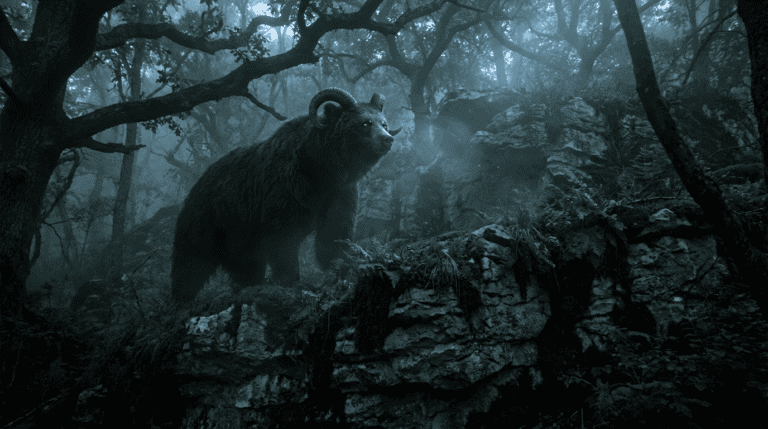
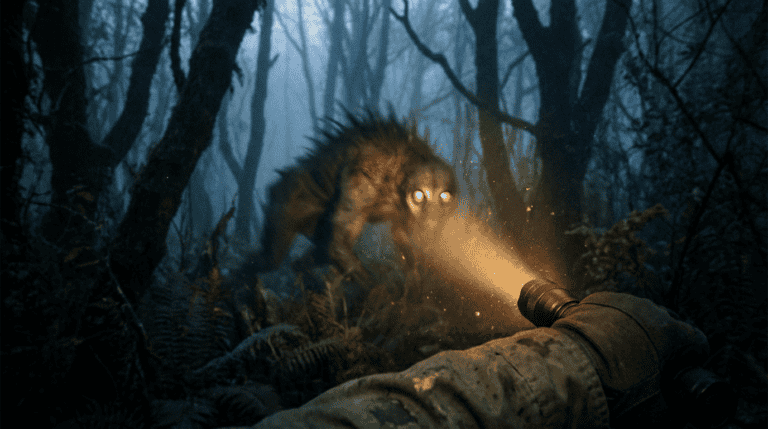
Survivors who managed to escape the jaws of the beast shared horrifying descriptions that baffled local hunters and naturalists. They described a massive animal roughly the size of a young calf, possessing an unusually broad chest and a huge head. According to historical records from the provincial authorities, the creature sported reddish fur with a distinct dark stripe running straight down its back. Perhaps the most bizarre detail was its remarkably long, cat-like tail that it used to balance itself before striking its victims. These strange features painted a picture of an impossible hybrid beast, leading many terrified villagers to believe they were being hunted by a supernatural werewolf.
King Louis XV And The Royal Hunts

As the death toll in the Margeride Mountains climbed toward nearly a hundred victims, a wave of sheer terror swept across the entire nation of France. Newspapers in Paris published terrifying accounts of a monstrous creature that seemed to hunt humans for sport, completely ignoring the fat sheep nearby. This growing national panic quickly reached the royal court, forcing King Louis XV to take drastic action before the situation embarrassed his reign. The king dispatched Captain Jean-Baptiste Duhamel, a highly respected military officer, along with a regiment of dragoons to restore order and slay the beast. What started as a local rural tragedy suddenly transformed into a full-scale royal military operation against an unknown and seemingly unstoppable predator.
Captain Duhamel immediately organized massive hunting drives that brought together his trained soldiers and tens of thousands of local volunteers. These giant search parties combed through the dense forests and rocky terrain, hoping to corner the creature and end the nightmare once and for all. Despite their overwhelming numbers and strict military tactics, the hunters found themselves constantly outsmarted by a monster that seemed to possess human-like intelligence. Historical records from the era note that soldiers occasionally spotted the beast and even fired their muskets directly at it, only to watch the bullets seemingly bounce right off its thick hide. This unnatural resilience led many terrified locals to whisper that they were not hunting a normal animal at all, but rather a supernatural werewolf that could not be killed by ordinary lead.
Werewolves Hyenas And Exotic Animal Theories
The sheer brutality of the attacks in the Margeride Mountains quickly convinced terrified locals that a supernatural monster was hunting them. With historical records confirming anywhere from 80 to 113 gruesome deaths, it is easy to see why tales of a bloodthirsty werewolf began to spread across France. Survivors often described a creature that possessed almost humanlike intelligence and an unnatural ability to evade traps and hunting parties. While modern science easily dismisses the idea of a shapeshifting human, the sheer panic recorded in eighteenth-century documents suggests the villagers were facing something far more terrifying than a standard European wolf. This enduring legend of a supernatural beast perfectly captures the deep fear of the unknown that gripped the region for three long years.
Looking for a more grounded explanation, many researchers point to the very real possibility of an escaped exotic animal. During this era, wealthy aristocrats frequently kept private menageries filled with dangerous beasts from Africa and Asia. According to cryptozoologists and historical researchers, the creature could have easily been a striped hyena or a juvenile African lion. A hyena would certainly match the strange physical descriptions of a sloping back and powerful crushing jaws, while a lion would explain the unprecedented ferocity of the attacks. This theory blends scientific skepticism with the terrifying reality that an alien predator was roaming the French countryside completely unchecked.
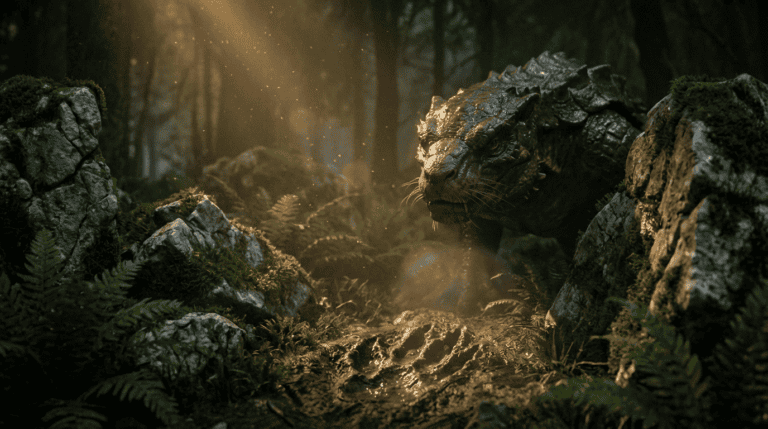
Perhaps the most chilling theory suggests that the monster was actually a massive armored dog trained by a human master. Historical accounts note that the creature strangely ignored sheep and cattle, choosing instead to specifically target women and children who were tending the flocks. Some historians argue that a sadistic killer could have outfitted a huge mastiff in protective armor, which would explain why bullets seemingly bounced off the hide of the beast. This terrifying blend of human malice and animal savagery keeps the mystery alive even centuries later.
Jean Chastel And The Final Kill

The three-year nightmare that claimed up to 113 lives finally reached its climax on June 19, 1767. A local nobleman organized a massive hunt on the slopes of Mount Mouchet to track down the elusive monster. Among the hunting party was Jean Chastel, a local farmer and innkeeper with a reputation for being a skilled marksman. According to historical accounts, the massive beast stepped into a clearing right in front of Chastel. He raised his custom rifle and fired a fatal shot, bringing the terrifying creature to the ground once and for all.
The details surrounding this final kill quickly blurred the line between historical fact and supernatural folklore. Local legends insist that Chastel did not use ordinary ammunition to slay the beast. Tales passed down through generations claim he melted down a silver medal of the Virgin Mary to cast a blessed bullet. This specific detail fueled lasting rumors that the creature was actually a werewolf or a supernatural entity rather than a normal animal. While modern historians often debate the truth of the silver bullet, the story perfectly captures the deep terror and mystical beliefs of eighteenth-century France.
After the celebrated kill, the physical evidence of the monster vanished almost as quickly as it had appeared. The beast was strapped to a cart and paraded through local villages before being sent to King Louis XV in Paris. However, the long journey in the hot summer sun caused the carcass to rot and emit a terrible smell. The disgusted king immediately ordered the decaying remains to be destroyed and buried in an unknown location. Because the bones were lost forever, cryptozoologists and scientists are still left wondering if the beast was a giant wolf, an exotic hyena, or something far more sinister.
The Unnatural Legacy of the Gévaudan Beast
The terrifying reign of the Beast of Gévaudan remains one of the darkest and most fascinating chapters in French history. Between 1764 and 1767, this mysterious predator claimed the lives of nearly a hundred innocent people in the Margeride Mountains. Unlike typical animal attacks, the creature showed a chilling preference for targeting women and children while completely ignoring nearby livestock. This unnatural behavior, combined with detailed historical records from the era, proves that something truly extraordinary stalked the countryside. Even centuries later, the sheer scale of the slaughter makes it impossible to simply dismiss the events as the work of ordinary wolves.
Today, the story of the beast holds a legendary status in the world of cryptozoology. Researchers and historians continue to debate whether the monster was a surviving prehistoric predator, an armored war dog, or perhaps even a real werewolf. The blend of verified government documents and supernatural folklore creates a perfect puzzle that defies a simple, modern explanation. While science demands physical proof, the consistent eyewitness accounts of a massive, bulletproof monster suggest we still do not have the full story. It is entirely possible that the dense forests of eighteenth-century France hid a cryptid that has since vanished from the natural world.
Unraveling the exact identity of this legendary monster might be impossible, but the search for answers remains a fascinating pursuit. Every new theory brings us one step closer to understanding what really happened in those isolated woods. We would love to hear your thoughts on this historical mystery. Do you think the creature was a known animal with strange mutations, a deliberate human conspiracy, or a genuine supernatural entity? Drop down to the comments section below and share exactly what you believe the Beast of Gévaudan truly was.
Frequently Asked Questions
1. Who was the first victim of the Beast of Gévaudan?
In June 1764, a young teenager named Jeanne Boulet became the first known victim of the creature. Her tragic death marked the beginning of a three-year reign of terror in the Margeride Mountains. This attack set a chilling pattern where the monster targeted vulnerable humans over livestock.
2. Why were the beast’s hunting habits considered so unusual?
The creature completely ignored plump sheep and cattle grazing in the pastures, which are normally easy prey for a predator. Instead, it specifically hunted the vulnerable women and children tending to those flocks. This unnatural preference for human flesh sparked whispers that this was no ordinary animal.
3. What did the monster look like according to the survivors?
Survivors who escaped the horrific attacks described a massive animal roughly the size of a young calf. These eyewitness accounts baffled local hunters and naturalists of eighteenth-century France. The descriptions painted a picture of a creature that defied the known laws of nature, leaving room for theories of an exotic beast or something entirely unknown to science.
4. How many people did the Beast of Gévaudan kill?
Official historical records document that the mysterious creature claimed over 80 lives during its brutal three-year reign of terror. The staggering death toll left behind a trail of panic across the French countryside. Today, these deadly attacks remain one of history’s greatest unsolved mysteries.
5. Could the attacker have been just a normal wolf?
While some historians argue it was simply an unusually aggressive wolf, the creature’s strange behavior and massive size suggest otherwise. The fact that it bypassed livestock to hunt humans makes a standard wolf attack seem unlikely. It is entirely possible that an exotic animal brought from afar, or perhaps a completely undiscovered species, stalked the shadows of France.
6. Where exactly did these historical attacks take place?
The terrifying events unfolded in the Margeride Mountains of southern France. This once peaceful countryside transformed into a living nightmare starting in the summer of 1764. The rugged terrain provided the perfect hunting ground for a mysterious predator to stalk its victims and evade capture.
7. Was the true identity of the Beast ever discovered?
The true identity of the attacker is still fiercely debated among historians and cryptozoologists alike. While official records clearly document the victims, no single theory has ever fully explained the creature’s unnatural abilities. The mystery invites us to keep an open mind about what truly hunted in the French mountains centuries ago.