
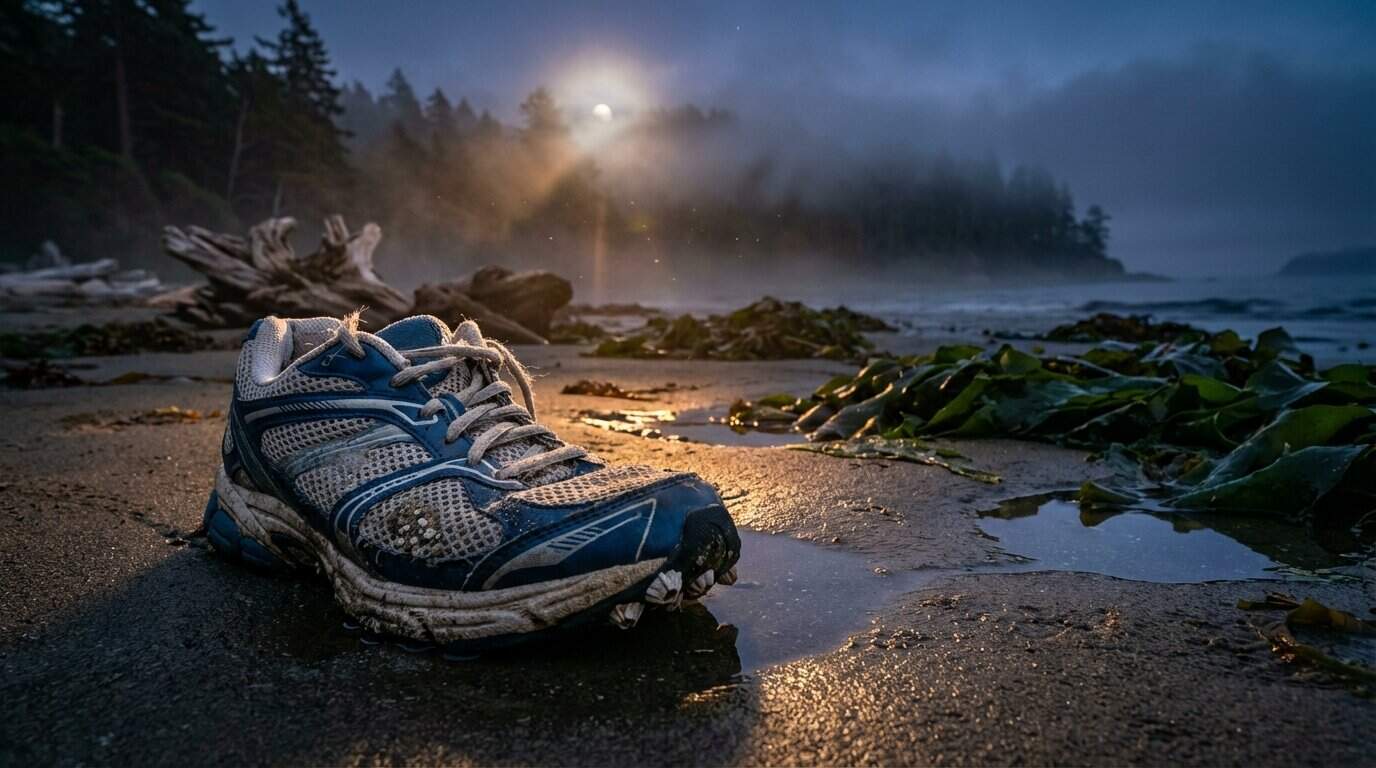
The Haunting Mystery Of The Salish Sea Feet
Since 2007, a series of macabre discoveries has haunted the misty coastlines of British Columbia and Washington State. Beachgoers expecting to find seashells have instead stumbled upon the salish sea feet, detached human limbs still tucked neatly inside their sneakers. What began as a single, chilling find on Jedediah Island has grown into a decade-long puzzle involving over twenty documented cases.
While many experts point to the mechanics of deep-sea currents and modern footwear design, the sheer frequency of these finds continues to spark local rumors. The sneakers act like small flotation devices, bobbing through the waves until they settle on the shore, leaving investigators to piece together the identities of those lost to the water. It is a mystery that blends the cold reality of forensic science with the lingering, eerie whispers of the Pacific Northwest.
Key Takeaways
- The Salish Sea feet phenomenon is a result of marine disarticulation, where deep-sea scavengers and cold-water decomposition naturally separate feet at the ankle joint.
- Modern sneaker technology, featuring pressurized air pockets and lightweight foam, acts as a flotation device that carries remains to the surface and protects them from the elements.
- Unique ocean currents in British Columbia and Washington State act as a natural funnel, repeatedly depositing these remains along specific public coastlines.
- Forensic DNA testing has successfully linked most of these discoveries to missing persons cases involving accidents or suicides, largely debunking local theories of foul play or serial predators.
A Gruesome Timeline Of Pacific Northwest Discoveries
The mystery officially began on a quiet August afternoon in 2007 when a young girl visiting Jedediah Island spotted a lone Adidas sneaker resting on the shore. Inside the shoe lay the remains of a human foot, marking the start of a pattern that would baffle the region for nearly two decades. Since that initial discovery, at least twenty-one official cases have been recorded across British Columbia and Washington State. Each find follows a similar, unsettling script where a single shoe washes up with no body in sight. While forensic experts often point to natural decomposition, the frequency of these discoveries continues to fuel local legends and dark theories.
As the timeline progressed through the 2010s, the discoveries moved from isolated incidents to a recurring phenomenon that captured global attention. Investigators have utilized DNA testing and modern footwear records to identify several of the individuals, yet many cases remain shrouded in silence. The geography of the Salish Sea creates unique currents that seem to funnel these specific remains toward public beaches, creating a literal trail of shoes. Some researchers suggest that modern footwear design, which uses pressurized air and foam, acts as a flotation device for the remains. However, the consistent lack of other skeletal parts washing ashore keeps the door open for more chilling interpretations of how these feet are being separated.
Recent years have seen the tally continue to rise, with a major discovery occurring as recently as New Year’s Day. This ongoing timeline suggests that the Salish Sea holds secrets that science has yet to fully categorize or explain. While authorities often lean toward accidental drownings or tragic ends, the repetitive nature of the finds feels like a message from the deep. Every new sneaker found on the sand reignites the debate between forensic reality and the possibility of something more calculated. Do you believe these twenty-one discoveries are merely a result of ocean physics, or is there a more intentional, hidden force at work along these misty coastlines?
Forensic Science Versus Dark Conspiracy Theories
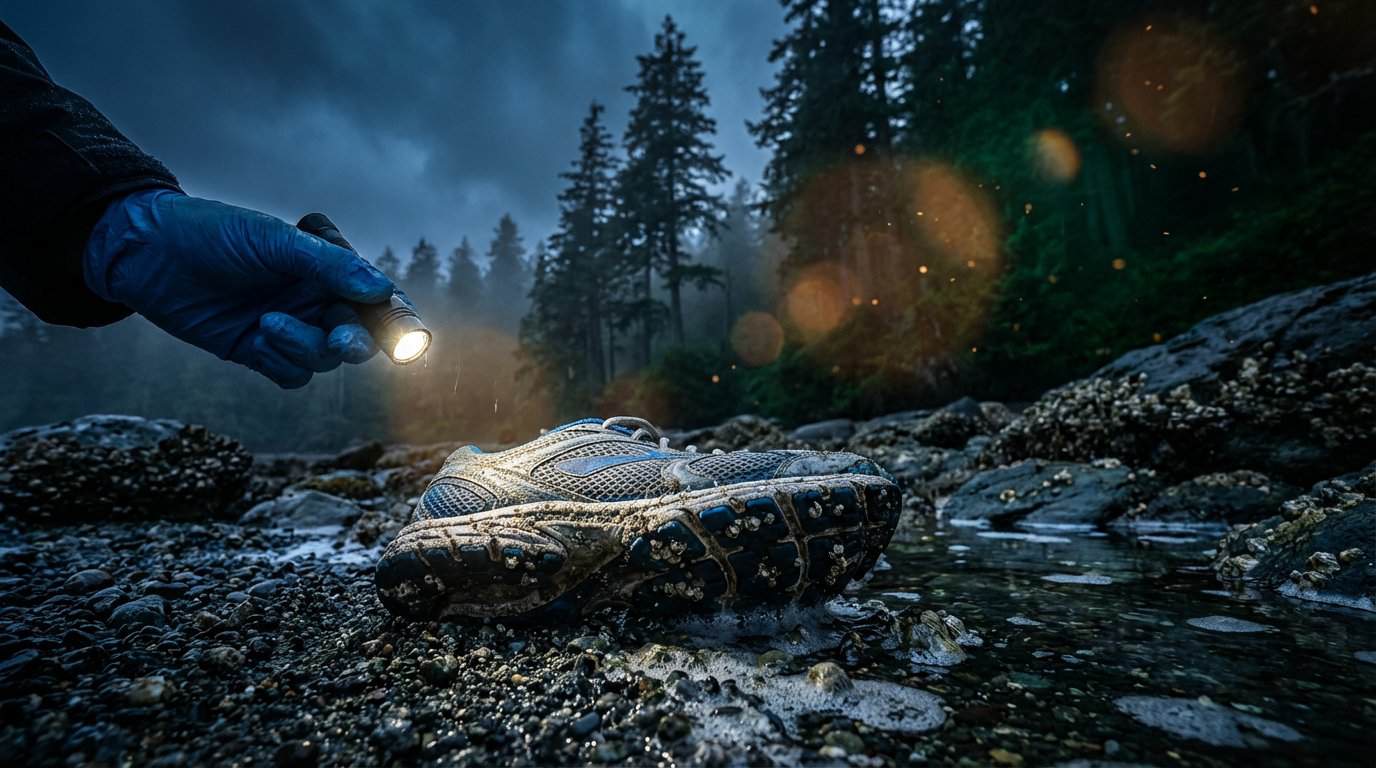
The official explanation from regional coroners suggests a purely scientific cause for this grim phenomenon. Forensic experts explain that when a body sinks in deep, cold water, scavengers tend to target the softer tissue of the ankles first. Because modern sneakers are filled with air pockets and lightweight foam, the foot naturally detaches during decomposition and floats to the surface. This process, known as marine disarticulation, argues that these are not the victims of a singular monster but rather individuals lost to accidents or suicide. It is a logical answer that strips away the horror, turning a terrifying discovery into a simple matter of buoyancy and biology.
Despite these forensic assurances, the sheer number of discoveries keeps the doors of speculation wide open for many observers. Skeptics often point out the geographical clustering of the finds and the unsettling timing of the sneakers appearing on shore. To those who favor darker theories, the idea of a serial predator or a human trafficking ring feels just as plausible as a scientific coincidence. They argue that the Salish Sea could be a dumping ground, where the unique currents help mask the evidence of foul play. While the DNA often matches missing persons cases, the haunting nature of finding a lone shoe makes it difficult for the public to fully embrace the natural explanation.
This tension between cold hard facts and lingering dread creates a mystery that refuses to stay buried. Every time a new sneaker washes up on a pebble beach, the debate between forensic science and the unexplained reignites with fresh intensity. Is it possible that the ocean is simply doing its job, or are we overlooking a more coordinated and sinister series of events? The truth may lie somewhere in the middle, blending the predictable laws of nature with the darker possibilities of human behavior. What do you think is more likely, a strange quirk of modern footwear or a hidden story that the authorities have yet to uncover?
Why Modern Footwear Keeps These Mysteries Afloat
The secret to why these feet appear so frequently lies in the unique way modern sneakers are manufactured. Unlike old-fashioned leather boots that would sink to the dark depths of the ocean floor, today’s athletic shoes are packed with pressurized air pockets and lightweight foam. This advanced buoyancy acts like a flotation device for the foot, keeping it floating near the surface rather than letting it rest in the silt. As the shoes drift with the currents, they become tiny vessels carrying their grim cargo across the vast waters of the Salish Sea. This specialized footwear technology is the primary reason why these remains are discovered by beachgoers rather than remaining lost forever in the deep.
While the idea of severed limbs naturally brings to mind dark theories of foul play, the cold environment of the Salish Sea offers a more scientific explanation for why the feet are detached. In these frigid waters, a body undergoes a specific decomposition process where the joints, which are held together by soft ligaments, naturally break down over time. Scavengers often target these softer tissues, and because the ankle is a relatively weak joint, the foot naturally separates from the rest of the remains. Because the sneaker protects the foot from being eaten and provides the lift needed to float, it becomes a perfect capsule for travel. This creates a haunting cycle where the shoe preserves the very evidence that eventually washes ashore.
Even with these logical explanations, the number of discoveries since 2007 continues to fuel a sense of unease and mystery. Forensic experts and investigators from regional coroners services have worked tirelessly to match these feet to missing persons cases using Forensic DNA testing. While many have been successfully identified, the repetitive and rhythmic nature of these finds feels like something out of a supernatural thriller. Much like unraveling the mystery of other Pacific Northwest legends, it raises the question of whether there is more to the story than just physics and biology. Much like the entire crew of a ghost ship vanishing without a trace, the missing bodies associated with these feet leave behind a void that invites endless speculation. What do you think is the most unsettling part of this coastal mystery, and do you believe science has truly explained every aspect of these traveling remains?
Closure Found Amidst the Lingering Mystery
While forensic experts have managed to identify several of the individuals through DNA testing, many of the cases remain tied to tragic accidents or suicides. Families of the missing have finally received some closure, learning that their loved ones were not victims of a calculated monster, but rather of the sea itself. However, the number of discoveries, reaching over twenty since 2007, keeps the public questioning if there is more to the story. Even with names attached to the remains, the specific mechanics of why this keeps happening in this exact region remain a point of deep fascination. The coastal currents of the Salish Sea seem to hold onto secrets, only releasing these small, sneaker-clad clues when they are ready.
The explanation that modern footwear acts as a protective flotation device is scientifically sound, yet it does little to dampen the eerie atmosphere surrounding the beach finds. There is something inherently unsettling about a shoe washing ashore with a human foot still inside, a sight that feels more like a scene from a thriller than a natural occurrence. This phenomenon challenges our sense of safety and forces us to look at the beautiful Pacific Northwest coastline with a bit of trepidation. Much like the mystery of the Dyatlov Pass incident, while science points to decomposition and buoyancy, the frequency of these events continues to fuel theories about ocean currents and the strange ways they interact with human remains. The mystery persists because it sits right at the intersection of cold forensic reality and the haunting unknown.
As we look toward the future, it is likely that more feet will find their way to these shores as long as our footwear continues to evolve. Each new discovery serves as a grim reminder of the vastness of the ocean and the stories that still lie beneath the waves. Whether you believe every case is a simple matter of biology or you suspect there are deeper patterns yet to be uncovered, the Salish Sea remains one of the world’s most unique forensic puzzles. What do you think is the most chilling aspect of this recurring coastal mystery? Do you believe the scientific explanation covers every discovery, or is there a piece of the puzzle still missing from the official record?
Frequently Asked Questions
1. What exactly are the Salish Sea feet?
The Salish Sea feet refer to a series of detached human feet, still contained within their shoes, that have washed ashore in British Columbia and Washington since 2007. Investigators have documented over twenty cases where these sneakers appear on the coastline without the rest of the body.
2. Why are only feet being found instead of entire bodies?
When a body stays in the water, natural decomposition and sea life often target the soft tissue of the joints first. Because modern sneakers are made of buoyant materials like foam and air pockets, the foot stays protected and floats to the surface while the rest of the remains sink.
3. Where do these mysterious shoes usually wash up?
Most discoveries occur along the rugged coastlines of the Salish Sea, spanning from Jedediah Island in British Columbia down to the beaches of Washington State. The unique currents of the Pacific Northwest act like a funnel, pushing floating objects toward these specific shores.
4. Have any of the individuals been identified?
Yes, forensic investigators and regional coroners have successfully used DNA testing to identify several of the remains. Most cases have been linked to missing persons who were lost to accidents or suicides, though some feet remains a mystery to this day.
5. Is there a serial killer responsible for these discoveries?
While the frequency of the finds has fueled many dark theories, authorities have found no evidence of foul play or trauma in the documented cases. The phenomenon is largely attributed to the cold, deep waters of the Pacific and the specific way modern footwear interacts with the ocean.
6. How long can a shoe float in the ocean before reaching the shore?
A sneaker can drift for several months or even years depending on the strength of the currents and weather patterns. Much like the Bermuda Triangle explained by natural forces, the durable rubber and synthetic materials of modern shoes act as a protective capsule, keeping the remains intact through long journeys across the waves.