
Tracking The Tatzelwurm: Evaluating Historical Sightings And Alpine Evidence
High in the mist-covered peaks of the European Alps, a centuries-old mystery lurks beneath the rocky crevices and alpine meadows. While most travelers look for chamois or golden eagles, locals have long whispered about a serpentine creature with a feline face and two powerful front claws. Those searching for evidence of this creature will find a trail of chilling encounters that stretch from the 1700s to the modern day, suggesting that something truly unusual haunts these mountains.
This elusive clawed worm challenges standard knowledge of European wildlife, blending the traits of a heavy lizard with the movements of a snake. Skeptics often point to misidentified salamanders or badgers, yet the consistency of witness reports across Switzerland, Austria, and Italy is difficult to ignore. From grainy historical photographs to detailed sketches by terrified hikers, the evidence invites a closer look at the shadows of the high altitude wilderness.
Key Takeaways
- The Tatzelwurm is a persistent alpine cryptid described across centuries as a two-legged, serpentine lizard with a blunt feline face and powerful front claws.
- Decades of consistent witness reports from Switzerland, Austria, and Italy suggest a biological reality that defies standard classification and cannot be easily dismissed as mere folklore.
- Controversial physical evidence, such as the 1934 Balkin photograph and lost skeletal remains, continues to fuel the debate between scientific skepticism and cryptozoological investigation.
- Scientific theories propose the creature may be an undiscovered species of heavy-bodied reptile or a rare, cave-dwelling amphibian adapted to the remote, rocky crevices of the high Alps.
Historical Encounters Across The Alpine Peaks
For centuries, the rugged peaks of the Alps have served as the backdrop for chilling encounters with a creature that defies standard biological classification. Local folklore across Switzerland and Austria is rich with stories of the Tatzelwurm, a beast consistently described as a thick, serpentine lizard with the distinctive face of a cat. One of the most famous historical accounts dates back to 1779, when a farmer named Hans Fuchs reportedly suffered a fatal heart attack after being terrified by two of these clawed serpents. This early encounter set a precedent for future reports, establishing a recurring description of a creature roughly two to three feet long with a blunt head and powerful front legs.
The mystery gained further traction in the early 20th century as more witnesses came forward with detailed testimony from the Bavarian and Austrian highlands. In 1924, a group of hikers near the mountain of Hochfilzen claimed to have seen a creature that resembled a heavy salamander but possessed a feline expression and a surprising ability to leap great distances. These sightings were often documented by naturalists and local historians who noted the sincerity of the mountain dwellers. Despite the skepticism of modern science, the sheer volume of consistent reports from different alpine regions suggests that these witnesses were seeing something very real and very unusual.
By the 1930s, the Tatzelwurm had moved from mere campfire stories into the realm of organized investigation, particularly after a photographer claimed to have captured an image of the elusive beast. While the authenticity of specific photographs is often debated, the chronological timeline of sightings shows a remarkable pattern of physical traits that rarely vary between cultures. Whether it is called the Stollwurm in Switzerland or the Springwurm in Germany, the creature remains a staple of European cryptozoology. These historical accounts provide a fascinating look at a localized mystery that continues to haunt the high-altitude crevices of the Alpine range.
The Balkin Photograph And Controversial Physical Proof
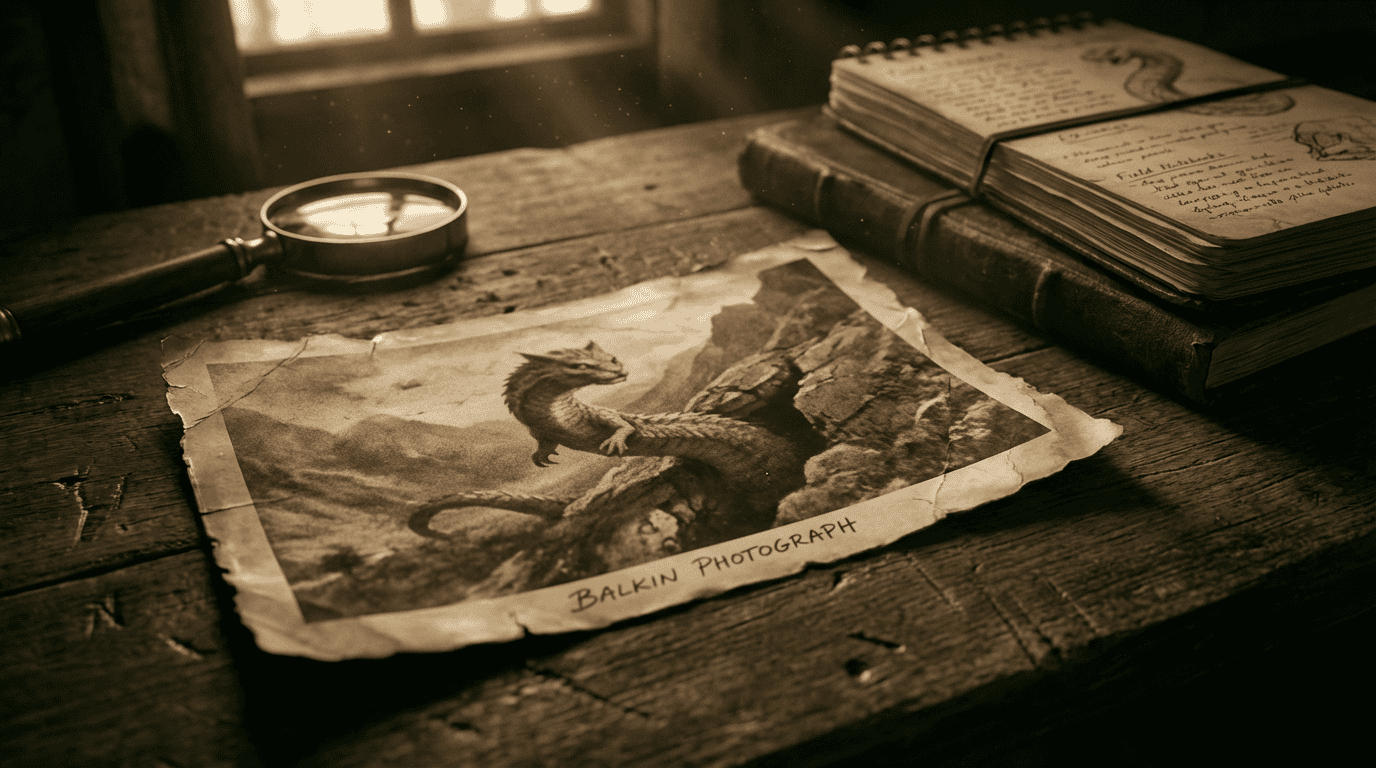
The most famous piece of evidence in the history of the Tatzelwurm is a photograph captured in 1934 by a Swiss photographer. While exploring the Meiringen region, he claimed to have spotted a bizarre, thick-bodied creature and managed to snap a picture before it vanished into the brush. The image shows a blunt-headed, scaly animal that looks remarkably like the fabled alpine lizard described in local folklore. Enthusiasts were thrilled by the discovery, as it provided the first visual proof of a creature that had been spoken of for centuries. This single photograph shifted the Tatzelwurm from a mountain legend into a subject of serious international debate among naturalists and curious onlookers alike.
Despite the initial excitement, the photograph eventually faced heavy scrutiny from the scientific community. Skeptics pointed out that the creature in the image appeared remarkably rigid, leading some to believe it was a clever hoax involving a ceramic figurine. However, the mystery deepened when a skeleton supposedly belonging to a Tatzelwurm was reportedly donated to a local institute, only to disappear before it could be properly cataloged. These artifacts often follow a frustrating pattern of surfacing with great fanfare only to vanish when modern testing becomes available. Many researchers still wonder if these lost skeletal remains were genuine remnants of an undiscovered species or simply part of an elaborate cultural tradition.
The tension between these historical sightings and modern skepticism creates a fascinating puzzle for anyone interested in European cryptids. While it is easy to dismiss grainy photos from the 1930s, the consistency of the descriptions provided by mountain residents cannot be ignored. These witnesses often describe a muscular, two-legged predator that does not match any known lizard or snake native to the Alps. Much like the enduring Bigfoot evidence debate, the physical evidence remains elusive because the Tatzelwurm is a master of its harsh, rocky environment. Do you think the photograph captured a real animal peering from the shadows, or was it a creative attempt to bring a local legend to life?
Scientific Theories Behind The Two Legged Cryptid
While the Tatzelwurm is often dismissed as a tall tale, some researchers suggest it could be a displaced relative of the Gila monster or the Mexican beaded lizard. These heavy bodied reptiles are famous for their venomous bites and thick scales, which matches many of the historical descriptions given by alpine farmers. Some cryptozoologists believe a similar species may have survived in the isolated, rocky crevices of the European mountains. If a rare lizard with small or hidden hind legs truly exists in these peaks, it would explain why witnesses only report seeing two front paws. This theory bridges the gap between local folklore and known biological traits found in other parts of the world.
Another compelling possibility involves a rare or oversized species of amphibian similar to the European olm or the giant salamander. These creatures thrive in damp, dark environments and possess the elongated, slippery bodies often attributed to the Tatzelwurm. Since salamanders can appear to have a blunt or feline shaped head from a distance, an undiscovered alpine variety could easily be mistaken for a strange monster. Naturalists have noted that the rugged terrain of the Alps contains many unexplored cave systems where such a creature might hide. Much like the various Loch Ness Monster theories, this scientific perspective suggests that the legend is not based on a ghost or a demon, but rather a shy animal that avoids human contact.
The mystery of the Tatzelwurm continues to fascinate because it sits right on the edge of what seems possible in nature. By comparing witness accounts to real animals like the skink or the slow worm, we can see how a physical creature could inspire such a lasting myth. Even if the sightings are rare, the consistency of the descriptions across different centuries and countries points toward something real living in the high altitude wilderness. It is possible that the Tatzelwurm is simply a master of camouflage that has managed to stay just out of reach of modern science. Do you think there is a hidden species waiting to be discovered in the Alps, or is this just a case of mistaken identity?
Evaluating the Evidence of the Feline Serpent
The Tatzelwurm remains one of Europe’s most enduring mysteries, bridging the gap between ancient folklore and modern cryptozoology. While skeptics often dismiss these sightings as misidentified alpine salamanders or stray otters, the sheer consistency of the reports across centuries is difficult to ignore. From the jagged peaks of Switzerland to the deep valleys of Bavaria, witnesses continue to describe a creature that defies standard biological classification. This feline headed serpent represents a unique piece of European natural history that refuses to be forgotten. Its presence in local culture suggests that something truly unusual may still be prowling the high altitude crevices of the Alps.
Exploring the legend of the Tatzelwurm allows us to appreciate the vast, unexplored corners of the European wilderness. Even in an age of satellite mapping and constant surveillance, the rugged terrain of the mountains offers plenty of hiding places for a small, reclusive predator. Whether it is a relic from a prehistoric era or a rare species of lizard yet to be officially named, the creature provides a thrilling reminder of the world’s remaining secrets. Much like the mystery of the Lake Tianchi monster sightings, the blend of historical documentation and vivid personal accounts keeps the spirit of discovery alive for researchers and enthusiasts alike. Every new report adds another layer to this fascinating alpine puzzle.
As we look toward the future of alpine research, the question of the Tatzelwurm’s existence remains an open and exciting debate. Perhaps the next hiker or mountain climber will be the one to finally capture the definitive evidence needed to solve this mystery once and for all. We would love to hear your perspective on these strange sightings and whether you believe a biological reality still calls the Alps home. Much like Australia’s mysterious swamp dweller, the Tatzelwurm remains a captivating figure in global folklore. Have you ever encountered something unexplained while exploring the high country, or do you have a favorite local legend about the Stollwurm? Please share your thoughts and stories in the comments below to help keep the conversation going.
Frequently Asked Questions
1. What exactly does a Tatzelwurm look like according to witnesses?
Witnesses consistently describe the creature as a thick, serpentine lizard measuring between two and three feet in length. It is most famous for its unique combination of a blunt, cat-like face and two powerful front claws that help it navigate rocky terrain.
2. Where are the most common locations for Tatzelwurm sightings?
Sightings are concentrated in the high-altitude regions of the European Alps, particularly across Switzerland, Austria, and Bavaria. The creature is said to prefer remote mountain peaks, rocky crevices, and alpine meadows where it can remain hidden from human activity.
3. What is the most famous historical encounter with the creature?
One of the most chilling accounts occurred in 1779 when a farmer named Hans Fuchs reportedly encountered two of these clawed serpents. The experience was so terrifying that it allegedly caused him to suffer a fatal heart attack shortly after sharing his story with his family.
4. Is there any photographic evidence of the Tatzelwurm?
While physical proof remains elusive, several grainy historical photographs and detailed sketches from hikers have surfaced over the decades. These visual records, though often debated by skeptics, show a creature that aligns closely with the centuries-old descriptions provided by local alpine residents.
5. Could the Tatzelwurm simply be a misidentified known animal?
Skeptics often suggest that people are seeing large alpine salamanders or perhaps badgers from an unusual angle. However, the consistent reports of a long, snake-like body combined with feline features and specific clawed limbs make it difficult to categorize as any known European species.
6. Are there modern reports of the Tatzelwurm today?
Sightings have continued into the modern era, including a notable 1924 report near the mountain of Hochfilzen. While encounters are rarer now due to increased tourism in the Alps, local folklore and occasional hiker testimonies keep the mystery of this elusive mountain dweller alive.