
The Stinky Legend of Florida Skunk Ape Encounters
Deep in the shadows of the Florida Everglades, a heavy silence often falls over the sawgrass just before the air turns sour with a thick, musky stench. For decades, hikers and hunters have reported bone-chilling encounters that challenge everything known about the American wilderness. These witnesses describe a massive, cinnamon-colored figure moving with surprising grace through the murky wetlands, leaving behind nothing but giant footprints and a lingering sense of wonder.
While skeptics might brush these stories off as simple misidentifications of bears or escaped orangutans, the sheer volume of reports suggests something more mysterious is afoot. This bipedal primate, standing nearly seven feet tall, has become a permanent fixture of Florida folklore and a puzzle for modern explorers. The search for the truth requires a careful look at the physical evidence left in the mud and the haunting stories told by those who have looked into its glowing eyes.
Key Takeaways
- The Skunk Ape is a distinct regional cryptid characterized by a lanky seven-foot frame, reddish-brown fur, and unique four-toed footprints that differentiate it from the five-toed tracks of the Pacific Northwest Bigfoot.
- A signature pungent odor, often compared to rotting cabbage or sulfur, likely results from the creature’s habit of sheltering in stagnant alligator holes and methane-rich swamp pits.
- The impenetrable geography of the Florida Everglades and Big Cypress National Preserve provides an ideal sanctuary with abundant food sources like wild hogs and alligator eggs to support a hidden primate population.
- Decades of consistent eyewitness accounts and controversial evidence, such as the 2000 Myakka photographs, suggest a creature perfectly adapted to the subtropical environment rather than a simple misidentification of local wildlife.
Tracking the Smelly Giant of the Glades
Deep within the emerald shadows of the Florida Everglades, the Skunk Ape cuts a formidable figure that distinguishes it from similar creatures reported in the Pacific Northwest. Standing between six and seven feet tall, this primate is typically covered in matted, reddish-brown or black fur that helps it blend into the thick cypress knees and sawgrass. While it shares the bipedal gait of a traditional Bigfoot, its physical build is often described as more lanky, weighing in at a solid 300 to 450 pounds. Most notably, researchers have documented that the Skunk Ape often leaves behind unique four-toed tracks rather than the five-toed prints seen in other regions. These distinct footprints offer a tantalizing piece of physical evidence that suggests a specialized evolution for navigating the slippery, limestone floor of the Florida basin.
The most infamous characteristic of this cryptid is the pungent odor that serves as a warning of its presence. Many witnesses describe a scent reminiscent of a skunk mixed with rotting cabbage or sulfur, which has earned the creature its colorful name. Some researchers propose a fascinating environmental theory, suggesting the smell is not a natural body odor but a result of the creature’s habitat. The Everglades are filled with alligator holes and stagnant pools rich in methane and decaying organic matter. If the Skunk Ape spends its time hunkered down in these swampy pits to stay cool or hide, the gases and muck would naturally cling to its thick fur, creating a mobile cloud of stench that lingers long after the animal has vanished.
Exploring the dense wetlands of South Florida requires a keen eye for more than just shadows among the mangroves. Tracking this elusive giant involves looking for flattened patches of sawgrass or peculiar hair snags on low-hanging branches. While skeptics point to misidentified bears or escaped orangutans, the consistency of eyewitness reports across decades keeps the mystery alive. The combination of its specialized four-toed anatomy and its unique environmental camouflage makes it a truly regional wonder. Have you ever caught a strange, sulfurous scent while hiking the Glades, or seen a shape that did not quite fit the profile of a local bear?
Famous Eyewitness Accounts and Historic Sightings
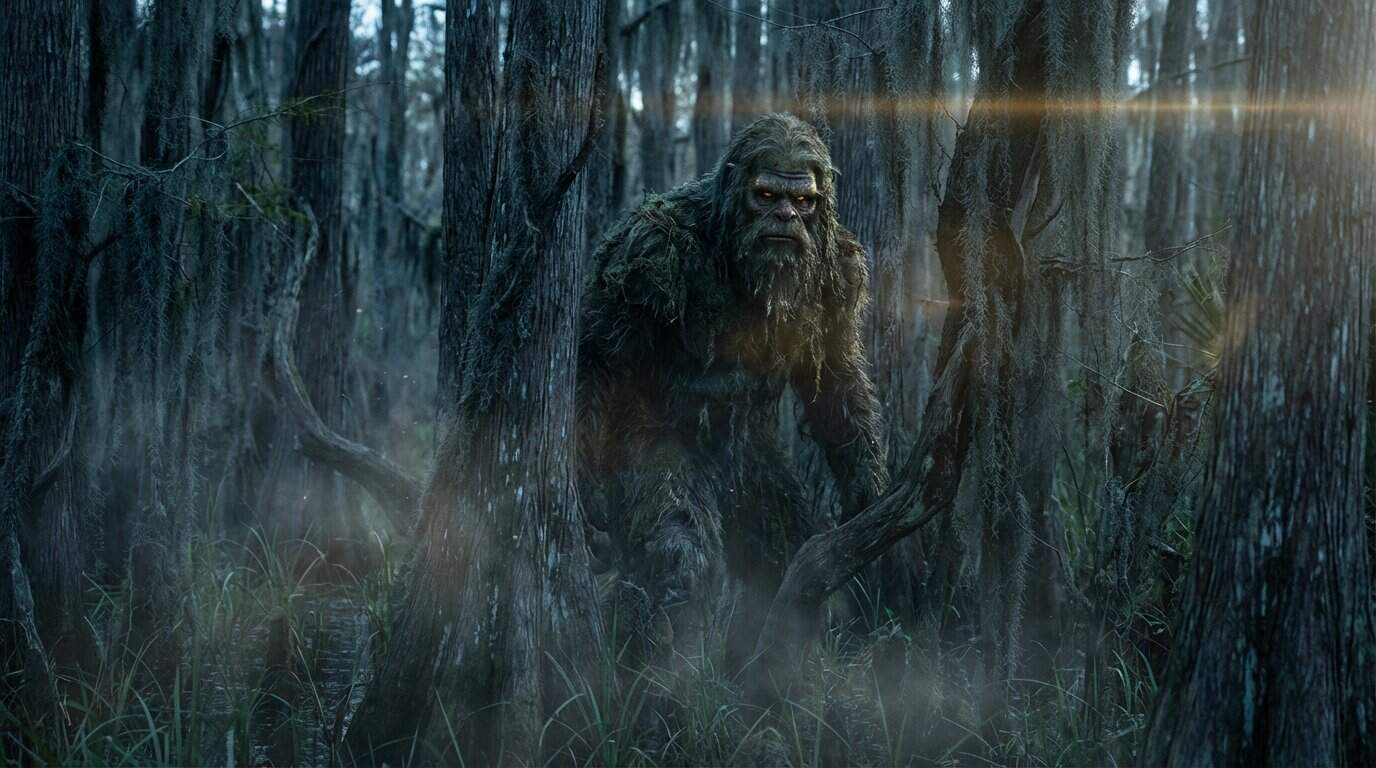
The legend of the Florida Skunk Ape moved from campfire stories to national headlines during the 1960s and 1970s, as sightings began to surge across the Everglades. One of the most famous early accounts came from witnesses who encountered the creature while driving near the Big Cypress National Preserve. Descriptions of a massive, foul-smelling primate helped establish the beast as a distinct regional mystery rather than just a local version of other legendary apes. These early reports often highlighted the animal’s unique ability to navigate the thick sawgrass and swampy terrain of South Florida. This environmental niche suggests a creature perfectly adapted to a humid, subtropical world that few humans ever truly explore.
Perhaps the most debated piece of evidence in the history of the Skunk Ape arrived in 2000 through a set of anonymous photographs known as the Myakka photographs or Myakka Skunk Ape photos. An elderly woman mailed these images to local authorities, claiming she had photographed an escaped orangutan stealing apples from her back porch. The photos reveal a dark, shaggy figure with glowing eyes peering through palm fronds, looking remarkably like a great ape. While skeptics suggest the images might show a known animal or a clever hoax, many researchers believe the physical details align perfectly with historical eyewitness descriptions. These photographs remain a cornerstone of the mystery, sparking endless debate about what might be hiding in the Florida brush.
The consistency of these sightings over the decades has turned the Skunk Ape into a beloved icon of the Sunshine State’s wilder side. Unlike the five-toed footprints typically reported in other parts of the country, Florida witnesses often describe four-toed tracks that suggest a different evolutionary path. Local experts and enthusiasts continue to document these encounters, noting that the creature’s pungent odor is often the first sign of its presence. Whether it is a relic of a prehistoric species or a misidentified animal, the sheer volume of historic accounts makes it difficult to dismiss the phenomenon entirely. Do you believe these famous photographs offer real proof of a hidden primate, or is there a more natural explanation for the sightings in the Everglades?
Environmental Clues in the Florida Wetlands
The Florida Everglades provide a vast and nearly impenetrable sanctuary where a large primate could easily live without being discovered. Dense stands of cypress trees and tangled mangroves create a natural fortress that limits human exploration to specific boardwalks and airboat trails. This environment is characterized by deep mud and seasonal flooding, which makes tracking any large animal a difficult task for even the most experienced outdoorsmen. According to reports from the National Park Service, the sheer size of the swamplands means that thousands of acres remain virtually untouched by civilization. In these remote pockets, the thick canopy offers perfect cover for a creature standing seven feet tall to move silently through the shadows.
Beyond the visual concealment, the humid environment of the wetlands plays a vital role in the classic descriptions of these encounters. The stagnant water and decaying organic matter create a heavy, moist atmosphere that traps scents, which might explain the overwhelming odor often reported by witnesses. This pungent smell, frequently compared to a skunk or rotting vegetation, is a hallmark of the Skunk Ape and serves as a primary environmental clue. Naturalists often point out that the Everglades are rich in high-calorie food sources like wild hogs, alligator eggs, and heart of palm. This abundance of resources suggests that a population of large mammals could thrive within the marshes while avoiding contact with the outside world.
Witnesses frequently report that the terrain itself acts as a barrier to gathering physical evidence of these elusive beings. While traditional sightings in other regions often feature five-toed tracks, investigators in South Florida have documented unusual four-toed footprints pressed deep into the limestone marl. These tracks are often found in areas where the sawgrass is so sharp and the water so deep that humans rarely venture. The unique geography of the Big Cypress National Preserve provides a complex network of limestone caves and dry hammocks that could serve as nesting sites. By blending into this prehistoric environment, the Skunk Ape remains a shadow in the swamp, leaving behind only fleeting glimpses and mysterious swamp dweller sounds for those brave enough to explore the deep bush.
Following the Trail to Ochopee
Interest in the creature has also taken a more organized form through Dave Shealy, a Florida researcher known for collecting Skunk Ape reports. His Skunk Ape Research Headquarters in Ochopee has become a recognizable stop for people curious about the legend. The headquarters brings together maps, stories, and displays about alleged tracks and sightings, giving visitors a place to compare the claims with the geography of the region. Its existence does not prove that the creature is real, but it shows how deeply the mystery has become tied to local identity.
Reports gathered by enthusiasts can help preserve details that might otherwise be lost, especially when witnesses record where they were, what they heard, and how long an encounter lasted. A distant call in a forest may sound very different from a noise heard beside a road, and weather, time of day, and visibility all matter. A useful account separates what a person saw from what they later concluded. That distinction leaves room for both a strange animal and ordinary explanations, such as a bear moving through brush or a sound carrying across water.
For example, a hypothetical hiker named Jack might note that he heard heavy steps near a flooded trail, then saw a tall, hairy shape disappear behind cypress trees. The details would be worth recording, but they would not settle the question by themselves. A footprint photograph with a visible scale, a clear location, and notes about the ground could make a report easier to assess. Across the United States, Bigfoot stories often share familiar themes, yet Florida accounts stand out for their swamp setting, reported odor, and local traditions. Comparing those patterns can help readers decide whether the Skunk Ape is a distinct mystery or a regional name for something already known.
Uncovering the Secrets of Florida’s Swamp Stalker
The legend of the Skunk Ape serves as a fascinating reminder that the Florida Everglades still hold secrets deep within their cypress domes and sawgrass prairies. While skeptics point to misidentified bears or escaped exotic pets, the consistency of eyewitness accounts suggests something more unique to the Sunshine State. These reports describe a creature perfectly adapted to the heat and humidity, moving with an agility that defies easy explanation. By looking at these encounters through a lens of curiosity, it becomes clear that the Skunk Ape is more than just a myth. It is a vital part of the region’s environmental identity that challenges people to look closer at the natural world.
Preserving these stories ensures that the spirit of Florida folklore remains vibrant for the next generation of swamp explorers and researchers. Whether the Skunk Ape is a biological reality or a persistent cultural phenomenon, its presence in the collective imagination encourages a deeper respect for the untamed wilderness. The pungent scent and reddish fur mentioned in so many accounts have become symbols of a world that refuses to be fully tamed. As long as there are vast, unreachable pockets of the Everglades, the mystery of this homid cryptid will continue to thrive. The search for the truth keeps the adventure alive for anyone brave enough to trek into the mangroves. Much like the unsolved secrets of other regional landmarks, the Skunk Ape remains a testament to the enduring power of local legends.
Do you believe the Skunk Ape is a relative of other legendary primates, or has the unique environment of the Florida swamps created a completely different type of creature? We want to hear your thoughts on whether these sightings are the result of a hidden population or simply a legendary tale passed down through the years. Share your own experiences or theories in the comments below to keep the conversation going. Your perspective helps piece together the puzzle of one of America’s most elusive mysteries. Searching for Florida’s Skunk Ape together is the best way to honor the enduring legacy of the wild Florida backcountry.
Frequently Asked Questions
1. What exactly is a Skunk Ape?
The Skunk Ape is a large, bipedal primate that stands between six and seven feet tall and is native to the Florida Everglades. It is covered in matted, reddish-brown or black fur and is known for its distinct, lanky build compared to other legendary apes. This creature is most famous for the pungent, musky odor it leaves behind when it moves through the sawgrass.
2. How can you tell the difference between a Skunk Ape and a black bear?
While bears move on four legs and have five toes, the Skunk Ape walks upright on two legs and leaves behind unique four-toed footprints. Witnesses describe its movements as graceful and human-like, which is very different from the lumbering gait of a Florida black bear. These physical characteristics suggest a specialized evolution for walking through the slippery limestone and thick mud of the wetlands.
3. Why does the Skunk Ape have such a strong smell?
Researchers believe the overwhelming stench comes from the creature spending much of its time in stagnant swamp water and mud. This environment allows bacteria and decaying organic matter to collect in its thick, matted fur, creating a thick and sour aroma. Some theories also suggest the smell might be a defense mechanism or a way to mark territory within the dense cypress knees.
4. Where are the most common places to spot a Skunk Ape?
Most encounters occur deep within the Florida Everglades and the Big Cypress National Preserve where the wilderness is thickest. These areas offer plenty of cover in the form of sawgrass and cypress swamps, allowing a large primate to remain hidden from modern explorers. High concentrations of reports often come from areas near the Tamiami Trail where the wetlands are most secluded.
5. Is there any physical evidence that the Skunk Ape exists?
Physical evidence includes numerous plaster casts of four-toed tracks and grainy photographic evidence collected over several decades. Researchers have documented these distinct footprints, which differ significantly from known animals in North America. While hair samples and blurry photos remain a point of debate, the sheer volume of consistent sightings adds a layer of credibility to the mystery.
6. Is it dangerous to encounter a Skunk Ape in the wild?
Most reports suggest the Skunk Ape is a shy and reclusive creature that prefers to avoid human contact whenever possible. While its size and glowing eyes can be bone-chilling, there are no documented cases of the creature attacking people. Most witnesses describe the animal watching them curiously from the shadows before it disappears silently back into the thick emerald brush.