Mapping the Mysteries of the Bridgewater Triangle
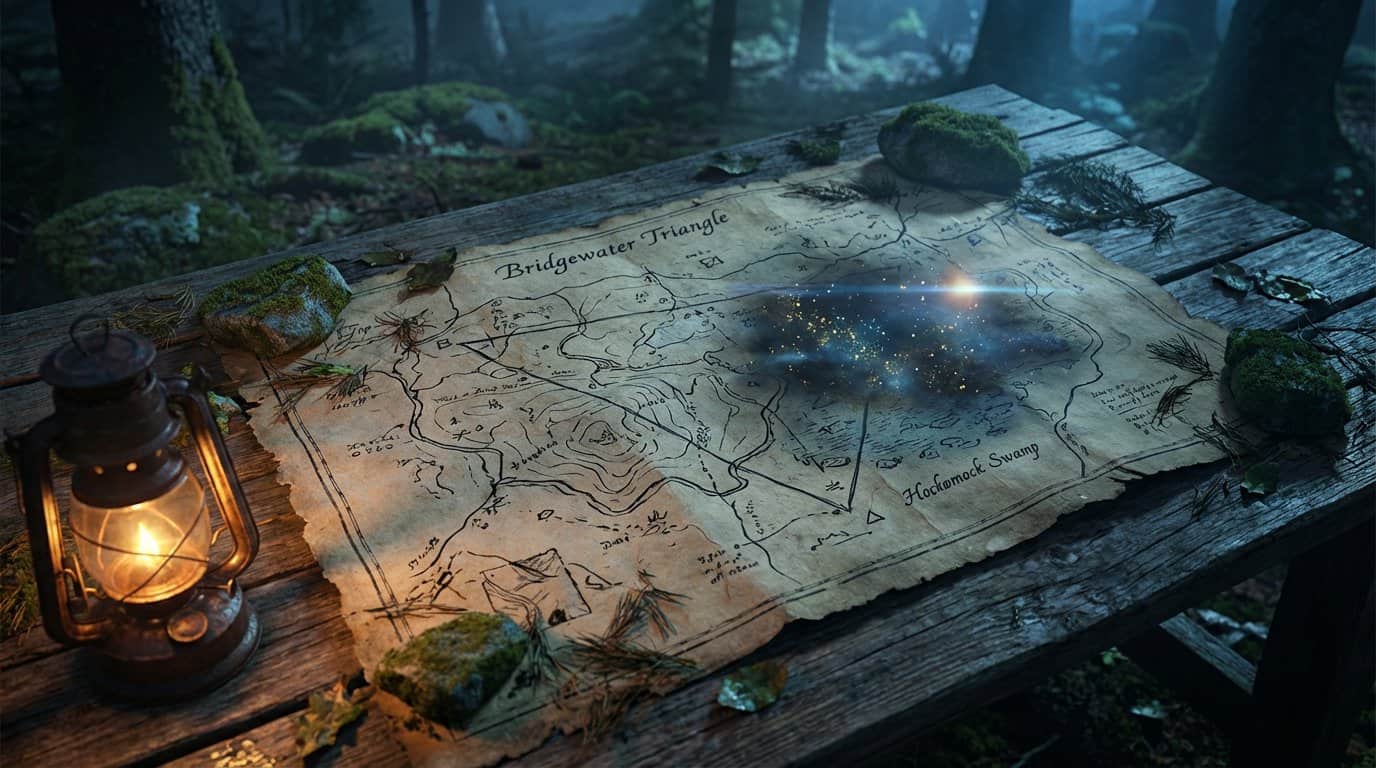
Deep within the woods of southeastern Massachusetts lies a 200-square-mile patch of land where the laws of nature seem to bend. When looking at a Bridgewater Triangle map, the eye is drawn to three specific points: Abington to the north, Rehoboth to the southwest, and Freetown to the southeast. Since cryptozoologist Loren Coleman first defined these boundaries in 1983, the region has become a magnet for those seeking answers to the unexplained.
This mysterious geography encompasses everything from the dark waters of the Hockomock Swamp to the quiet streets of nearly twenty different towns. While the map provides a clear outline, the stories reported within it, ranging from ghostly sightings to strange creatures, suggest something far more complex than simple coordinates. It is a place where history and folklore intertwine, inviting anyone with a sense of wonder to look closer at the shadows of the Bay State.
Key Takeaways
- The Bridgewater Triangle is a 200-square-mile region in southeastern Massachusetts defined by the apex points of Abington, Rehoboth, and Freetown.
- The Hockomock Swamp serves as the central hub of the area, acting as a primary engine for paranormal reports ranging from magnetic anomalies to cryptid sightings.
- The Freetown Fall River State Forest anchors the southern boundary and is notorious for a dark history of ritualistic crimes and unsettling landmarks like Profile Rock and the Ledge.
- While the traditional borders are fixed, the phenomena frequently bleed into neighboring towns, suggesting the region’s unexplained energy is fluid and expanding.
Defining the Apex Points of the Map
The geographical boundaries of the Bridgewater Triangle were first established in 1983 by the renowned cryptozoologist Loren Coleman. By connecting three specific points on a map of southeastern Massachusetts, Coleman identified a two hundred square mile area that serves as a magnet for the unexplained. This region forms a nearly perfect geometric shape that encompasses dense forests, murky swamps, and quiet suburban neighborhoods. While the lines on the map are clear, the energy within this zone is anything but predictable. These boundaries provide a necessary framework for researchers to track the hundreds of sightings that occur within the perimeter each year.
The northernmost point of this territory is anchored by the town of Abington. Moving toward the southwest, the line stretches down to Rehoboth, a town known for its deep colonial history and unsettling local legends. The final corner of the triangle is fixed in Freetown to the southeast, home to the infamous and sprawling Freetown State Forest. These three locations act as the pillars for the entire region, containing legendary sites like the Hockomock Swamp within their reach. By defining these coordinates, Coleman created a way for investigators to visualize where the veil between worlds seems thinnest.
Mapping these specific apex points allows enthusiasts to see how the phenomena are concentrated within a distinct portion of the state. While some reports of ghost lights or strange creatures occasionally bleed into neighboring towns like Fall River or Mansfield, the core activity remains tethered to the Abington, Rehoboth, and Freetown circuit. This layout has turned the area into a premier destination for those looking to explore a local version of the Bermuda Triangle. Having a defined Bridgewater Triangle map helps transform a collection of scattered campfire stories into a serious geographical study of the unknown. As you look at the map, do you think these specific coordinates hold a hidden power, or is the triangle shape simply a human attempt to organize the chaos?
Exploring the Hockomock Swamp Central Hub
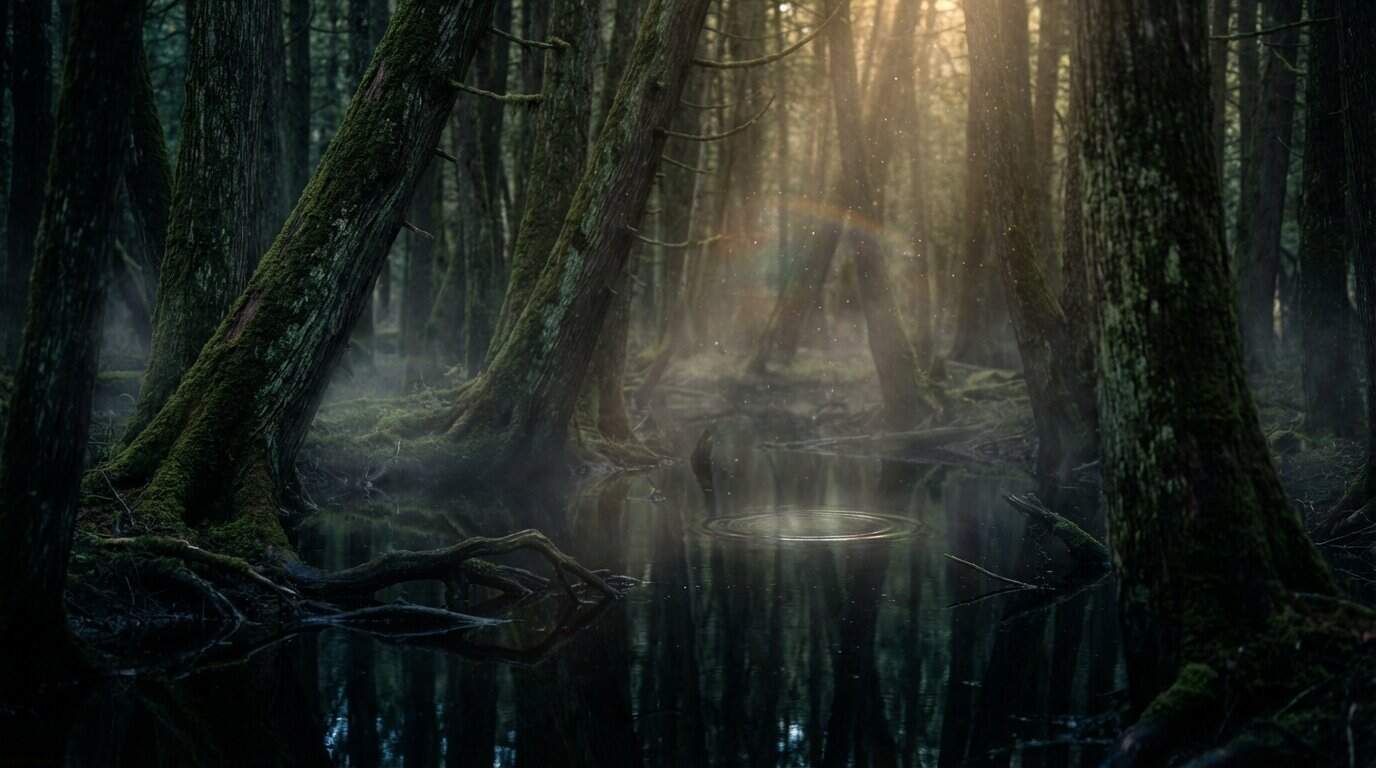
At the very core of the Bridgewater Triangle map sits the Hockomock Swamp, a massive 17,000 acre wetland that Indigenous Wampanoag people once called the Place Where Spirits Dwell. This vast expanse of cedar breaks and peat bogs serves as the primary engine for the region’s most famous paranormal reports. Explorers often find themselves disoriented by the shifting terrain, where compasses supposedly fail and strange lights dance over the dark waters. Cryptid hunters frequently focus their efforts here, citing decades of sightings involving giant birds and bipedal creatures that vanish into the thick brush. The swamp remains a wild, untamed heart that anchors the entire 200 square mile mystery.
Specific landmarks within this central hub provide tangible locations for those looking to chart the most active zones. Lake Nippenicket, situated on the western edge of the swamp, is a notorious hotspot for sightings of low flying unidentified craft and ghostly figures along its banks. Not far from the water, the mysterious Solitude Stone sits etched with cryptic, centuries old warnings that hint at a dark history long before modern investigators arrived. These sites act as physical pillars on the map, drawing in researchers who hope to capture evidence of the energy many believe is trapped within the marsh. Historical records from the colonial era even document strange occurrences in these exact spots, suggesting the activity is a permanent fixture of the land.
While skeptics point to the natural gases and dense fog of the wetlands to explain away the sightings, the sheer volume of consistent reports makes the swamp impossible to ignore. Cryptozoologist Loren Coleman has noted that the geography of the area seems to funnel unusual phenomena into this specific marshy corridor. Whether it is the result of ancient magnetic anomalies or something more spectral, the Hockomock Swamp remains the most critical destination for any serious mapping project. It bridges the gap between documented history and the unexplained, inviting anyone with a sense of wonder to look closer at the shadows. What do you think draws so much strange energy to this specific patch of Massachusetts wilderness?
Navigating the Freetown Fall River State Forest
The southern apex of the Bridgewater Triangle map is anchored by the Freetown Fall River State Forest, a dense expanse of over 5,000 acres known for its heavy atmosphere and dark history. This specific region is often cited by researchers like Loren Coleman as the epicenter for some of the most unsettling activity in the entire triangle. Visitors navigating the winding trails frequently report a profound sense of being watched or losing their sense of direction despite following marked paths. The forest gained national notoriety in the late 1970s and early 1980s when local police uncovered evidence of cult activity and ritualistic crimes deep within the woods. These documented historical events have layered the geographical location with a reputation for malevolence that persists to this day.
Deep within the forest boundaries lie specific landmarks that serve as lightning rods for paranormal enthusiasts and hikers alike. Profile Rock, once a massive natural stone formation resembling a human face, was long considered a sacred site by the Wampanoag people before it suffered significant damage. Nearby, the sheer drop-off known as the Ledge has become a focal point for reports of spontaneous disappearances and sightings of glowing orbs or spectral figures. Many witnesses claim to have seen strange lights hovering over the water at the base of the quarry, defying conventional explanations. These sites are essential stops for anyone attempting to map the energy of the region, as they represent the intersection of natural beauty and unexplained phenomena.
Mapping this area requires more than just a compass, as the legends of the forest include everything from giant snakes to creature sightings that resemble the mythical Pukwudgies. Local folklore suggests that the land itself holds a memory of the conflicts and tragedies that occurred there throughout the centuries. While skeptics point to the dense terrain as the cause for people getting lost or feeling uneasy, believers argue that the high concentration of sightings cannot be a mere coincidence. Whether you are searching for historical markers or hunting for ghosts, the Freetown Fall River State Forest remains the most intimidating quadrant of the map. Have you ever experienced a sudden chill or a feeling of dread while exploring a local forest, and do you think certain locations can truly hold onto a dark past?
Expanding the Map Beyond the Traditional Borders
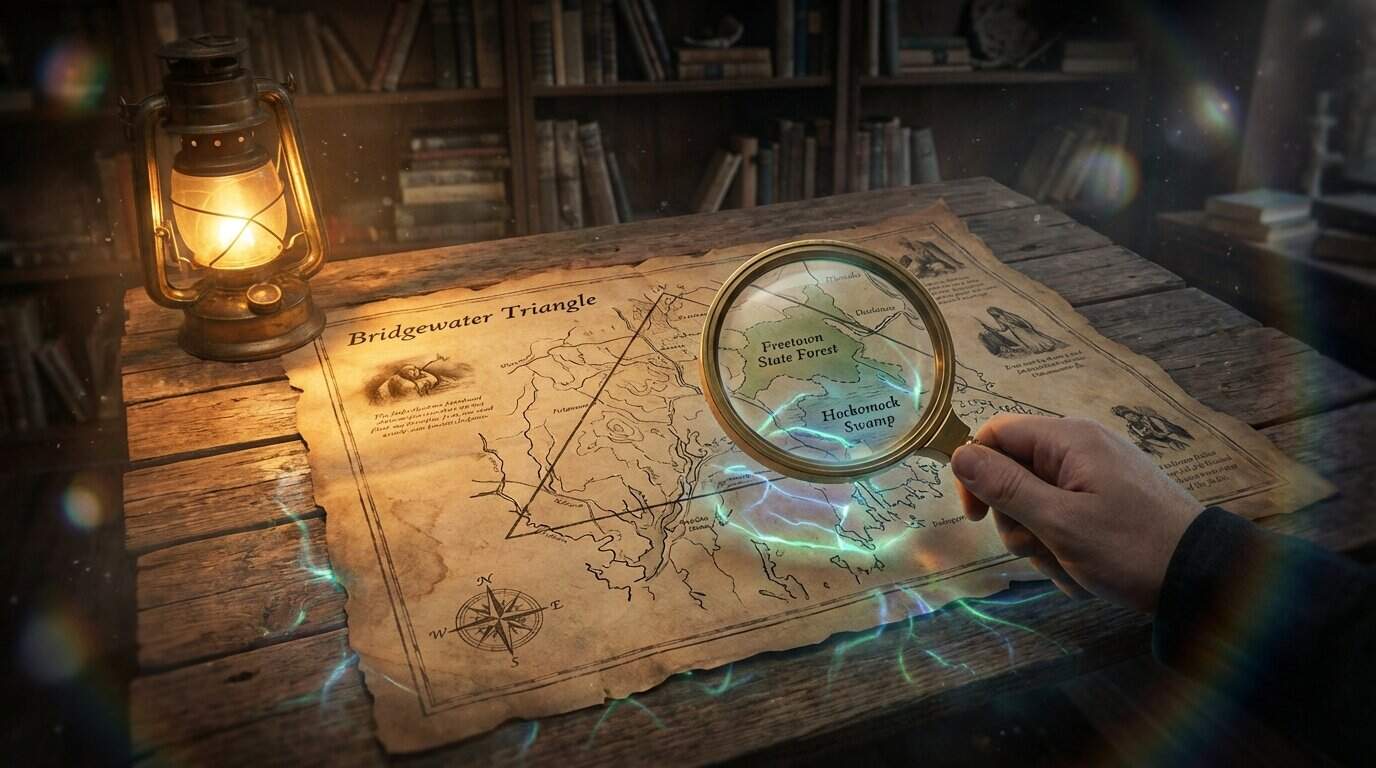
While the traditional Bridgewater Triangle map is often drawn as a 200 square mile perimeter between Abington, Rehoboth, and Freetown, many researchers argue that these borders are far from rigid. Cryptozoologist Loren Coleman, who originally coined the term, has noted that paranormal activity frequently bleeds into neighboring communities. Towns like Mansfield and Fall River often report the same strange lights and unexplained creatures that are synonymous with the Hockomock Swamp. This suggests that the energy of the region does not recognize man made municipal lines. Instead, the map serves more as a focal point for a much larger area of high strangeness.
The fluidity of these boundaries often leads investigators to look toward the south and west, where sightings stretch into parts of Rhode Island and even toward Cape Cod. In Fall River, the infamous Lizzie Borden house sits just outside the official southeastern apex, yet it shares the same heavy atmosphere and history of haunting. Many locals believe the geological features of the area, such as quartz deposits and underground water veins, act as a conductor for this activity. This theory would explain why the triangle seems to pulse and expand depending on the year or the specific type of phenomenon reported. Because the map is constantly evolving, it becomes a living document for those tracking the unexplained.
Mapping this area requires a balance between historical documentation and modern eyewitness accounts that often defy the original 1983 boundaries. When researchers plot recent UFO sightings or encounters with pukwudgies, the resulting clusters frequently form a shape that is much larger and more irregular than a perfect triangle. This expansion highlights the importance of keeping an open mind when exploring the geography of the unknown. Much like the unexplained history of other hotspots, looking just beyond the expected perimeter allows enthusiasts to find a richer and more complete picture of the Massachusetts mystery. Have you ever experienced something unexplainable just outside a famous paranormal hotspot, or do you think these boundaries should remain strictly defined?
Mapping the Heart of Massachusetts’ Mysteries
The map of the Bridgewater Triangle serves as a vital guide to a place where ancient history and modern hauntings collide. By charting the two hundred square miles between Abington, Rehoboth, and Freetown, researchers can better visualize the dense concentration of sightings within the Hockomock Swamp. This geographical framework provides a necessary structure for understanding why so many diverse phenomena occur in such a compact area of Massachusetts. Whether one is tracking the truth of thunderbirds or investigating the stone mysteries of the Dighton Rock, the map acts as a bridge between the physical world and the unexplained. It transforms a collection of local legends into a cohesive study of a region that seems to defy traditional scientific boundaries.
Navigating these specific coordinates offers a unique opportunity to explore the thin veil between reality and the fringe. While skeptics may point to the thick woods and foggy marshes as natural explanations for disorientation, the sheer volume of documented accounts suggests something more complex is at play. Every point on the triangle represents a decade of lore that continues to grow as new visitors share their own chilling experiences. The visual data gathered from these sites helps to preserve the legacy of a paranormal hotspot that rivals the most famous mysteries in the world. As the boundaries of the triangle continue to be debated, the core map remains an essential tool for anyone brave enough to go looking for answers.
The mysteries contained within these borders invite everyone to look closer at the world around them. Have you ever found yourself traveling through these specific Massachusetts coordinates or felt a sudden chill while passing near the Freetown State Forest? Some believe that documenting these locations helps us solve the puzzle, while others argue that certain secrets are better left off the map entirely. We encourage you to share your own stories or theories about why this particular patch of land holds such a powerful grip on the imagination. Whether you are a dedicated ghost hunter or a curious traveler, the Bridgewater Triangle continues to offer more questions than answers for those who follow its trail.
Frequently Asked Questions
1. What are the exact boundaries of the Bridgewater Triangle map?
The triangle is defined by three specific points in southeastern Massachusetts which include Abington to the north, Rehoboth to the southwest, and Freetown to the southeast. This geometric layout creates a 200 square mile perimeter where supernatural activity is frequently reported.
2. Who originally defined the coordinates of this mysterious region?
Renowned cryptozoologist Loren Coleman first established these geographical boundaries in 1983. By connecting these three towns on a map, he provided a framework for researchers to track and document the hundreds of unexplained sightings occurring in the area.
3. How many towns are actually located within the triangle?
The map encompasses nearly twenty different towns throughout the Bay State. While the three apex points get the most attention, the mysterious energy of the region extends through various suburban neighborhoods and dense forests across the entire interior.
4. What is the most significant geographical feature inside the map?
The Hockomock Swamp sits at the heart of the triangle and is often considered the center of the unexplained activity. Its dark waters and dense terrain have been the site of many ghostly sightings and strange creature encounters over the decades.
5. Why is the town of Rehoboth significant to the map?
Rehoboth serves as the southwestern anchor of the triangle and is steeped in deep colonial history. It is a vital part of the map because its local legends and unsettling historical accounts contribute to the overall supernatural profile of the region.
6. Is the Bridgewater Triangle map based on scientific data or folklore?
The map blends documented historical events with modern sightings to create a unique geographical study. While the lines are drawn using clear coordinates, the experiences reported within them invite a mix of critical thought and open minded wonder. Many researchers look for the truth behind the mystery by comparing these accounts to other famous anomalies around the globe, such as the enigma of Skinwalker Ranch or Australia’s mysterious swamp dweller, the Bunyip.