Utsuro Bune Japanese Mystery: The Hollow Boat Of 1803
The Utsuro bune Japanese mystery began on February 22, 1803, when fishermen in Hitachi Province, now Ibaraki Prefecture, reportedly found a strange, round vessel drifting ashore. Inside was a young woman with foreign features, an unknown language, and a small box she refused to surrender. Her unusual craft was covered with symbols that still raise questions about who she was and where she came from.
The story appears in several Edo-period manuscripts and illustrations, making it more than a modern legend. However, historical records cannot prove that the encounter happened exactly as described. Was the vessel a misunderstood boat, a carefully shaped folktale, or evidence of an unexplained visitor? The surviving clues offer no simple answer, leaving room for skeptical analysis and genuine wonder.
Key Takeaways
- The Utsuro bune mystery describes a reported February 22, 1803, landing on Japan’s Hitachi coast, where fishermen found a round vessel containing a foreign-looking woman, an unknown language, mysterious symbols, and a guarded box.
- Several Edo-period manuscripts and illustrations preserve the story, but conflicting details, translation challenges, and later retellings document a circulating legend rather than prove the encounter occurred exactly as described.
- The vessel’s unusual shape and markings inspired modern UFO interpretations, yet plausible alternatives include a misunderstood foreign boat, folklore shaped by concerns about outsiders, or an imaginative account.
- No physical evidence, verified identity, or independent eyewitness record confirms the event, so Utsuro bune remains an unresolved case at the intersection of history, folklore, and speculation.
Utsuro Bune Japanese Mystery
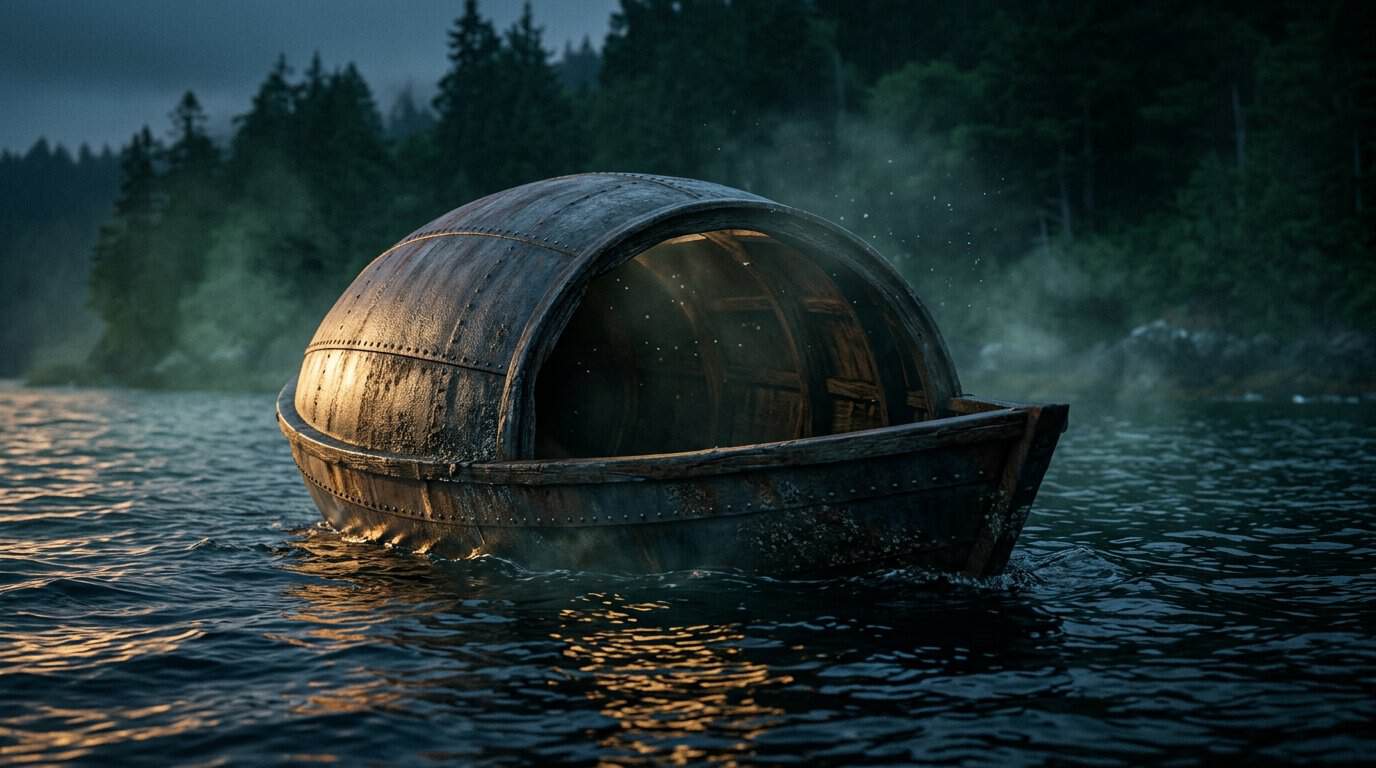
On February 22, 1803, fishermen on the Hitachi coast, in modern-day Ibaraki Prefecture, reportedly spotted a strange vessel drifting ashore. The craft was described as round and hollow, with dark wood, glass windows, metal fittings, and unfamiliar symbols on its surface. Inside, they found a young woman with an unusual appearance, clothing unlike local dress, and a small box she refused to surrender. No one could understand her speech, and the fishermen eventually returned her and the vessel to the sea. This unsettling scene became known as the Utsuro bune, or “hollow boat,” mystery.
The account did not survive as a single official report. Instead, it appeared in several Edo-period manuscripts and illustrations, including versions associated with Toen shōsetsu and other collections of strange events. Differences between these records matter because details changed across copies, translations, and later retellings. Terms describing the woman, the boat, and the markings may not carry exactly the same meaning in modern English. This leaves room for debate about what the original witnesses or storytellers intended to describe. Still, the manuscripts show that the story circulated among educated Japanese communities in the early nineteenth century. They document a persistent legend, not conclusive proof that the event happened exactly as recorded.
In later centuries, UFO researchers viewed the circular vessel, glowing or reflective features, and mysterious visitor as possible signs of extraterrestrial contact. Other explanations point to an unfamiliar foreign boat, a local folktale shaped by fears of outsiders, or a dramatic story built from several earlier traditions. None of these theories fully explains every detail, which keeps the mystery alive without turning it into established fact. Read alongside other historical accounts of strange visitors and unexplained objects, the tale offers a valuable look at how communities recorded the unknown. The central question remains open: was the Utsuro bune a real encounter, a misunderstood arrival, or an imaginative legend preserved because it was too strange to forget?
The 1803 Hitachi Coast Encounter
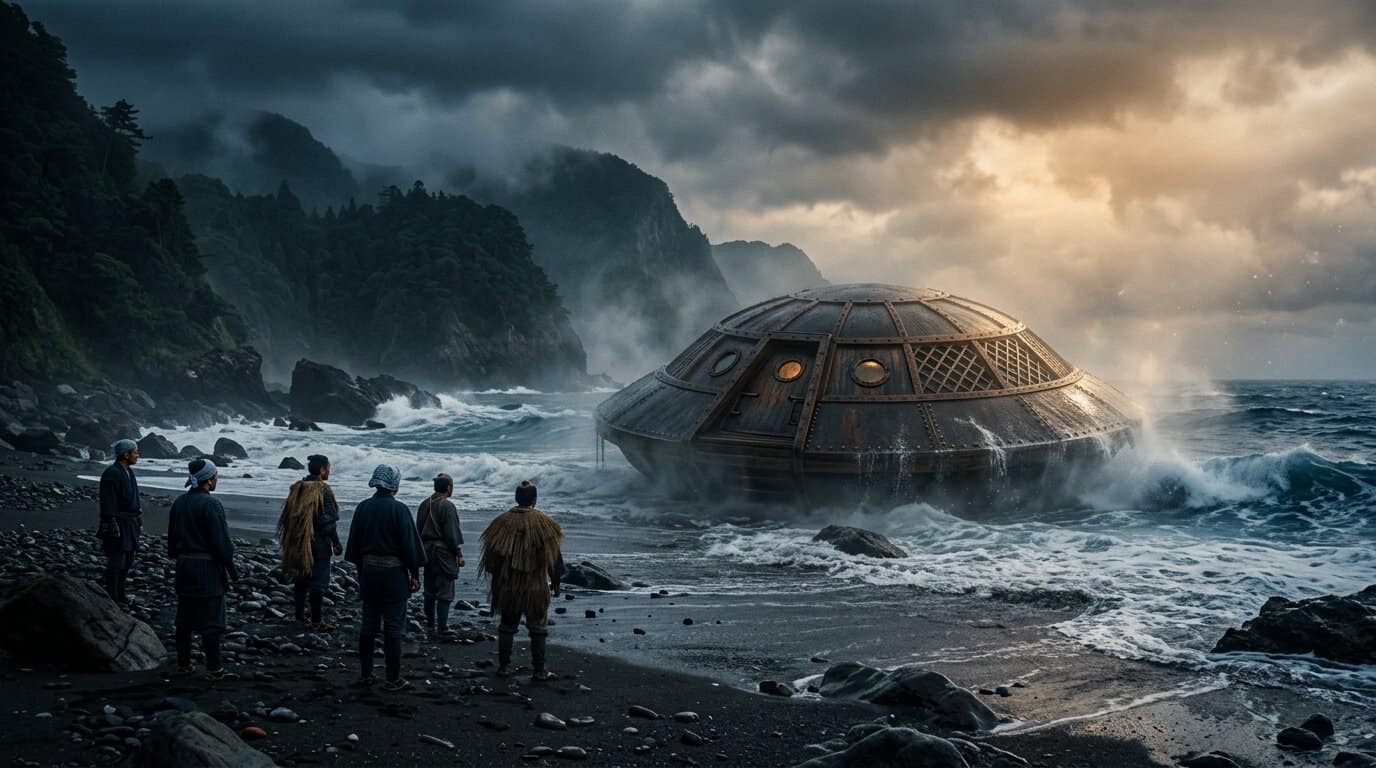
On February 22, 1803, fishermen along the coast of Hitachi Province, in what is now Ibaraki Prefecture, allegedly spotted a strange vessel drifting near shore. The craft was described as round or slightly oval, with a dark, reddish-brown body that looked unlike an ordinary Japanese boat. Its upper section had glass or crystal windows, while metal fittings and unfamiliar symbols covered parts of its surface. After pulling the vessel onto the beach, the fishermen found a young woman inside.
According to Edo-period accounts, the woman had a foreign-looking appearance, long reddish hair, and clothing unlike anything the fishermen recognized. She reportedly spoke a language no one could understand, making communication impossible and deepening the mystery around her arrival. Most strikingly, she held a small box close to her body and refused to let anyone examine or take it. Some versions say the fishermen eventually pushed the vessel back into the sea, leaving the woman and her box to disappear from the record.
The story survives through several manuscripts and illustrations, including accounts that circulated in early nineteenth-century Japan. However, these records do not prove that the encounter happened exactly as described. Differences between the original Japanese texts and later translations may have changed details about the boat, the woman, or the symbols. Even so, the combination of an unfamiliar craft, dark panels, glass windows, and a guarded box later encouraged comparisons with modern UFO reports. The Utsuro bune mystery remains compelling because it sits between documented folklore and an event that some readers still believe may contain a fragment of truth.
Edo Manuscripts And Conflicting Details
The Utsuro bune story appears in several Edo-period manuscripts, including accounts commonly known as Toen shōsetsu and Ume no chiri, along with accompanying illustrations. These records do not match in every detail. One widely repeated version places the landing on the Hitachi coast on February 22, 1803, while other accounts vary in their dates and descriptions of the location. The vessel may appear as a round, hollow craft with windows, metal fittings, and writing or symbols on its surface, but its shape and decoration change from one image to another. The visitor’s clothing, hair, skin tone, language, and the small box she carried also receive different treatment, suggesting that storytellers adapted the account as it was copied and retold.
Those differences make the manuscripts valuable evidence of a circulating tale rather than a single, consistent eyewitness report. The records show that the strange boat and its unusual passenger captured attention among literate communities in early nineteenth-century Japan, much as unexplained mysteries continue to spread through newspapers and online discussions today. At the same time, none of the surviving texts independently confirms that fishermen truly encountered the vessel. Later copies may reflect rumor, artistic convention, or translation choices. The story remains intriguing because its details are vivid, yet the historical record supports a careful conclusion: the Utsuro bune account was widely preserved, but preservation alone does not prove that the reported landing happened.
Translation Problems And Historical Context
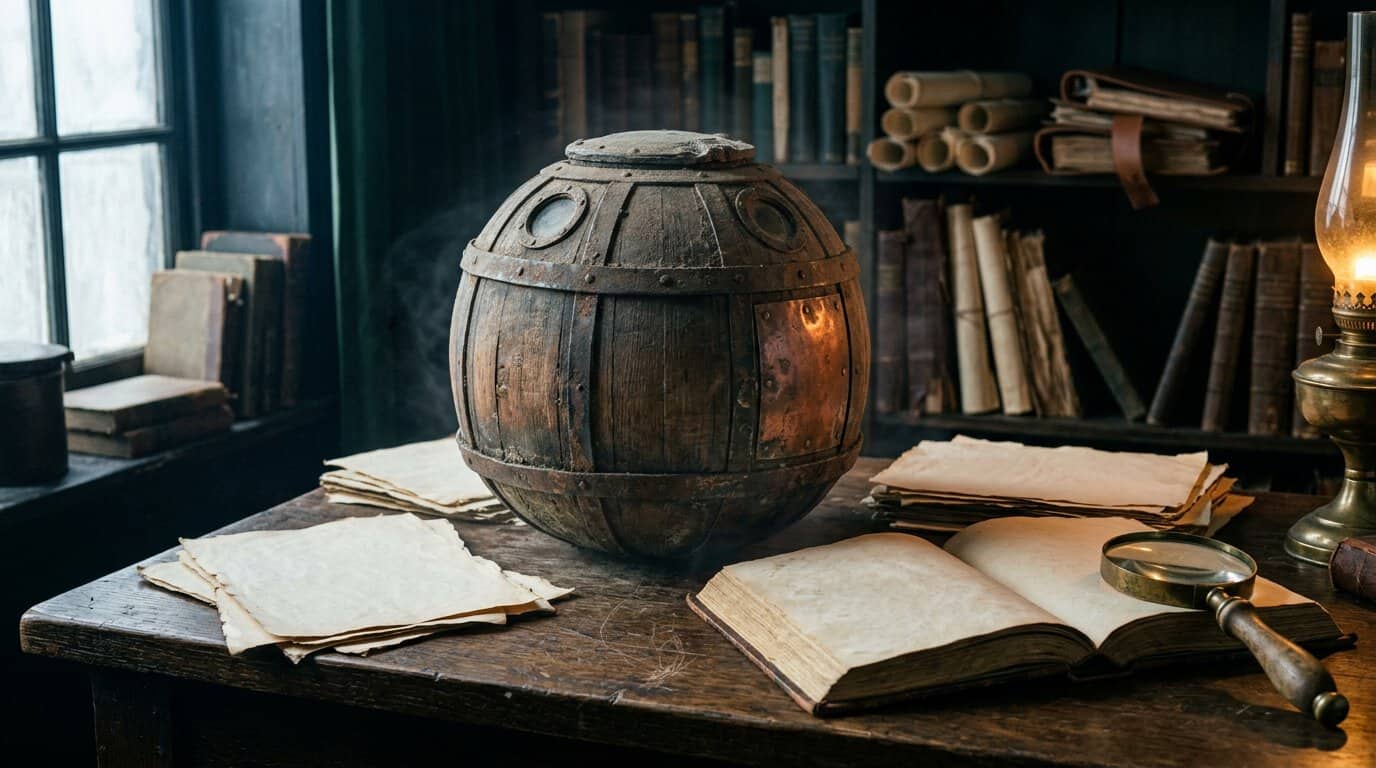
The surviving Utsuro bune accounts are difficult to translate because they use old Japanese, regional expressions, and descriptions shaped by Edo-period storytelling. The woman’s speech is simply called unintelligible, so modern readers cannot know whether it represented a real foreign language, a local dialect, or a literary device. The symbols painted on the vessel are equally uncertain, since different manuscripts show different markings and illustrations. Even the woman’s appearance, including her pale skin, red hair, and unusual clothing, may reflect translation choices or familiar ideas about foreigners. These gaps leave room for questions, but they also make it risky to treat every detail as a precise eyewitness record.
The reported landing in Hitachi Province, modern Ibaraki Prefecture, took place on February 22, 1803, during a period when coastal communities watched the sea closely. Japan’s maritime restrictions limited foreign contact, while officials remained alert to drifting ships, smugglers, and possible attempts by European powers to approach the coast. Historical records from the Edo period show repeated concern about foreign vessels, making a strange craft and an unknown visitor a powerful subject for local reports. Manuscripts such as Toen Shōsetsu and Hyōryū Kishū preserve versions of the story, but they demonstrate that the tale circulated, not that the event happened exactly as described. In that setting, Utsuro bune can be read both as a strange coastal incident and as a story shaped by fear, curiosity, and the need to explain unfamiliar arrivals.
Long before modern UFO theories, Japanese literature and folklore featured visitors who arrived from the sea, unusual boats, and beings connected to distant worlds. Stories such as Urashima Tarō and accounts of drifting foreign sailors provided cultural patterns that could influence how an unexplained landing was remembered. Later translations often turned the vessel’s “hollow” or circular form and its markings into clues that seem technological, although the original texts do not clearly identify a machine or spacecraft. This does not erase the possibility that a real object or outsider inspired the report, but it places the mystery between history, folklore, and interpretation. The most balanced reading keeps both possibilities in view while recognizing how much meaning can change when an Edo-era account is carried into the modern world.
From Coastal Tale To UFO Claim
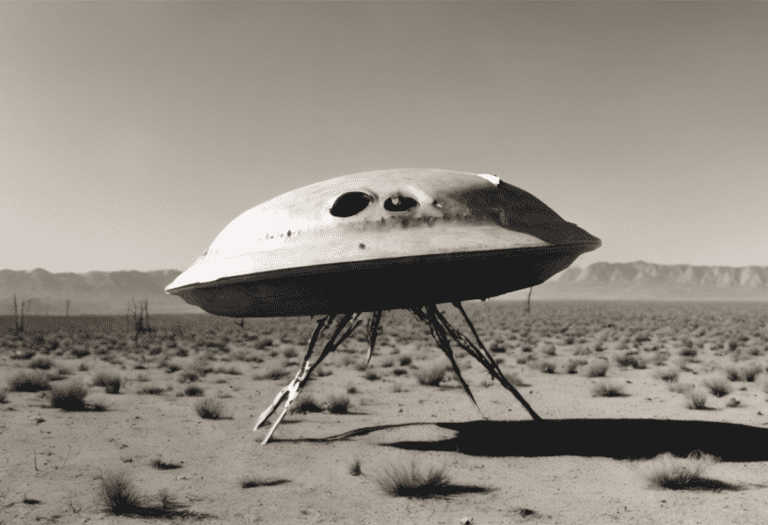
In the twentieth century, writers began to recast the utsuro-bune, or “hollow boat,” as a possible UFO encounter. The reported vessel, which reached the coast of Hitachi Province in 1803, was circular and covered with unfamiliar markings, features that can resemble a flying saucer when viewed through a modern lens. The strange woman inside, her unknown language, and the small box she guarded added to the sense of an encounter beyond ordinary experience. For some authors, these details suggested a spacecraft that had malfunctioned or landed in the sea.
The original Edo-period accounts offer a more complicated picture. Several manuscripts and illustrations preserve versions of the story, but they differ in detail, and translation choices can shape how readers understand the woman, the symbols, and the vessel itself. The records show that the tale circulated in early nineteenth-century Japan, yet they do not prove that the event happened exactly as described. As with other historical UFO reports, the distance between an old story and a modern claim leaves room for both genuine mystery and later reinterpretation.
More cautious explanations include a misidentified foreign boat, a local legend shaped by concerns about outsiders, or a creative story built from several older traditions. The markings may have been artistic symbols rather than technical writing, while the disk-like craft could reflect the design of a floating container or an imaginative illustration. Still, the consistency of the core details keeps the utsuro-bune Japanese mystery open to discussion, especially alongside other cases in Japanese mysteries and historical UFO reports. Whether it records an unusual arrival, a piece of folklore, or a blend of both, the tale shows how one coastal story can change meaning across two centuries.
What The Utsuro Bune Mystery Shows
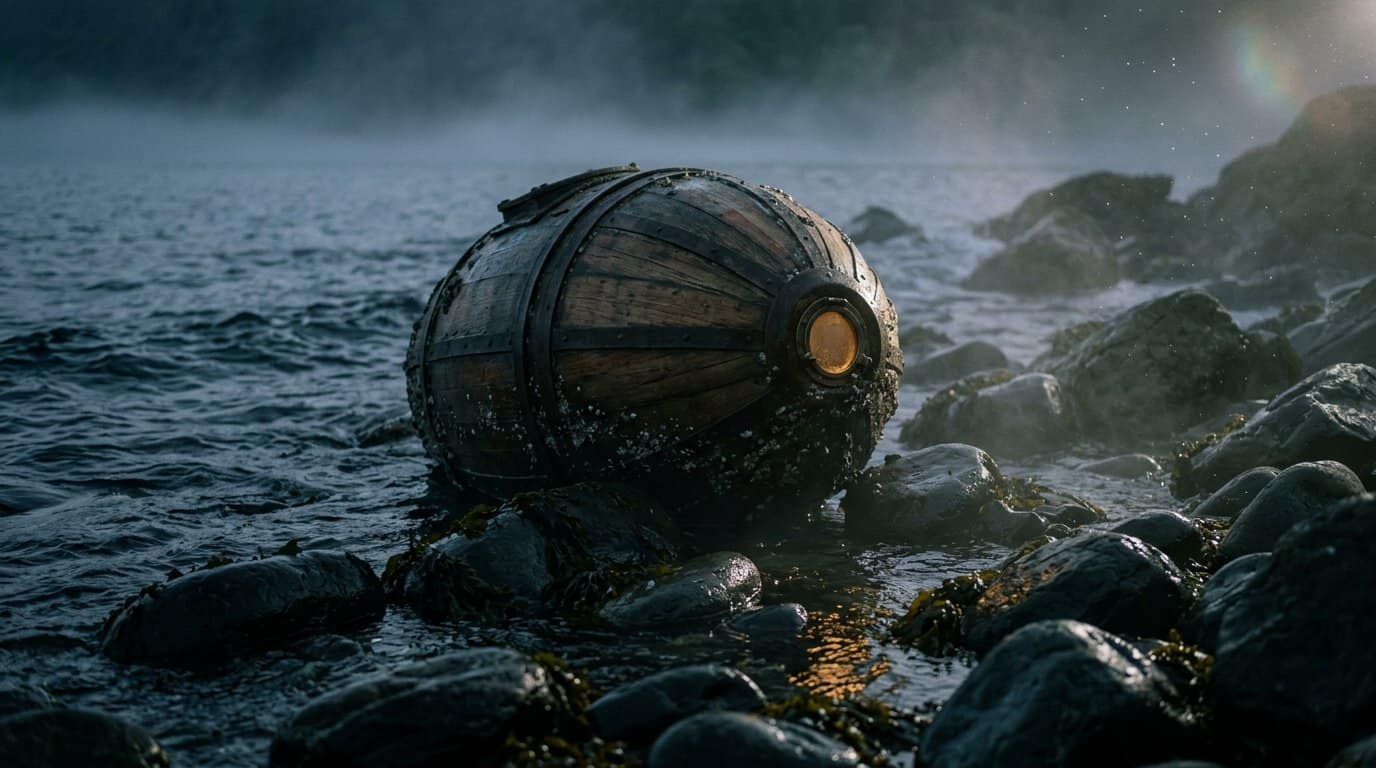
The Utsuro-bune story is well documented as a tale that circulated in early nineteenth-century Japan. Several Edo-period manuscripts and illustrations describe a strange, round vessel washing ashore in Hitachi Province, modern Ibaraki Prefecture, on February 22, 1803. The best-known version tells of a young foreign-looking woman who spoke an unknown language, guarded a small box, and arrived in a craft marked with unusual symbols. These surviving records show that the account was copied, discussed, and preserved by literate communities, but they do not prove that the reported encounter happened.
The gap between a story’s existence and an event’s reality is central to the mystery. Differences among manuscripts, uncertain translations, and later interpretations can change how readers understand details such as the vessel’s design, the woman’s appearance, and the meaning of its markings. Some modern writers connect the account to UFO ideas, while other possibilities include folklore, a misunderstood coastal incident, or a report shaped by local beliefs and storytelling. The evidence leaves room for questions, but it does not provide physical remains, independent witnesses, or other proof that would confirm an extraordinary visitor.
The Utsuro-bune mystery therefore asks readers to weigh both its historical record and its unanswered details. Is it best understood as folklore, a misunderstood coastal incident, or an unresolved historical mystery with a real event at its core? A useful illustration could show the reported hollow boat beside a simple timeline tracing the 1803 account and the surviving manuscripts that preserved it. That visual would help separate what is known about the story from what remains uncertain about the event.
What the Utsuro Bune Mystery Reveals
The Utsuro bune remains one of Japan’s most intriguing early nineteenth-century mysteries. On February 22, 1803, fishermen in Hitachi Province, now part of Ibaraki Prefecture, reportedly found a strange hollow boat on the shore. Inside was a young woman with unfamiliar features, an unknown language, and a small box she refused to release. The vessel’s circular shape, glass windows, and unusual markings made the story memorable, while its appearance in several Edo-period manuscripts and illustrations shows that the account circulated widely.
Yet the surviving records do not prove that the event happened exactly as described. Differences between manuscripts, translation challenges, and the storytelling customs of the Edo period leave room for questions about what was witnessed, changed, or imagined. Later readers connected the craft and its visitor with UFOs, but that interpretation came long after the original reports and remains speculation rather than historical fact. Utsuro bune is therefore most valuable as both a recorded Japanese mystery and a reminder that strange evidence can invite curiosity without providing a final answer. Could the tale preserve a misunderstood real encounter, or is its lasting power rooted in the way each generation reshapes an old mystery?
Frequently Asked Questions
1. What is the Utsuro bune Japanese mystery?
The Utsuro bune Japanese mystery tells of a strange, hollow vessel that reportedly came ashore in Hitachi Province, modern-day Ibaraki Prefecture, on February 22, 1803. Fishermen said they found a young woman inside, along with unfamiliar writing, unusual clothing, and a small box she refused to release.
2. Where and when did the Utsuro bune encounter supposedly happen?
The encounter supposedly took place on the Hitachi coast, now part of Ibaraki Prefecture, Japan. The reported date was February 22, 1803, during the Edo period, when Japan maintained strict controls over foreign contact.
3. What did the Utsuro bune vessel look like?
The vessel was described as round, hollow, and partly made of dark wood. Reports also mention glass windows, metal fittings, and mysterious symbols covering its surface, although the exact details differ between surviving accounts and later illustrations.
4. Who was the woman found inside the vessel?
The woman was described as young, with foreign-looking features, unusual clothing, and speech the fishermen could not understand. No surviving record identifies her with certainty, and the small box she guarded has never been explained.
5. What happened to the woman and the boat?
The fishermen reportedly questioned the woman but could not understand her language or discover where she came from. After finding no clear solution, they returned her and the vessel to the sea, allowing the mystery to continue through later written records.
6. Are there historical records of the Utsuro bune story?
Yes, the story appears in several Edo-period manuscripts and illustrations, including versions linked with Toen shōsetsu and other collections of strange events. These records show that the tale circulated in Japan, but they do not prove that the encounter happened exactly as described.
7. What are the main theories about the Utsuro bune mystery?
Some researchers view the vessel as a misunderstood foreign boat, while others believe the story developed from Japanese folklore, local rumor, or creative storytelling. More unusual theories suggest an unknown visitor or unfamiliar technology, but no physical evidence confirms that interpretation.
8. Can the Utsuro bune mystery be proven today?
The event cannot be proven with the surviving evidence because there is no vessel, verified identity, or independent eyewitness record. Still, the number of related manuscripts and the persistence of the details make Utsuro bune an intriguing historical mystery, especially when compared with other unexplained maritime encounters.