The Sumerian King List Mystery: Myth, History, And Impossible Reigns
The Sumerian King List mystery begins with a claim that sounds impossible: ancient rulers supposedly reigned for thousands of years before a great flood. Written in cuneiform, the text names cities, kings, and the dramatic transfer of power from one city to another. Its astonishing numbers raise questions about lost history, forgotten traditions, and the purpose behind such extraordinary records.
Modern scholars recognize the King List as an important ancient document, but not as a straightforward record of literal, superhuman reigns. It blends myth, political messaging, cultural memory, and fragments of history. Its exaggerated ages may reveal how Mesopotamians understood power and the distant past. The mystery lies not only in what the list claims, but also in why its ancient authors chose to present history in this way.
Key Takeaways
- The Sumerian King List is not a literal timeline of superhuman reigns; it combines myth, royal propaganda, cultural memory, and fragments of genuine history.
- The enormous reign lengths assigned to antediluvian kings likely symbolize divine authority and a legendary age, while the flood marks the transition toward more human, historically plausible dynasties.
- The list presents kingship as a single institution transferred between cities such as Kish, Uruk, and Ur, reinforcing political claims about legitimate rule and continuity.
- Archaeology and other inscriptions confirm some cities and rulers, including Enmebaragesi of Kish, but the list must be tested against independent evidence rather than accepted as a complete historical chronology.
Introduction To The Sumerian King List Mystery
The Sumerian King List opens with a claim that seems impossible: some early kings supposedly ruled for thousands, or even tens of thousands, of years. Written in Sumerian cuneiform, the record names cities, rulers, reign lengths, and the moments when kingship passed from one city to another. It also describes a great flood that separates an ancient age from the era of more familiar dynasties. For modern readers, this creates the central Sumerian King List mystery: is it history, royal mythmaking, or a mixture of both?
The answer may lie in how the list was created and used. Rather than serving as a simple timeline, it appears to combine cultural memory, political claims, legendary tradition, and fragments of real history. Its authors present several city-states as part of one continuous line of kingship, even though archaeology shows that many of these places rose to power at different times. The extraordinary reigns may have symbolized an age when kings stood closer to the gods, while later entries become more historically plausible.
Yet the list should not be dismissed as pure fiction. Some rulers, including Enmebaragesi of Kish, are supported by other evidence, showing that the document preserves names and traditions connected to genuine early rulers. Its mystery comes from the tension between these recoverable details and its impossible numbers. That tension invites comparisons with other ancient flood stories and traditions about forgotten civilizations. By reading the Sumerian King List alongside archaeology and other cuneiform records, researchers can explore where historical memory may end and royal mythology begins.
The Weld Blundell Prism And Its Origins
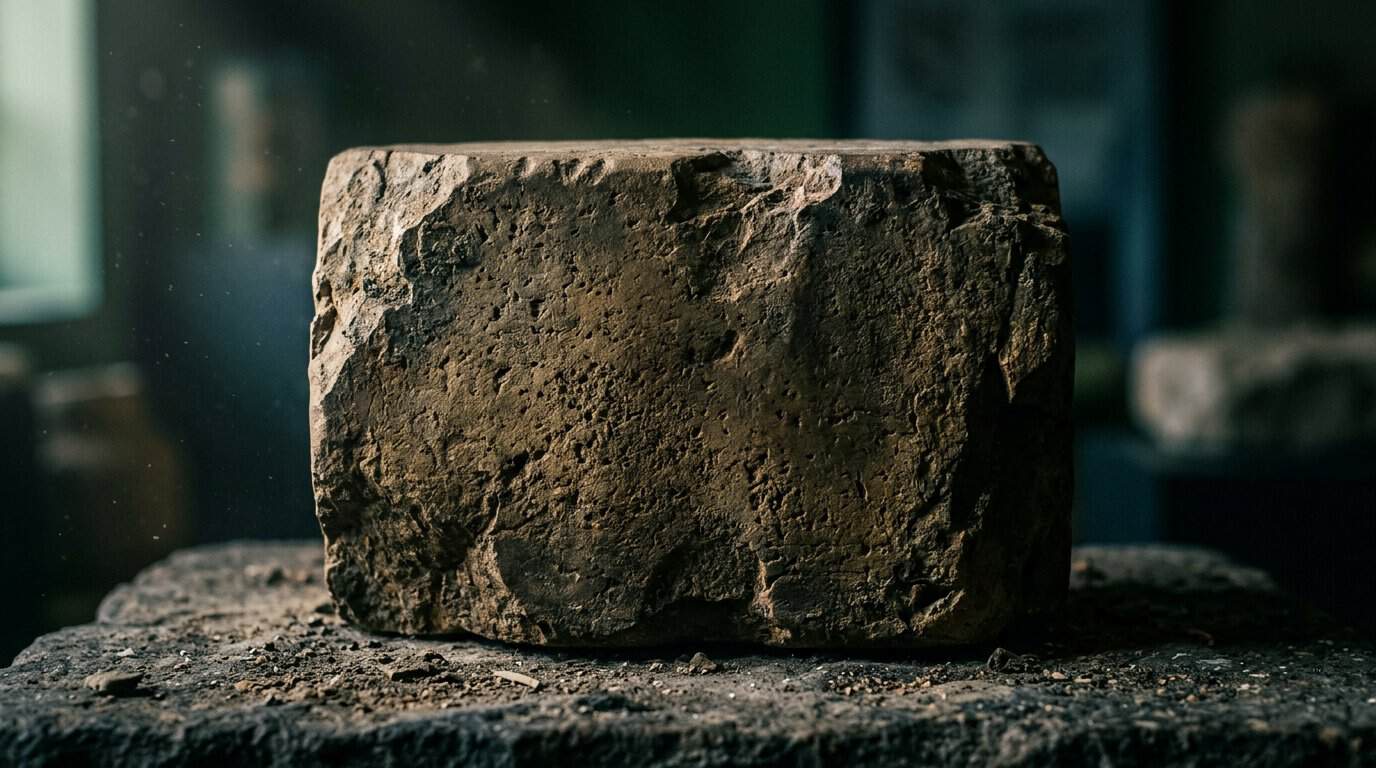
The Sumerian King List is a group of related cuneiform manuscripts that names rulers, cities, reign lengths, and the transfer of kingship from one city to another. Written in Sumerian cuneiform, the surviving copies are not identical, suggesting that scribes adapted an older tradition over time. The text also describes kings who ruled before a great flood, followed by dynasties based in places such as Kish, Uruk, and Ur. Its most puzzling feature is the enormous reign lengths, which raise the central question of the Sumerian King List mystery: where does recorded history end and mythology begin?
The best-known copy is the Weld-Blundell Prism, a four-sided clay object covered in tightly packed cuneiform writing. The prism is associated with the early second millennium BCE, when scribes in southern Mesopotamia were preserving older Sumerian traditions and shaping them for new political purposes. Its exact discovery history is uncertain, but Herbert Weld-Blundell acquired it, and it is now held by a museum in Oxford. A visual of the prism beside a map of ancient Sumer would help show how the text connects distant city-states across the rivers and plains of southern Iraq.
Rather than treating the list as a literal timeline of rulers who lived for hundreds of thousands of years, modern scholars view it as a composite work that blends myth, cultural memory, and royal ideology with genuine historical information. The flood story and exaggerated numbers may express the distance between a legendary past and the more familiar world of early dynasties. At the same time, several later rulers and cities appear in other inscriptions, allowing researchers to compare the list with archaeological evidence. The prism remains intriguing not because it proves impossible lifespans, but because it preserves how early scribes imagined the beginning of kingship while remembering fragments of real history.
Antediluvian Kings And Extraordinary Reigns
The Sumerian King List opens with a startling claim: before the Flood, kingship passed between several cities, and eight rulers governed for a combined 241,200 years in one well-known version. Individual reigns are equally extraordinary, with some lasting tens of thousands of years. The names of these antediluvian kings, including Alulim of Eridu and En-men-lu-ana of Bad-tibira, belong to a world where myth and memory are difficult to separate. Their impossible lifespans form the heart of the Sumerian King List mystery, raising questions about whether the numbers were symbolic, corrupted over time, or designed to present the earliest rulers as more than human.
The record becomes more familiar after the Flood, when kingship is said to return and move from city to city across southern Mesopotamia. Scholars studying the Sumerian King List, including versions preserved on tablets such as the Weld-Blundell Prism, view it as a composite work shaped by royal ideology rather than a straightforward timeline. Even so, parts of the list connect with figures and cities known from archaeology, and rulers such as Enmebaragesi of Kish may reflect genuine historical memory. This mixture of evidence gives the document its unusual power, much like the flood story and heroic traditions found in the Epic of Gilgamesh.
Rather than proving that humans once ruled for thousands of years, the extraordinary reigns may have expressed the sacred authority of the first kings or represented long periods compressed into a symbolic pattern. The Flood also echoes wider Mesopotamian mythology, where catastrophe marks a dividing line between an ancient, semi-divine age and the more recognizable human past. Yet the possibility remains that later scribes preserved fragments of older traditions whose original meaning has been lost. The mystery lies not only in whether the antediluvian kings existed, but also in how much historical truth can survive inside a story built from myth, political memory, and early written history.
Kingship After The Flood And Political Memory
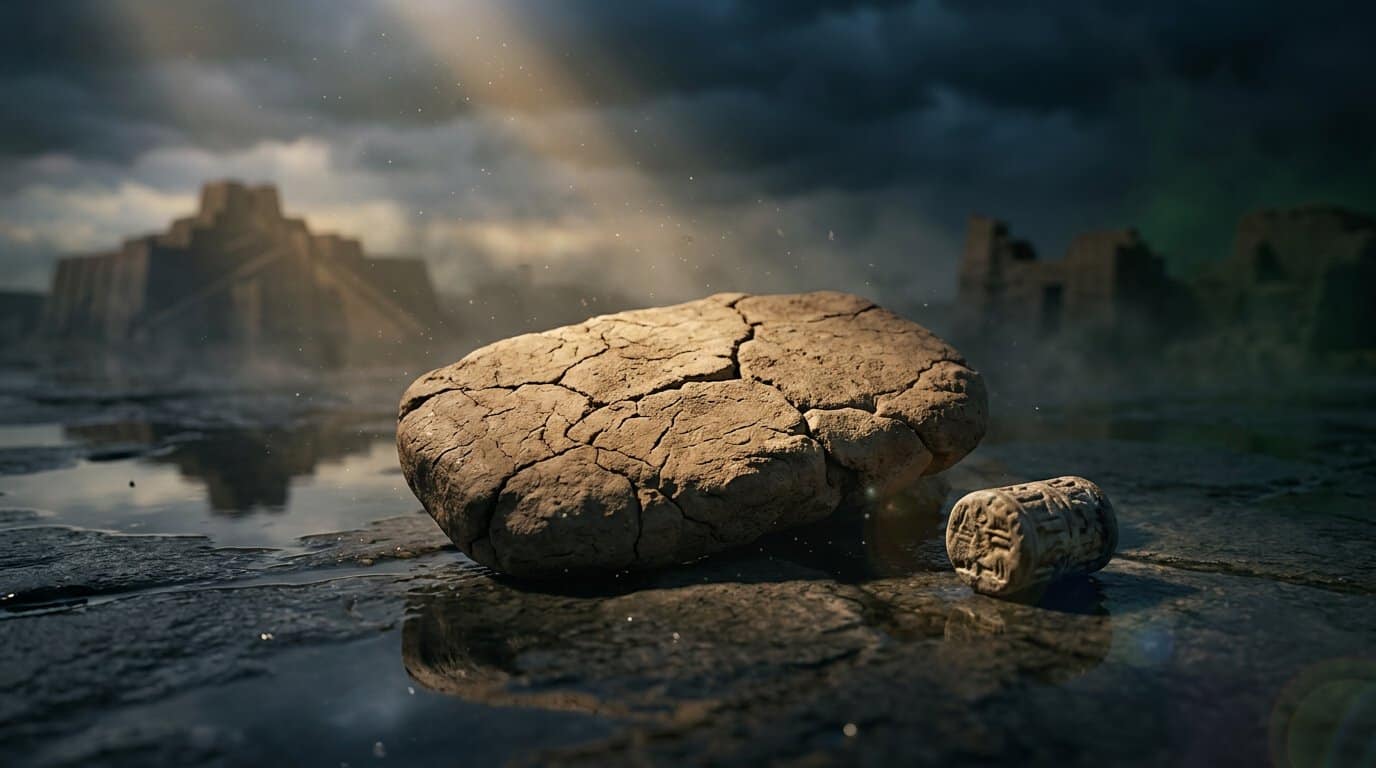
After the Flood, the Sumerian King List moves kingship first to Kish, then through cities such as Uruk and Ur. This orderly sequence suggests that the text was doing more than recording events. It presents political power as a single institution that passed from one city to another. Kish’s ruler Etana belongs partly to legend, while Enmebaragesi is a stronger historical case because his name appears in other early inscriptions and is generally placed in the Early Dynastic period. The contrast shows how the list blends remembered rulers, heroic traditions, and evidence that can be tested against archaeology.
Uruk adds another layer to the mystery through names linked with the Gilgamesh tradition, including Gilgamesh himself, although the surviving king list does not prove that every story about him is historical. Excavations and royal inscriptions confirm that Uruk, Ur, and other southern cities were powerful centers, but they do not support the list’s extraordinary claims that early rulers reigned for thousands of years. Those vast numbers are better understood as mythic or symbolic expressions of a distant age, especially when compared with the much shorter reigns expected from ordinary human rulers. In this way, the Sumerian King List becomes a meeting point between mythology, political memory, and the physical record preserved in temples, graves, and ruined cities.
By the time the list reaches Isin, its purpose becomes even clearer. It helped later rulers present their authority as the rightful continuation of an ancient order. The Isin dynasty, which rose after the fall of Ur around the early second millennium BCE, was historically real and can be compared with royal inscriptions and other administrative records. Yet the list compresses centuries of rivalry into a neat chain, repeatedly declaring that kingship was “defeated” in one city and granted to another. Its mystery may therefore lie less in literal survivors of a prehistoric empire than in how successfully the text turned political change into a sacred story of one divinely approved kingship.
What Scholars Believe About The Mystery
The Sumerian King List’s greatest mystery is its extraordinary reign lengths, especially those assigned to rulers before the flood. Scholars generally see these numbers as symbolic rather than calendar records, reflecting ideas about sacred power, cosmic order, or the distant past. As the list moves into later periods, the reigns become shorter and more believable, suggesting a deliberate shift from mythic time toward human history. This pattern allows the text to serve as a bridge between mythology and the archaeological record without requiring kings to have lived for hundreds of thousands of years.
The surviving manuscripts also show that the list was copied, edited, and adapted over time, which helps explain its uneven details and damaged passages. The Weld-Blundell Prism and related cuneiform tablets preserve different versions, while missing or broken sections leave room for uncertainty about names, dates, and the order of events. The claim that kingship moved from one city to another may also reflect political ideas, presenting separate Sumerian centers as chapters in one grand story of legitimate rule. Even so, figures such as Enmebaragesi of Kish connect the list with rulers known from other early evidence, suggesting that genuine historical memories were woven into the larger tradition.
Modern scholarship therefore treats the Sumerian King List as authentic and valuable, but not as a literal timeline of superhuman reigns. It is best understood as a composite work that blends royal propaganda, inherited stories, symbolic numbers, damaged records, and memories of real places and rulers. Its flood narrative and shifting city-based succession reveal how early writers tried to explain the origins of kingship while preserving the prestige of the past. The mystery remains compelling because the list is neither pure myth nor straightforward history. It invites readers to consider where remembered events end and sacred storytelling begins.
Conclusion On The Sumerian King List Mystery
The Sumerian King List mystery becomes clearer when the text is read as a blend of myth, political storytelling, and recoverable history. Its enormous reign lengths, including rulers said to have governed for thousands of years, signal a world shaped by sacred tradition rather than a precise calendar. The flood story and the repeated transfers of kingship also helped present separate city-states as parts of one continuous order. In that sense, the list was not simply recording the past. It was explaining who had the right to rule.
Archaeology shows that some kings and cities named in the list belong to real places and periods, especially in the later sections of the record. Inscriptions connected with rulers such as Enmebaragesi provide evidence that at least some figures were more than legendary characters, even though the list rearranges history to serve a larger story. Its surviving copies were written centuries after some of the events they describe, allowing memory, belief, and royal ambition to shape the account. The result is neither a complete invention nor a straightforward chronology, but a layered record that must be tested against inscriptions, settlement evidence, and other ancient texts.
The enduring mystery is not whether kings truly ruled for hundreds of thousands of years, but where the boundary between remembered history and sacred myth begins. The Sumerian King List preserves echoes of real political struggles while revealing how ancient people understood power, disaster, and the origins of civilization. Its contradictions make it more valuable, not less, because they show history in the process of being remembered and reshaped. As readers explore related mysteries of the ancient world, they are left with a lasting question: how much truth can survive inside a story written by memory, belief, and royal ambition?
How Myth and History Shape the King List
The Sumerian King List remains mysterious because it blends several kinds of truth into one remarkable record. Its enormous reign lengths, especially those assigned to rulers before the flood, are best understood as symbols of divine authority and cosmic time rather than literal history. At the same time, the list preserves memories of real cities, dynasties, and political struggles, including the repeated transfer of kingship between centers such as Kish, Uruk, and Ur. This mixture of mythology, cultural memory, and early written history explains why the text continues to attract historians and curious readers.
Rather than proving that ancient kings ruled for hundreds of thousands of years, the surviving manuscripts reveal how Sumerian writers understood power, order, and the distant past. Archaeology and other cuneiform records can support some later rulers and dynasties, while the flood narrative and antediluvian section remain part of the text’s legendary framework. The enduring mystery lies in the possibility that extraordinary stories may preserve faint echoes of real events, even when the details have been reshaped by time and belief. What do the list’s impossible reigns suggest about the way early societies remembered their origins?
Frequently Asked Questions
1. What is the Sumerian King List mystery?
The Sumerian King List mystery centers on a cuneiform record that names ancient rulers, cities, and reign lengths ranging from ordinary years to thousands of years. It also describes a great flood and the movement of kingship between cities. The puzzle is whether the list preserves history, royal propaganda, sacred tradition, or all three.
2. Did Sumerian kings really rule for thousands of years?
There is no scientific or archaeological evidence that human kings literally lived and ruled for thousands of years. The extreme numbers likely express divine authority, symbolic time, or a legendary age before the flood. Later entries become more realistic, suggesting that the list gradually shifts from mythic tradition toward remembered history.
3. When was the Sumerian King List written?
The surviving copies were mainly written during the Old Babylonian period, roughly between 1900 and 1600 BCE, although some traditions within them are older. Important versions include the Weld-Blundell Prism and the Kish Tablet. These copies show that scribes preserved and edited earlier material rather than recording events as they happened in a single, continuous document.
4. What does the great flood mean in the Sumerian King List?
The flood acts as a major dividing line between a remote, legendary age and the period of more familiar dynasties. The Sumerian King List gives only a brief account, while the Epic of Ziusudra and the later Epic of Gilgamesh provide fuller flood stories. Flood layers found at sites such as Shuruppak show that severe regional flooding occurred, but they do not prove a single worldwide flood.
5. Is the Sumerian King List a reliable historical record?
It is valuable evidence, but it is not a straightforward historical timeline. The list combines real cities and some historically known rulers with legendary kings, impossible reign lengths, and a carefully arranged transfer of power. Archaeology and other inscriptions can confirm parts of its later sections, while the earliest entries remain difficult to verify.
6. Why did ancient scribes create a list with impossible reigns?
The unusual reigns may have strengthened the idea that early kingship came directly from the gods and belonged to a sacred, distant age. The list also presents kingship as one institution that moved from city to city, even when rival cities were not politically united. Scholars studying Old Babylonian royal writing often view this structure as political messaging as well as cultural memory.
7. Could the Sumerian King List preserve memories of real ancient rulers?
Yes, it may preserve fragments of genuine history, especially in its later sections. Names connected with rulers such as Enmebaragesi of Kish also appear in other early inscriptions, giving the list some historical support. At the same time, legendary figures such as Gilgamesh and the enormous early reigns show that fact and tradition were woven together.
8. Does the Sumerian King List prove advanced or lost civilizations existed before the flood?
The list does not prove the existence of a lost advanced civilization or a race of superhuman rulers. It does show that Mesopotamian scribes preserved powerful memories of an ancient past and expressed them through mythic numbers and divine kingship. That leaves room for questions about forgotten local traditions, but any larger claim requires independent archaeological evidence.