The Sunken Secrets Of The Cosquer Cave Handprints
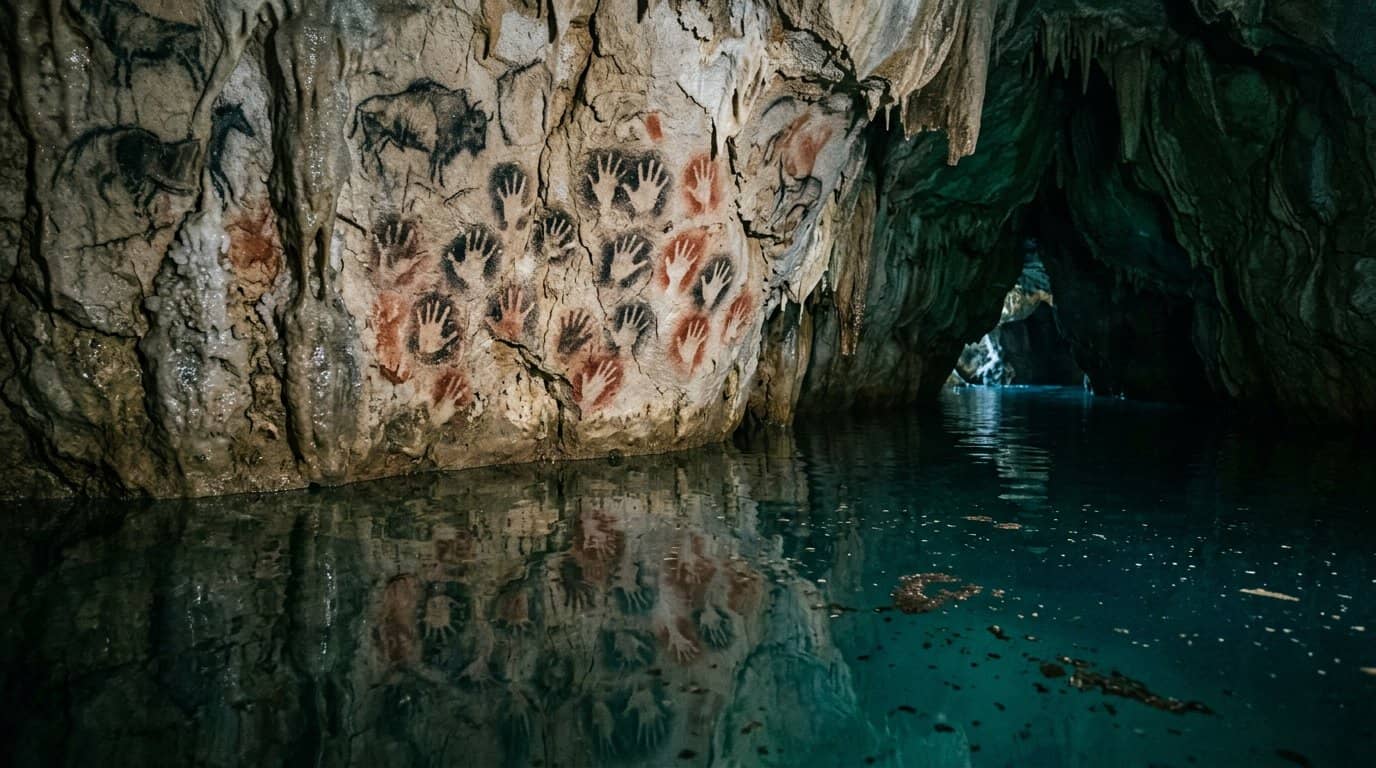
Deep beneath the turquoise waters of the French Riviera lies a prehistoric time capsule guarded by the rising Mediterranean tides. Hidden within a submerged limestone cathedral, the cosquer cave handprints offer a hauntingly personal glimpse into a world that existed 30,000 years ago. These red and black stencils, pressed onto the rock walls by Paleolithic families, serve as a silent “I was here” from an era long lost to the sea.
What makes these ancient signatures truly captivating is not just their survival 121 feet below sea level, but the strange stories they tell. Among the sixty-five prints discovered, many appear to have missing or shortened fingers, fueling a deep archaeological mystery. Whether these marks represent a sophisticated code, a ritualistic sacrifice, or simply a unique artistic style, they challenge everything we thought we knew about the minds of our earliest ancestors.
Key Takeaways
- The Cosquer Cave handprints represent a diverse communal effort, with digital analysis confirming that men, women, and children all participated in creating the 30,000-year-old stencils.
- The ‘mutilated’ appearance of the handprints likely signifies a sophisticated prehistoric sign language or ritualistic code rather than accidental injury or widespread deformity.
- Early humans utilized advanced ‘airbrush’ techniques by blowing charcoal and red ochre through hollow reeds to create precise negative silhouettes on limestone walls.
- Rising sea levels and saltwater erosion pose an imminent threat to these submerged artifacts, necessitating the use of 3D laser scanning and full-scale replicas for historical preservation.
A Submerged Gallery Of Ancient Gravettian Art
Hidden deep beneath the Mediterranean waves, the Cosquer Cave holds a collection of sixty-nine hand stencils that challenge our understanding of prehistoric life. These ancient markings, created between 27,000 and 33,000 years ago, consist of forty-four black charcoal prints and twenty-five red ochre outlines. While the cave entrance is now submerged nearly 121 feet below sea level, it was once a dry sanctuary for Gravettian people. Researchers have noted that these prints belong to a diverse group of men, women, and even children. This suggests that the cave was a communal space where entire families gathered to leave their mark on the stone walls.
The most baffling aspect of these stencils is the appearance of shortened or missing fingers, often referred to as mutilated hands. Some researchers suggest these figures represent a sophisticated sign language or a ritualistic code used by the tribe. Others wonder if these patterns point to intentional finger amputations, which would indicate a level of medical or ritualistic complexity rarely attributed to the Paleolithic era. According to studies by experts like Jean Clottes, these markings are clustered near a deep vertical shaft within the cave. This specific placement hints that the handprints were part of a deliberate and perhaps mysterious ceremony.
Exploring the submerged gallery reveals a high proportion of female handprints, a finding supported by recent computer-assisted analysis. This discovery shifts the traditional narrative of ancient art being a male dominated activity and highlights a more inclusive social structure. The physical environment of the cave, with its dark chambers and echoes, must have provided a powerful backdrop for such long lasting expressions. By questioning the technological and social capabilities of these early civilizations, we begin to see these handprints as more than just art. They serve as a haunting bridge to a world that existed before the rising seas hid these secrets from view.
The Enigma Of The Missing Fingers
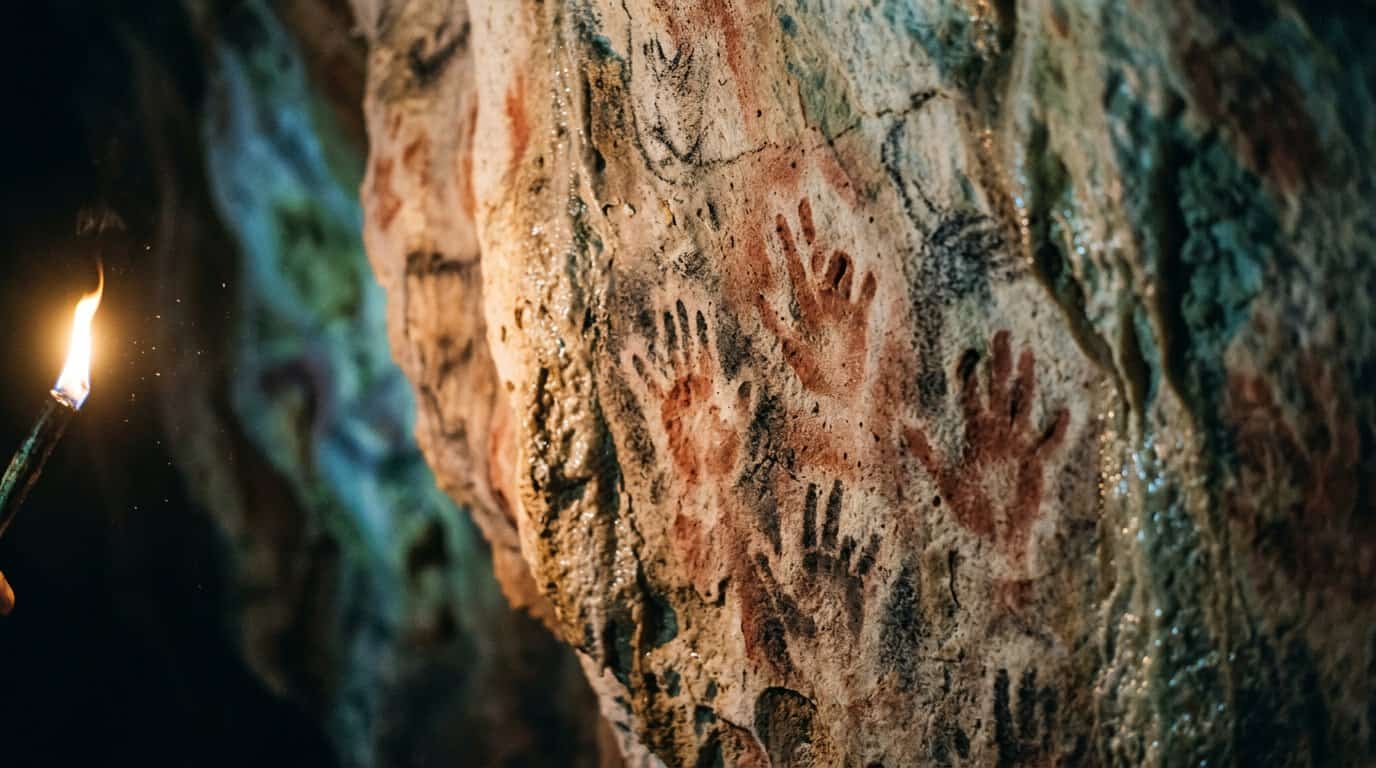
The hand stencils of Cosquer Cave present a haunting visual puzzle because many of them appear to be missing fingers. Out of the dozens of prints left behind by the Gravettian people, a significant number show digits that are shortened or entirely absent. This has led researchers to wonder if these ancient inhabitants were practicing a form of ritualistic sacrifice or if they were losing fingers to the harsh, freezing conditions of the Ice Age. The precision of the stencils suggests that these were not accidental injuries but deliberate choices made by the artists. Scientists have noted that the prints include men, women, and even children, indicating that whatever caused these missing fingers affected the entire community.
One of the most compelling theories suggests that these handprints were actually a sophisticated form of prehistoric sign language. By folding certain fingers against the palm before blowing pigment over the hand, these early humans may have been communicating specific messages or hunting signals. This idea challenges our understanding of prehistoric technology and communication, suggesting a level of symbolic complexity that rivals modern systems. Some researchers have documented similar patterns in other caves, yet the sheer concentration at Cosquer remains an anomaly. The idea that these were “mutilated” may be a misunderstanding of a clever and silent way of speaking across the millennia.
The mystery deepens when considering the spiritual and ritualistic possibilities of the site. Some experts believe the missing fingers could represent a sacrificial rite, where bits of bone were offered to the spirits of the deep earth. However, if the fingers were simply tucked away, it points to a culture that valued complex storytelling and hidden meanings. Because the cave entrance is now trapped deep beneath the Mediterranean Sea, we are left to wonder what other secrets these silent hands were trying to protect. Do you believe these truncated fingers were a sign of physical sacrifice, or were they a brilliant ancient code waiting to be cracked?
Diverse Artists In A Hidden Coastal Sanctuary
The hand stencils of Cosquer Cave offer a startling intimate look at a community that thrived nearly 30,000 years ago. While early researchers often assumed these ancient artists were exclusively male hunters, modern analysis tells a much more inclusive story. By measuring finger lengths and palm widths, scientists have determined that men, women, and even small children left their marks on these limestone walls. This diverse participation suggests that the cave was not a restricted sanctuary for a few, but a vital communal space where the entire tribe gathered to document their existence. The presence of tiny handprints, some placed high on the walls, hints at parents lifting their children to participate in these sacred rituals.
The specific placement and appearance of these prints raise fascinating questions about the technological and social coordination of prehistoric people. These artists utilized a sophisticated “airbrush” technique, blowing pigments like red ochre and charcoal through hollow bones or reeds to create negative silhouettes. Among the sixty-nine identified stencils, a significant number appear to have shortened or “mutilated” fingers, a mystery that continues to baffle historians. Some researchers suggest these represent a complex sign language used for silent communication during hunts, while others wonder if they point to ritualistic practices we have yet to understand. The sheer effort required to navigate a cave that is now submerged under thirty-seven meters of water proves these people possessed a drive for expression that transcended mere survival. Much like the ancient engineering found at other global sites, the precision of these prehistoric methods suggests a high level of technical skill.
What do you think the missing fingers on these diverse handprints represent in the context of such a coordinated community effort? Do you believe these stencils were a form of ancient storytelling, or perhaps a sophisticated warning system left for those who entered the sanctuary? We invite you to share your thoughts on whether these patterns suggest a forgotten ritual or a practical tool for prehistoric life. Exploring these hidden echoes from the past helps us piece together the true capabilities of our ancestors. Your perspective helps keep the mystery alive as we look deeper into the secrets of the Paleolithic world.
Rising Tides And The Vanishing Handprints
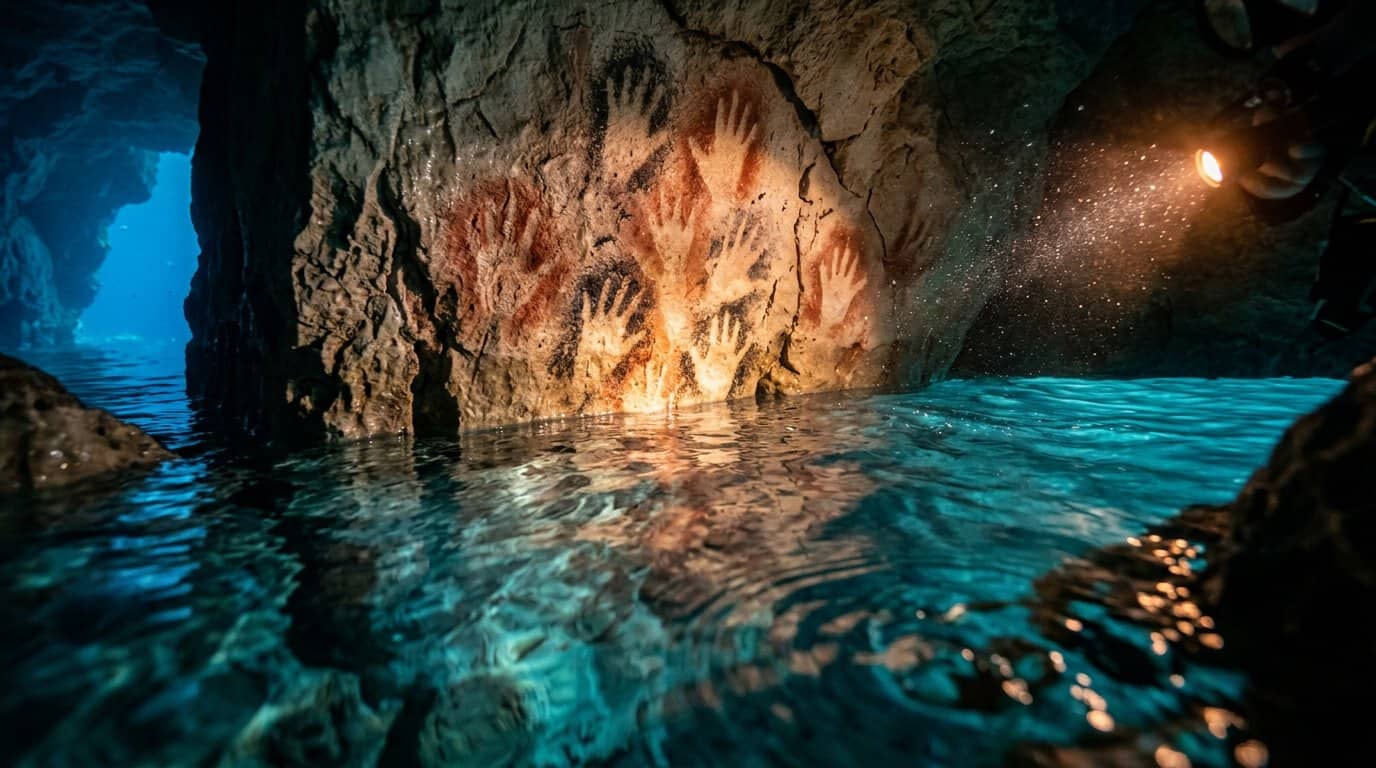
The race to document the Cosquer Cave is a battle against time and the rising Mediterranean Sea. Researchers face immense technological hurdles because the entrance to this prehistoric sanctuary sits 37 meters below the water’s surface, requiring expert diving skills just to reach the main chambers. Modern archaeologists are currently using sophisticated 3D laser scanning and high-resolution digital photography to map every inch of the cave before it is lost. These tools allow scientists to study the 65 hand stencils in a virtual environment, protecting the fragile pigments from the heat and carbon dioxide produced by human breath. However, as sea levels continue to climb, the saltwater slowly erodes the limestone walls and threatens to wash away these ancient treasures forever.
The handprints themselves offer a chilling look into the distant past, particularly the mysterious mutilated fingers that appear in many of the stencils. While some experts suggest these missing digits were the result of frostbite or disease, others believe they represent a complex ritual language or deliberate technological symbolism. The fact that these marks were made by men, women, and even children suggests a deeply communal experience that challenges our understanding of Paleolithic social structures. Because the cave was once several miles inland during the last ice age, the submerged entrance we see today serves as a haunting reminder of how much the environment has changed. This site acts as a bridge to a forgotten world, forcing us to wonder what other ancient mystery remains hidden beneath the waves.
Preserving the memory of these red and black stencils has become a global priority for historians and digital archivists. Professional heritage organizations have worked tirelessly to create a full-scale replica of the cave so that the public can experience its wonders without damaging the original site. This digital preservation ensures that even if the physical handprints are eventually erased by the sea, the data will remain for future generations to analyze. The urgency of this project highlights the fragility of our collective human history in the face of a changing climate. What do you think the ancient artists were trying to communicate with these specific hand gestures, and why did they choose such a secluded location for their work?
A Haunting Echo Beneath the Waves
The handprints of Cosquer Cave serve as a haunting bridge across time, connecting modern observers to a world that now lies deep beneath the Mediterranean waves. These stencils are more than just artistic expressions because they represent a sophisticated form of communication that predates written history by tens of thousands of years. By leaving their marks in such a remote and challenging environment, these early humans demonstrated a level of intentionality and ritualistic behavior that challenges our understanding of prehistoric life. The presence of prints from men, women, and children suggests a communal experience that was deeply woven into the fabric of their society. It is a powerful reminder that our ancestors possessed complex emotional lives and a desire to be remembered long after they were gone.
One of the most enduring puzzles of this site is the high frequency of handprints with missing or shortened fingers, a feature that has sparked intense debate among researchers. While some experts suggest these marks could represent a sophisticated sign language or a counting system, others wonder if they point to more physical realities like frostbite or ritualistic practices. The fact that these specific patterns appear consistently across different Paleolithic sites suggests that the “mutilated” look was a deliberate choice rather than a random occurrence. This intentionality hints at a hidden layer of ancient culture that remains just out of our reach, leaving us to wonder what message they were trying to convey. It forces us to reconsider the technological and social boundaries we often place on people living in the Ice Age, much like the discovery of ancient technology found in other parts of the Mediterranean.
What do you think was the true purpose behind these mysterious, shortened finger stencils found in the depths of the cave? Could they be a form of ancient code used for hunting, or do they represent a spiritual ritual that has been lost to the passage of time? We invite you to share your theories and join the conversation about these incredible prehistoric artifacts. Perhaps the answer lies in a combination of practical communication and deep-seated tradition that we are only beginning to decode. Your perspective helps keep the mystery alive as we continue to explore the unexplained wonders of our human heritage.
Frequently Asked Questions
1. Where are the Cosquer Cave handprints located?
These ancient markings are hidden deep beneath the Mediterranean Sea off the coast of the French Riviera. The cave entrance sits 121 feet below the water’s surface, making it a submerged sanctuary that is nearly impossible to reach without professional diving equipment.
2. How old are these prehistoric hand stencils?
The handprints were created between 27,000 and 33,000 years ago during the Gravettian period. This was a time when the sea levels were much lower, allowing early humans to walk into the cave on dry land to leave their signatures.
3. Why do some of the handprints appear to have missing fingers?
Researchers are fascinated by these shortened fingers and suggest they might represent a complex sign language or a ritualistic code. While some wonder if they show intentional amputations, others believe the artists simply folded their fingers to communicate specific messages to their tribe.
4. What materials did the ancient artists use to make the prints?
The Paleolithic families used natural pigments found in the earth to create their art. They produced forty-four black prints using charcoal and twenty-five red outlines using ochre, often blowing the pigment over their hands to create a stencil effect.
5. Who created the handprints in Cosquer Cave?
Evidence suggests these marks were a family affair rather than the work of a single artist. Analysis of the hand sizes shows that men, women, and even small children participated in leaving their marks on the limestone walls.
6. Are the Cosquer Cave handprints still visible today?
The original handprints remain in the underwater cave, but they are extremely fragile and threatened by rising sea levels. To preserve this history, experts have created high tech replicas and digital scans so the public can experience the gallery without disturbing the original site.