
Beyond The Surface Of Transmedium UAP Technology
Imagine a craft that glides through the stars, moves through the ocean at hundreds of miles per hour, and resurfaces into the sky without leaving a single splash. These extraordinary uap transmedium capabilities represent a frontier of physics that defies standard understanding of travel and resistance. While these accounts once lived in the shadows of campfire stories, they have recently moved into the light of official military reports and high-tech sensor data.
Witnesses describe sleek objects that ignore the laws of friction, moving between the vacuum of space and the crushing depths of the sea as if the boundaries of nature do not exist. This seamless transition suggests a level of technology that does not just move through its environment, but perhaps masters the very fabric of it. Understanding how these phenomena operate could change the future of human travel forever, turning what was once considered science fiction into a startling new reality.
Key Takeaways
- Transmedium UAPs demonstrate the ability to move seamlessly between space, the atmosphere, and the ocean without being hindered by friction or structural stress.
- These crafts achieve ‘zero cavitation’ propulsion, entering and traveling through dense water at high speeds without creating splashes, bubbles, or the turbulence associated with conventional physics.
- Military sensor data and eyewitness accounts indicate that these objects likely utilize localized energy fields to manipulate the surrounding environment rather than pushing against it.
- The existence of transmedium technology suggests a mastery over gravity and fluid dynamics that could revolutionize human travel by eliminating traditional resistance barriers.
Defining The Seamless Transition Of Transmedium Craft
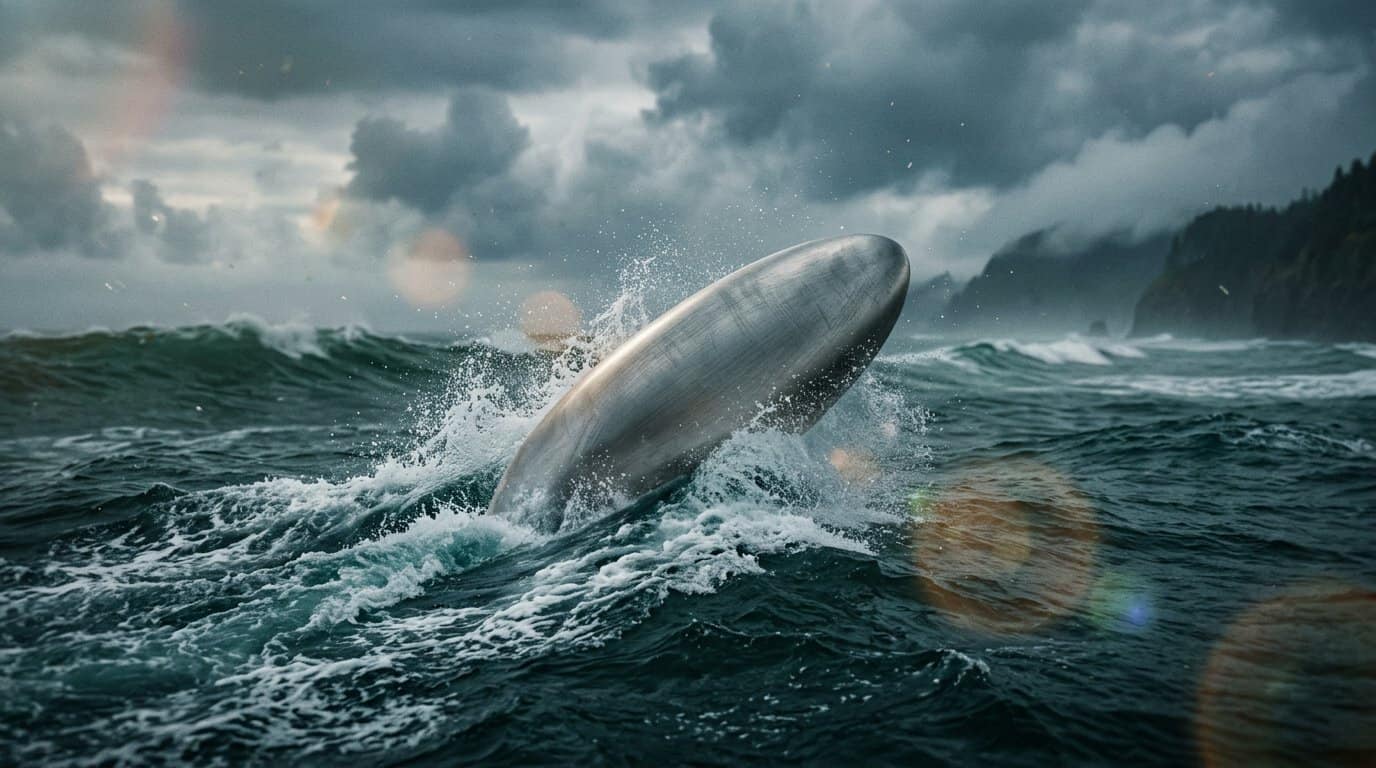
Imagine a smooth, metallic object plummeting from the sky at thousands of miles per hour, only to vanish into the ocean waves without leaving a single splash or a trace of foam. To our current understanding of physics, hitting the water at such speeds should be equivalent to striking a concrete wall, yet these crafts seem to ignore the laws of fluid dynamics entirely. This ability to move between the vacuum of space, the thin air of our atmosphere, and the depths of the sea is what experts call transmedium capability. It suggests a level of engineering that manages to bypass the traditional friction and resistance that would typically tear a human-made aircraft apart.
Observations from military personnel describe these transitions as being eerily silent and instantaneous. When a standard torpedo or submarine moves through water, it creates bubbles and turbulence known as cavitation, which slows the vehicle down and creates significant noise. These unidentified objects appear to travel through the dense medium of water as if it were no different than the open air, maintaining incredible velocities that defy conventional propulsion logic. This seamless movement hints at a technology that might manipulate the environment around the craft, rather than simply pushing against it.
Scientific curiosity naturally peaks when considering how a physical structure can survive the immense pressure changes involved in these rapid transitions. Researchers are looking into the possibility that these objects utilize localized energy fields or energy bubbles that isolate the craft from the surrounding elements. By effectively cloaking themselves from the physical impact of water molecules, they can dive and resurface without the structural damage that would plague any known drone or jet. While this remains a mystery for now, it challenges the brightest minds to rethink what is possible in the realm of multispatial travel.
Military Observations Of All Domain Anomalous Detections
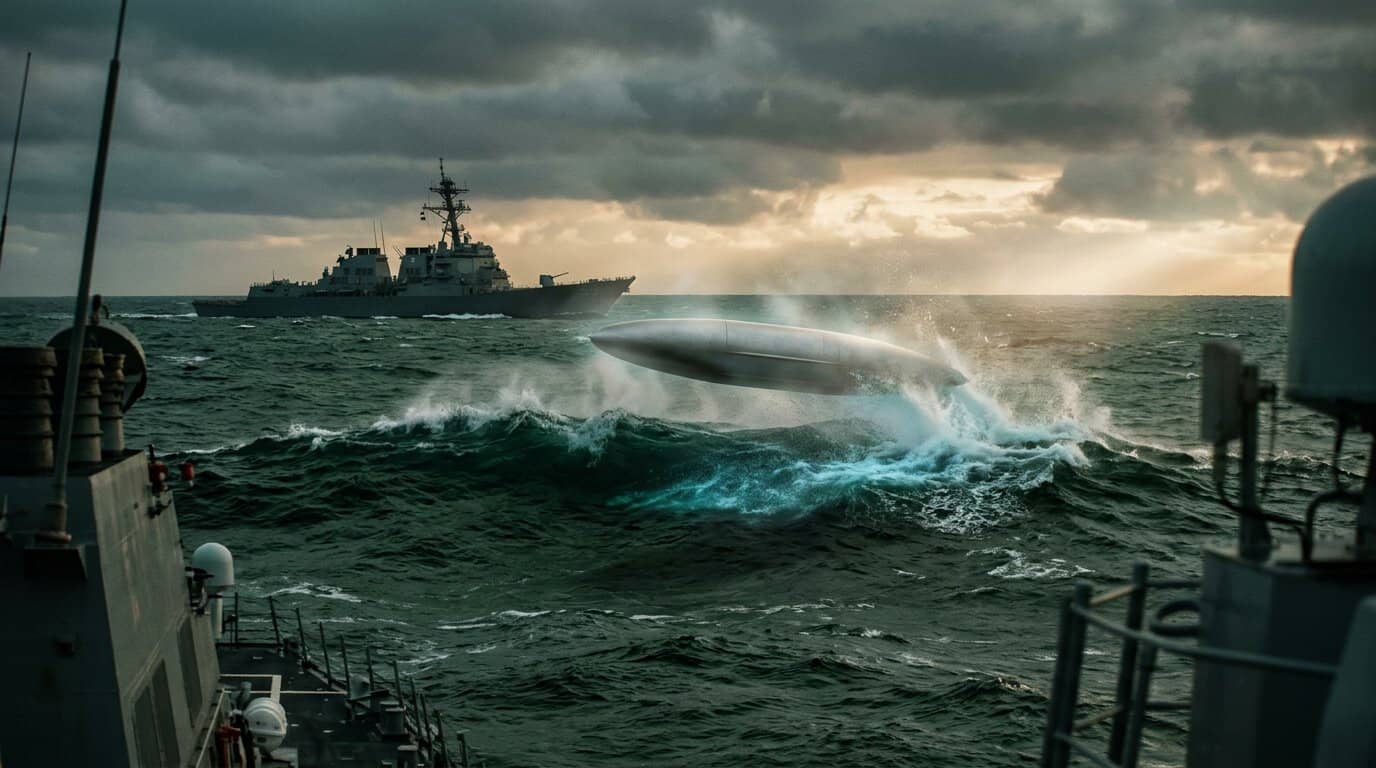
Official government research groups have fundamentally changed how the military tracks objects that defy our current understanding of physics. Instead of looking at the sky in isolation, officials now monitor how these strange crafts navigate the vacuum of space, our atmosphere, and the depths of the ocean. These transmedium capabilities suggest a level of technology that ignores the massive pressure changes and resistance that would normally destroy a human-made vehicle. Observations from military sensor data indicate that these objects move between these drastically different environments with a seamless grace that leaves researchers baffled. It is no longer just about blurry photos, as the data now points toward a physical reality that challenges scientific textbooks.
Imagine a craft traveling at thousands of miles per hour that plunges into the sea without creating a massive splash or showing signs of structural stress. This lack of cavitation, which is the formation of bubbles around an object in water, suggests that these UAPs might be manipulating the medium around them rather than pushing through it. Military pilots and radar operators have described these transitions as instantaneous, as if the water and air offer no more resistance than a shadow passing through a room. While traditional submarines and aircraft are designed for very specific densities, these anomalies seem to treat all domains as a single, unified playground. This versatility hints at a propulsion system that does not rely on wings, propellers, or combustible fuel.
The transition from outer space to the deep ocean represents a significant engineering hurdle, yet these detections show it happening regularly. By analyzing data from various defense platforms, researchers are attempting to bridge the gap between anecdotal sightings and hard forensic evidence. There is a shift where the scientific community must consider the possibility that our understanding of fluid dynamics is incomplete. If a craft can move from a vacuum to high-pressure saltwater without slowing down, it suggests a mastery over gravity or spacetime itself. These military observations serve as a reminder that the universe still holds secrets of the deep sea that are waiting for us to catch up.
The Scientific Mystery Of Zero Cavitation Propulsion
When an object hits the ocean at high speed, the laws of physics usually dictate a violent collision. For a normal aircraft, hitting the water is like hitting a brick wall because the liquid cannot move out of the way fast enough. This process creates massive bubbles and turbulence known as cavitation, which drags on the object and creates immense structural stress. However, military observers have documented UAPs entering the sea at hundreds of miles per hour without slowing down or creating a single splash. These objects seem to ignore the friction that should naturally occur when moving from thin air into dense water.
Scientists are looking closely at how a craft could achieve this zero cavitation state. One theory suggests these objects might be creating a small envelope or field around themselves that prevents the water from actually touching the hull. By pushing the medium away at a molecular level, the craft could essentially fly through a vacuum even while deep underwater. This would explain why sonar operators have tracked these targets moving at speeds that would normally tear a submarine apart. It suggests a level of engineering that treats different environments as if they were exactly the same.
The implications of this technology are staggering because it challenges our basic understanding of fluid dynamics. If a craft can move through the ocean without creating a wake or heat signature, it becomes nearly impossible to detect using traditional sensors. This seamless transition between space, air, and sea suggests that the propulsion system does not rely on wings or propellers. Instead, it likely manipulates the very fabric of its surroundings to glide through any density with total ease. Researchers continue to wonder if we are witnessing a new form of physics that makes the resistance of water a thing of the past.
Navigating Between Sea, Sky, and Space
The study of these mysterious objects has evolved from hushed stories told by pilots into a serious field of scientific inquiry. Government agencies now officially track and analyze how these crafts navigate through space, air, and sea with such effortless grace. We are no longer looking at blurry photos or unreliable accounts, but rather at data collected by sophisticated military sensors and radar systems. This shift in perspective allows us to look at the phenomenon through a lens of curiosity rather than dismissal. By acknowledging that these transmedium movements are happening, we open the door to a much larger conversation about the secrets of the deep and the limits of our current technology.
As we look at the evidence, it becomes clear that our understanding of the physical world might be missing a vital piece of the puzzle. These objects move between the vacuum of space and the crushing depths of the ocean without slowing down or showing signs of structural stress. This suggests a mastery of propulsion that does not rely on the wings or engines we use today. It challenges the very foundation of how we think things should move through different environments. Exploring these possibilities requires us to be both critical and open-minded as we weigh the facts against the unknown.
The transition from the atmosphere to the deep ocean without a single splash invites us to rethink everything we know about the laws of nature. If an object can ignore the friction of air and the resistance of water so easily, what does that say about our grasp of gravity and motion? We are standing at a crossroads where modern science meets a profound mystery that could change our future forever. It leads us to wonder if we are on the verge of discovering a new branch of physics that we simply have not named yet. Does the existence of transmedium travel suggest that our current rules of flight are just the beginning of a much larger story?
Frequently Asked Questions
1. What exactly are transmedium capabilities?
Transmedium capabilities refer to the ability of a craft to move seamlessly between different environments, such as space, the atmosphere, and the ocean. These objects travel through air and water at incredible speeds without being slowed down by friction or the physical impact of hitting the surface.
2. How do these crafts enter the water without making a splash?
Witnesses and sensor data describe these objects entering the sea as if the water offers no resistance at all. This suggests the craft may use a technology that creates a vacuum or a protective field around itself, allowing it to bypass the traditional laws of fluid dynamics.
3. Has the government officially recognized these phenomena?
Yes, official groups tasked with anomaly resolution have documented reports of these extraordinary transitions. Military personnel have provided high-tech sensor data and eyewitness accounts that move these stories from the realm of legend into official record.
4. Why would hitting the water at high speeds normally be dangerous?
In our current understanding of physics, hitting water at high speeds is like striking a concrete wall because water does not compress easily. The fact that these crafts survive such impacts without damage suggests they possess engineering far beyond modern human capability, much like the questions raised when exploring Yonaguni Monument origins regarding advanced ancient structures.
5. Do these objects make noise when they move between air and sea?
Most accounts from military observers describe these transitions as being eerily silent. Unlike human-made jets or torpedoes that create massive sonic booms or wake turbulence, these crafts operate with a quiet efficiency that defies standard propulsion theories.
6. What could this technology mean for the future of travel?
Mastering transmedium travel could revolutionize how humans move across the globe and through space by eliminating the barriers of resistance and friction. It opens up the possibility of crafts that can explore the deepest parts of our oceans and the furthest reaches of space using the same engine, much like the objects documented in The 1977 Colares UFO Incidents and Operation Saucer which displayed remarkable aerial maneuvers.