The Enigma Of The Malta Cart Ruts
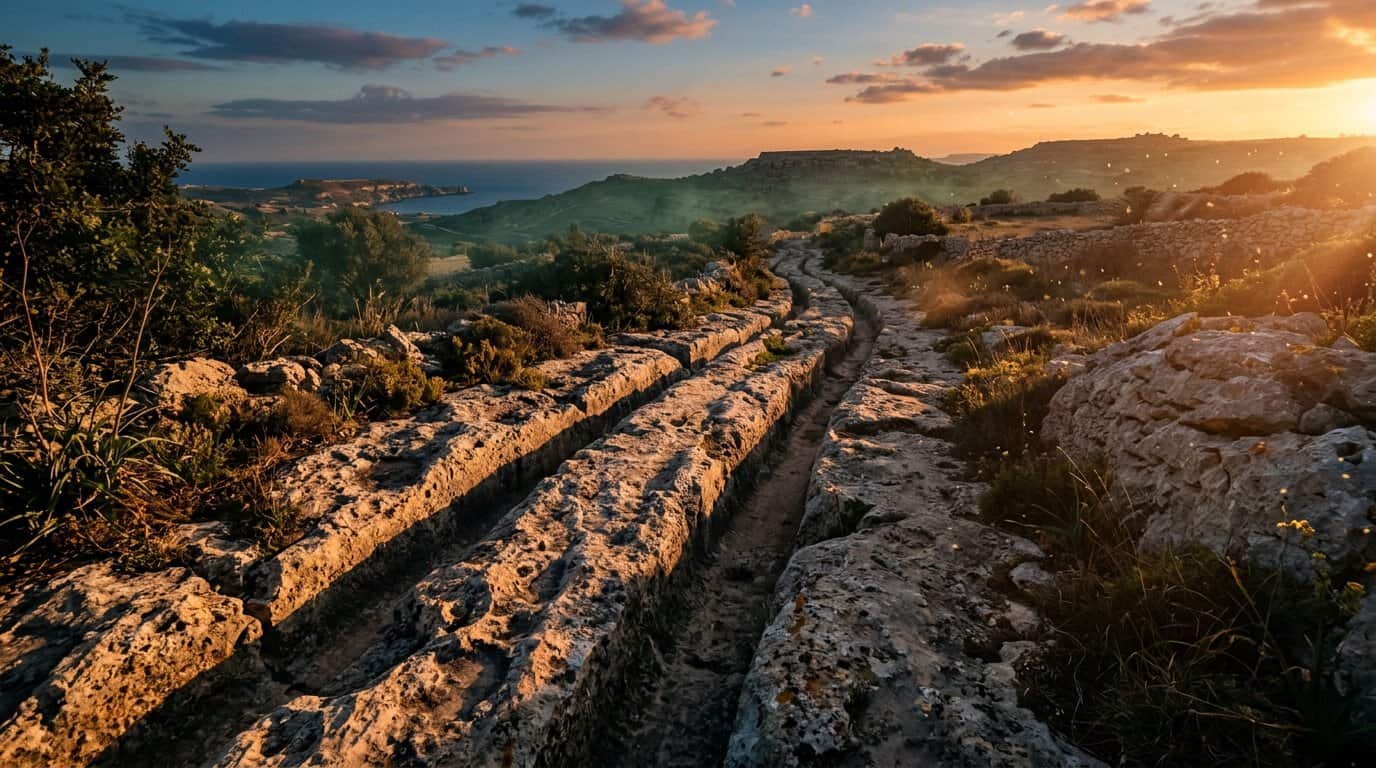
Across the windswept limestone plateaus of Malta and Gozo, a prehistoric puzzle lies etched forever into the bedrock. These deep, parallel grooves, known as the Malta cart ruts, crisscross the islands like an ancient transit system frozen in stone. At sites like the famous Clapham Junction, the tracks weave and intersect in a complex web that seems to defy simple explanation. They appear in over 30 locations, serving as a silent testament to a massive, island-wide effort that took place thousands of years ago.
While they look like modern tank tracks or railway lines, these mysterious furrows were carved long before the invention of the iron wheel. Some grooves plunge deep into the earth while others lead directly off the edges of sheer cliffs or disappear into the Mediterranean Sea. This strange environment leaves observers wondering what kind of heavy loads were being moved and where they were headed. Historians and curious explorers alike find themselves standing on the edge of these limestone paths, trying to hear the echoes of a lost civilization.
Key Takeaways
- The Malta cart ruts represent a sophisticated prehistoric transit system featuring parallel limestone grooves with a consistent gauge of 110 to 140 centimeters.
- Sites like Misraħ Għar il-Kbir, nicknamed ‘Clapham Junction,’ demonstrate a high level of ancient engineering through complex, intersecting track networks that reach depths of 60 centimeters.
- The disappearance of tracks into the Mediterranean Sea and off sheer cliffs suggests the ruts were carved during a period of significantly lower sea levels, potentially predating the last Ice Age.
- The absence of draft animal hoof prints and the precision of the V-shaped and U-shaped furrows challenge standard archaeological timelines regarding ancient Mediterranean logistics and technology.
The Labyrinth Of Misraħ Għar il-Kbir
The limestone terrain of Misraħ Għar il-Kbir presents a scene so complex that researchers nicknamed it Clapham Junction after the busy London railway hub. Deep grooves snake across the bedrock in a dizzying array of intersections, occasionally plunging as deep as sixty centimeters into the stone. These parallel tracks maintain a consistent gauge of about 110 to 140 centimeters, suggesting they were created by a specific type of vehicle or repeated mechanical process. Walking through this labyrinth feels like stepping into a prehistoric transit station where the original purpose has been lost to time. The sheer density of the tracks at this specific site makes it the most significant location for anyone trying to decode this Mediterranean puzzle.
One of the most intriguing features of these tracks is how they interact with the natural geography of the island. At sites like Ta Ċenċ, the ruts do not simply stop at a destination, but instead run directly off the edge of high cliffs or disappear into the Mediterranean Sea. This suggests that the geography of Malta has changed significantly since the tracks were first carved, or perhaps the sea levels were much lower when they were in use. Local legends and folklore often link these strange paths to ancient giants or divine beings, bridging the gap between physical evidence and mythological wonder. The sight of these stone furrows leading into the blue water invites observers to imagine a lost era of transportation that defies modern logic.
Archaeologists have struggled to provide a definitive answer for how these deep V-shaped and U-shaped grooves were formed. While some researchers suggest they are the result of heavy loads or carts carrying stone, the lack of hoof prints from draft animals remains a significant mystery. The variability of the ruts often depends on the hardness of the limestone layer, yet the precision of the parallel lines hints at a deliberate and long term use. This site stands as a prime example of an ancient archaeological mystery that challenges our understanding of ancient engineering and logistics. Whether they were part of an industrial system or something far more mysterious, the ruts at Clapham Junction continue to spark intense debate among visitors and scholars alike.
Vanishing Into The Deep Mediterranean Waters
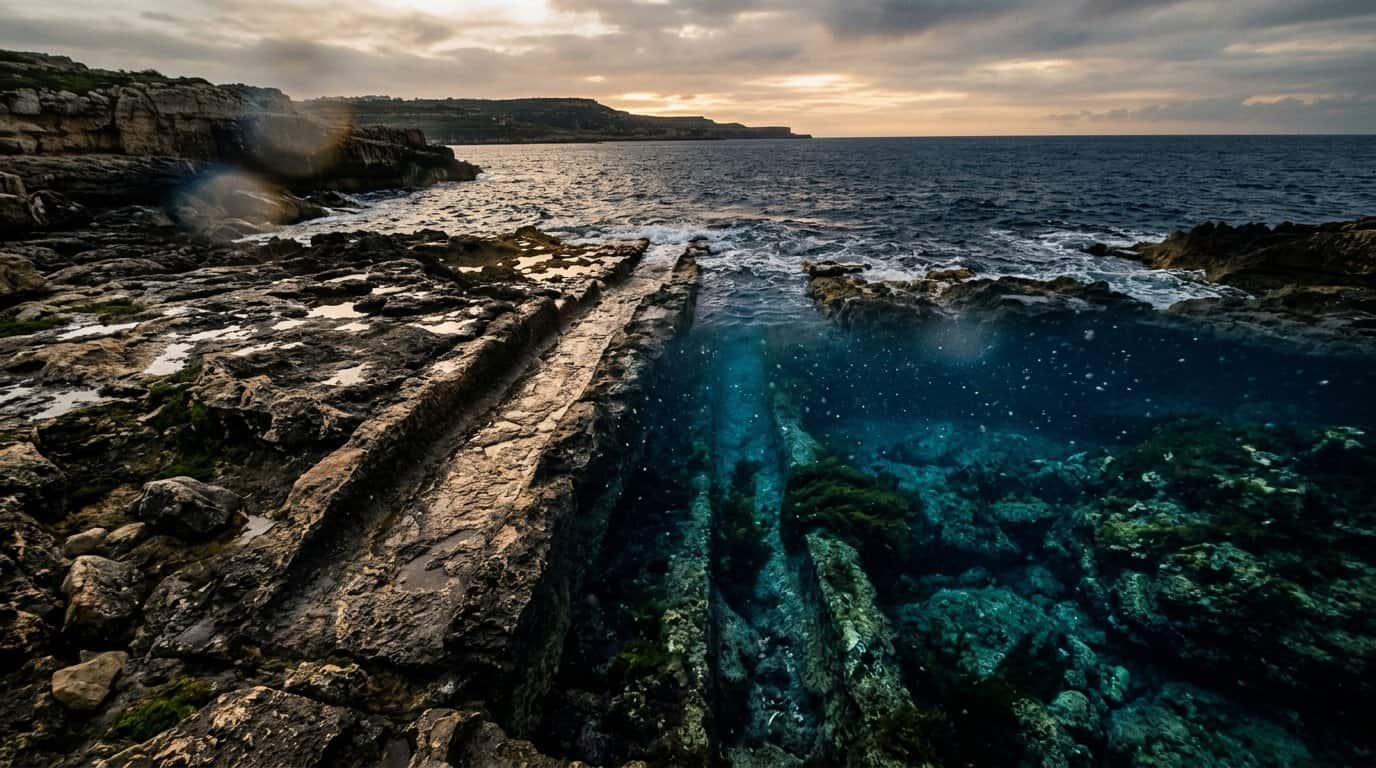
One of the most haunting sights in the Maltese geography occurs where these ancient limestone grooves march straight toward the edge of a sheer drop. At sites like the Ta Cenc cliffs, the parallel tracks do not turn or stop but instead disappear abruptly into the empty air above the Mediterranean Sea. This creates a striking visual that suggests the geography of the islands has shifted dramatically since the ruts were first carved. It is as if a giant hand simply cut the road short, leaving modern observers to wonder what destination originally lay across the horizon.
Below the surface of the turquoise waves, the mystery continues to deepen as underwater archaeologists and explorers suggests that these submerged paths may date back to a time when sea levels were much lower. If these ruts were carved on dry land, it implies they could be thousands of years older than traditionally thought, perhaps originating before the end of the last Ice Age. This evidence challenges our standard timeline of Mediterranean civilization and points toward a lost civilization or a forgotten era of coastal activity.
The presence of these underwater ruts invites us to imagine a vastly different coastline where Malta and Gozo were connected by wide, walkable plains. These tracks might be the final footprints of a forgotten culture that saw the Mediterranean not as a barrier, but as a fertile valley filled with life. While some scientists argue that local tectonic shifts or coastal erosion could explain the disappearing paths, the visual of a road leading into the deep remains a powerful piece of evidence for the theory of a sunken landmass. Do you think these tracks are proof of a lost prehistoric road system, or is there a simpler explanation for why they lead into the sea?
Megalithic Engines Or Ancient Out Of Place Artifacts
The limestone plateaus of Malta are home to a puzzling network of deep grooves that look remarkably like modern railway tracks. Known locally as il-cart ruts, these parallel indentations wind across the islands, with the most famous site at Misraħ Għar il-Kbir earning the nickname Clapham Junction. While many of these paths seem to connect ancient quarries or temple sites, others behave in ways that defy logical logistics. Some tracks lead directly to the edges of towering cliffs or disappear into the Mediterranean Sea, suggesting they were carved when the coastline looked very different. This bizarre layout has led some researchers to wonder if they served as a prehistoric transportation system for the massive stones used to build Malta’s megalithic temples.
Archaeologists have spent decades measuring these ruts, noting that they typically maintain a consistent width between 110 and 140 centimeters. While the grooves are often attributed to the repeated passage of heavy wooden sleds or carts during the Temple Period, the sheer depth of some tracks reaches a staggering 60 centimeters. This extreme wear implies an incredible amount of weight or thousands of years of constant use that the local population size might not fully explain. Professional archaeological studies often point to these ruts as evidence of a highly organized society, yet the lack of animal hoof prints or clear footwear marks leaves the actual engine behind these carts a complete mystery.
Because the tracks often lead into the deep blue water, some enthusiasts view them as out of place artifacts that point to a lost civilization or a period of ancient engineering defying history. If these ruts were created before the sea levels rose at the end of the last Ice Age, they would be much older than the famous temples themselves. This possibility shifts the narrative from simple agricultural tools to a sophisticated network that once spanned a dry land bridge between Malta and Sicily. Whether they were used for moving massive megaliths or served a purpose we have yet to uncover, they remain a silent testimony to an era of hidden human history. What do you think was being moved across these ancient stone highways, and where were they heading?
The Unsolved Mystery of Malta’s Sunken Tracks
The limestone tracks of Malta remain one of the most intriguing puzzles of the ancient world, defying any single scientific explanation. These deep grooves crisscross the islands like a forgotten railway system, yet they lead toward cliff edges or vanish directly into the depths of the Mediterranean Sea. The sheer scale of the network at sites like Misrah Ghar il-Kbir suggests a massive, coordinated effort by a civilization whose identity and methods remain largely unknown. While some researchers suggest they were simple irrigation channels or transport routes, the way they navigate the rugged terrain feels far more intentional and mysterious.
Exploring these tracks feels like walking through a world where history and folklore blur into one another. Theories range from practical sledges hauling heavy stones to more adventurous ideas involving ancient technologies that have since been lost to time. The fact that many tracks continue underwater suggests they were carved during a period when sea levels were much lower, placing their origin thousands of years in the past. This evidence forces us to reconsider what we know about the capabilities of prehistoric people and the true age of these enigmatic carvings.
What do you think was the true purpose behind these ancient limestone paths? Some believe they are the remnants of a massive industrial operation, while others wonder if they hold a deeper, more symbolic meaning related to the stars or the sea. Perhaps you have a unique theory on how such precise grooves were worn into the solid rock without the use of modern machinery. We invite you to share your thoughts and join the discussion as we try to piece together the story behind Malta’s incredible cart ruts.
Frequently Asked Questions
1. What exactly are the Malta cart ruts?
The Malta cart ruts are deep, parallel grooves carved into the limestone bedrock of Malta and Gozo. These ancient tracks crisscross the islands in over 30 locations, resembling a prehistoric transit system that has been frozen in stone for thousands of years.
2. Where is the best place to see these mysterious tracks?
The most famous site is Misraħ Għar il-Kbir, which earned the nickname Clapham Junction because the tracks intersect like a busy London railway station. Visitors can explore a dizzying array of grooves that snake across the landscape, with some reaching depths of sixty centimeters.
3. How old are the cart ruts?
While their exact age is still debated by historians, many researchers believe they date back to the Bronze Age or even earlier. These furrows were created long before the invention of the iron wheel, suggesting a massive effort by a lost civilization that predates modern technology.
4. Are all the tracks the same size?
Most of the tracks maintain a consistent gauge of about 110 to 140 centimeters between the two parallel grooves. This uniformity suggests they were created by a specific type of vehicle or a repeated mechanical process used across the entire island.
5. Why do some tracks lead directly into the sea?
Some ruts lead off sheer cliffs or disappear into the Mediterranean Sea, which adds a mysterious layer to the puzzle. This suggests that the geography has changed significantly since they were made, or that the people who built them had purposes we do not yet fully understand.
6. What were the ruts used for?
Theories range from irrigation channels to transportation systems for heavy stone blocks used in temple building. While some scientists suggest they are simple erosion from sledges, the complex intersections at places like Clapham Junction hint at a much more sophisticated purpose.