The Haunted Waters Of Southeast Alaska: Investigating Petersburg Monster Encounters
The quiet stretches of road near Petersburg often feel like a different world once the sun dips below the horizon. While these areas are known for their history and charm, a growing collection of petersburg monster encounters suggests that something unusual may be lurking in the shadows. From the humid thickets of Florida to the wooded outskirts of Virginia, residents have reported sightings that defy conventional biology and challenge our understanding of the natural world.
The most chilling accounts describe massive, upright figures that seem to blend the features of predators with an unsettlingly human posture. One famous report involves a towering, nine-foot-tall feline creature with shimmering black fur and piercing eyes that stood its ground against an oncoming vehicle. These stories stir a deep sense of curiosity, forcing us to wonder if these sightings are mere tricks of the light or evidence of a hidden species living right in our backyard.
Key Takeaways
- The Petersburg monster represents a unique aquatic-hybrid subspecies of Bigfoot, featuring water-repellent fur and physical adaptations suited for the rugged Alaskan shoreline.
- Tlingit folklore identifies the Kushtaka as a dangerous shapeshifter that uses mimicry, such as the cries of women and children, to lure victims into the wilderness.
- Historical accounts like the 1900 Harry Colp encounter at Thomas Bay document aggressive, non-biological entities that bridge the gap between land-based cryptids and marine mysteries.
- Persistent sightings across diverse regions like Alaska, Virginia, and Florida suggest a widespread phenomenon of predatory, upright figures that defy conventional biological classification.
The Kushtaka Legend Of Kupreanof Island
The dense, emerald forests of Kupreanof Island near Petersburg, Alaska, hold a secret that has been passed down through Tlingit generations for centuries. According to local lore, the Kushtaka, or Otterman, is a formidable shapeshifter that haunts the tidal zones and deep woods of the Alexander Archipelago. This creature is often described as a massive, hairy humanoid that can seamlessly transition between the form of a man and a giant land otter. Unlike the typical Bigfoot sightings in the Pacific Northwest, the Kushtaka is known for its cunning intelligence and its predatory habit of mimicking the cries of women or children to lure unsuspecting fishermen away from their boats.
Witnesses who have survived these encounters often describe a sense of overwhelming dread as the creature attempts to trap them in the wilderness. Many Tlingit folklore stories, documented by researchers like Thomas Thornton, suggest that the Kushtaka aims to steal the souls of those who drown or get lost, turning them into one of its own kind. While some skeptics view these tales as cautionary fables designed to keep children away from dangerous waters, the sheer consistency of the sightings keeps the mystery alive. Modern hikers and hunters in the Petersburg area continue to report strange, high pitched whistling sounds and the feeling of being watched by something that is neither fully animal nor entirely human.
The physical descriptions of the Kushtaka provide a fascinating bridge between traditional cryptid sightings and supernatural folklore. It is frequently portrayed as a hybrid with long, sharp claws and a face that shifts between a human appearance and an otter’s snout. This unique Alaskan monster represents a high value niche for those interested in the Bigfoot phenomenon because it adds a complex, aquatic element to the classic wild man archetype. Whether it is a relic hominid adapted to the cold coastal climate or a spiritual guardian of the woods, the legend remains a central part of the region’s identity. Do you believe these sightings are misidentified animals, or is there a shapeshifting predator truly hiding in the Alaskan brush?
Sightings Of The Thomas Bay Devil
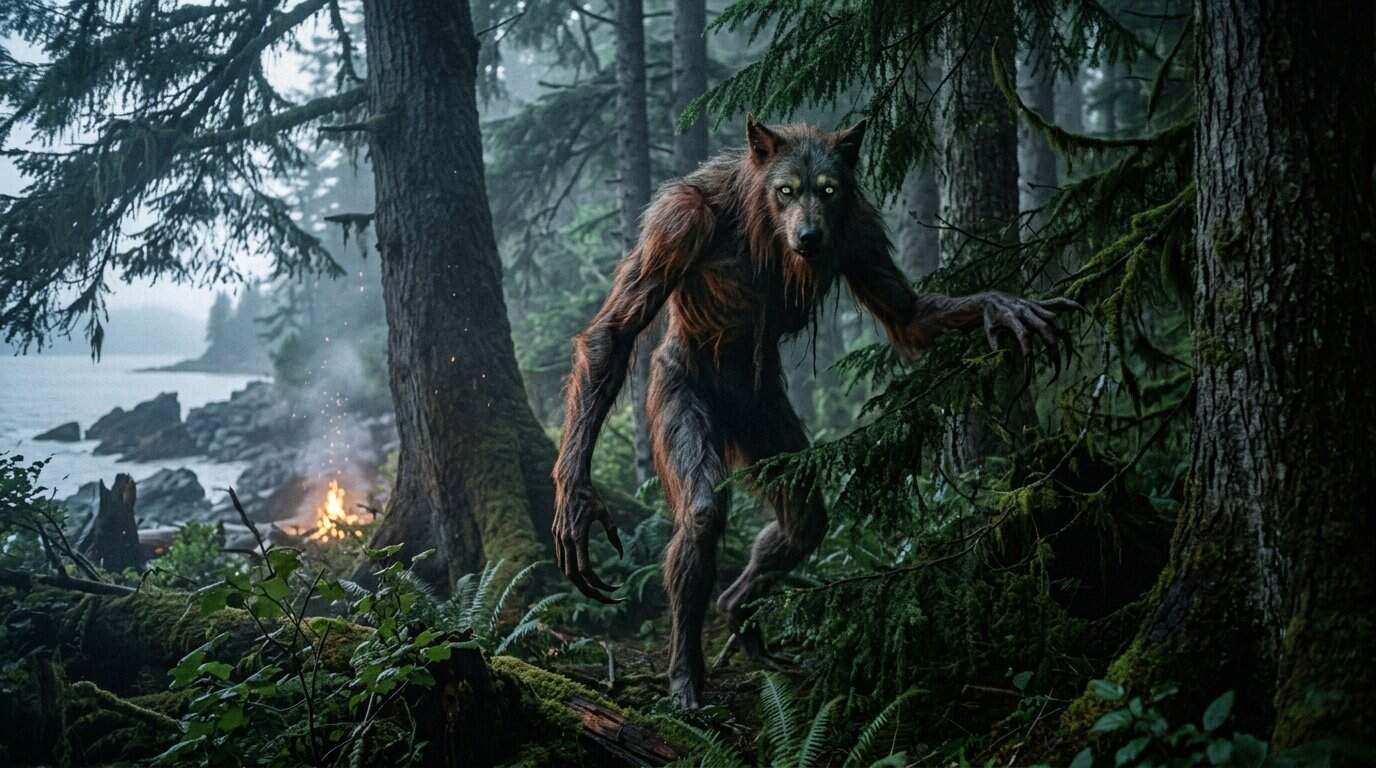
The legend of the Thomas Bay Devil began in 1900 when a prospector named Harry Colp ventured into the rugged wilderness near Petersburg, Alaska. While searching for gold, Colp and his companions encountered a pack of creatures that defied any known biological classification. These beings were described as massive, hairy humanoids that possessed an unsettling mix of ape-like features and strange, aquatic characteristics. The entities were reportedly extremely aggressive, throwing rocks and shrieking with a sound that chilled the men to their bones. This traumatic encounter earned the area the ominous nickname the Bay of Death among local miners and explorers.
Historical accounts from this period suggest that these monsters were far more than just misidentified bears or typical Bigfoot sightings. Colp described the creatures as having long, yellowish hair and sores across their skin, moving with a speed that seemed impossible for their size. Some researchers believe these sightings point to a unique subspecies of cryptid that adapted specifically to the coastal environment of Southeast Alaska. The physical descriptions provided in these early 20th century journals remain consistent with modern reports of strange, upright beings seen near the water’s edge. Scientists often struggle to explain these events, but the sheer detail in the Harry Colp encounter suggests they encountered something truly extraordinary.
What makes the Thomas Bay Devil so intriguing is how it bridges the gap between traditional land based legends and marine mysteries. Unlike the typical forest dwelling giants of the Pacific Northwest, these entities seemed closely tied to the rocky shores and cold inlets of the Thomas Bay region. This geographic isolation has allowed the legend to persist without the same level of overexposure seen in other famous monster cases. The accounts leave us wondering if a small population of these hybrids could still be hiding in the unexplored fjords of the Alaskan panhandle. Do you think these early explorers stumbled upon a lost species, or is there a more supernatural explanation for the terrors of Thomas Bay?
Petersburg Bigfoot And Aquatic Hybrid Theories
The Petersburg monster represents a fascinating departure from the standard Sasquatch mold, blending the characteristics of a terrestrial primate with those of a marine predator. Witnesses in this icy Alaskan region frequently describe a creature that is equally at home in the frigid coastal waters as it is in the dense timber. These reports often highlight a thick, oil-slicked coat of hair that appears water-repellent, allowing the beast to transition seamlessly between the shoreline and the deep. Local hunters have noted that while the creature maintains the massive, upright stature of a traditional Bigfoot, its tracks often lead directly into the tide. This suggests a unique evolutionary adaptation to the rugged archipelago environment where land and sea are constantly intertwined.
The physical nuances of these sightings have led some researchers to propose a controversial hybrid theory regarding the creature’s origins. Unlike the dusty brown or reddish hues seen in Pacific Northwest sightings, the Petersburg monster is often described as having dark, almost slate-gray fur that provides perfect camouflage against wet rocks. Some accounts even mention webbing between the toes or a more streamlined, muscular build suited for swimming against powerful northern currents. These aquatic features align with ancient indigenous oral histories that speak of powerful beings living within the transitional zones of the coast. By examining these specific physical traits, it becomes clear that we may be dealing with a distinct subspecies that has mastered the treacherous shoreline.
Does the idea of a swimming Bigfoot change how you view the legend of Sasquatch? Some believe these adaptations are the only way a large primate could survive the extreme geography of the Alaskan panhandle. Whether it is a relic from a prehistoric age or a modern biological anomaly, the Petersburg monster continues to challenge our understanding of what lies hidden in the mist. We want to hear your thoughts on these hybrid theories and if you think a creature could truly adapt to such a dual lifestyle. Join the conversation below and share your perspective on these mysterious coastal encounters.
The Unsolved Mysteries of the Alaskan Wilds
The enduring legends of the Petersburg monster remind us that the Great North still holds vast, unexplored reaches where the line between myth and reality blurs. Whether these sightings describe a massive, hairy man or a strange aquatic hybrid, the consistency of the reports across generations suggests something significant is moving through the Alaskan wilderness. Scientists continue to study the region for undiscovered species, yet the dense forests and icy waters provide the perfect cover for a creature that does not wish to be found. These stories are more than just campfire tales because they represent a deep connection to the untamed spirit of the frontier.
Witnesses who have come face to face with these figures often describe a sense of wonder mixed with primal fear. While it is easy to dismiss such encounters as tricks of the light or misidentified wildlife, the physical evidence and historical accounts offer a compelling reason to keep an open mind. As modern technology advances, the chances of capturing definitive proof increase, but for now, the Bigfoot evidence debate remains part of the local identity. The wilderness around Petersburg continues to challenge our understanding of the natural world, inviting us to look closer at the shadows.
What do you think is hiding in the remote corners of the Alaskan panhandle? Have these sightings convinced you that a prehistoric giant still roams the woods, or is there a more grounded explanation waiting to be discovered? Much like the elusive beast reported in other parts of the world, we want to hear your thoughts on these chilling encounters and whether you believe the truth is finally within our reach. Share your theories in the comments below and join the conversation about the many secrets still tucked away in the Great North.
Frequently Asked Questions
1. What exactly is the Kushtaka of Petersburg, Alaska?
The Kushtaka is a legendary shapeshifter from Tlingit folklore that inhabits the woods and shorelines of the Alexander Archipelago. This creature, often called the Otterman, is known for its ability to shift between human and otter forms to trick travelers. It is a cunning predator that uses mimicry to lure people into the wilderness.
2. Have there been sightings of large feline creatures in Petersburg?
Witnesses have reported chilling encounters with massive, upright feline figures standing nearly nine feet tall. These creatures are described as having shimmering black fur and piercing eyes that remain fixed on their targets. Unlike normal mountain lions, these beasts exhibit a human-like posture that defies traditional biological classification.
3. How does the Kushtaka lure its victims?
The Kushtaka is a master of psychological manipulation that mimics the sounds of crying women or children in distress. It uses these familiar, heartbreaking noises to draw unsuspecting fishermen and hikers away from safety and into the deep forest. Once the victim is isolated, the creature attempts to capture their soul and prevent them from returning home.
4. Are these monster encounters limited to a specific region?
Unusual sightings under the name Petersburg occur in several distinct locations, ranging from the humid thickets of Florida Skunk Ape encounters to the wooded outskirts of Virginia and the islands of Alaska. While the environments differ, the reports consistently describe large, predatory figures that blend into the shadows. This suggests a widespread phenomenon that transcends a single geographical area.
5. What is the historical significance of these sightings?
The stories are deeply rooted in indigenous history and local oral traditions that have been documented by researchers like Thomas Thornton. These accounts serve as both cultural warnings and historical records of interactions with the unknown. They bridge the gap between ancient mythology and Yowie encounters in modern day cryptozoology.
6. Is there any scientific explanation for these creatures?
While many sightings can be attributed to tricks of the light or misidentified wildlife, some encounters involve physical details that challenge conventional science. Researchers explore theories of undiscovered species or hidden biological branches that have managed to avoid human classification. We maintain an open mind toward the possibility that these beings are a real, yet elusive, part of our natural world.