
The Hidden Tulli Papyrus History And Ancient Egyptian UFOs
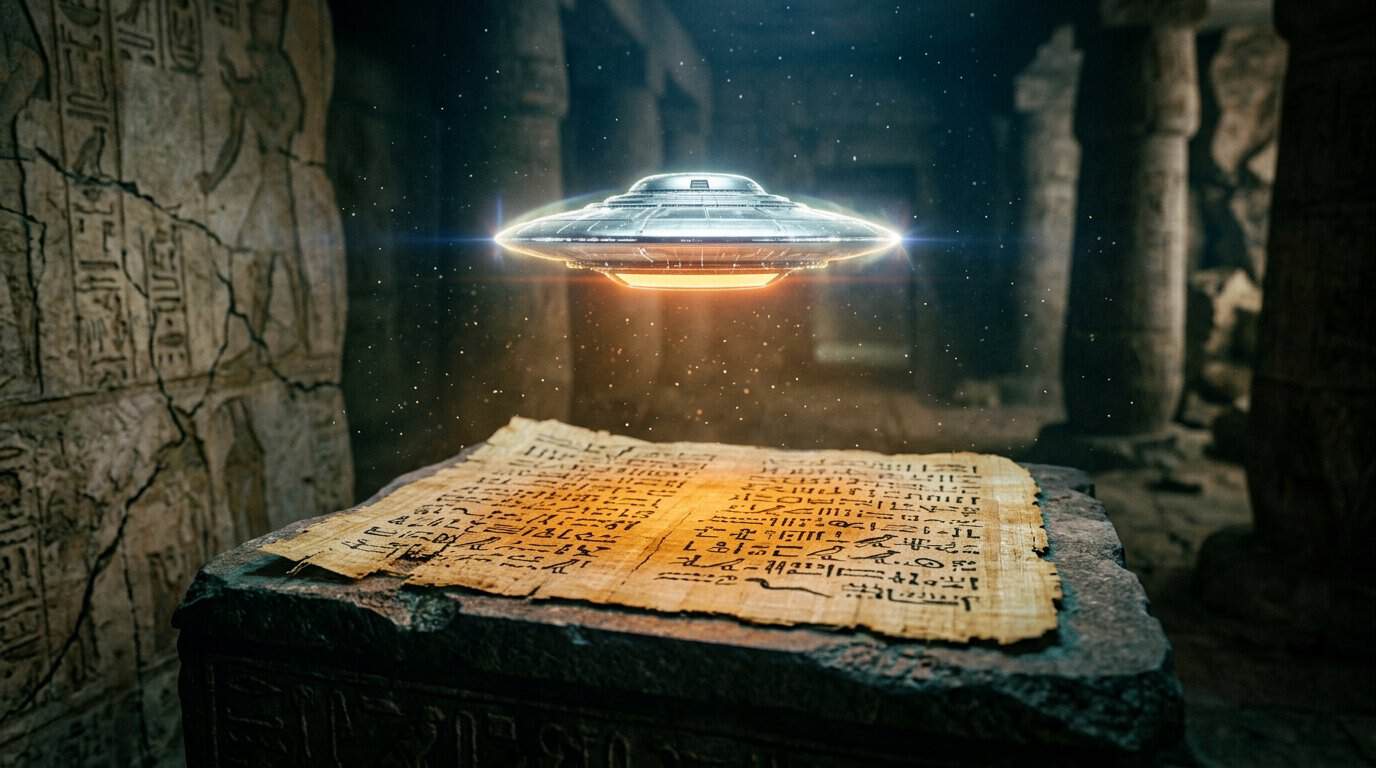
Deep within the dusty corners of a Cairo antique shop in 1933, a discovery was made that would forever blur the lines between archaeology and the extraterrestrial. Alberto Tulli, a director at the Vatican Museum, allegedly stumbled upon a script that whispered of fiery disks descending from the Egyptian sky thousands of years ago. This mysterious document, now known as the hidden tulli papyrus history, has sparked decades of debate regarding whether ancient pharaohs witnessed a mass UFO sighting or if the entire story is a cleverly crafted modern myth.
The intrigue deepened years later when Prince Boris de Rachewiltz claimed to have rediscovered Tulli’s lost transcriptions, bringing the tale of celestial fire to the global stage. While some scholars point to the lack of an original physical artifact as evidence of a hoax, others wonder if a genuine piece of human history is being kept out of public sight. Exploring this mystery requires a careful balance between historical skepticism and the chilling possibility that our ancestors were not alone in the desert silence.
Key Takeaways
- The Tulli Papyrus describes a mass aerial sighting during the reign of Pharaoh Thutmose III, where a fleet of silent, glowing ‘fiery disks’ reportedly maneuvered over the Egyptian army.
- The document’s legitimacy remains a subject of intense debate because the original papyrus is missing, leaving only Alberto Tulli’s 1933 transcription and Prince Boris de Rachewiltz’s 1953 translation as evidence.
- Skeptics argue the text may be a 20th-century hoax or a misinterpretation of natural phenomena, while ancient astronaut theorists view it as the oldest official military report of a UFO sighting.
- The persistent mystery of the papyrus highlights a tension between traditional archaeology and the search for extraterrestrial history, fueled by rumors of hidden artifacts within private collections or the Vatican Secret Archive.
Alberto Tulli And The Cairo Antique Shop
The story begins in 1933 when Alberto Tulli, the director of the Egyptian section of the Vatican Museum, was exploring the dusty shelves of an antique shop in Cairo. Among the various relics, he spotted a papyrus that appeared to date back to the reign of Thutmose III, one of Egypt’s greatest pharaohs. Tulli was immediately struck by the strange nature of the text, but the asking price for the artifact was far beyond his budget. Unable to purchase the original, he carefully created a transcription of the ancient hieratic script to bring back to the Vatican for further study. This handwritten copy would eventually become the only surviving record of the document, as the original papyrus vanished shortly after into the hands of private collectors.
The mystery deepened decades later when Prince Boris de Rachewiltz, a respected researcher, discovered Tulli’s notes among his personal belongings after his death. In 1953, Rachewiltz published a translation that shocked the world, describing a series of celestial events where circles of fire descended from the sky. These objects were said to shine brighter than the sun and stretched across the horizon, causing the pharaoh and his army to watch in silent awe. While some skeptics suggest the document may have been a clever hoax or a misinterpretation of natural phenomena, the description of these objects moving with intent remains a cornerstone of ancient astronaut theory. The absence of the original scroll leaves us with a haunting question: is the truth of Egypt’s visitors hidden in a lost archive, or was it simply a misunderstanding of the stars?
Fiery Disks Over The Skies Of Thutmose III
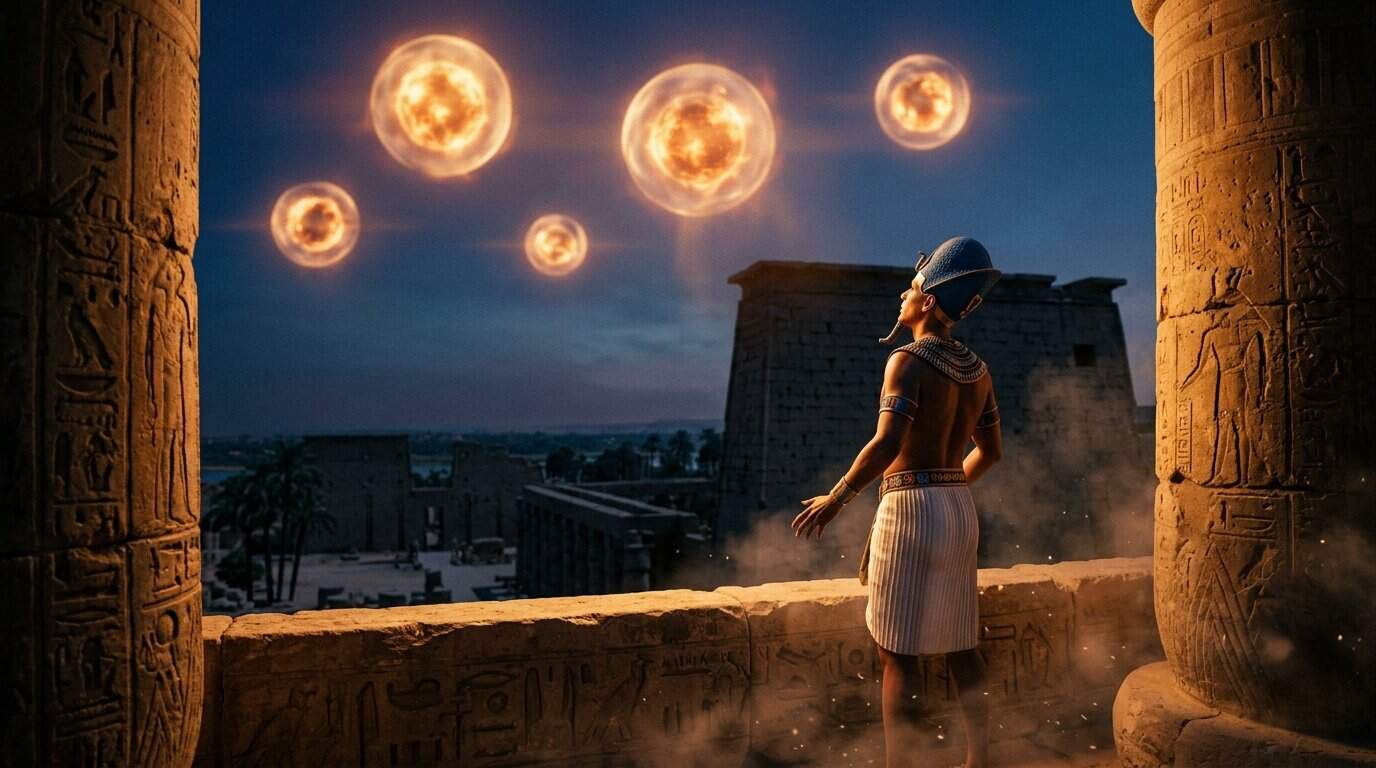
The narrative of the Tulli Papyrus begins during the twenty second year of the reign of Thutmose III, a period when Egypt was at the height of its military power. According to the translation provided by Prince Boris de Rachewiltz, the royal scribes recorded a terrifying yet awe inspiring sight in the sky. A strange circle of fire, described as having no head and emitting a foul odor, silently glided over the desert landscape. The Pharaoh and his elite army watched in stunned silence as this celestial visitor moved toward the horizon. This account suggests that the ancient Egyptians were witnessing something far beyond their understanding of natural phenomena or traditional mythology.
As the days progressed, the single fiery disk was joined by a massive fleet of similar objects that filled the entire sky. These glowing orbs reportedly shone brighter than the sun, stretching across the four supports of the heavens to create a spectacle of light. Thutmose III ordered his army to observe the objects closely while he offered incense to the gods to seek protection. The document claims that these objects eventually ascended higher into the atmosphere before heading toward the south. This coordinated movement led many researchers to wonder if the Pharaoh was documenting a structured aerial formation rather than a random atmospheric event.
The sheer scale of this encounter raises fascinating questions about what truly happened over the Nile thousands of years ago. While some modern critics argue that the text might be a clever reproduction or a misunderstanding of weather patterns, the descriptions of silent flight and metallic brilliance remain captivating. The Tulli Papyrus serves as a bridge between the rigid history of the 18th Dynasty and the mysterious world of unidentified aerial phenomena. If the scribes were truly recording an objective physical event, this document could stand as the oldest official military report of a UFO sighting in human history. Do you think these fiery disks were a misunderstood natural omen, or did the Pharaoh witness a visit from a distant world?
Prince Boris De Rachewiltz And The Translation Controversy
The mystery of the Tulli Papyrus reached a fever pitch in 1953 when Prince Boris de Rachewiltz published his sensational translation. Rachewiltz claimed to have discovered the transcription among the late Alberto Tulli’s private papers, bringing the story of ancient circles of fire to the global stage. His translation described a bizarre event during the 22nd year of Pharaoh Thutmose III’s reign, where strange objects appeared in the sky and shone brighter than the sun. According to the Prince’s account, these celestial intruders emitted a foul odor and eventually ascended high into the heavens before disappearing toward the south. This narrative immediately captured the imagination of the public, as it sounded remarkably like a modern close encounter documented thousands of years ago.
Ancient astronaut theorists point to this specific translation as smoking gun evidence that extraterrestrials visited Earth during the height of the Egyptian Empire. They argue that the descriptions of silent, glowing disks and their organized flight patterns perfectly match contemporary UFO reports. Scholars and skeptics, however, remain deeply divided over the legitimacy of the Prince’s work and the existence of the original document. Many researchers note that the original papyrus has never been found in the Vatican archives, leading to intense debates about whether the text was a clever 20th century hoax. Despite these doubts, the story persists because it challenges our understanding of history and suggests that the Pharaohs might have witnessed something truly out of this world.
The controversy surrounding Rachewiltz’s translation serves as a bridge between traditional archaeology and the search for alien life. While critics highlight linguistic inconsistencies in the hieratic script, others believe the Prince was simply translating a genuine historical anomaly that the world wasn’t ready to accept. This tension creates a fascinating puzzle that remains unsolved to this day, as no one can definitively prove or disprove the contents of the missing scroll. Whether it was a profound record of a mass sighting or a masterful piece of fiction, the Tulli Papyrus continues to haunt the halls of Egyptology. We are left to wonder if a hidden piece of our past is still waiting to be rediscovered in a dusty corner of a private collection.
Sifting Through The Vatican Secret Archive Rumors
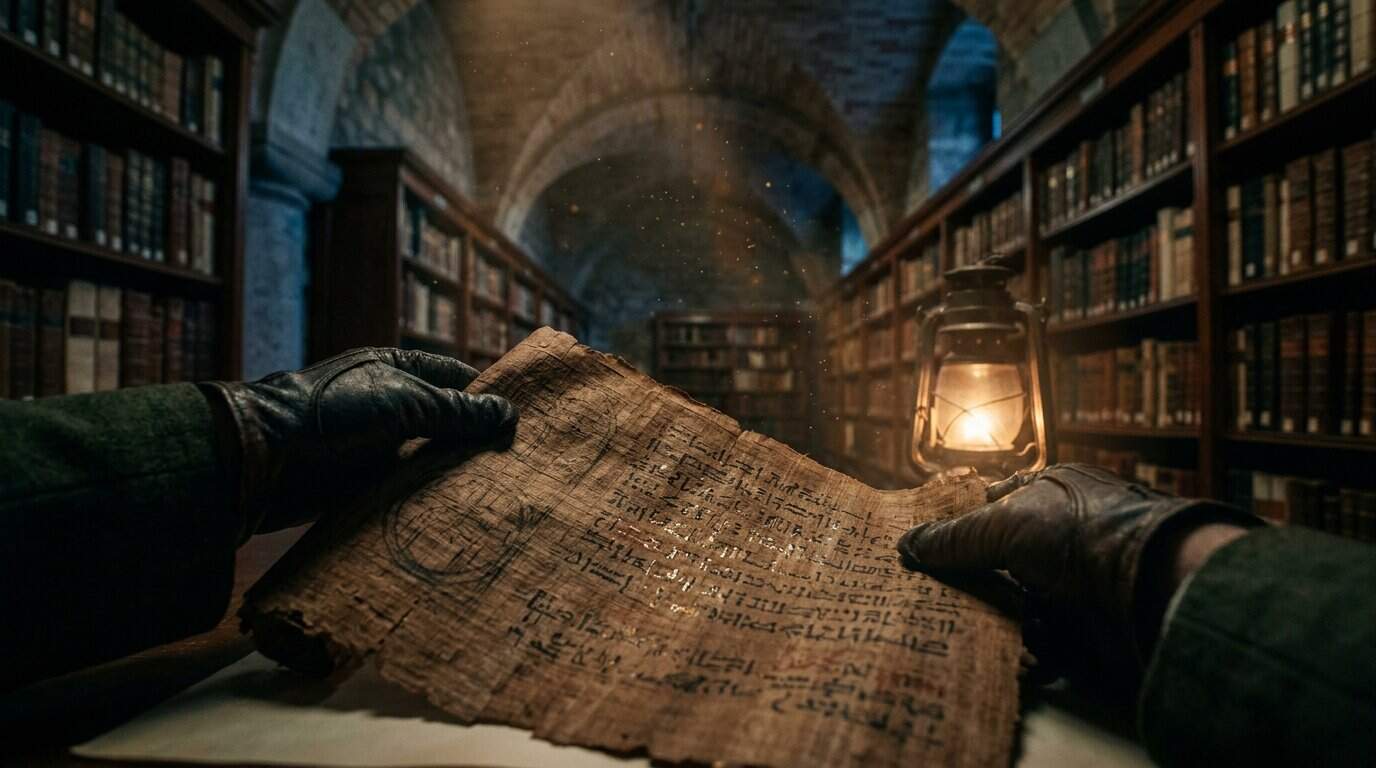
The legend of the Tulli Papyrus often centers on the labyrinthine halls of the Vatican Secret Archive, where many believe the original scroll is tucked away from public view. This narrative suggests that Alberto Tulli, a former director of the Vatican Museum’s Egyptian gallery, encountered the document in a Cairo antique shop but could only afford to transcribe it rather than buy it. While the Vatican has officially denied possessing the original artifact, the persistent rumors keep the mystery alive for those who believe the Church is guarding evidence of ancient extraterrestrial contact. This atmospheric backdrop of hidden vaults and whispered secrets adds a layer of high stakes to the search for the truth.
Scientific scrutiny has cast a shadow of doubt on the document’s authenticity, leading many researchers to classify it as a clever 20th century modern myth. Critics point out that the transcription published by Prince Boris de Rachewiltz contains grammatical errors and phrases that do not align perfectly with the language of the Thutmose III era. Some experts suggest the text might have been pieced together from a popular Egyptian grammar book of the time, which would explain the familiar yet slightly off vocabulary. Despite these red flags, the lack of an original physical specimen to test makes it impossible to definitively prove or disprove its ancient origins.
Even with the evidence pointing toward a possible forgery, the story remains a cornerstone of ancient astronaut theory because of its vivid descriptions of fiery disks in the sky. If the transcription is somehow accurate, it would represent one of the oldest recorded mass UFO sightings in human history, occurring long before modern technology existed. Much like the 1561 Nuremberg UFO battle, these accounts challenge our perception of reality and demand a closer look at the evidence. The debate continues to balance between the cold reality of historical skepticism and the thrilling possibility that a genuine record of the unknown was once held in Tulli’s hands. Whether it is a masterpiece of deception or a misplaced piece of history, the papyrus forces us to question how much of our past remains buried in the shadows.
The Eternal Legacy of the Fiery Disks
The Tulli Papyrus remains one of the most captivating enigmas at the intersection of ancient history and extraterrestrial theory. Whether it represents a genuine record of fiery disks during the reign of Thutmose III or a clever modern fabrication, its influence on our curiosity about the stars is undeniable. The story bridges the gap between the rigid archives of the Vatican and the boundless imagination of those who look for life beyond Earth. Even without the original document in hand, the transcription continues to spark debate among scholars and enthusiasts alike. This enduring legacy ensures that the mystery of the pharaoh’s sky remains a staple of historical intrigue.
While modern skepticism points toward a 20th century hoax, the possibility of a lost truth keeps the legend alive for many. If a mass UFO sighting truly occurred over three thousand years ago, it would fundamentally change our understanding of human history and our place in the cosmos. Investigating these claims requires a delicate balance of critical thinking and an open mind toward the unexplained. Every translation and investigation adds a new layer to this complex puzzle, reminding us that some secrets of the past are not easily unraveled. The papyrus serves as a symbol for the many hidden histories that might still be waiting for discovery in the dusty corners of the world.
What do you believe is the true origin of this mysterious ancient text? Do you think the Tulli Papyrus is a genuine account of an ancient encounter that has been suppressed, or is it simply a creative myth born from the curiosity of the 1930s? The debate between scientific evidence and the allure of the unknown is what makes this story so fascinating for every generation. Much like the 1977 Colares UFO incidents, these accounts challenge our perception of reality and demand a closer look at the evidence. We invite you to share your thoughts and theories on whether this document is a window into the past or a masterfully crafted legend. Your perspective helps keep the conversation going as we continue to explore the many mysteries that define our world.
Frequently Asked Questions
1. What exactly is the Tulli Papyrus?
The Tulli Papyrus is a controversial document discovered in 1933 that reportedly describes a fleet of fiery disks appearing over ancient Egypt. It is believed to date back to the 18th Dynasty during the reign of Pharaoh Thutmose III. While the original artifact is currently missing, the text remains a cornerstone for those studying potential extraterrestrial visits in antiquity.
2. Who was Alberto Tulli and why is he important?
Alberto Tulli served as the director of the Egyptian section of the Vatican Museum and was a respected figure in the world of archaeology. His discovery of the papyrus in a Cairo antique shop provided the first modern account of this strange historical event. Because he was unable to afford the original artifact, his handwritten transcription is the primary source that keeps this mystery alive today.
3. Did Pharaoh Thutmose III actually see UFOs?
The translated text claims that the Pharaoh and his army witnessed silent, glowing circles of light that filled the sky and outshone the sun. According to the transcription, these objects moved toward the south before disappearing into the heavens. While mainstream historians remain skeptical, the detailed descriptions of the event suggest a significant aerial phenomenon occurred during his reign.
4. Where is the original Tulli Papyrus located now?
The original papyrus has vanished from the public eye and its current location remains a total mystery. After Alberto Tulli found it in Cairo, the artifact was sold to a private collector and never resurfaced in any museum. This lack of a physical specimen is often used by critics to argue that the document might have been a clever fabrication or a misinterpretation.
5. How did Prince Boris de Rachewiltz contribute to the story?
Prince Boris de Rachewiltz claimed to have found Tulli’s original notes among the director’s private papers years after his death. He translated the hieratic script into Italian and shared the story of the fiery disks with the global community. His involvement brought the Tulli Papyrus into the spotlight of modern ufology and sparked renewed scientific interest in the document.
6. Is there any scientific evidence that the papyrus is real?
There is no direct scientific evidence because the original papyrus cannot be carbon dated or physically examined by experts. Researchers must rely on the accuracy of the transcription provided by Tulli and the later translation by de Rachewiltz. This leaves the debate open between those who see it as a genuine historical record and those who believe it is a modern myth.
7. Could the fiery disks have been a natural weather event?
Some skeptics suggest that the ancient Egyptians might have been describing a rare meteor shower or a group of ball lightning shells. However, the text describes the objects as being highly organized and remaining in the sky for several days. This specific behavior leads many to believe that the witnesses were observing something far more advanced than a simple natural phenomenon.