
Unraveling the Mystery of D.B. Cooper Theories
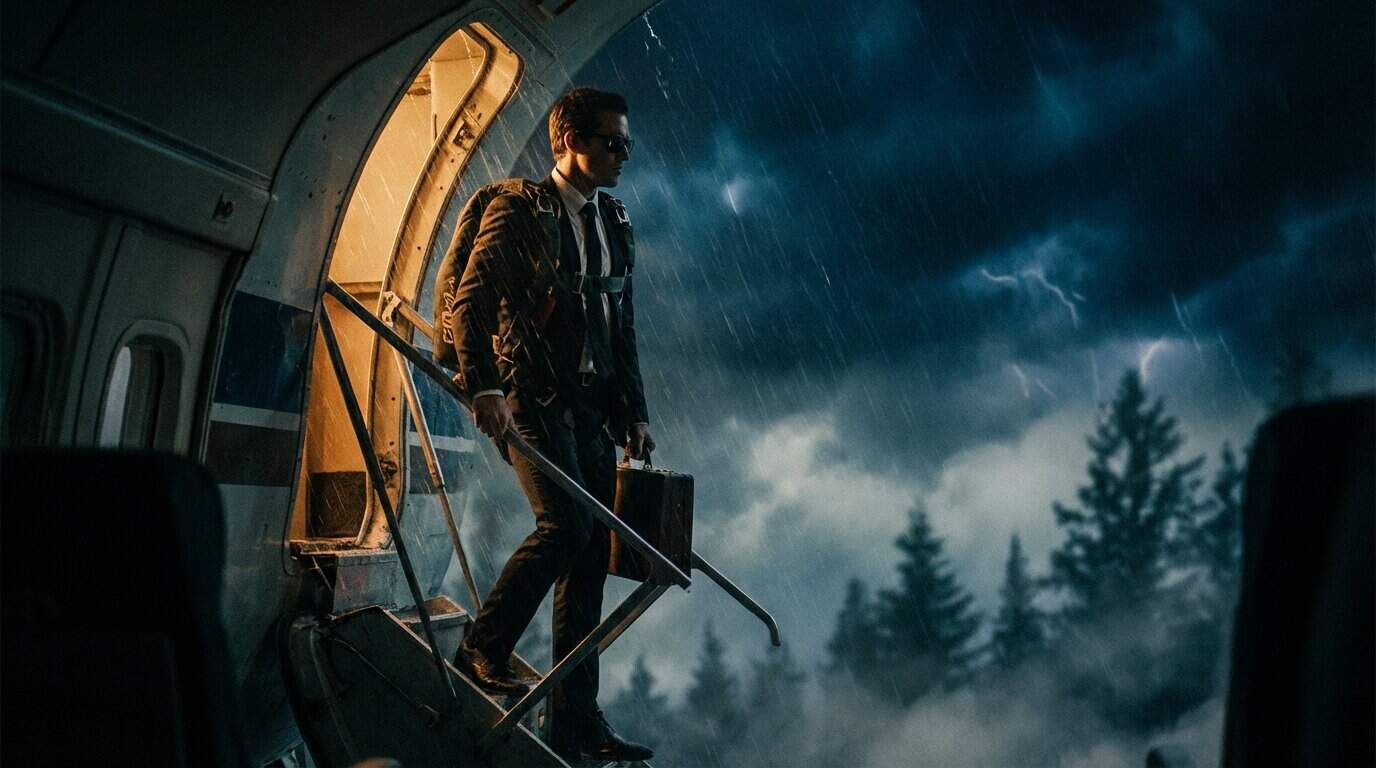
On a stormy Thanksgiving Eve in 1971, a nondescript man boarded a flight in Portland, Oregon, dressed in a dark suit and sunglasses. He ordered a bourbon and soda before handing a chilling note to the nearest flight attendant. This passenger, who checked in as Dan Cooper, calmly claimed to have a bomb inside his briefcase. What started as a routine holiday trip on Northwest Orient Flight 305 quickly became one of the most daring crimes in American history. The events of that night sparked a mystery that continues to captivate the world decades later.
Cooper demanded $200,000 in cash and four parachutes in exchange for the safety of the passengers on board. After receiving the ransom and releasing the hostages during a tense stop in Seattle, he ordered the flight crew to take off again toward Mexico. Somewhere over the rugged terrain of southwestern Washington, the hijacker lowered the rear airstair into the howling wind. With the money strapped to his body, he leaped into the freezing darkness and vanished without a trace. This dramatic exit remains the only unsolved commercial airline hijacking in the history of the United States.
The complete disappearance of the man later misidentified by the press as D.B. Cooper has fueled endless speculation for over fifty years. Because authorities never found a body or the majority of the money, many believe it is entirely possible he survived the fall. Theories range from a master criminal who pulled off the perfect heist to an inexperienced jumper who perished in the dense forest. Some investigators even suggest he might have been a former paratrooper with specialized knowledge of the area. Several compelling pieces of evidence and ideas attempt to explain this enduring puzzle.
Key Takeaways
- In 1971, a man identified as Dan Cooper hijacked a Northwest Orient flight and parachuted into the night with $200,000, committing the only unsolved commercial airline hijacking in U.S. history.
- Evidence such as the freezing weather conditions, the hijacker’s inadequate clothing, and his selection of a non-functional reserve parachute supports the theory that he died during the jump.
- Investigators have examined compelling suspects like copycat hijacker Richard McCoy Jr. and special ops veteran Robert Rackstraw, but the FBI eventually cleared them due to alibis or physical discrepancies.
- The discovery of rotting ransom money along the Columbia River nine years later remains a primary piece of physical evidence, suggesting the hijacker and his loot may have been lost to the wilderness.
Evidence Supporting the Fatal Plunge Theory
The most compelling argument for Cooper’s demise begins with the brutal conditions awaiting him outside the aircraft. On that November night, he leaped into a freezing rainstorm with an ambient temperature near seven degrees below zero. Experts point out that he was dressed in a simple business suit and trench coat rather than thermal protective gear. Without a helmet or goggles, the 200 mph wind blast alone would have been disorienting enough to cause immediate trouble. Many experienced skydivers argue that surviving such a jump without professional equipment is nearly impossible.
Beyond the weather, Cooper’s choice of equipment suggests he might not have been an expert skydiver after all. He demanded four parachutes but mistakenly selected an older, non-steerable military model for his descent. Even more telling is that he cut up a perfectly good reserve chute to secure the money bag. Investigators later noted that the other reserve chute he took was actually a dummy unit sewn shut for classroom demonstrations. A seasoned jumper would likely have checked his gear, but Cooper jumped into the dark with a useless backup.
The strongest physical proof that the hijacker failed to land safely appeared nine years later along the Columbia River. A young boy named Brian Ingram discovered three bundles of rotting cash buried in the sand at a spot known as Tena Bar. The FBI confirmed the serial numbers matched the ransom money, yet the bills were still banded together in their original order. Geologists theorized that the money likely washed down from upstream and got buried naturally over time. This discovery leads many to believe Cooper and his loot slammed into the wilderness and never made it back to civilization.
The Richard McCoy Jr. Copycat Hypothesis
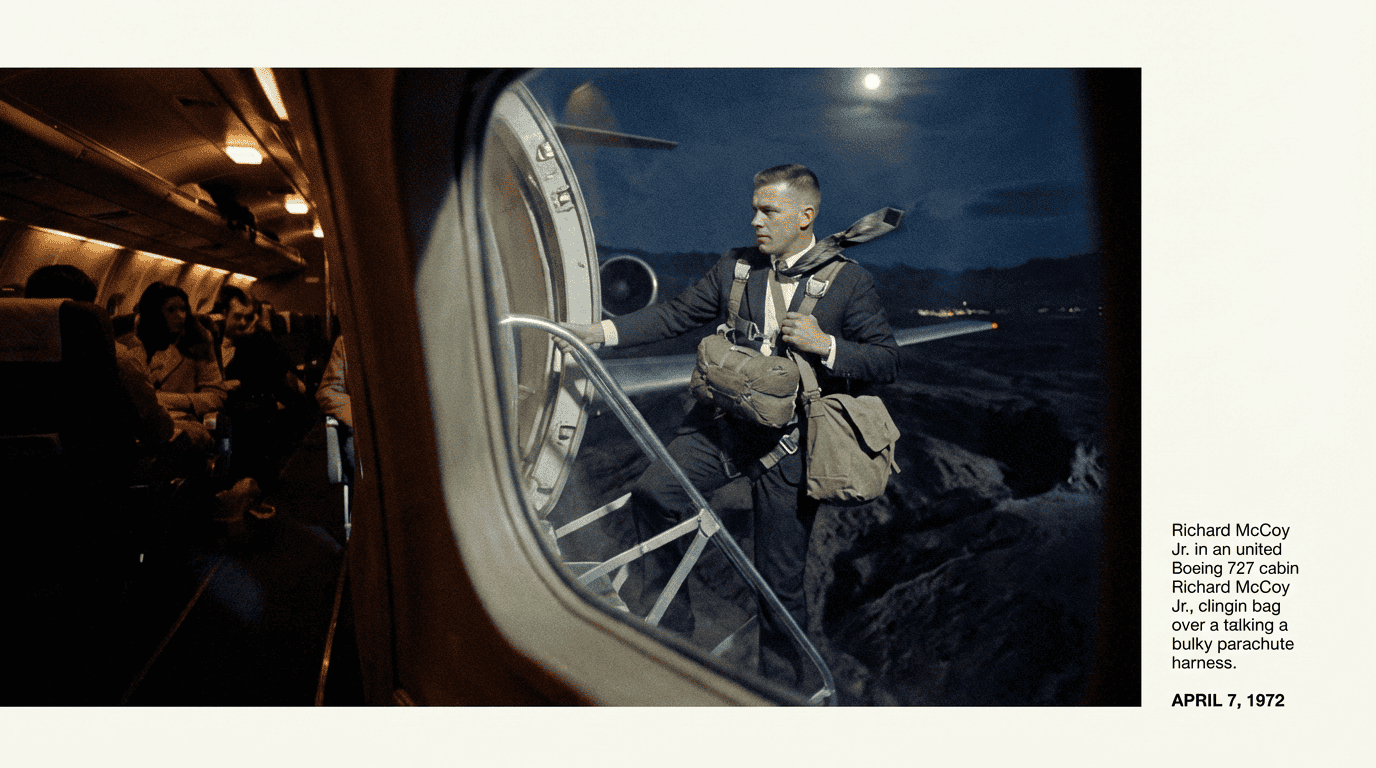
Among the list of suspects, Richard McCoy Jr. stands out because he successfully pulled off a nearly identical crime just five months after Cooper vanished. McCoy was a Vietnam War veteran and an experienced skydiver who clearly possessed the skills needed to survive such a dangerous jump. In April 1972, he boarded a United Airlines flight and demanded $500,000 in cash along with four parachutes. Like Cooper, he jumped from the rear stairs of a Boeing 727 over Utah. The similarities between the two events led investigators to wonder if the copycat was actually the original hijacker coming back for a second round.
Law enforcement caught up with McCoy just two days after his jump, thanks to fingerprints found on a magazine he left behind. When agents searched his home, they found a handmade electric blasting cap and a parachute harness. Many researchers point out that McCoy physically resembled the police sketches of Cooper and even owned a pearl tie tack very similar to the one Cooper left on the plane. Despite these striking coincidences, the FBI eventually ruled him out as a suspect for the November hijacking because he was supposedly in Las Vegas for Thanksgiving. However, former FBI agents and authors like Bernie Rhodes and Russell Calame firmly believe McCoy was the man behind both masks.
Robert Rackstraw and the Secret History Claims
Among the many names put forward over the decades, Robert Rackstraw stands out as one of the most compelling suspects. He was a Vietnam War veteran with an impressive set of skills that seemed perfectly tailored for the daring heist. Rackstraw served as a special ops paratrooper and had extensive training in explosives, which aligns with the bomb threat used during the hijacking. Furthermore, he was a skilled pilot who would have understood the flight path and mechanics of the Boeing 727. Many investigators believe his physical resemblance to the police sketches created in 1971 is undeniable.
The theory gained significant traction due to the work of a cold case team led by author Thomas Colbert. This group spent years digging into Rackstraw’s life and claimed to have found coded messages in letters allegedly sent by Cooper. When confronted by reporters and filmmakers, Rackstraw often played a cat-and-mouse game rather than issuing a flat denial. He would smile or give cryptic answers that suggested he enjoyed the attention and the mystery surrounding his name. This behavior convinced many onlookers that he was hiding a massive secret about that night in the Pacific Northwest.
Despite the mounting circumstantial evidence presented by independent sleuths, the FBI officially cleared Rackstraw of suspicion before closing the case. Agents noted that he was much younger than the descriptions provided by the flight attendants on board. However, supporters of this theory argue that makeup or disguises could have easily aged him during the crime. Rackstraw passed away in 2019 without ever confessing, taking any potential truth he held to the grave. His story remains a favorite for those who believe the hijacker survived the jump and lived a full life afterward.
The Enduring Mystery of the Skyjacker’s Fate
Decades of searching have produced more questions than answers regarding the fate of the mysterious skyjacker. Physical clues like the microscopic particles found on the abandoned clip-on tie suggest a man with specific industrial knowledge. However, the most compelling suspects often fail to match these forensic details or have solid alibis for that stormy night. The discovery of rotting ransom money along the Columbia River years later only added to the confusion rather than solving the puzzle. It seems that for every piece of evidence that points in one direction, another clue emerges to contradict it entirely.
This contradiction leaves investigators and amateur sleuths stuck between two very different realities. One theory paints Cooper as a brilliant mastermind who escaped with the cash to live a quiet life in hiding. The opposing view argues that the harsh elements and a dangerous jump into the night claimed his life immediately. Without a body or a confirmed identity, the legend of D.B. Cooper remains open to endless interpretation and speculation. Do you believe the hijacker survived the fall to spend his loot, or did the wilderness swallow the evidence of a perfect crime?
Frequently Asked Questions
1. Who was D.B. Cooper?
He was a mysterious passenger who hijacked Northwest Orient Flight 305 on Thanksgiving Eve in 1971. Using the alias Dan Cooper, he claimed to have a bomb and successfully demanded a ransom before vanishing. He remains the subject of the only unsolved commercial airline hijacking in United States history.
2. Did D.B. Cooper survive the jump?
This question fuels endless debate among investigators and mystery enthusiasts. While the freezing storm and rough terrain suggest a fatal outcome, the fact that no body was ever found leaves the possibility open. Many theories propose that a skilled jumper could have survived the fall and escaped with the money.
3. How much money did Cooper steal?
Cooper demanded and received $200,000 in cash along with four parachutes. He strapped the bundles of money to his body before lowering the airstair and jumping into the night. Despite extensive searches, the vast majority of this cash has never been recovered.
4. How did he escape the airplane mid-flight?
Cooper took advantage of the rear airstair design on the Boeing 727 aircraft. He ordered the flight crew to fly at a low altitude and slow speed toward Mexico. Somewhere over the wilderness of southwestern Washington, he lowered the stairs and leaped into the darkness.
5. Why is he called D.B. Cooper if his ticket said Dan?
The hijacker actually checked in under the name Dan Cooper. A reporter rushing to meet a deadline mistakenly used the name of a different suspect, D.B. Cooper, and the error was published nationwide. The media stuck with the incorrect initial, creating the legendary name we know today.
6. What is the fatal plunge theory?
The fatal plunge theory argues that Cooper likely died due to the brutal weather conditions that night. He jumped into a freezing storm wearing only a business suit, which offered little protection against the elements. Supporters of this view believe an inexperienced jumper would not have survived the landing in the dense forest.