Unlocking The Mind: Practical Remote Viewing Techniques From The Stargate Project
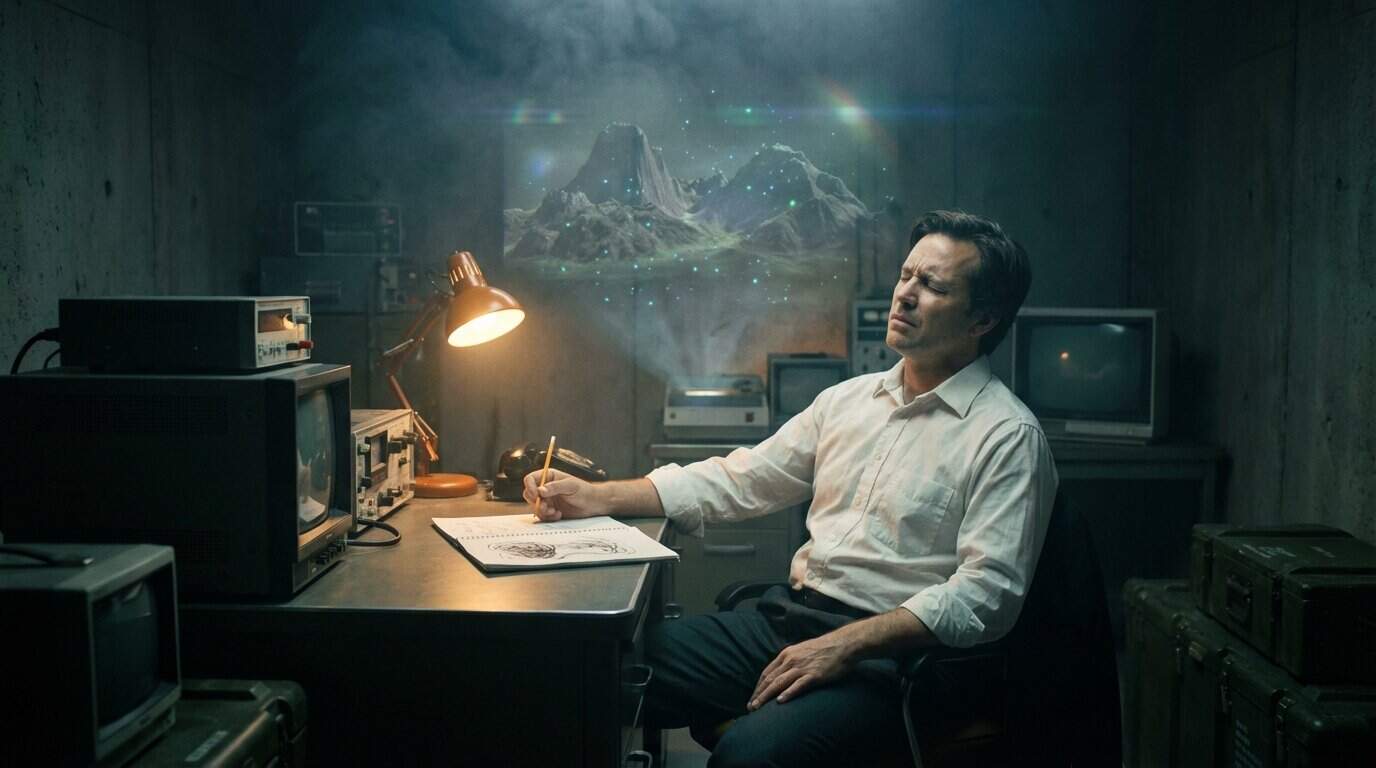
In a quiet, windowless room, a person sits with a pen and paper, attempting to describe a secret location thousands of miles away. This scenario describes a real historical experiment conducted by government agencies investigating specific remote viewing techniques. For decades, researchers at places like Stanford Research Institute explored whether the human mind could traverse space and time to gather intelligence without ever leaving a chair.
Proponents claim this phenomenon serves as a trainable skill rather than a rare magical gift. By following structured protocols, such as Controlled Remote Viewing, practitioners aim to separate random imagination from actual sensory data coming from a distant target. While mainstream science often debates the results, the detailed records from Project Stargate suggest that human consciousness might be far more expansive than we typically believe.
Key Takeaways
- Remote viewing functions as a disciplined, teachable skill rather than a rare mystical gift, relying on structured protocols to access non-local information.
- The Controlled Remote Viewing protocol utilizes specific stages to guide the mind from simple sensory sketches to complex, three-dimensional models of a target.
- Practitioners must learn to identify and discard Analytical Overlay, which occurs when the logical mind attempts to interpret raw psychic data into incorrect guesses.
- Associative Remote Viewing allows for forecasting future events by linking binary outcomes to distinct images, bypassing the difficulty of perceiving abstract numbers directly.
The Structured Stages Of Controlled Remote Viewing
Ingo Swann developed Controlled Remote Viewing at Stanford Research Institute to turn psychic functioning into a teachable skill. This protocol breaks the process down into specific phases that help the viewer separate imagination from actual psychic signals. The session usually begins with Stage 1, where the viewer produces a rapid doodle or ideogram that captures the basic motion or feeling of the target. Immediately following this, Stage 2 focuses on raw sensory data like distinct smells, textures, temperatures, or colors associated with the site. By Stage 3, the viewer starts to perceive dimension, allowing them to sketch broader shapes and physical layouts without yet trying to identify what the object actually is.
Once the physical foundation is set, the protocol guides the mind toward more abstract information. In Stage 4, the viewer begins to receive complex concepts, often described as a flood of information regarding the purpose, emotions, or function of the target. This critical phase acts as a bridge to Stage 5, where specific details can be interrogated to refine the data further. Finally, Stage 6 involves creating a three-dimensional model of the target, allowing the viewer to kinesthetically explore the location as if they were physically present. This structured climb from simple scribbles to full immersion helps prevent the analytical mind from guessing too early.
Accessing The Hypnagogic State In Extended Remote Viewing
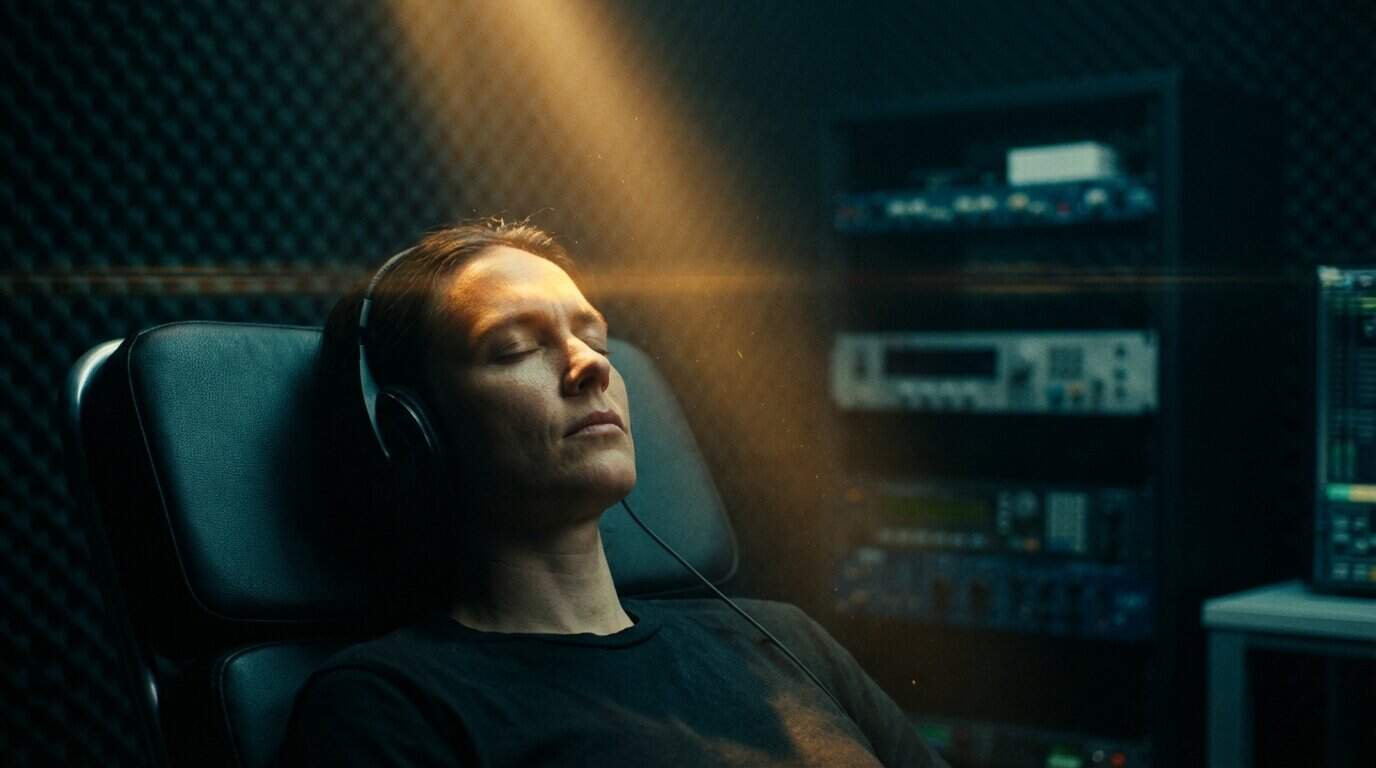
While Controlled Remote Viewing relies on pen and paper at a desk, Extended Remote Viewing asks the viewer to lie down and drift into the twilight zone of consciousness. The primary goal here is to guide the brain out of the alert beta state and down into the slower, rhythmic pulses of theta waves. This specific frequency, often associated with deep meditation or the moments just before sleep, acts as a bridge to the subconscious mind. Viewers often describe this hypnagogic state as a mental space where visual data becomes clearer and less filtered by the analytical mind. By quieting the body completely, the practitioner creates a blank canvas where subtle psychic impressions can finally be seen.
Achieving this delicate balance between wakefulness and sleep usually requires a systematic approach to physical relaxation. Many practitioners begin with progressive muscle relaxation, where they tense and then release every muscle group from their toes up to their head. Once the physical body feels heavy and asleep, the viewer might use visualization techniques like walking down a long staircase or descending in an elevator. These mental exercises signal the conscious mind that it is time to step back and allow intuitive perceptions to take the lead. The challenge lies in maintaining just enough awareness to observe and remember the incoming data without actually falling asleep.
In this deeply relaxed environment, the viewer does not hunt for information but rather allows the target to reveal itself naturally. Images often appear as fleeting dream fragments that must be observed passively without immediate analysis or judgment. Experienced viewers, such as those trained in military units like the Stargate Project, learned to hold this fluid state for extended periods to gather detailed intelligence. Staying grounded is essential, so many sessions conclude with a deliberate countdown to return the mind to normal waking consciousness. Mastering this transition allows the viewer to bring back subconscious insights into the waking world with clarity and precision.
Forecasting Outcomes Using Associative Remote Viewing
Associative Remote Viewing offers a clever workaround for those attempting to predict future events with high accuracy. Instead of trying to see a fluctuating stock number or a specific sports score directly, the viewer targets an unrelated image associated with a specific outcome. This method relies on the idea that describing a distinct picture is easier for the subconscious than grasping abstract data like numbers or financial trends. Researchers and enthusiasts often use this technique when experimenting with binary choices, such as whether a market will go up or down. By removing the analytical pressure of guessing the event itself, the viewer focuses purely on describing sensory details like colors and shapes.
The process begins by selecting two very different images to represent two possible outcomes of a future event. For example, a photo of a waterfall might represent a win for one team, while a picture of a desert represents a win for the other. The viewer, who is kept blind to the specific question and the images, simply describes the impressions they receive during their session. An independent judge then compares the viewer’s sketch and notes against the two potential images to see which one matches best. If the description clearly resembles the waterfall, the prediction points toward that specific team winning the game.
Many practitioners have applied this structured approach to financial markets and sports betting with intriguing results. While it is not a guaranteed way to win the lottery, studies by researchers like Russell Targ suggest that consistent application can yield results above chance. The key to success in these experiments appears to be the ability to detach from the desire for a specific outcome. When the viewer remains neutral and follows the protocol strictly, the associative link between the target and the future event seems to strengthen. This fascinating application transforms remote viewing from a passive observation tool into a proactive method for decision making.
Distinguishing Signal From Noise With Analytical Overlay

In the structured world of Controlled Remote Viewing, the biggest hurdle for beginners is often their own imagination rather than a lack of psychic ability. Ingo Swann, the artist and psychic who helped develop these protocols at the Stanford Research Institute, coined the term Analytical Overlay to describe this mental interference. It happens when the logical mind attempts to interpret raw sensory data too quickly, turning a vague impression of something red and hot into a specific but incorrect guess like a fire truck. Successful viewers learn to catch these snap judgments immediately, declaring them as AOL and writing them down on the side of the paper to discard them. This process acts like clearing a cache, allowing the subtle, true signal from the target to flow through without distortion.
The history of government-sponsored research suggests that remote viewing is much more of a disciplined skill than a rare mystical gift. While the Stargate Project eventually closed, the legacy of its training manuals proves that consistency often outweighs natural talent when it comes to psychic functioning. Readers are encouraged to take these established protocols and attempt a simple session, perhaps by asking a friend to select a hidden photo as a target. The barrier to entry is low, and with patience, the results might just challenge the boundaries of what is considered possible. Taking that first step into the unknown is the only way to know the truth is to attempt a session.
From Random Visions to Controlled Remote Viewing
Remote viewing moves beyond simple intuition into a structured skill set that anyone can practice. By following the stages of Controlled Remote Viewing, practitioners learn to separate raw data from imagination. The protocols developed by Ingo Swann and researchers at SRI provide a roadmap for accessing non-local information. Success relies on discipline and the ability to follow specific steps rather than waiting for a random vision. This approach transforms a mysterious psychic phenomenon into a trainable mental exercise.
Mastering these techniques requires patience as the mind learns to quiet its internal chatter. The biggest hurdle for beginners is strictly distinguishing between actual psychic signal and the brain’s tendency to guess. Regular practice helps viewers identify these analytical overlays and push them aside to reveal the target. Over time, the process becomes more fluid as the subconscious mind learns to communicate clearly. Even without a government budget, dedicated individuals can achieve surprising results through consistent effort.
Exploring the limits of human consciousness offers a fascinating journey regardless of the final outcome. These methods provide a practical toolkit for testing the boundaries of space and time from a quiet room. Whether one views this as hard science or a spiritual practice, the only way to know the truth is to attempt a session. The history of the Stargate program suggests that human potential is far greater than generally accepted. What might you discover if you learned to see beyond the walls of your own home?
Frequently Asked Questions
1. What is Controlled Remote Viewing?
Controlled Remote Viewing is a structured protocol developed to turn psychic functioning into a teachable skill. It breaks the process down into specific phases that help the viewer separate imagination from actual psychic signals. This method allows a person to describe a distant target by following a strict set of rules.
2. Is remote viewing a rare magical gift?
Most practitioners believe this is a trainable skill that anyone can learn with patience. Researchers at Stanford Research Institute spent years developing protocols to prove that this ability is not just for a chosen few. The goal is to train the mind to access information that is usually hidden from normal senses.
3. How does a remote viewing session begin?
A session typically starts with Stage 1, where the viewer produces a rapid doodle known as an ideogram. This simple sketch captures the basic motion or feeling of the target site without trying to identify it. It serves as the initial connection between the viewer and the distant location.
4. What kind of details can a viewer perceive?
As the session progresses into Stage 2, the viewer begins to report raw sensory data like smells, textures, temperatures, and colors. These details help build a comprehensive picture of the target before the mind tries to label what it is seeing. This phase focuses on pure sensation rather than logical analysis.
5. Did the government really study remote viewing?
Yes, agencies formally investigated these techniques through programs like Project Stargate. Detailed records show that researchers explored whether human consciousness could traverse space and time to gather intelligence. These historical experiments suggest that the mind may be capable of far more than traditional science suggests.
6. How do viewers avoid just guessing the target?
The protocols are designed to keep the logical, guessing part of the brain occupied while the intuitive mind works. By focusing on raw data like shapes and sensory feelings first, the viewer avoids jumping to conclusions. This structured approach helps separate true signal from random imagination.
7. What happens in the later stages of the process?
Once the physical layout is sketched in Stage 3, the viewer moves on to more complex concepts in Stage 4. This phase often involves a flood of information regarding the purpose, emotions, or meaning associated with the site. It allows for a deeper understanding of the target beyond just its physical appearance.