
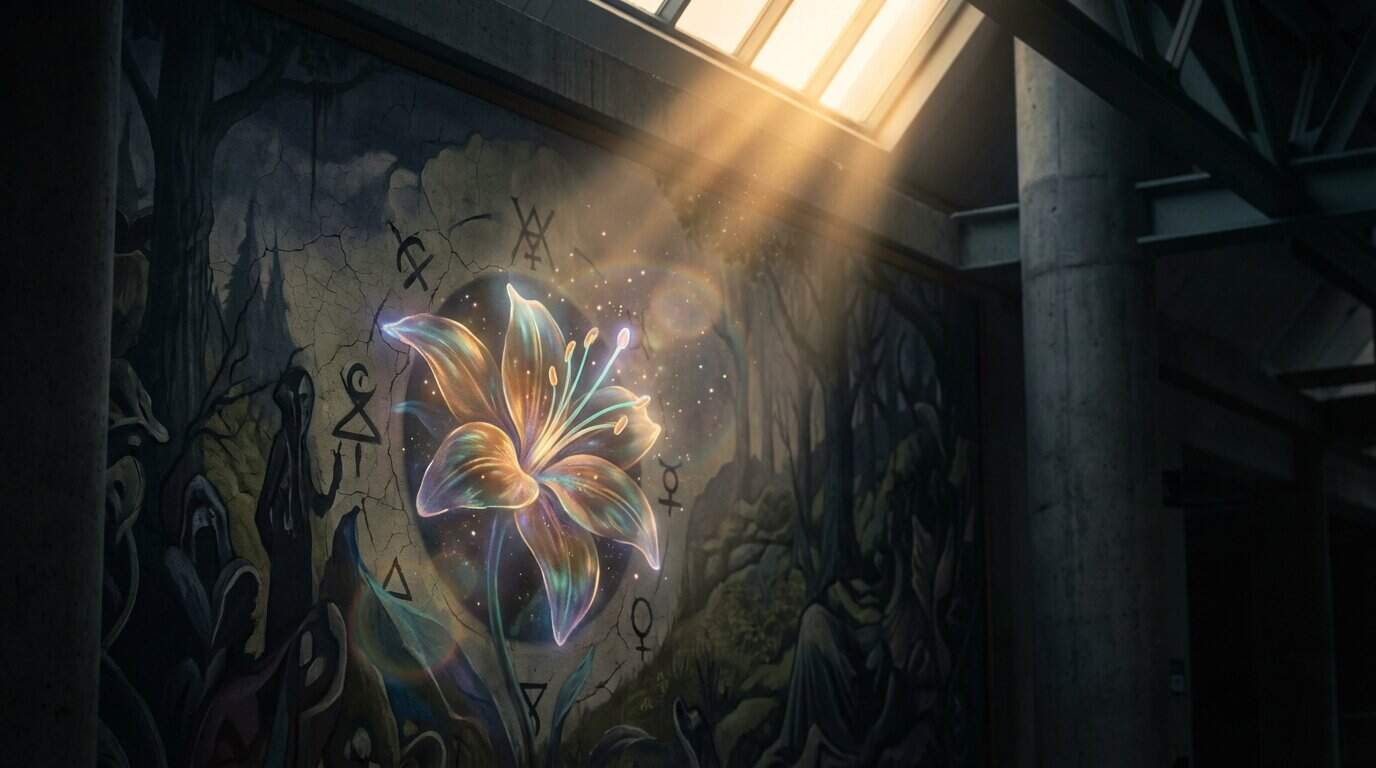
Unlocking The Denver Airport Murals Meaning: Art, Symbolism, And Conspiracy
Millions of travelers rush through Denver International Airport every year, dragging suitcases past some of the most fiercely debated public art in the world. High above the baggage claim, massive paintings depict apocalyptic scenes of menacing soldiers in gas masks, weeping mothers, and crumbling cities. For decades, curious onlookers have questioned the true Denver airport murals meaning, wondering if these striking images hold a darker, hidden message. While the official story points to a simple theme of global harmony, the unsettling details hidden in plain sight continue to fuel whispers of secret societies and underground bunkers.
Created by Chicano artist Leo Tanguma in 1995, the sprawling artwork is officially titled “Children of the World Dream of Peace.” The two-part narrative is meant to show humanity’s transition from global destruction to a bright future where children conquer war by handing over their weapons. Yet, when travelers actually stop to look at the terrifying, sword-wielding figure stabbing a white dove, it is hard not to feel a lingering sense of unease. Perhaps there is a deeper truth woven into this famous artwork, leaving room to wonder what secrets might actually be painted on the terminal walls.
Key Takeaways
- Created by artist Leo Tanguma in 1995, the Denver International Airport murals officially use the social realism style to depict humanity’s journey from war and environmental collapse to global peace.
- The inclusion of dark, apocalyptic imagery like gas-masked soldiers and ruined cities has fueled decades of conspiracy theories regarding secret societies and hidden global agendas.
- The stark visual contrast between terrifying devastation and utopian harmony creates a captivating modern enigma that continuously sparks intense debate among travelers.
Welcome To The Denver Airport Enigma
Countless passengers hurry through the sprawling halls of Denver International Airport every year, dragging suitcases past some of the most debated public art in the world. Amid the chaos of delayed flights and busy baggage claims, massive painted panels stretch across the walls to catch the eyes of curious onlookers. These enormous artworks were created by Chicano artist Leo Tanguma and installed back in 1995 when the airport first opened its doors to the public. At first glance, the bright colors and intricate details seem like standard terminal decorations meant to entertain weary passengers. However, a closer look reveals a startling collection of bizarre symbols and unsettling imagery that leaves many visitors scratching their heads.
The true Denver airport murals meaning has sparked countless debates between art historians and conspiracy theorists alike. Tanguma originally designed these pieces to tell a story of global harmony, showing humanity transitioning from a period of terrible destruction into a beautiful new era of peace. One of the most famous sections, titled “Children of the World Dream of Peace,” features a terrifying soldier in a gas mask destroying a white dove with a sword. This dark, menacing figure stands in stark contrast to the surrounding images of joyful children in traditional clothing from around the globe. Because of these intense and conflicting visuals, many observers wonder if a much deeper, hidden message is secretly woven into the paint.
Uncovering the secrets behind these captivating paintings requires an open mind and a willingness to explore the unknown. Some researchers suggest the artwork contains genuine clues about secret societies, underground bunkers, and future global events. While official sources insist the murals simply represent environmentalism and world peace, the sheer volume of strange details makes it hard to dismiss the alternative theories entirely. Travelers continue to pause in the terminal every single day to decode the mysterious messages hidden right in front of them. This exploration of the famous artwork examines both the historical facts and the chilling conspiracies that make this airport a true modern enigma.
Leo Tanguma And The Social Realism Vision
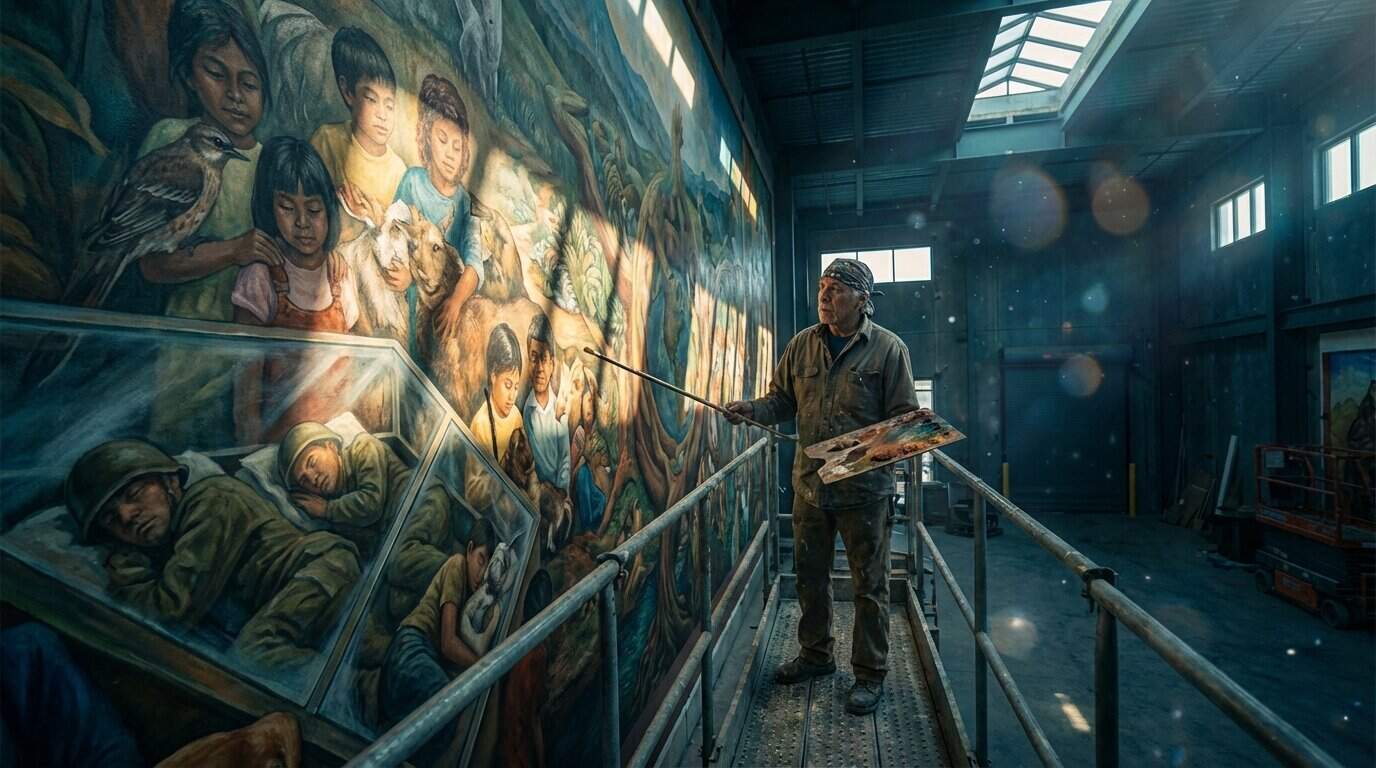
When the Denver International Airport opened its doors to the public in 1995, travelers were immediately struck by the massive and intense artwork dominating the baggage claim area. The creator behind these captivating pieces is Chicano artist Leo Tanguma. His artistic roots are deeply planted in social realism, a style that uses powerful and easily understood images to highlight human struggles and societal issues. Tanguma used this dramatic approach to craft a visual story that is supposed to guide viewers on a journey from global destruction to ultimate peace. Because social realism relies on bold and sometimes unsettling visuals to get its point across, the resulting murals ended up being far more intense than typical airport decorations.
The most heavily debated section of Tanguma’s work is the piece titled “Children of the World Dream of Peace.” One side of this mural features a terrifying soldier wearing a gas mask and wielding a scimitar actively stabbing a white dove. Below this towering figure, weeping mothers hold their babies while sleeping in the ruins of a destroyed city. Tanguma has stated that these horrifying details are meant to represent the dark side of humanity before a great awakening. However, the sheer brutality of these images has led many curious travelers to question if a more sinister agenda is being broadcast in plain sight.
Following the narrative flow of the artwork, the story eventually transitions into a bright scene of global unity and healing. Children from nations all over the globe are shown wearing traditional clothing and handing over their weapons to be destroyed. This part of the mural is meant to show the triumph of peace over war, completing Tanguma’s hopeful vision for the future of mankind. Even with this positive conclusion, the intense focus on a unified New World Order continues to fuel popular conspiracy theories today. It leaves visitors wondering if this dramatic social realism is simply a heartfelt plea for peace or a coded message about the future of our planet.
Children Of The World Dream Of Peace
Travelers waiting for their luggage in the Jeppesen Terminal are often caught off guard by the massive artwork looming over the baggage claim. Created in 1995 by Chicano artist Leo Tanguma, the first major mural series is titled “Children of the World Dream of Peace.” The painted narrative begins with a deeply unsettling dark side that feels entirely out of place in a bustling international transit hub. A towering, terrifying soldier wearing a gas mask dominates the scene while wielding a rifle and a scimitar that actively stabs a white dove. Below this monstrous figure, weeping mothers hold their sleeping children in the crumbling ruins of a destroyed city. This grim imagery has fueled countless theories about a hidden global agenda, making observers wonder if the artist was secretly instructed to paint a warning for humanity.
Moving further down the massive wall, the terrifying scene transitions into a hopeful light side that presents a stark visual contrast. Children from dozens of nations are shown wearing bright traditional clothing as they gather together to conquer the devastation of war. They are depicted joyfully handing over wrapped swords and guns to a German boy who uses a heavy hammer to forge the weapons into plowshares. Art historians note that Tanguma was simply illustrating a traditional social realist transition from human destruction to global harmony. Despite this official explanation, the bizarre and heavy-handed execution leaves many unsuspecting travelers feeling incredibly uneasy.
The striking visual symbolism embedded in these panels continues to spark intense debate among casual tourists and dedicated researchers alike. Many alternative theorists believe the gas-masked soldier represents an impending totalitarian government, while the peaceful children symbolize a strictly controlled global population. Official airport records insist the murals are merely a harmless celebration of world peace and environmental conservation. However, the sheer intensity of the apocalyptic imagery makes it very difficult to completely dismiss the darker interpretations. Does this massive piece of public art simply contain a hopeful message, or could these chaotic scenes actually be hiding a sinister blueprint for the future of humanity right in plain sight?
In Peace And Harmony With Nature

The second major artwork by Leo Tanguma at the Denver International Airport is a striking two-part mural titled “In Peace and Harmony with Nature.” Viewers are immediately confronted with a deeply unsettling scene of environmental destruction and human despair. In the foreground, three grieving children mourn over the bodies of extinct and endangered animals, including a sea turtle and a passenger pigeon. A raging forest fire and a bleak, polluted cityscape loom in the background, painting a grim picture of a world pushed to the brink of collapse. One of the children even holds a Mayan tablet that depicts the end of the world, a detail that immediately catches the eye of anyone looking for hidden messages.
Just beyond this apocalyptic wasteland, the mural transitions into a vibrant scene of global healing and rebirth. People from various cultures gather joyously around a glowing, magical plant, celebrating the return of a thriving and restored Earth. According to the artist, this dramatic shift simply illustrates a hopeful message about humanity waking up to its ecological mistakes and choosing to protect the environment. The stark contrast between total devastation and utopian harmony is meant to be a call to action for environmental conservation. However, the sheer intensity of the destructive imagery leaves a lasting impression that is hard for many travelers to shake off.
This intense blend of death and sudden rebirth is exactly what fuels so many dark theories about the true purpose of the airport. Conspiracy researchers often point to the extinct animals and the burning cities as a sinister blueprint for global depopulation orchestrated by a secret elite. They argue that the sudden transition to a pristine world represents a New World Order where only a chosen few are allowed to survive and enjoy the restored planet. While art experts maintain that the piece is a standard work of social realism, the bizarre placement of such terrifying visions in a busy public transit hub keeps the rumors alive. It is certainly easy to see why so many onlookers suspect these painted walls hold a much deeper, more apocalyptic warning for humanity.
Balancing Apocalyptic Conspiracies With Artistic Intent
For decades, the massive paintings inside the Denver International Airport have served as a breeding ground for wild internet theories about secret societies and hidden global agendas. When travelers first walk past these striking pieces, they are often stopped in their tracks by the towering figure of a menacing soldier wearing a gas mask and wielding a scimitar. According to numerous online researchers and alternative historians, this terrifying imagery points to a dark roadmap for the future of humanity orchestrated by an unknown elite. The presence of weeping mothers and ruined cities in the background only adds fuel to the fire, making it easy to see why so many believe these walls hide an apocalyptic warning. While some dismiss these ideas as pure fiction, the sheer intensity and strange placement of such dark art in a bustling transit hub keep these fringe theories very much alive.
Looking beyond the sinister rumors reveals a very different story documented by the creator himself, Chicano artist Leo Tanguma. Tanguma designed these multi-panel narratives in the tradition of social realism to showcase a journey from human-driven destruction to a bright future of global peace. The second half of his famous series, titled “Children of the World Dream of Peace,” shows kids from every nation dressed in traditional clothing coming together to conquer war. In a powerful display of unity, these children are depicted handing over weapons wrapped in flags to a German boy who beats them into plowshares. Art historians and local cultural experts note that this vivid progression was always intended to be a message of environmental restoration and hope rather than a sinister prophecy.
The stark contrast between terrifying destruction and joyful unity is exactly what makes the Denver airport murals so endlessly fascinating. It is entirely possible that the artist simply wanted to highlight the harsh realities of our world before showing a path to salvation, just as official records claim. However, the persistent whispers of underground bunkers and hidden Masonic symbols nearby make it hard to completely ignore the more mysterious interpretations. This fascinating blend of documented artistic vision and unexplained airport oddities leaves travelers with plenty to ponder during a long layover. Do you think these colorful walls are just a misunderstood masterpiece of social realism, or could they actually be hiding a secret message in plain sight?
Final Thoughts On The Terminal Masterpieces
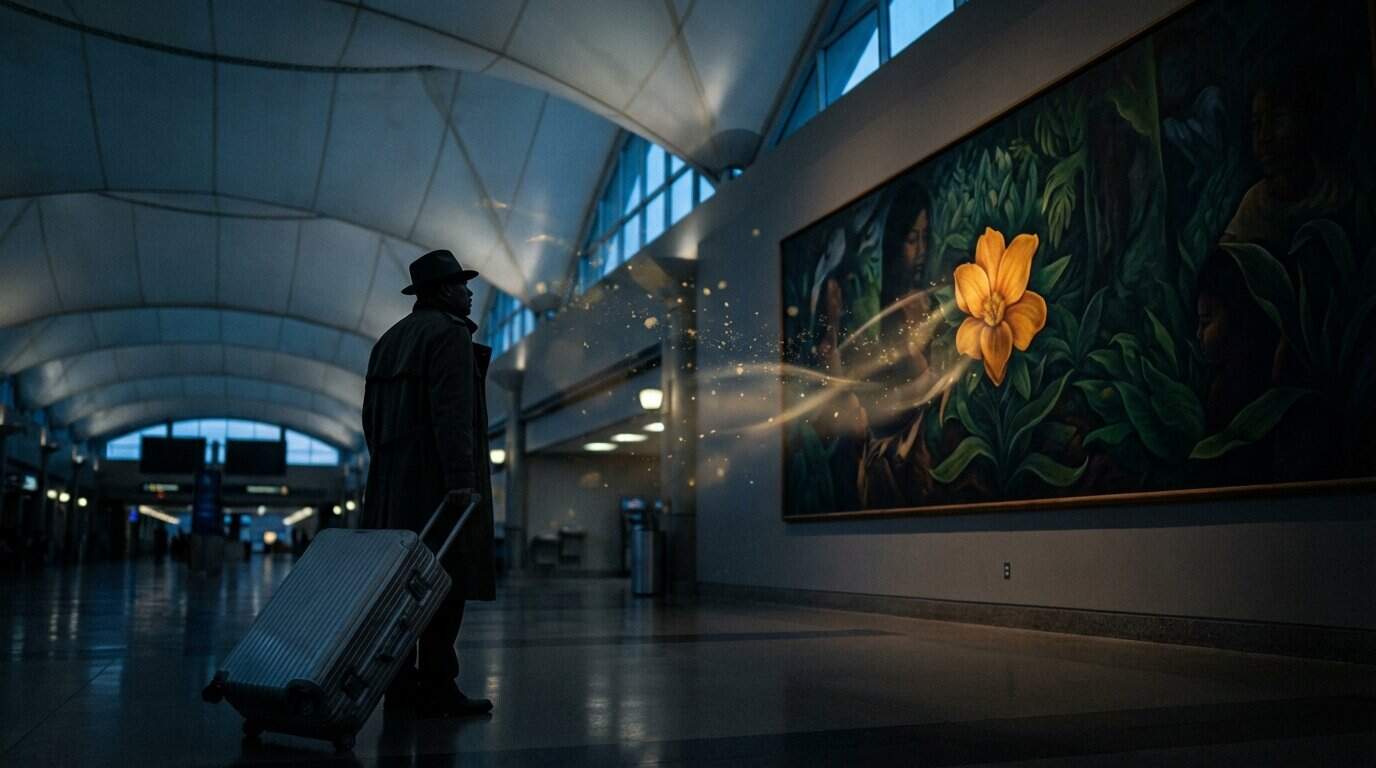
The murals at Denver International Airport leave a lasting impression that goes far beyond typical terminal decorations. On one hand, artist Leo Tanguma created a profound message of hope, illustrating humanity overcoming destruction to achieve global peace. However, the unsettling imagery of gas-masked soldiers and weeping children has cemented these paintings as a famous modern mystery. Travelers and researchers alike cannot help but wonder if there is a hidden, darker truth painted right in front of our eyes. This incredible contrast makes the artwork a permanent fixture in the world of conspiracy theories.
It is entirely possible that the bizarre symbols and apocalyptic scenes hold secrets meant only for those paying close attention. While official explanations point to a story of environmental conservation and harmony, the sheer intensity of the dark side of the murals keeps alternative theories alive. Some observers point out that the specific details, like the extinct animals and the ruined cities, seem too deliberate to just be a general plea for peace. Whether these massive panels are simply misunderstood social realism or a genuine roadmap of global events to come, they undeniably force everyone to question the world around them. The airport itself has even embraced the strangeness, proving that the fascination with these terminal masterpieces will not fade anytime soon.
The true meaning of this fascinating puzzle hiding in plain sight ultimately depends on the person looking at it. When travelers look closely at the vibrant but terrifying details of these massive paintings, everyone sees something slightly different. Do readers view them as a beautiful story about the children of the world uniting to conquer war, or do they sense a more sinister warning hidden within the brushstrokes? Everyone is encouraged to examine the imagery for themselves and share their thoughts on the artwork in the comments. The world may never fully agree on what the Denver airport murals truly mean, but the ongoing conversation remains deeply captivating.
Decoding the True Meaning of Denver’s Murals
The true meaning behind the Denver airport murals remains a captivating puzzle that continues to draw curious travelers from around the globe. On the surface, artist Leo Tanguma created a powerful story of hope where humanity transitions from dark times of war and environmental destruction into a bright future of global harmony. The official explanation highlights a beautiful message of children from all nations coming together to conquer violence and heal the planet. Historical documentation confirms this was designed in the tradition of social realism to inspire positive change. However, the intense imagery of a gas-masked soldier and weeping mothers leaves a lasting impression that feels undeniably unsettling to many observers.
This striking contrast between terrifying destruction and utopian peace is exactly what fuels ongoing speculation about hidden agendas. Looking closely at the strange details within these massive paintings reveals why they are considered a cornerstone of modern conspiracy lore. It is entirely possible that powerful groups embedded secret messages about global control right in plain sight. The bizarre symbolism scattered throughout the artwork makes it incredibly difficult to simply brush off the darker theories as pure imagination. Even with straightforward artistic explanations, the chilling accuracy of the apocalyptic scenes keeps these alternative ideas alive and well today.
The airport itself has playfully embraced these rumors over the years, which only adds another fascinating layer of mystery to the baggage claim area. Whether viewed as a masterpiece of social realism or a blueprint for a secret world order, the massive panels demand attention from anyone walking by. The true brilliance of the installation lies in its ability to spark intense emotion and endless debate decades after its creation. Travelers passing through the Jeppesen Terminal often stop to study the painted faces and hidden details for themselves. What secret messages or messages of hope might observers see when they finally look into the eyes of the children conquering war?
Frequently Asked Questions
1. What is the official Denver airport murals meaning?
The official story is that the artwork, titled “Children of the World Dream of Peace”, represents humanity’s journey from destruction to global harmony. Created by Chicano artist Leo Tanguma in 1995, the narrative shows children conquering war by turning in their weapons. However, the unsettling imagery leaves many wondering if a darker message hides in plain sight.
2. Why do the paintings feature terrifying images like soldiers in gas masks?
The massive panels depict apocalyptic scenes to illustrate the horrors of war and environmental collapse before peace is finally achieved. A menacing, sword-wielding figure stabbing a white dove serves as a stark warning about the fragility of global harmony. Yet, these dark details continue to fuel whispers of secret societies and hidden agendas.
3. Who painted the bizarre artwork at Denver International Airport?
Chicano artist Leo Tanguma created these sprawling murals when the airport first opened to the public in 1995. His work is known for tackling intense social and environmental themes through bright colors and complex symbols. Tanguma maintains that his vision is purely about world peace, though curious onlookers often suspect a more mysterious inspiration.
4. Do the airport murals prove the existence of underground bunkers?
Rumors have swirled for decades that the terrifying artwork serves as a signpost for secret underground bunkers built for the global elite. While blueprints show massive baggage tunnels beneath the terminal, the sheer scale of the buried infrastructure keeps these fascinating theories alive. It is entirely possible that the unsettling paintings are guarding secrets buried deep below the surface.
5. What is the significance of the children in the murals?
Children represent the bright, hopeful future of humanity after global destruction has finally ended. In the paintings, they are shown handing over weapons wrapped in their national flags to conquer war once and for all. This peaceful imagery contrasts sharply with the crumbling cities and weeping mothers seen in other parts of the artwork.
6. Are there hidden symbols connected to secret societies in the paintings?
Many travelers believe they can spot unusual symbols woven into the intricate details of the murals. From strange letters on the floor to the apocalyptic themes on the walls, these elements strongly resemble the alleged imagery used by powerful secret groups. While officials deny any hidden messages, the bizarre combination of symbols makes it hard to dismiss the theories completely.
7. Where exactly are these murals located inside the airport?
These massive painted panels stretch across the walls high above the busy baggage claim area in the main terminal. Millions of weary passengers drag their suitcases past the artwork every year, often stopping to examine the startling collection of bizarre symbols. Their prominent placement ensures that the great Denver airport enigma remains in the public eye.