Uncovering the Significance of Göbekli Tepe: The Zero Point of History
Deep in the mountains of southeastern Turkey, a discovery challenged our understanding of human history. Before the invention of the wheel, writing, or even agriculture, ancient builders carved massive limestone pillars and arranged them in complex circles. This site is not just a collection of old stones; the true gobekli tepe significance lies in its ability to rewrite the timeline of civilization. It raises the question of how hunter-gatherers organized such a colossal feat thousands of years before the pyramids existed.
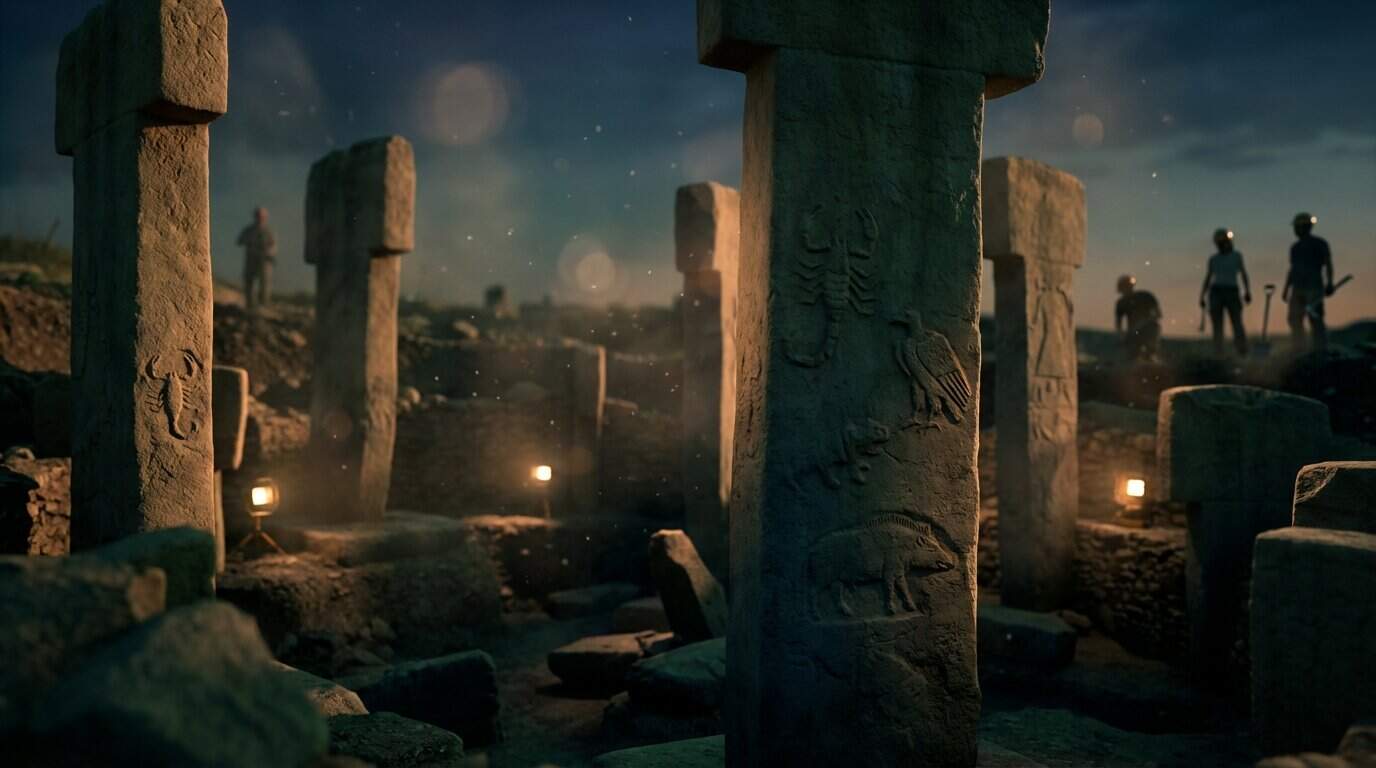
These T-shaped giants, some weighing up to 50 tons, stand silently with arms and belts carved into their sides. They appear to guard secrets from a lost chapter of humanity. Intricate reliefs of lions, scorpions, and vultures suggest a complex belief system or perhaps a message left for future generations. The creators deliberately buried the entire complex under tons of earth before vanishing. Unlocking the purpose of this ancient temple could reveal a forgotten legacy connecting us to a sophisticated past we are only just beginning to understand.
Key Takeaways
- Göbekli Tepe fundamentally rewrites the timeline of civilization by proving that organized religion and monumental architecture predated the invention of agriculture.
- Ancient hunter-gatherers utilized complex engineering to erect fifty-ton limestone pillars and carve intricate animal reliefs without the aid of wheels or metal tools.
- Evidence indicates that the need to feed large workforces for spiritual gatherings likely sparked the agricultural revolution and the domestication of crops.
- In a baffling act of preservation or closure, the builders deliberately buried the entire complex under tons of soil around 8000 BCE, sealing it as a prehistoric time capsule.
Massive Limestone Pillars and Animal Reliefs
Standing amidst the rolling hills of Turkey, the sheer scale of Göbekli Tepe challenges historical assumptions. The site features enormous T-shaped limestone pillars that tower over five meters in height and weigh up to 50 tons. It is difficult to comprehend how ancient hunter-gatherers moved these massive stones without the help of wheels or large work animals. Archaeologists believe these monolithic structures represent stylized human figures, complete with carved arms and belts wrapping around their waists. This architectural feat was accomplished thousands of years before the pyramids or Stonehenge existed.
Beyond their size, the pillars serve as a permanent canvas for a terrifying and beautiful collection of stone creatures. Intricate reliefs of foxes, scorpions, vultures, and lions seem to crawl right off the rock surfaces in high relief. The craftsmanship displays an artistic ability that was not supposed to exist during such a primitive era. These are not simple scratches but complex three-dimensional sculptures that required deep planning and skilled artisans. Such detailed artwork suggests that these ancient people possessed a rich and complex mythology long before the invention of writing.
Rewriting the Timeline of Religion and Agriculture
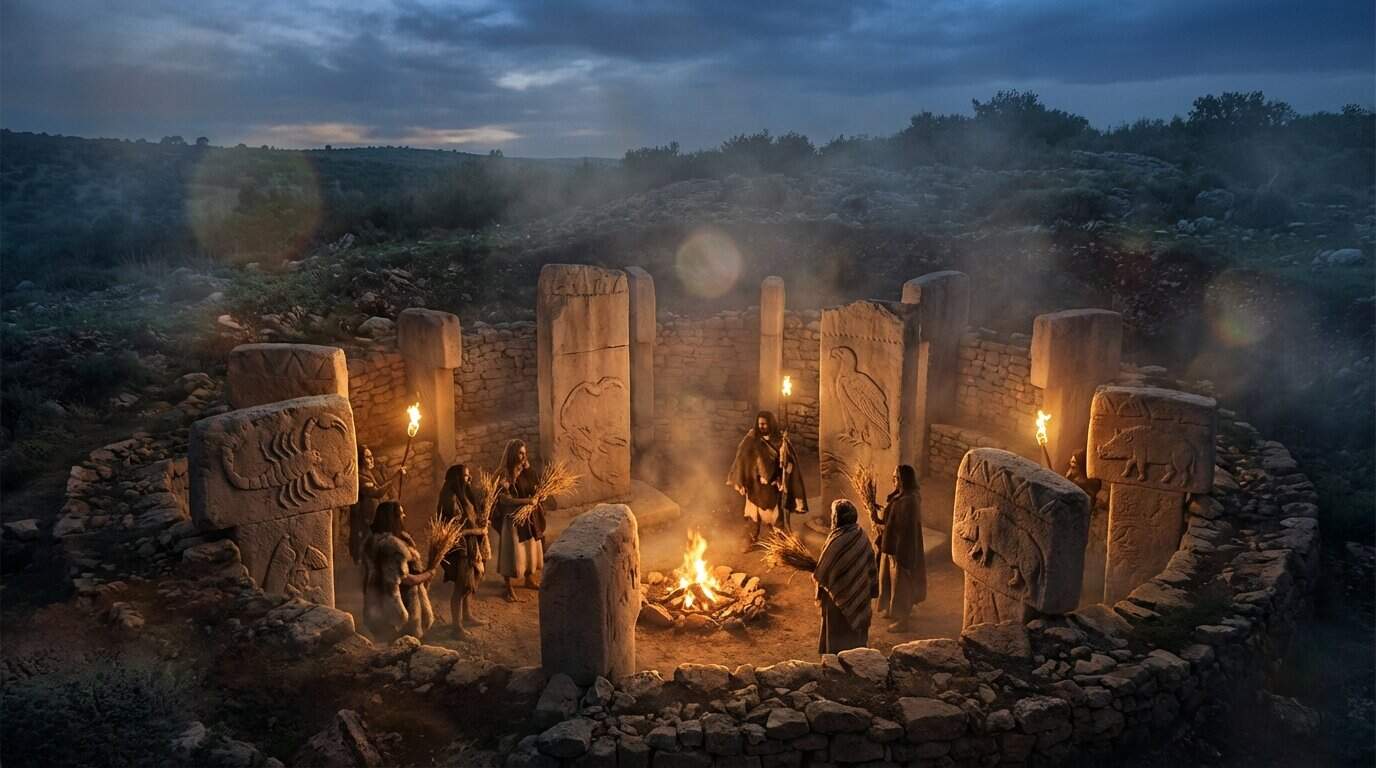
For decades, historians believed that agriculture was the catalyst for complex societies. The standard story suggested that once humans stopped chasing animals and started planting crops, they finally had the time to build temples. However, the discovery of Göbekli Tepe in southeastern Turkey upended this long-held assumption. Dating back to around 9600 BCE, these massive limestone pillars were erected by hunter-gatherers long before the first seeds were systematically sown. This site suggests that the urge to worship and gather for spiritual reasons might be what brought people together in the first place.
Building such a monumental structure required a level of organization that researchers previously thought was impossible for nomadic tribes. The site features circular enclosures with massive T-shaped pillars weighing up to 50 tons, many decorated with intricate carvings of scorpions, lions, and vultures. Without beasts of burden or metal tools, hundreds of people had to cooperate to carve, move, and arrange these megaliths. This massive collaborative effort implies that shared belief systems were strong enough to unite different groups toward a common goal. It paints a picture of a sophisticated society that valued spiritual connection enough to move mountains.
German archaeologist Klaus Schmidt proposed that this was the world’s first temple. He suggested that religion motivated people to invent farming to feed the workforce. Evidence shows that wild wheat grew nearby, potentially leading these early builders to domesticate crops to support their massive gatherings. Instead of a city growing around a farm, it appears civilization grew around a place of worship. Even more mysterious is the fact that the site was deliberately buried under tons of soil around 8000 BCE. This intentional act of covering the site leaves us wondering if the builders wanted to protect their sacred space or hide it from the world.
The Mystery of the Deliberate Burial
Perhaps the most baffling aspect of Göbekli Tepe is not how it was built, but how it ended. Around 8000 BCE, the ancient builders made a conscious decision to completely bury their magnificent creation under tons of limestone rubble and soil. This was not a result of natural erosion or accidental abandonment, but rather a massive engineering project in itself. Archaeologists estimate that the volume of debris used to cover the enclosures would have required as much effort as constructing them in the first place. Instead of destroying the pillars, this act carefully preserved them in a state of suspended animation for ten thousand years.
Experts struggle to agree on why a culture would work so hard to hide their greatest achievement. Some theories suggest the burial was a ritual act of closure that signified the end of an era or a change in spiritual beliefs. Others speculate that the site was buried to protect it from enemies or environmental changes, creating a Neolithic time capsule waiting to be found. This intentional preservation suggests the builders placed immense value on the site and perhaps wanted to ensure its survival for future generations. It remains one of the few examples in history where a civilization deliberately erased its own footprint to save it.
Göbekli Tepe serves as a zero point in time that forces history books to be rewritten. It proves that complex society and monumental architecture existed thousands of years before the pyramids or Stonehenge were conceived. As researchers continue to brush away the soil, one has to wonder how many other lost chapters of human history are waiting right beneath our feet. We invite you to share your thoughts on what other secrets might be hidden in the unexcavated mounds of the world.
Building the Impossible in the Ice Age
Göbekli Tepe stands as a monumental challenge to the traditional timeline of human civilization. While famous sites like Stonehenge capture the imagination, this Turkish discovery predates them by an astonishing six thousand years. The massive limestone pillars, some weighing nearly fifty tons, prove that hunter-gatherers were capable of complex engineering long before the invention of the wheel or pottery. It seems impossible that such a sophisticated structure could exist during the Ice Age, yet the physical evidence remains undeniable. This site suggests that organized religion and social cooperation may have actually sparked the agricultural revolution rather than the other way around.
The intricate carvings found on the T-shaped stones add another layer of depth to this ancient riddle. Dangerous predators like lions, scorpions, and vultures dominate the artwork. This hints at a darker or perhaps protective spiritual purpose. Archaeologists are still trying to decipher what these symbols meant to the people who gathered here nearly twelve thousand years ago. Perhaps the most baffling aspect is that the entire complex was deliberately buried and abandoned around 8000 BCE for reasons we may never fully understand. This intentional act preserved the site perfectly, creating a historical record that waited millennia to be opened.
Uncovering Göbekli Tepe has fundamentally shifted the understanding of where human history truly begins. It serves as a reminder that the past is often far more complex and advanced than textbooks have previously admitted. As excavations continue, we can only wonder what other secrets remain hidden beneath the soil of the Germuş mountains. This discovery bridges the gap between myth and reality. It proves that ancient ancestors possessed skills that rival modern ingenuity. Do you believe this site was simply a temple for gathering tribes, or does it hold evidence of a lost chapter in human development?
Frequently Asked Questions
1. What is the primary gobekli tepe significance for historians?
The discovery of this site fundamentally rewrites the timeline of human civilization by showing that complex construction projects existed before agriculture. It proves that ancient hunter-gatherers were capable of organizing massive feats of engineering long before the invention of the wheel or writing. This suggests that shared beliefs and religion may have been the true catalyst for the formation of early society.
2. How old is Göbekli Tepe compared to the Great Pyramids?
This ancient temple complex predates the Great Pyramids of Giza and Stonehenge by several thousand years. It was constructed during a remote period of history when humanity had not yet developed pottery or domesticated beasts of burden. Its extreme antiquity challenges standard archaeological models of human progress.
3. What do the massive T-shaped pillars represent?
Archaeologists believe the giant T-shaped limestone pillars are stylized representations of human figures or perhaps ancient giants. Clear carvings of arms and belts wrapping around the waists of the stones support this anthropomorphic interpretation. These silent sentinels stand in circles as if gathering for a ritual that has been forgotten by time.
4. How did the builders move stones weighing up to 50 tons?
Moving these colossal limestone blocks without wheels or large work animals remains a profound engineering mystery. It implies that these ancient people possessed a level of social organization and workforce management that was previously thought impossible for hunter-gatherers. They likely used simple leverage techniques and immense human power to transport the stones from nearby quarries.
5. What types of carvings are found on the pillars?
The pillars serve as a permanent canvas for intricate low-relief carvings of various animals including lions, scorpions, and vultures. These depictions likely represent a complex mythology or spiritual system that was central to the culture of the builders. Some researchers speculate these images could be astronomical symbols or warnings left for future generations.
6. Why was the Göbekli Tepe complex buried?
One of the most baffling aspects of the site is that its creators deliberately buried the entire complex under tons of earth before vanishing. This intentional act sealed the temple like a time capsule and preserved the delicate limestone carvings in pristine condition. The motivation behind this massive effort to hide their work remains a subject of intense debate.
7. Where is Göbekli Tepe located?
The site is situated atop a limestone plateau in the Germuş mountains of southeastern Turkey. This location overlooks the Harran Plain and sits within the region often called the cradle of civilization. Its high vantage point would have made the structure visible for miles around during its prime.