Uncovering the Men in Black Real Story Behind the Legend
When most people think of secret agents silencing UFO witnesses, they picture the slick, sunglasses-wearing heroes from Hollywood blockbusters. However, the real story of the Men in Black is far more unsettling and strange than any movie script. Historical accounts describe pale, mechanical figures who do not just erase memories but issue terrifying threats to those who see too much.
These encounters date back to the late 1940s, appearing long before the pop culture phenomenon ever took hold. From the ominous warnings at Maury Island to the bizarre visits that silenced researcher Albert Bender, the evidence suggests something darker than simple government secrecy. Examining these cases reveals a chilling evolution from standard federal agents to entities that seem almost otherworldly.
Key Takeaways
- The Men in Black phenomenon originated with the 1947 Maury Island incident, establishing a legacy of intimidation long before the concept became a pop culture staple.
- Accounts from researchers like Albert Bender and John Keel reveal a shift from standard government agents to supernatural entities exhibiting glowing eyes and materialization abilities.
- Witnesses describe these figures as having pale skin and mechanical behaviors, suggesting they may be extraterrestrial drones or mimics rather than human officials.
- The consistent objective of these dark-suited visitors is to suppress the truth about UFOs by issuing terrifying threats to silence witnesses and investigators.
The Maury Island Incident and Harold Dahl
Long before popular culture turned them into action heroes, the legend began on a boat in Puget Sound near Tacoma, Washington. In June 1947, a harbor patrolman named Harold Dahl claimed he saw six doughnut-shaped objects hovering in the sky. According to his report, one of the crafts seemed to malfunction and spewed hot metal and debris onto his boat below. This falling slag allegedly killed his dog and injured his son, forcing Dahl to retreat to the shore in fear. While the UFO sighting was terrifying enough, the events that followed the next morning sparked a mystery that endures to this day.
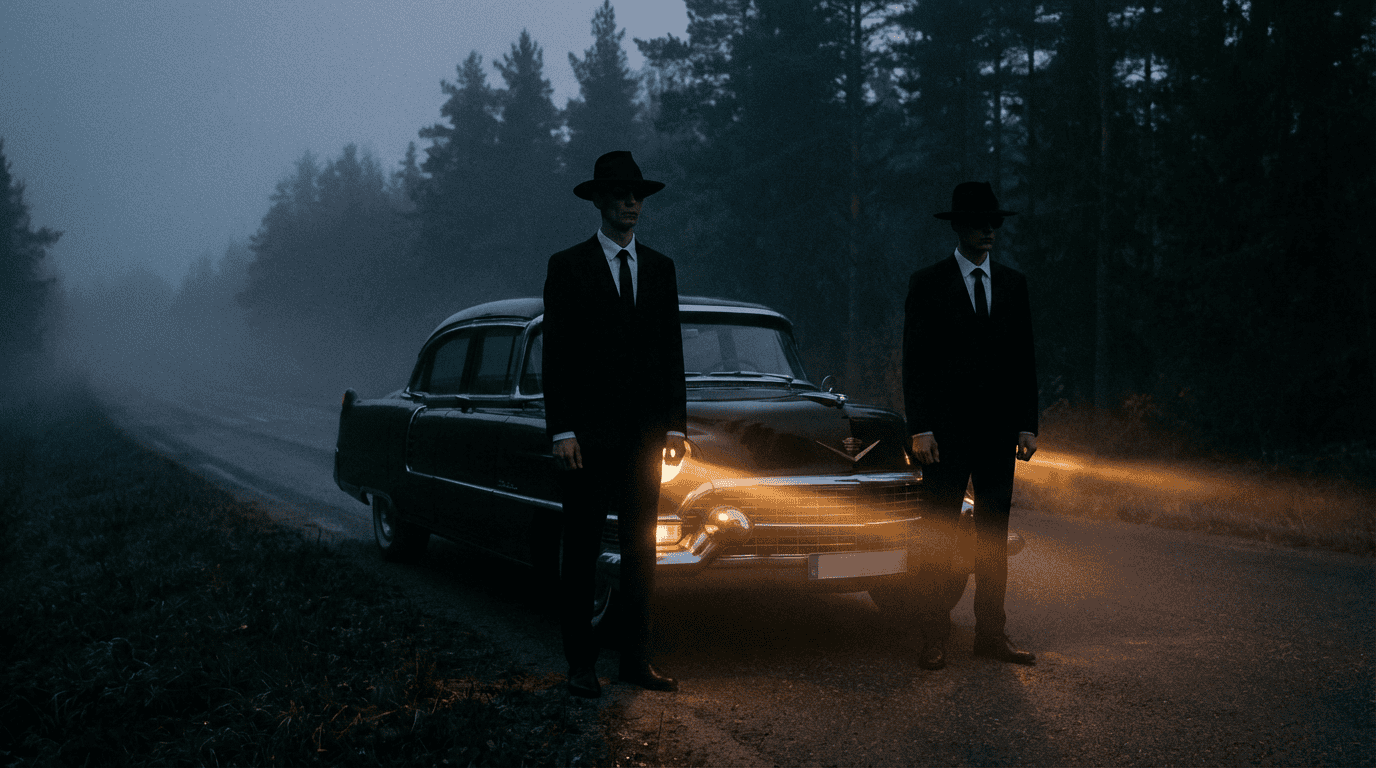
Dahl reported that a man wearing a pristine black suit invited him to breakfast at a local diner the very next day. This mysterious stranger drove a new black sedan and appeared to know every intimate detail of the sighting before Dahl had told anyone. During their meal, the figure issued a stern warning that bad things would happen to the patrolman if he spoke about what he saw. This interaction established the terrifying template for the Men in Black phenomenon that researchers study today. It shifted the narrative from simple government secrecy to intimidating personal visits designed to silence witnesses completely.
The story gained traction when Kenneth Arnold, a famous pilot known for his own saucer sighting, arrived to investigate the claims. Tragedy struck soon after when two military intelligence officers carrying samples of the strange metal died in a plane crash. FBI records from the era show that J. Edgar Hoover was personally interested in the case, though many officials eventually dismissed it as a complex hoax. Regardless of the final verdict, the Maury Island incident cemented the image of dark-suited silencers in American folklore. It forces us to ask if these agents are protecting national secrets or something far more unearthly.
Albert Bender and the International Flying Saucer Bureau
In the early 1950s, the Men in Black phenomenon took a darker and more terrifying turn with the story of Albert K. Bender. As the founder of the International Flying Saucer Bureau, Bender was a prominent figure in the growing community of UFO researchers. By 1953, he excitedly announced to his followers that he had finally uncovered the true origin of flying saucers and planned to reveal the secret in his magazine, Space Review. However, before the issue could go to print, Bender abruptly shut down the entire organization and ceased all publication. His sudden silence shocked the UFO community and sparked immediate rumors about what could have possibly scared him into submission.
Bender later revealed that he had been visited in his Bridgeport, Connecticut, home by three mysterious figures dressed in dark suits. Unlike the government agents people might expect, these visitors possessed frightening supernatural traits, such as glowing eyes and the ability to materialize out of thin air. According to his 1962 book Flying Saucers and the Three Men, these entities confirmed his theories were correct but warned him to never share the truth with the public. They reportedly left him with a severe headache and a terrifying ultimatum that effectively ended his career as an investigator. This encounter transformed the image of Men in Black from simple security agents into something far more paranormal and menacing.
John Keel and the Mothman Connection
The narrative surrounding the Men in Black took a drastic turn during the mid-1960s in West Virginia. Journalist John Keel arrived in Point Pleasant to investigate reports of a winged creature known as Mothman but found himself deep in a different mystery. During his research, he uncovered accounts of strange visitors that did not fit the mold of standard government agents. Witnesses described these figures as having olive skin or strange features while behaving in erratic and almost robotic ways. Keel detailed these unsettling encounters in his book The Mothman Prophecies, suggesting a shift from political suppression to paranormal harassment.
Unlike the earlier threats of silence, these new interactions involved elements of what Keel termed high strangeness. People reported visitors who seemed confused by simple human objects, such as ballpoint pens or telephones. Some accounts claimed the men spoke with mechanical buzzing voices or appeared to read minds before words were spoken. The fear they instilled was less about legal trouble and more about a deep and primal dread associated with the unknown. This era cemented the idea that the Men in Black might be supernatural entities mimicking human form rather than federal employees.
From Secret Agents to Something Stranger
The history of the Men in Black reveals a phenomenon that shifts and changes just like the figures themselves. What began with Harold Dahl’s report of a stern warning from a man in a dark suit seemed to suggest a covert government operation trying to silence witnesses. However, the accounts surrounding Albert Bender and later John Keel paint a much stranger picture than simple federal agents. These later stories introduced elements like glowing eyes and mechanical behaviors that defy conventional explanations. The transformation from intimidating officials to otherworldly entities suggests that the real story is far more complex than a simple military cover-up.
Observers must eventually decide if these visits are the work of a secret human agency or something that originates from beyond our world. Some researchers argue that the stiff movements and odd speech patterns point to extraterrestrial biological drones attempting to mimic human behavior. Others believe these encounters might be a form of psychological theater designed to confuse researchers and muddy the waters of UFOlogy. Regardless of their origin, the consistency of these reports over decades proves that the Men in Black are a lasting part of the mystery. Do you believe these dark-suited silencers are protecting state secrets, or are they visitors hiding in plain sight?
Frequently Asked Questions
1. When did the Men in Black phenomenon actually start?
The legend began in June 1947 with the Maury Island incident involving harbor patrolman Harold Dahl. After witnessing strange objects in the sky, Dahl reported a terrifying meeting with a mysterious man in a black suit who knew every detail of the event. This interaction set the template for the phenomenon long before Hollywood movies existed.
2. What do the real Men in Black look like according to witnesses?
Historical accounts describe these figures as pale and stiff with an unsettling mechanical quality. They typically wear pristine black suits and drive brand new black sedans while appearing out of place in their surroundings. Witnesses often report that these entities feel more otherworldly than like standard government agents.
3. Who was Harold Dahl and why is he important to this mystery?
Harold Dahl was a harbor patrolman who claimed to witness six doughnut-shaped objects hovering over Puget Sound. After the sighting, he became the first recorded person to receive a threatening visit from a mysterious figure in a black suit. His experience defines the classic behavior associated with these strange enforcers.
4. What exactly happened during the Maury Island incident?
Harold Dahl reported seeing hovering crafts that malfunctioned and spewed hot metal onto his boat in Puget Sound. This falling debris allegedly killed his dog and injured his son, forcing them to retreat to shore. The event stands out because it involved physical evidence and injury rather than just a visual sighting.
5. Are the Men in Black government agents or something else?
While they often present themselves as federal officials, their behavior suggests something far stranger. Witnesses describe pale skin and mechanical movements that hint at an otherworldly origin beyond simple government secrecy. The evidence points to entities that mimic human authority but may not actually be human at all.
6. How is researcher Albert Bender connected to these events?
Albert Bender was a researcher who faced bizarre visits that ultimately silenced his work on UFOs. His case provides evidence that these entities actively seek to suppress information and intimidate those who dig too deep. It suggests the phenomenon involves a chilling effort to stop the spread of truth.
7. What is the main goal of the Men in Black?
Their primary objective appears to be silencing witnesses who have seen too much regarding UFO activity. They issue stern warnings and threats to ensure people do not speak about their experiences. The pattern shows a consistent effort to suppress the truth through fear and intimidation.