Uncovering Project Stargate Results: The Truth About CIA Psychic Spies
On January 21, 2025, the boundary between science fiction and reality shifted with the announcement of a $500 billion initiative rivaling the Manhattan Project. Known as the Stargate Project, this massive effort aims to transform American infrastructure through a vast network of AI data centers. As construction begins in places like Abilene, Texas, early results suggest a future powered by over 2 million advanced chips. This gamble on human potential forces the question of what lies beyond this technological threshold.
Beyond the financial figures, this collaboration between OpenAI and Oracle aims to build a grid capable of supporting artificial intelligence at a superhuman level. While the immediate focus highlights the creation of over 100,000 jobs, the deeper story involves the physical footprint of a digital mind expanding across twenty locations nationwide. As these facilities come online, they bring promises of unprecedented power alongside questions about the true depth of this expansion. The magnitude of the operation suggests the beginning of a historic shift.
Key Takeaways
- The 2025 Stargate Project represents a $500 billion collaboration between OpenAI and Oracle to build a nationwide infrastructure grid supporting superhuman artificial intelligence.
- Ingo Swann and SRI researchers established Coordinate Remote Viewing as a controlled protocol that allowed the U.S. government to utilize psychic abilities for high-stakes espionage.
- Remote viewers successfully identified classified Soviet weaponry and planetary features like Jupiter’s rings, providing statistically significant data that defied conventional scientific understanding.
- Despite decades of funding and verified anomalies, the CIA officially terminated the psychic spying program in 1995 because the results were considered too inconsistent for reliable military operations.
Ingo Swann and the Coordinate Remote Viewing Protocol
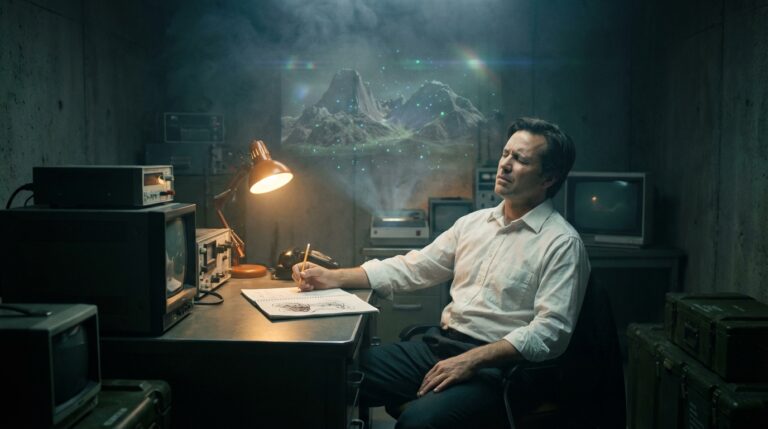
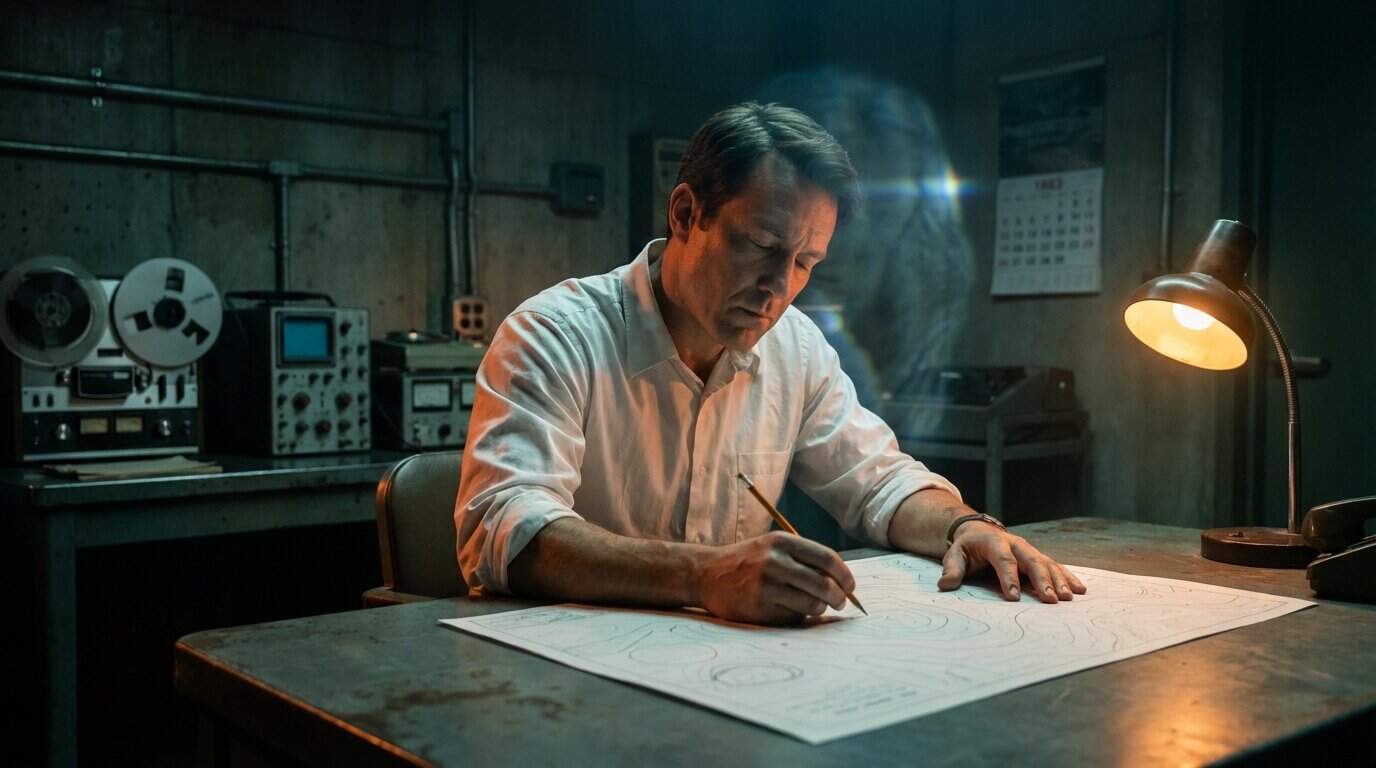
In the early 1970s, New York artist Ingo Swann approached the Stanford Research Institute with a bold claim about the hidden powers of the human mind. He believed anyone could learn to see distant locations by following a strict set of rules, which eventually became known as Coordinate Remote Viewing. Working alongside physicists Harold Puthoff and Russell Targ, Swann helped design a controlled environment to strip away lucky guessing and focus on raw psychic data. Instead of vague impressions, the team used specific latitude and longitude coordinates to target the psychic’s attention to a precise spot on the globe. This approach turned what many considered mystical tricks into a repeatable military protocol.
The testing process was rigorous. It was designed to baffle the conscious mind while unlocking subconscious perceptions. Researchers handed a viewer an envelope containing nothing but a set of geographical coordinates. This kept the target location a complete secret from everyone in the room. To the shock of government overseers, Swann and his colleagues began describing top-secret military bases and distant islands with uncanny accuracy. One famous experiment involved Swann viewing the planet Jupiter before NASA’s Pioneer 10 probe arrived. He correctly described its rings years before scientists confirmed their existence. These results suggested the mind was not limited by physical distance or ordinary constraints of time.
As trials continued, the intelligence community could no longer ignore the consistent stream of actionable data coming from the lab. The Central Intelligence Agency, and later the Defense Intelligence Agency, poured funding into the program because the statistical results defied mere chance. Documents declassified decades later revealed that this specific protocol served as the foundation of government psychic spy operations for over twenty years. While skeptics still argue about the methodology, the U.S. government relied on these techniques for high-stakes espionage. This era proved that under the right scientific conditions, the impossible might actually be possible.
The Typhon Submarine and Other Astonishing Hits
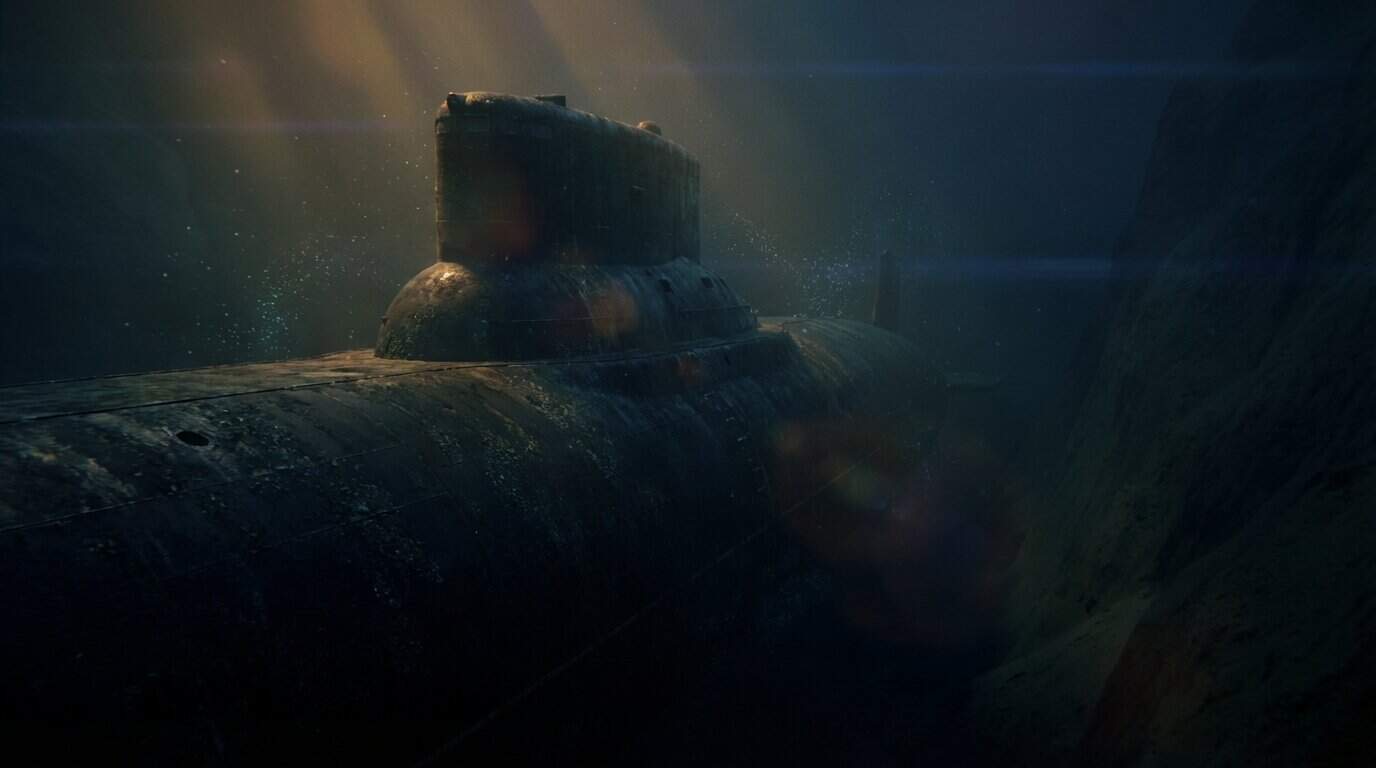
One of the most legendary success stories involves the discovery of a massive Soviet weapon hidden from standard surveillance. Intelligence officials handed a remote viewer nothing but a set of geographic coordinates and asked for a description of what was located at that specific spot. To their shock, the psychic described a gigantic submarine with a unique double-hull construction never seen before by American engineers. Skeptics initially dismissed the detailed report as fantasy until satellite imagery later confirmed the existence of the Typhoon-class submarine exactly where the viewer claimed it was. This specific hit remains a primary argument for proponents who believe the government successfully tapped into genuine psychic abilities.
Another astonishing result occurred when Ingo Swann turned his attention toward the outer solar system. Years before the Voyager 1 probe sent back detailed data, Swann described seeing a distinct ring around the planet Jupiter during a controlled remote viewing session. At the time, mainstream scientists believed only Saturn had rings, so his claim was largely ignored by the academic community. However, when the Voyager spacecraft finally passed the gas giant, it captured images proving the existence of a faint planetary ring system just as Swann had described. This incident suggests remote viewers might have accessed information completely unknown to anyone on Earth at the time.
These successful missions provided the CIA and later the DIA with enough justification to keep funding flowing for over two decades. While not every session produced such accurate results, the statistical improbability of these specific hits continues to puzzle researchers and historians. Documents released under the Freedom of Information Act show that military leaders took these anomalous mental phenomena seriously as a potential tool for gathering intelligence. Even though the program eventually closed, these unexplained successes leave the door open to the possibility that human consciousness extends far beyond the physical body.
The AIR Report and Statistical Inconsistencies
In 1995, the CIA commissioned the American Institutes for Research to perform a final review of government psychic spying efforts. Two independent experts, statistician Jessica Utts and skeptical psychologist Ray Hyman, analyzed decades of data. Surprisingly, both reviewers agreed that the experiments showed results that were statistically significant. This meant the success rates were too high to be just random guessing. This admission suggested something unexplained was actually happening within the laboratory walls at Fort Meade. However, the report concluded that while the phenomenon might be real in a lab setting, it was too inconsistent for practical use in the field.
The core problem identified by the AIR report was the gap between scientific anomalies and actionable intelligence. A remote viewer might correctly perceive a structure with a dome, but if they could not tell a commander specifically where it was or what was inside, the information was useless for a military strike. The evaluators noted that intelligence officers often had to interpret vague drawings or feelings. This introduced too much human error into the process. Because the psychics could not perform on demand with complete accuracy, the CIA decided the program was not worth the continued investment. Consequently, Project Star Gate was officially declassified and shut down, leaving the public to wonder what truths remained in the archives.
Project Stargate’s Official Failure and Eerie Precision
The official conclusion of Project Stargate states that remote viewing was never reliable enough for actionable intelligence operations. After two decades and twenty million dollars, the CIA shut the program down in 1995 while citing a lack of consistent results. Yet, the declassified files reveal moments of startling clarity where psychics described hidden Soviet bases or located missing aircraft with eerie precision. It remains a fascinating chapter in history simply because it proves the government took psychic phenomena seriously enough to fund it. The conflicting reports leave a lingering question about what actually happened inside those quiet rooms at Fort Meade.
Many researchers argue that the publicly released documents might only represent a fraction of what was truly discovered. It is difficult for some to believe that a program running for over twenty years yielded absolutely nothing of value before being discarded. Perhaps the most successful methods were simply moved into deeper black budget projects hidden from public view. This possibility suggests the search for the hidden capabilities of human consciousness did not end but merely went underground. Do you believe the government truly walked away from psychic espionage, or is the real program still active in the shadows today?
Frequently Asked Questions
1. What is the 2025 Stargate Project initiative?
This massive undertaking is a $500 billion collaboration between tech giants like OpenAI and Oracle to build a vast network of AI data centers. It aims to create a power grid capable of supporting artificial intelligence at a superhuman level using over 2 million advanced chips. The project rivals the historic Manhattan Project in its ambition and scale.
2. What are the early project stargate results revealing?
Initial reports from construction sites like Abilene, Texas, show a rapidly expanding physical footprint designed to house a massive digital mind. These early results suggest the successful creation of over 100,000 jobs and the deployment of unprecedented computing power. It appears to be a major step toward a future where the distinction between science fiction and reality disappears.
3. How does Coordinate Remote Viewing work?
This method involves using specific latitude and longitude coordinates to direct a person’s focus to a precise location on the globe. Developed to eliminate lucky guessing, the protocol helps psychics retrieve raw data about distant targets within a controlled environment. It turns vague mental impressions into a structured way of seeing across great distances.
4. Who was Ingo Swann and why is he important?
Ingo Swann was a New York artist who approached the Stanford Research Institute with bold claims about the hidden powers of the human mind. He worked alongside physicists to design the strict rules that became the foundation of the remote viewing program. His involvement helped shift the study of psychic abilities from folklore to a more controlled scientific setting.
5. Where are the new Stargate facilities located?
Construction has already broken ground in Abilene, Texas, marking the beginning of this nationwide expansion. The plan includes a network spreading across twenty locations throughout the country to support the necessary power infrastructure. These sites act as the physical backbone for the new digital intelligence grid.
6. What is the connection between the AI project and the 1970s experiments?
Both initiatives share a name and a drive to push beyond the known limits of intelligence and perception. While the 1970s program explored the hidden potential of the human mind, the 2025 initiative seeks to build a superhuman digital mind. They both represent humanity’s deep desire to see what lies on the other side of the technological and biological threshold.